
Pommard Wine Guide: Premier Cru Pinot Noir, Rugiens, Epenots and the Power of Côte de Beaun
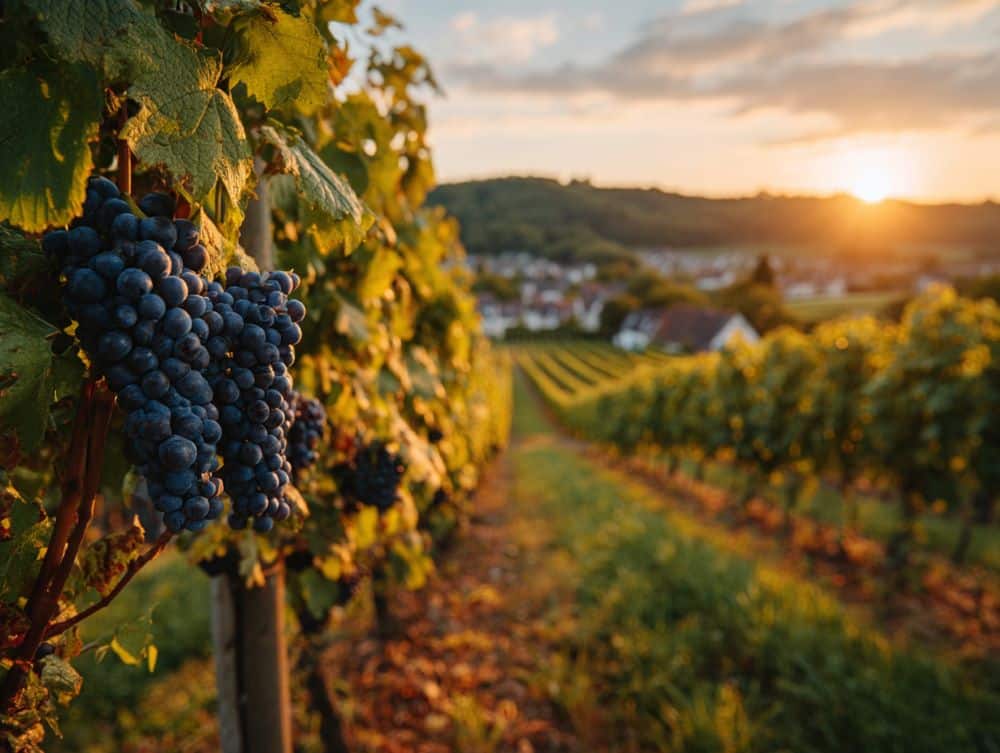
Pommard has spent generations carrying one of Burgundy’s most persistent stereotypes: the muscular Pinot Noir village, darker, firmer and more severe than its neighbours. The cliché survives because there is truth behind it, but it also hides how much variation exists inside a single commune.
Some Pommard is broad and tannic. Some is floral, precise and surprisingly elegant. The best Premier Crus combine both sides, giving Pinot Noir enough structure to age for decades while preserving the perfume and transparency that make Burgundy compelling in the first place.
This tension reaches its highest level in vineyards such as Les Rugiens, Les Grands Epenots, Les Petits Epenots and Clos des Epeneaux. Burgundy officially classifies them as Premier Cru, yet their historical reputation, prices and ageing performance have long encouraged comparisons with Grand Cru vineyards. Pommard itself still has no Grand Cru.
That apparent contradiction is central to the fascination.
Pommard is where Pinot Noir stops pretending that elegance requires delicacy.
The Basics
- Region: Bourgogne
- Subregion: Côte de Beaune
- Commune: Pommard
- Appellation: Pommard AOC
- AOC recognition: 1936
- Wine colour: Red only
- Principal grape: Pinot Noir
- Vineyard area: Around 314 hectares
- Premier Cru area: Around 118 hectares
- Premier Cru climats: 28 officially listed in the current technical material
- Most famous Premier Crus: Les Rugiens, Les Grands Epenots, Les Petits Epenots, Clos des Epeneaux
- Altitude: Roughly 250–330 metres
- Main exposures: East and south
- Main soils: Clay-limestone, Jurassic marl, limestone, ancient alluvium
- Iron-rich soils: Present in several sectors, particularly associated with the reddish earth of Rugiens
- Typical aromas: Black cherry, blackberry, plum, redcurrant, violet, spice, earth
- With age: Leather, game, forest floor, pepper, cocoa, dried flowers
- Body: Medium to medium-full
- Tannin: Medium to high for Pinot Noir
- Acidity: Medium-high
- Best serving temperature: Around 14–16°C
- Ageing: 5–10 years for village wines; 10–25+ years for strong Premier Cru bottlings
Where Pommard Sits
Pommard lies immediately south of Beaune and just north of Volnay, creating one of the sharpest stylistic transitions in the Côte de Beaune.
Volnay is traditionally associated with perfume, finesse and supple red fruit. Pommard has historically represented the opposite end of the spectrum: darker colour, more tannin, greater density and a reputation for longevity.
The comparison is useful but too simple. The border between the two villages does not suddenly change Pinot Noir’s genetics, and some southern Pommard vineyards close to Volnay can show considerable finesse. Conversely, Volnay can produce structured wines from firmer sites.
What changes is the combination of soil depth, clay content, slope position, drainage and exposure.
Pommard’s geology gives Pinot Noir more opportunities to build mass.
A Village Built Around One Red Grape
Pommard is unusually focused.
The appellation is reserved exclusively for red wine, with Pinot Noir at its core. There is no white Pommard AOC category, no Chardonnay counterpart and no attempt to divide attention between several major styles.
That gives the village an unusually coherent identity.
The regulatory area is limited to the commune of Pommard itself, a principle that was already established before the AOC system through legal decisions in 1926 and 1932 designed to protect the name from misuse.
Formal AOC recognition followed in 1936.
Pommard therefore entered the modern appellation era with a reputation already strong enough to require legal defence.
Why Pommard Became Famous
Pommard was one of Burgundy’s most recognised names long before global collectors learned the geography of every small climat.
During the nineteenth century, its relatively dark colour, tannic structure and ability to travel made it easier to understand than more delicate Pinot Noir. The village developed an international reputation as a robust, dependable red Burgundy.
That history eventually became a stylistic burden.
For decades, “Pommard” almost automatically meant masculine, powerful and rustic.
Modern viticulture and gentler extraction have shown how misleading that can be.
The structure remains.
The rusticity does not have to.
Pommard Has 28 Premier Crus — and No Grand Cru
This is one of Burgundy’s most intriguing anomalies.
Pommard contains 28 officially recognised Premier Cru climats, with vineyards such as Rugiens and Epenots historically considered among the strongest sites in the Côte de Beaune.
Yet there is no Pommard Grand Cru.
This becomes even more striking when compared with neighbouring villages where individual sites enjoy the highest classification.
For years there has been discussion about whether some of Pommard’s greatest terroirs merit promotion. A formal project concerning Rugiens, Epenots and Clos des Epeneaux was developed and submitted to the French appellation authorities more than a decade ago.
As of 2026, however, they remain Premier Cru.
The label has not changed.
Their reputation does not depend on it.
The Geography of the Village
Pommard sits where a narrow valley opens onto the Côte de Beaune.
This topography creates significant differences across the commune. Lower vineyards receive deeper soils and more alluvial material, while mid-slope vineyards often benefit from thinner clay-limestone soils mixed with stones and rock debris.
Higher slopes move into Jurassic marl and limestone, where soils can be leaner and drainage more severe.
Altitude ranges broadly from 250 to 330 metres.
The best sites generally combine sufficient clay to give body with enough limestone and slope to maintain drainage and freshness.
Too much fertile soil can make Pinot Noir broad.
Too little soil can make it austere.
Pommard’s great climats sit in the narrow territory between the two.
Iron and the Myth of “Iron-Tasting” Pommard
Iron is frequently invoked when describing Pommard, particularly Les Rugiens, whose name itself is associated with reddish soils.
Some vineyard soils are visibly coloured by iron oxides, but it is misleading to imagine that the wine literally absorbs an iron flavour from the ground.
Soil chemistry affects vine growth, drainage, water availability and nutrient behaviour. Those factors influence berry size, ripening and phenolic development.
The metallic, ferrous or bloody descriptors sometimes used in tasting are sensory analogies, not evidence that dissolved vineyard iron has moved directly into the flavour of the wine.
Pommard’s geology matters enormously.
It just matters in more complicated ways than “red soil equals iron taste.”
The Northern Side: Toward Beaune
The northern part of Pommard, on the Beaune side, contains the great Epenots sector.
These vineyards often produce wines combining Pommard’s characteristic structure with comparatively refined fruit and fine-grained tannin.
Clay and limestone remain central, but individual differences in slope and soil depth create significant variation.
This is where Pommard becomes especially interesting for drinkers who associate the village only with brute force.
The Epenots can be powerful.
They can also be remarkably polished.
Les Grands Epenots
Les Grands Epenots is one of the most prestigious names in the appellation.
The vineyard lies in the northern Premier Cru sector and is usually associated with a particularly complete interpretation of Pommard: substantial without becoming coarse, dark-fruited without losing Pinot transparency.
Expect wild cherry, blackcurrant, plum, spice and earth, with tannin that can be firm when young but becomes increasingly silky with age.
Good Grands Epenots can evolve for fifteen to twenty-five years, sometimes considerably longer.
The best examples do not simply taste powerful.
They feel composed.
Les Petits Epenots
Despite the diminutive name, Les Petits Epenots is not a lesser vineyard.
Its wines often sit close stylistically to Grands Epenots, combining red and black fruit with firm but elegant structure.
Producer decisions become particularly important here because whole bunches, new oak, extraction and crop level can push the same climat toward very different expressions.
One bottle may feel floral and precise.
Another may be dense and almost brooding.
That is Burgundy.
Climat is fundamental, but it never operates alone.
Clos des Epeneaux
Clos des Epeneaux is one of the most celebrated individual vineyards in Pommard and one of Burgundy’s notable monopoles.
The walled vineyard covers a little over five hectares and is controlled by Domaine du Comte Armand.
Its position within the broader Epenots sector gives it many of the qualities associated with that group of vineyards: concentration, dark fruit, substantial tannin and long ageing potential.
Yet Clos des Epeneaux often shows more complexity than simple power. Mature bottles can move through cherry and blackberry into dried flowers, spice, game and forest floor while preserving striking freshness.
It is one of the wines most frequently cited when people argue that Pommard’s top Premier Crus operate at Grand Cru level.
Whether the classification ever changes is secondary.
The wine already behaves like a major Burgundy.
Rugiens: Pommard at Maximum Intensity
If the Epenots represent Pommard’s combination of power and polish, Les Rugiens represents intensity.
The climat is divided principally into Rugiens Bas and Rugiens Hauts, with differences in slope, soil depth and exposure.
Rugiens is associated with reddish, iron-rich soils and particularly stony, well-drained terrain.
The wines can be extraordinarily concentrated for Pinot Noir, with dark cherry, blackberry, spice and pronounced mineral or earthy sensations.
Tannin is often substantial in youth.
Great bottles can require ten years simply to begin revealing their full range.
Rugiens Bas
Rugiens Bas is generally regarded as the most celebrated part of Rugiens.
Soils are relatively deep compared with the higher sector and contain substantial clay alongside limestone and iron-rich material.
This gives the wines considerable mass without necessarily sacrificing freshness.
Young Rugiens Bas can be severe: black cherry, plum, earth and spice wrapped in dense tannin.
Age changes everything.
After a decade or more, the structure begins to open into leather, dried flowers, forest floor and game, while the original fruit moves toward mature cherry and plum.
This is Pinot Noir that rewards patience aggressively.
Rugiens Hauts
Rugiens Hauts sits higher and is generally steeper, with thinner soils and greater exposure of limestone.
The wines can therefore feel slightly more linear and less broad than Rugiens Bas.
In the hands of strong producers, Hauts can show a particularly attractive combination of acidity, perfume and mineral tension.
The distinction between Bas and Hauts should not become a rigid quality ranking.
Site ownership, vine age, vintage and producer are too important for that.
The difference is better understood as structural.
Bas tends toward depth.
Hauts can emphasise lift.
Why Rugiens and Epenots Dominate the Conversation
Pommard contains many excellent Premier Crus, but Rugiens and Epenots have historically occupied another level of attention.
The reason is not simply reputation.
Both sectors have repeatedly demonstrated the ability to combine concentration with long-term development, and their wines have historically achieved higher market values than many other Premier Crus within the commune.
Their status has been recognised in historical classifications long before today’s regulatory hierarchy.
This consistency explains why discussion of possible Grand Cru promotion has persisted.
Their supporters are not trying to invent prestige.
They are formalising prestige that already exists.
The Other Premier Crus Matter
Focusing only on Rugiens and Epenots risks flattening Pommard into a four-vineyard story.
Les Pézerolles can be particularly elegant and aromatic. Les Fremiers, near the Volnay border, often brings more finesse and floral detail. Les Jarolières can combine firmness with freshness, while Les Charmots, Les Chaponnières, Les Bertins, Les Poutures and Clos de la Commaraine each offer different balances of fruit, tannin and soil expression.
This is where Pommard becomes more interesting for serious drinkers.
The headline vineyards deliver prestige.
The less famous Premier Crus often deliver discovery.
Les Fremiers: The Volnay Side of Pommard
Les Fremiers sits close to Volnay and can show the stylistic transition between the two villages particularly clearly.
The wines remain recognisably Pommard in structure, but fruit can become brighter, tannins more refined and floral notes more noticeable.
For someone who finds Rugiens too imposing, Fremiers can provide a different entry point.
It proves that geographical proximity inside Burgundy matters enormously.
A few hundred metres can change the balance between clay, limestone, exposure and airflow.
The grape remains Pinot Noir.
The voice changes.
Les Pézerolles
Pézerolles is one of Pommard’s more refined Premier Crus.
It can show less overt muscle than Rugiens, with red cherry, violet, spice and fine tannin taking precedence over density.
In warmer vintages this restraint becomes particularly valuable because the vineyard can preserve elegance while surrounding sites become broader.
Pézerolles deserves attention from drinkers who love Pommard but do not want every bottle to be a monument.
Clos de la Commaraine
Clos de la Commaraine is another historic walled Premier Cru, occupying a substantial enclosed vineyard close to the village.
Its long history and distinctive physical identity have made it one of Pommard’s recognisable clos.
Recent investment and renewed attention have returned the vineyard to greater prominence.
The style can combine ripe red fruit, darker berries and firm structure without reaching the sheer intensity of Rugiens.
Like Clos des Epeneaux, it demonstrates how Burgundy’s walled vineyards can preserve a particularly coherent site identity over centuries.
Village Pommard Is Not “Second-Class” Pommard
Premier Cru dominates discussion, but village-level Pommard can be excellent.
The appellation includes numerous named lieux-dits outside the Premier Cru classification, and strong producers often bottle individual village vineyards separately.
These wines usually offer the same basic vocabulary—cherry, blackberry, plum, earth and spice—but with less density and shorter ageing requirements.
Good village Pommard can be more enjoyable young precisely because the tannins are less imposing.
In the current Burgundy market, it can also represent far better value than fashionable Premier Cru.
What Pommard Tastes Like
Classic Pommard tends to sit on the darker side of Pinot Noir.
Young wines commonly show black cherry, blackberry, blueberry, redcurrant and ripe plum, sometimes with violet or peony in more aromatic examples.
Earth, spice and cherry stone add savoury depth.
With bottle age, the fruit retreats and secondary aromas emerge: leather, game, forest floor, pepper, dried flowers and cocoa.
The stereotype of Pommard as purely rustic becomes difficult to sustain once a good bottle reaches maturity.
What seemed severe at five years can feel remarkably elegant at fifteen.
Why Pommard Has More Tannin Than Many Pinot Noirs
Pinot Noir is not inherently a high-tannin variety, but extraction and vineyard conditions can make major differences.
Pommard’s clay-rich sectors often produce berries with enough phenolic material to create substantial grip. Lower yields and complete ripeness further increase concentration.
Traditional winemaking sometimes amplified this through long macerations and firm extraction.
Modern producers tend to be more careful.
The objective is no longer to prove Pommard’s power.
The vineyard already does that.
Whole-Bunch Fermentation
Whole-bunch fermentation has become increasingly important across Burgundy, including Pommard.
Including stems can add floral lift, spice and aromatic complexity while modifying tannin texture. In Pommard, however, the technique requires particular precision because the wines already possess significant structure.
Fully ripe stems can make a Rugiens or Epenots more aromatic and energetic.
Unripe stems can make a naturally tannic wine even more severe.
There is therefore no universal percentage that defines quality.
Producer judgement and vintage matter more.
Extraction: The Old Pommard Problem
Historically, some Pommard was extracted aggressively to satisfy the market expectation that the village should produce dark, powerful wine.
That could exaggerate tannin and create bottles requiring decades simply to become drinkable.
Today the strongest domaines generally pursue gentler extraction, allowing fermentation and time to do more of the work.
Punch-downs may be reduced, temperatures controlled more carefully and maceration adapted to vintage rather than following a fixed recipe.
The result is not weaker Pommard.
It is clearer Pommard.
Oak
Pommard can absorb substantial oak because of its fruit concentration and tannic framework.
Premier Cru wines are commonly matured in French barrels for roughly 12–18 months, though producer practices vary widely.
New-oak percentages can range from minimal to significant.
The danger is obvious: Pinot Noir’s perfume can disappear beneath vanilla, toast and sweet spice.
The best producers use oak structurally, not aromatically.
After several years in bottle, barrel influence should be almost impossible to separate from the wine.
Pommard vs Volnay
This is Burgundy’s classic contrast.
Volnay generally emphasises perfume, red fruit, silkier tannin and floral detail.
Pommard usually carries darker fruit, greater tannic grip and more density.
But the border is porous.
Southern Pommard vineyards can feel surprisingly Volnay-like, while structured Volnay Premier Crus can approach Pommard in power.
The distinction remains useful only if treated as a tendency rather than a rule.
Great Burgundy is always more complicated than the village stereotype.
Pommard vs Gevrey-Chambertin
Both villages have reputations for powerful Pinot Noir, but the expression differs.
Gevrey-Chambertin often combines black fruit with game, earth and substantial structure, particularly at Premier and Grand Cru level.
Pommard can be similarly firm but often shows a more pronounced clay-driven breadth and ripe cherry-plum character.
Gevrey’s best sites frequently feel more mineral and linear.
Pommard often feels more tactile.
Both can age magnificently.
Their geography is entirely different.
Pommard vs Nuits-Saint-Georges
Nuits-Saint-Georges may be the closest Côte de Nuits comparison.
Both appellations are known for structured Pinot Noir and both lack a Grand Cru despite having Premier Crus of exceptional reputation.
Young Nuits can be darker, more savoury and more austere, while Pommard often carries slightly riper fruit and a broader mid-palate.
The comparison is especially interesting because both challenge Burgundy’s simplistic hierarchy.
Classification does not always map perfectly onto quality.
Vintage Matters More Than Ever
Pommard’s structure reacts strongly to vintage conditions.
Cooler vintages can produce firmer acidity, lighter alcohol and more red-fruited profiles but may also risk harder tannins if phenolic ripeness is incomplete.
Warm vintages bring easier tannin maturity and richer fruit, but excessive heat can soften acidity and push Pinot toward plum and jam.
The best warm years retain freshness while giving Pommard enough ripeness to tame its natural structure.
The ideal vintage is not simply the hottest one.
Balance matters more than concentration.
Climate Change and Pommard
Warmer growing seasons have changed the way Pommard needs to be farmed and interpreted.
Historically, achieving complete tannin maturity was a major challenge. Today the problem can be preserving freshness and avoiding excessive sugar accumulation.
Harvest dates, canopy management and vineyard exposure have become increasingly important.
Sites once considered relatively cool may gain value.
Old assumptions about which parcels are “best” can evolve as climate changes.
Pommard’s limestone-rich higher slopes may become particularly important in this context.
How Long Does Pommard Age?
A strong village Pommard can comfortably develop for five to ten years, while good Premier Crus commonly benefit from a decade.
Top Rugiens, Epenots and Clos des Epeneaux can evolve for twenty to thirty years, occasionally much longer in exceptional vintages and from exceptional producers.
Joseph Drouhin, for example, places the optimum window for its Grands Epenots broadly around 10–25 years and gives the wine a potential life extending beyond that.
The important point is not simply survival.
Great Pommard changes fundamentally with age.
The hard edges soften.
The perfume expands.
When Should You Drink Pommard?
Young village Pommard can be attractive after three to five years if the producer favours gentle extraction.
Premier Cru is another matter.
Many examples become less expressive several years after release as fruit closes and tannin dominates. Opening a major Rugiens at six years can sometimes tell you less than opening it at three.
After ten years, the architecture begins to relax.
At fifteen, serious bottles can become extraordinary.
If patience is difficult, decant young wines generously.
But decanting is not ageing.
Serving Temperature
Serve Pommard around 14–16°C.
This is slightly cooler than the temperature at which many restaurants serve red Burgundy.
At 18–20°C, alcohol and oak become more obvious and the fruit loses definition.
A large Burgundy glass allows the wine to expand aromatically without forcing it.
Older bottles should be served carefully and decanted primarily for sediment, not for prolonged oxygen exposure.
The Great Producers
Domaine de Courcel
Domaine de Courcel is one of the classic names of Pommard and owns important parcels in several major Premier Crus, including Rugiens, Grand Clos des Epenots and Fremiers.
The wines have historically been structured and long-lived, often demanding substantial bottle age.
For understanding traditional Pommard architecture, De Courcel remains essential.
Domaine du Comte Armand
Comte Armand is inseparable from Clos des Epeneaux, its celebrated monopole.
The wine represents one of the clearest demonstrations of how Pommard can combine power, perfume and longevity.
Older vintages can develop with exceptional complexity.
Domaine Parent
The Parent family has deep roots in Pommard and produces several important wines from the village, including major Premier Cru holdings.
Modern bottles generally combine concentration with increasingly refined extraction, making the domaine an excellent reference for contemporary Pommard.
Domaine Michel Gaunoux
Michel Gaunoux is known for traditional, long-lived Burgundy and significant holdings in Grands Epenots and Rugiens.
The wines can be restrained in youth and develop slowly, making them particularly interesting for drinkers who value mature Burgundy over immediate fruit.
Domaine Joseph Voillot
Joseph Voillot has long been associated with both Volnay and Pommard, making the domaine particularly useful for comparing the two neighbouring villages.
The wines often emphasise purity and finesse rather than exaggerated extraction.
Domaine Jean-Marc Bouley
Jean-Marc Bouley represents a more contemporary generation of Côte de Beaune producers and has become highly regarded for precise, energetic Pinot Noir.
Its Pommard bottlings demonstrate how modern farming and restrained cellar work can preserve structure without heaviness.
Domaine Launay-Horiot
Launay-Horiot owns important Pommard parcels and has become particularly interesting for its interpretation of traditional vineyards with a fresh, increasingly precise style.
Domaine Rebourgeon-Mure
A longstanding Pommard family domaine with holdings including Grands Epenots, Rebourgeon-Mure remains a valuable name for drinkers looking beyond the most internationally famous estates.
How Much Does Pommard Cost?
Burgundy pricing makes generalisation difficult, but Pommard remains broad enough to offer several entry points.
Good village bottlings typically begin around €40–€60, with recognised domaines moving into the €60–€90 range.
Premier Crus commonly start around €60–€90, while established producers and stronger climats frequently sit around €90–€150.
Rugiens, Grands Epenots and famous monopoles can move substantially higher. Recent retail listings place strong-producer Epenots around €80–€130, while Clos des Epeneaux from Comte Armand can reach roughly €170–€200 or more, depending on vintage.
That may look expensive until compared with Grand Cru Burgundy.
In that context, Pommard’s best Premier Crus can still appear relatively rational.
Where the Value Is
The obvious mistake is buying only the most famous climat.
Pézerolles, Fremiers, Jarolières, Chaponnières, Charmots and strong village lieux-dits can deliver a large part of Pommard’s character at much lower prices than Rugiens or Clos des Epeneaux.
Producer remains the most important filter.
A careful grower in a less famous climat is usually more interesting than a weak producer holding prestigious land.
This is particularly true in Burgundy, where farming and winemaking decisions magnify small differences.
Buy the grower first.
Then learn the vineyard.
Does Pommard Deserve a Grand Cru?
The regulatory answer is simple: Pommard currently has no Grand Cru.
The qualitative debate is more interesting.
Rugiens and Epenots have centuries of reputation, strong historical classification records and a market position above many ordinary Premier Crus. Formal studies have also examined their geological, historical and economic case for promotion.
Whether they should be reclassified is ultimately a regulatory decision, not a tasting score.
For drinkers, the useful conclusion is simpler: some Pommard Premier Crus already possess the longevity, complexity and market prestige normally associated with Burgundy’s highest tier.
The absence of the words “Grand Cru” on the label does not make them modest wines.
Why Pommard Still Matters
Burgundy is increasingly discussed through scarcity, allocations and prices.
Pommard gives a better reason to remain interested: it demonstrates how dramatically Pinot Noir can change across a tiny distance.
Move from Volnay into Pommard and the grape gains weight. Move from Fremiers to Rugiens and the tannic architecture changes again. Cross to Epenots and refinement returns without sacrificing concentration.
The village is effectively a laboratory for Pinot Noir structure.
That is more compelling than prestige alone.
What Makes Great Pommard?
Great Pommard needs tannin, but not hardness. Its dark cherry and blackberry fruit should have enough freshness to remain recognisably Pinot Noir, while earth, spice and mineral complexity should deepen the wine rather than make it heavy.
Extraction is crucial. The grape should feel concentrated because of the vineyard, not because the cellar has forced additional mass into it.
Oak needs the same restraint.
In the strongest Premier Crus, the wine should possess enough structure to improve for a decade without becoming inaccessible for twenty years.
Power is part of the identity.
Balance determines whether that power becomes greatness.
What Makes Great Pommard Premier Cru?
Premier Cru Pommard becomes compelling when the vineyard adds another layer beyond village character.
Rugiens brings depth and iron-rich intensity. Epenots adds refinement and completeness. Fremiers introduces floral lift. Pézerolles can show remarkable finesse.
The best bottles therefore do not simply taste like stronger versions of village Pommard.
They become more specific.
This is the point of Burgundy’s climat system.
Quality matters.
Identity matters even more.

Perfect with braised meats, game, pulled pork, empanadas, hamburgers. Among the cheeses, we recommend an Époisses, a mature Pecorino and a Blu del Moncenisio, which enhance the strength of the wine.

