
Puligny-Montrachet: Burgundy’s White Gold and the World’s Ultimate Chardonnay
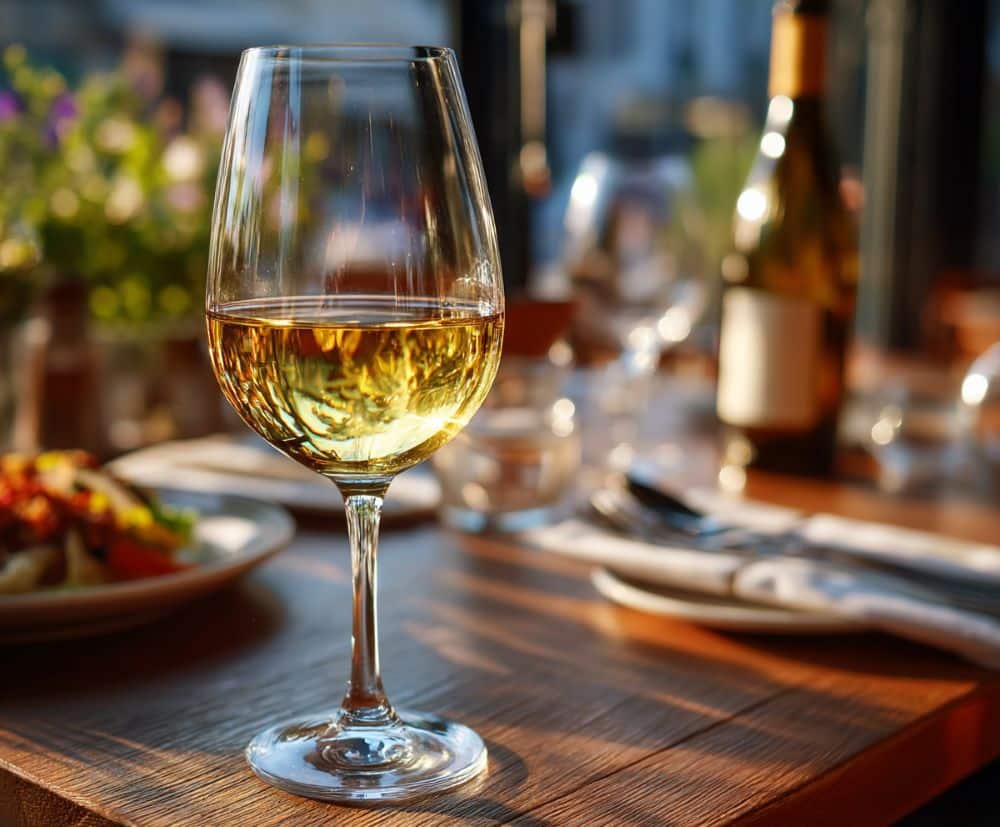
Puligny-Montrachet sits at the heart of one of the smallest and most valuable strips of vineyard land in the world. The village lies in the southern Côte de Beaune between Meursault and Chassagne-Montrachet, yet its identity is distinct from both. Where Meursault often brings breadth, hazelnut and generosity, and Chassagne can combine weight with a more openly floral character, Puligny is conventionally associated with precision, tension, citrus, white flowers and limestone-driven austerity.
That shorthand is useful, but the real story is more complex. Puligny contains village parcels on deeper lower-slope soils, 17 officially recognised Premier Cru climats, and direct access to four of Burgundy’s greatest white Grand Cru appellations: Montrachet and Bâtard-Montrachet, shared with Chassagne, together with Chevalier-Montrachet and Bienvenues-Bâtard-Montrachet, which lie within Puligny. The geological distance between them may be measured in metres, yet differences in slope position, soil depth, clay, limestone and exposure can create dramatically different Chardonnay.
At its best, Puligny does something particularly difficult: it produces Chardonnay with enough concentration to survive twenty years while still giving the impression of restraint. Citrus, pear and white peach may dominate in youth, but mature bottles move toward almond, toast, wax, honey, dried flowers and roasted nuts without necessarily losing the saline, linear structure that defines the village.
The Basics
- Region: Burgundy
- Subregion: Côte de Beaune
- Commune: Puligny-Montrachet
- Appellation: Puligny-Montrachet AOC
- AOC recognition: 1937
- Main white grape: Chardonnay
- Red wine: Legally permitted in the appellation, though now extremely rare
- Premier Cru climats: 17
- Grand Crus associated with Puligny: Montrachet, Bâtard-Montrachet, Chevalier-Montrachet, Bienvenues-Bâtard-Montrachet
- Main soils: Jurassic limestone, marl and clay-limestone
- Typical elevation: Roughly 230–350 metres depending on sector
- Typical exposure: East to southeast
- Classic aromas: Lemon, white peach, pear, hawthorn, acacia, fern, almond
- With age: Toast, hazelnut, honey, wax, dried citrus, candied fruit
- Body: Medium to medium-full
- Acidity: Medium-high
- Oak: Common, but usually more restrained in style than heavily marked
- Village ageing: 4–8 years commonly; stronger bottles longer
- Premier Cru ageing: 8–20 years
- Grand Cru ageing: 15–30+ years depending on producer and vintage
- Serving temperature: Around 11–13°C
Where Puligny-Montrachet Sits
Puligny occupies a narrow section of the Côte de Beaune immediately south of Meursault and north of Chassagne-Montrachet. The vineyards climb westward from the flatter land of the Saône plain toward the limestone escarpment that separates the Côte from the Hautes-Côtes.
This slope is fundamental. Lower vineyards tend to have deeper soils with more clay and alluvial influence, producing broader village wines. Move upward and soils become thinner, drainage improves and limestone becomes increasingly dominant. The most famous Premier and Grand Cru sites occupy the middle and upper sections where exposure, drainage and soil depth reach a particularly favourable balance.
Puligny is therefore not simply a village attached to famous names. It is a vertical geological sequence.
Understanding that sequence explains much of its hierarchy.
Why Puligny Tastes Different
The classic Puligny profile is built less around obvious richness than around shape.
Chardonnay here often enters the palate with citrus and white fruit before tightening through acidity, chalky texture and a subtly bitter mineral finish. Good examples feel concentrated without immediately appearing broad.
This is why words such as “linear,” “precise” and “mineral” appear so frequently in discussions of Puligny. They are imperfect sensory shortcuts, but they describe a real structural tendency.
The wines generally reveal their power later than Meursault.
The first impression is often tension.
The depth appears underneath.
Limestone Is Central, but Not Simple
Puligny is frequently described as limestone terroir, which is correct but incomplete.
The slope contains various Jurassic formations combining hard limestone, marl, clay and weathered calcareous debris. Soil depth changes substantially between lower, middle and upper slope.
Limestone encourages drainage and can restrict vigour, while marl and clay retain more water and nutrients. The precise proportion changes vine behaviour, berry size and ripening.
It is more accurate to think of Puligny as a series of clay-limestone balances than as one pure chalk slope.
This also explains why neighbouring climats can taste markedly different despite appearing almost contiguous on a map.
The Village Appellation
Village-level Puligny-Montrachet often comes from lower-slope parcels where soils are somewhat deeper than in the Premier Cru belt.
These wines are usually more approachable and less severe in youth, with lemon, pear, white peach and light floral aromas supported by enough acidity to keep the palate clean.
Good village Puligny can age for five to eight years, while stronger producers and vintages may develop for a decade or more.
The category has become expensive because even village vineyards sit within one of Burgundy’s most prestigious communes, but stylistically it remains an important reference point. Village Puligny should reveal the village’s tension without requiring the concentration of a Premier Cru.
The Premier Cru Belt
Puligny contains 17 officially recognised Premier Cru climats, extending mainly across the mid-slope between the village vineyards below and the Grand Crus above.
The best known include Les Pucelles, Les Folatières, Les Combettes, Les Perrières, Les Referts, Les Caillerets, Champ Canet, Clavoillon, Les Chalumaux and Sous le Puits.
These sites are not interchangeable.
Some emphasise limestone and verticality.
Others carry more clay and produce broader wines.
The fascination lies in tasting several side by side and discovering how Chardonnay changes within a few hundred metres.
Les Pucelles
Les Pucelles is one of the most celebrated Premier Crus in Puligny and sits immediately beside the Grand Cru sector.
Its position close to Bienvenues-Bâtard-Montrachet helps explain its reputation, but proximity alone is not enough. Soils are finely balanced between limestone and clay, and the vineyard generally produces wine with both intensity and exceptional precision.
Expect lemon, white flowers, pear, stone fruit and fine saline tension, often with less obvious breadth than Bâtard but considerably more depth than ordinary village wine.
Top examples can age for fifteen to twenty years and may take several years to reveal their full aromatic range.
Domaine Leflaive’s substantial holdings make its version one of the reference bottlings.
Les Folatières
Les Folatières is another benchmark Premier Cru and generally occupies a higher position on the slope.
The soils become more calcareous and thinner, which tends to produce wines that feel more aromatic and lifted than Pucelles.
Lemon, white peach, flowers and stony sensations are common, with strong acidity and a relatively delicate texture.
Folatières can be expressive earlier than some of Puligny’s denser Premier Crus while still ageing extremely well.
It represents the more ethereal side of the village.
Les Combettes
Les Combettes sits toward the northern edge of Puligny near Meursault.
That geography matters.
The climat often produces broader, more textured wine than Folatières or Perrières, with ripe orchard fruit and greater mid-palate volume.
It can sometimes feel almost Meursault-like in generosity, yet the finish usually retains the tighter structure associated with Puligny.
This combination of breadth and precision makes Combettes one of the most complete Premier Crus in the village.
Les Perrières
Puligny’s Les Perrières should not be confused with the celebrated Meursault Premier Cru of the same name.
Here the name still reflects the stony nature of the terrain. Wines tend to show citrus, white flowers, crushed stone and a particularly dry, linear finish.
The style is often less immediately generous than Combettes but can be more incisive.
For drinkers who value mineral tension over richness, Perrières is one of the clearest expressions of Puligny’s identity.
Les Referts
Les Referts lies close to the Meursault boundary and generally produces a somewhat richer expression.
The wines can carry pear, yellow apple and ripe citrus alongside Puligny’s normal freshness, with a slightly broader texture than Folatières.
Good Referts balances this richness with enough acidity to avoid becoming soft.
It is one of the Premier Crus that most clearly demonstrates the gradual stylistic transition toward Meursault.
Champ Canet
Champ Canet sits high on the slope and is capable of producing particularly intense, fine-boned Chardonnay.
The wines often combine citrus and white flowers with a mineral texture and considerable length.
Champ Canet is less famous to casual Burgundy drinkers than Pucelles or Folatières, which can make it particularly attractive when pricing has not become completely detached from quality.
In strong hands, it belongs among the serious Premier Crus.
Les Caillerets
The name Caillerets derives from the abundance of small stones in the soil.
This typically creates a leaner, highly drained environment and wines with considerable tension.
Citrus, white flowers and mineral sensations tend to dominate, while oak needs to remain restrained because the site already provides significant structural definition.
Caillerets can require patience but develops beautifully with bottle age.
Clavoillon
Clavoillon is closely associated with Domaine Leflaive, which owns a large contiguous section of the climat.
Compared with the most severe Puligny Premier Crus, Clavoillon can feel somewhat rounder and more generous, with ripe white fruit balanced by clear limestone freshness.
That combination makes it particularly useful for understanding Puligny because it sits between the village’s austere and generous poles.
It is serious without being excessively rigid.
Sous le Puits and the Higher Slopes
Premier Crus such as Sous le Puits occupy higher positions where soils become thinner and the influence of limestone increases.
These wines can be lighter in body but highly aromatic, with pronounced acidity and a firm mineral edge.
Climate change may increase the importance of these higher, historically cooler sectors. Sites that once struggled for full ripeness can now offer valuable freshness in warm vintages.
Puligny’s hierarchy was established under a different climate.
Future conditions may gradually alter how individual parcels are valued.
The Grand Cru Core
Puligny’s greatest distinction is its proximity to four Grand Cru appellations.
Montrachet and Bâtard-Montrachet straddle the boundary between Puligny and Chassagne. Chevalier-Montrachet and Bienvenues-Bâtard-Montrachet lie entirely within Puligny.
These vineyards occupy a remarkably small area, yet they have become global benchmarks for Chardonnay.
Their prices reflect scarcity, reputation and extraordinary demand, but stylistically they remain different from one another.
Grand Cru does not mean one single Montrachet style.
Montrachet
Montrachet sits at the centre of the slope and represents the most complete expression of the sector.
The vineyard combines enough clay for richness with enough limestone and drainage for precision. Its exposure allows full ripening without requiring excessive alcohol.
Great Montrachet can be almost contradictory: broad yet tense, powerful yet controlled, intensely aromatic without feeling perfumed.
Young wines may show citrus, peach, flowers and restrained oak. With age, they develop butter, toasted nuts, honey, spices and dried fruit while retaining substantial freshness.
The best bottles can evolve for decades.
Chevalier-Montrachet
Chevalier-Montrachet lies above Montrachet on thinner, stonier soils.
The higher position and stronger limestone influence generally produce a more vertical and mineral wine.
Chevalier often feels less massive than Montrachet but more immediately precise, with citrus, flowers and intense saline length.
Its strength is not weight.
It is energy.
For drinkers who value Puligny’s most linear characteristics, Chevalier may be the purest Grand Cru expression of the village.
Bâtard-Montrachet
Bâtard-Montrachet lies below Montrachet on deeper soils with more clay.
The wines are generally broader, richer and more powerful, with greater mid-palate mass and sometimes slightly lower perceived acidity.
Bâtard can show yellow fruit, peach, honey and toasted notes earlier than Chevalier.
The challenge is maintaining freshness.
In strong vintages and from great producers, this concentration becomes extraordinary. In warmer years, careful harvest timing is critical.
Bienvenues-Bâtard-Montrachet
Bienvenues-Bâtard-Montrachet lies adjacent to Bâtard but entirely on the Puligny side.
It is generally considered more delicate and aromatic than Bâtard, combining richness with greater floral lift.
The wines often carry white flowers, citrus and ripe orchard fruit with a finely textured palate.
Bienvenues can lack some of Bâtard’s sheer mass but compensate with greater finesse.
The distinction becomes especially clear when the same producer owns parcels in both.
Montrachet vs Chevalier-Montrachet
These two vineyards represent different ideas of greatness.
Montrachet tends toward completeness: concentration, texture, aroma and length are all present simultaneously.
Chevalier tends toward definition: acidity, limestone and vertical structure are more obvious.
Montrachet often expands across the palate.
Chevalier moves through it.
Neither is inherently superior as a style.
The preference depends on whether you value amplitude or precision.
Puligny vs Meursault
This is one of Burgundy’s classic comparisons.
Meursault generally produces broader Chardonnay, with more yellow fruit, hazelnut and creamy texture. Puligny tends to emphasise citrus, flowers and mineral tension.
The distinction becomes less reliable near the commune boundary. Puligny vineyards such as Combettes and Referts can show substantial Meursault-like breadth, while high-slope Meursault can become remarkably linear.
Producer style also matters enormously.
Still, the general contrast remains useful.
Meursault often leads with texture.
Puligny leads with structure.
Puligny vs Chassagne-Montrachet
Chassagne sits immediately south and shares Montrachet and Bâtard-Montrachet with Puligny.
Its white wines often show more floral and ripe yellow-fruit character, with a somewhat broader and earthier texture.
Puligny tends to feel more citrus-driven and linear.
Again, this is a tendency rather than a law.
Chassagne’s upper-slope Premier Crus can be extremely mineral, while lower Puligny parcels can become quite generous.
The border matters less than the individual climat.
Puligny vs Chablis
Both produce Chardonnay with strong associations with limestone and mineral tension, but their climates and textures are very different.
Chablis is cooler and generally shows sharper acidity, green apple, lemon and oyster-shell-like sensations, often with little or no obvious oak.
Puligny is riper and broader, with more peach, flowers and barrel-derived complexity.
Chablis can feel skeletal.
Puligny places more flesh around the structure.
Both demonstrate Chardonnay’s sensitivity to site.
Puligny vs Corton-Charlemagne
Corton-Charlemagne comes from a completely different part of the Côte de Beaune but provides another benchmark for serious white Burgundy.
It is generally more powerful and austere, often showing citrus, smoke and substantial structure.
Puligny’s top wines tend to be more refined and floral.
Corton-Charlemagne can feel monumental.
Chevalier-Montrachet often feels more precise.
Again, these are stylistic tendencies rather than rigid quality judgments.
Oak in Puligny
Oak is integral to traditional Puligny winemaking, but the best producers rarely allow it to become the central flavour.
Fermentation and maturation commonly take place in French barrels, often followed by additional ageing in stainless steel to stabilise the wine and reduce overt wood influence.
New-oak percentages vary significantly between producers and cuvées.
The strongest wines can absorb substantial new wood because fruit concentration and acidity are high.
Village Puligny generally benefits from more restraint.
The objective is texture, not vanilla.
Lees Ageing
Lees ageing contributes heavily to Puligny’s texture.
Fine lees can add body, savoury complexity and protection against oxidation while keeping the wine fresh.
Some producers use bâtonnage actively, while others minimise stirring to preserve tension.
The fashion has moved away from excessive bâtonnage because repeated lees stirring can create broad, creamy wines that obscure terroir.
Puligny generally rewards restraint.
Its identity depends on keeping the structure visible.
Malolactic Fermentation
Malolactic fermentation is common and often complete.
It reduces sharp malic acidity and introduces softer lactic character, which helps balance naturally tense Chardonnay.
Yet the buttery flavour commonly associated with malo should not dominate serious Puligny.
Careful élevage allows malolactic texture without converting the wine into obvious butter and cream.
The best producers integrate the process until it becomes structural rather than aromatic.
Reduction and the Matchstick Debate
Modern white Burgundy frequently shows reductive aromas such as matchstick, flint or struck stone, and Puligny is no exception.
Moderate reduction can reinforce the impression of tension and mineral precision.
Too much becomes distracting.
The style became fashionable during the last two decades, occasionally leading to wines where cellar technique overwhelmed vineyard character.
Great Puligny should smell of the vineyard first.
Reduction can add complexity, but it should never become the identity.
Premature Oxidation
Any discussion of mature white Burgundy has to acknowledge the historical problem of premature oxidation, particularly in wines produced from the mid-1990s through parts of the 2000s.
Some bottles aged far faster than expected, turning dark and oxidative long before their theoretical drinking window.
The causes proved complex and involved cork oxygen transmission, pressing, sulphur management, lees practices and other cellar factors.
Many producers changed techniques substantially.
Modern Puligny is generally more carefully protected, but storage history remains essential when buying older bottles.
A famous producer and vineyard cannot compensate for poor provenance.
Village Puligny and Value
The word “value” has become difficult to use in Puligny.
Demand has pushed even village wines from leading producers into price levels that once bought Premier Cru.
Still, village bottlings can provide the clearest introduction to producer style without paying for a famous climat.
Strong producers blend several lower-slope parcels to create wines that represent the commune rather than one vineyard.
This can be more useful educationally than buying a mediocre Premier Cru simply because the label carries the classification.
In Burgundy, producer still matters enormously.
Domaine Leflaive
Domaine Leflaive is one of the defining names of Puligny-Montrachet.
The family has been established in the village for centuries, and the modern domaine became particularly influential through Anne-Claude Leflaive’s commitment to biodynamic viticulture. The entire estate moved to biodynamic farming during the 1990s.
Its holdings include major parcels in Les Pucelles, Les Folatières, Clavoillon and Les Combettes, together with significant Grand Cru vineyards.
The wines combine concentration with a distinctly mineral, restrained style and often require substantial ageing.
For understanding Puligny at the highest level, Leflaive remains unavoidable.
Domaine Étienne Sauzet
Étienne Sauzet is another essential Puligny name.
The domaine works approximately fifteen hectares across Puligny, Chassagne and neighbouring sectors and now farms biodynamically.
Its wines are typically precise and aromatic, with carefully judged oak and strong vineyard definition.
Sauzet’s Premier Cru range provides an excellent way to compare Puligny climats because several important sites are vinified under broadly consistent cellar philosophy.
The producer’s reputation is built less on sheer power than on finesse.
Domaine Jacques Carillon
The Carillon family has deep historical roots in Puligny.
Domaine Jacques Carillon produces a particularly classical style, usually favouring clarity, acidity and moderate oak influence.
Wines from sites such as Les Perrières and Les Referts can show clear differences in texture while retaining a recognisable house style.
For drinkers who prefer Puligny without excessive reduction or wood, Carillon is an important reference.
Domaine Jean Chartron
Jean Chartron owns vineyards across several significant Puligny and surrounding climats and has a long family history in the village.
The domaine works both Premier and Grand Cru sites and is particularly useful for understanding the transition from village Puligny into the upper hierarchy.
Styles have evolved over generations toward greater precision and less overt oak.
Chartron often offers slightly better value than the most internationally chased names while retaining serious terroir credibility.
Domaine Paul Pernot
Paul Pernot remains one of Puligny’s important traditional producers and has extensive holdings, including Grand Cru parcels.
The wines often show generous fruit and relatively immediate accessibility without abandoning classic Puligny freshness.
Pernot can therefore provide a useful counterpoint to the more austere producers.
The wines tend to be less aggressively reductive and can be attractive relatively young.
Domaine François Carillon
François Carillon represents another branch of the historic Carillon family.
The domaine produces a broad range of Puligny wines and tends toward a clean, restrained style where oak remains supportive.
The wines usually emphasise citrus, orchard fruit and saline finish rather than overt richness.
For exploring the appellation across several vineyard levels, François Carillon is consistently instructive.
Domaine Alain Chavy and Domaine Jean-Louis Chavy
The Chavy family produced Puligny for generations before the modern estate divided into separate branches.
Both Alain Chavy and Jean-Louis Chavy now produce important examples from village and Premier Cru sites.
These domaines can offer relatively classical Puligny at prices below the most speculative producer tier.
They are particularly useful for drinkers who want to explore climats without paying solely for label prestige.
Leflaive’s Les Pucelles vs Folatières
Comparing these two wines from the same domaine is one of the most educational exercises in Puligny.
Les Pucelles generally has more depth and density, with a firm mineral core and extraordinary length.
Folatières tends to be more aromatic and lifted, with greater floral expression and a more immediate sense of limestone.
The winemaking is broadly similar.
The vineyard difference remains visible.
That is exactly what Burgundy’s climat system is supposed to demonstrate.
Vintage Variation
Puligny responds strongly to vintage.
Cooler years emphasise acidity, citrus and mineral structure but can risk austerity if grapes fail to reach full maturity.
Warm years produce greater peach and yellow-fruit character and can make the wines more accessible early.
The danger in hot vintages is loss of acidity and excessive alcohol.
Recent climate change has generally made full ripeness easier, but harvest timing has become more critical.
The best producers increasingly pick for freshness rather than maximum sugar.
Climate Change and the Upper Slope
Climate change is gradually changing the internal balance of Puligny.
Historically cooler high-slope parcels can now achieve greater ripeness and may become more consistent.
Lower vineyards with deeper clay soils can suffer more in hot vintages if fruit ripens too quickly.
Higher limestone sectors benefit from greater ventilation and thinner soils.
This does not rewrite the hierarchy overnight, but it does make previously marginal positions increasingly interesting.
Burgundy’s classification is historical.
Climate is not static.
2024 and the Return of a Difficult Vintage
The 2024 season illustrates the opposite problem.
Heavy rainfall and strong disease pressure made vineyard work extremely difficult across Burgundy, with yields reduced in many estates.
Quality could still be high where selection was rigorous, but volume was limited.
The vintage reinforced how dependent Puligny remains on detailed vineyard work despite modern technology.
Warmth is not the only climate challenge.
Humidity can be equally destructive.
Ageing Puligny-Montrachet
Village Puligny generally becomes more interesting after three to five years, when oak and primary fruit begin to integrate.
Premier Cru often needs five to eight years and can continue improving for fifteen or twenty.
Grand Cru is built on a different scale. Strong Montrachet or Chevalier-Montrachet may remain relatively closed for a decade and develop for several decades.
Ageing transforms citrus into preserved lemon, almond and honey while introducing toast, wax, nuts and dried flowers.
The crucial condition is freshness.
Mature Puligny should broaden without collapsing.
When to Drink Premier Cru
There is no universal answer because producer and vintage matter enormously.
More open Premier Crus such as Folatières can be attractive relatively young.
Pucelles, Perrières and stronger Combettes often benefit from more time.
A useful broad window is six to fifteen years, with serious bottles capable of going much further.
Opening a major Premier Cru at two years can show quality but rarely complexity.
Puligny rewards patience because the mineral structure becomes more expressive after the fruit softens.
Serving Puligny
Serve village and Premier Cru Puligny around 11–13°C.
Grand Cru can be slightly warmer, around 12–14°C, particularly with bottle age.
Serving too cold suppresses texture and aroma.
A medium-large Burgundy glass is ideal because it gives the wine enough surface area without exaggerating alcohol.
Young Premier Cru can benefit from thirty minutes in a decanter.
Older bottles should be treated carefully and generally opened without aggressive aeration.
How Much Does Puligny-Montrachet Cost?
Puligny now sits among Burgundy’s most expensive white-wine appellations.
Village wines from sound producers commonly begin around €60–€90, with leading names easily moving beyond €100.
Premier Cru often starts around €90–€130, while recognised climats and prestigious producers can reach €150–€300 or more.
Les Pucelles, Folatières and Combettes from cult domaines can move dramatically higher.
Grand Cru pricing operates in a different market entirely. Bienvenues-Bâtard and Chevalier-Montrachet can reach several hundred euros per bottle, while Montrachet from famous producers routinely enters four-figure territory.
Scarcity now influences price almost as much as vineyard classification.
Where the Value Still Exists
The best relative value usually lies away from the most famous climat names.
Village wines from Alain Chavy, Jean-Louis Chavy, François Carillon, Paul Pernot or Jean Chartron can provide genuine Puligny character without the extreme premium attached to Leflaive or cult Premier Crus.
Less celebrated Premier Crus such as Sous le Puits, Chalumaux or some village lieux-dits can also outperform their reputation.
The useful rule is simple: producer and vineyard condition matter more than chasing the most recognisable name.
Burgundy rewards knowledge more than hierarchy alone.
Why Puligny Became the Benchmark
Puligny’s reputation does not come from maximum richness.
Other regions can produce more powerful Chardonnay.
Its distinction lies in the combination of concentration, acidity, limestone tension and long ageing, all contained within a remarkably small geographical area.
The village demonstrates how Chardonnay can change dramatically over minute distances while retaining a recognisable structural identity.
Village wines show the framework.
Premier Crus sharpen individual differences.
The Grand Crus expand that same language to extraordinary depth.
What Makes Great Puligny-Montrachet?
Great Puligny should have enough fruit to support its acidity without ever feeling sweet or broad. Lemon, pear and white peach may dominate early, while flowers, almond and subtle oak build around them rather than covering the fruit.
Texture matters as much as aroma. The wine should feel concentrated through the middle but tighten toward the finish, where acidity and limestone-derived structure create persistence.
Oak should disappear into the wine with age.
Reduction should remain an accent rather than a signature.
The defining quality is tension between richness and restraint.
What Makes Great Puligny Premier Cru?
Premier Cru should introduce specificity rather than merely more weight.
Pucelles should not taste identical to Folatières, and Combettes should not behave like Perrières.
The classification matters because these vineyards repeatedly produce recognisable structural differences.
A great Premier Cru combines the village’s mineral backbone with a clear climat personality, enough concentration for extended ageing and enough freshness to retain definition after a decade.
The strongest examples can approach Grand Cru complexity without Grand Cru mass.
Food Pairings

Puligny-Montrachet is perfect with great fish dishes, Chicken tikka masala; Chicken Cacciatore, Vitello Tonnato; truffle risotto; pasta alla carbonara. Try “French” pairings like fresh goat cheese, Brie de Meaux, Saint-Marcellin, or scallops au gratin.

