
From Muscadet to Sancerre: A Journey Through the Loire’s Vineyards
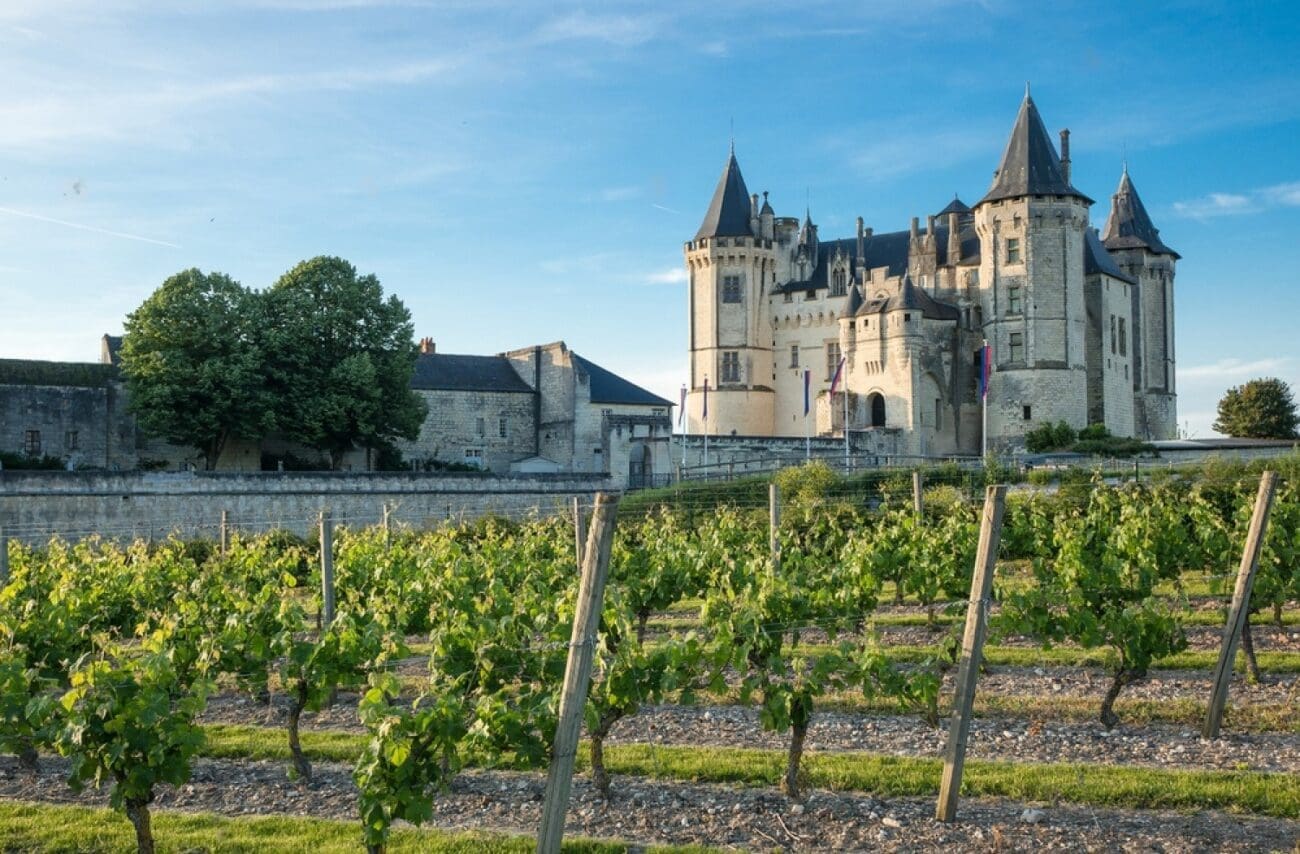
The Loire Valley is a major wine-producing region in western France. It follows the Loire River on its long trip through the heart of France, from the Auvergne inland hills to the lowlands on the French Atlantic coast near Nantes (Muscadet country).
The Loire Valley, France’s third-largest appellation (after Bordeaux and Burgundy), is critical for both quantity and quality wine production. The region produces a large amount of everyday wine (approximately 400 million liters per year) as well as some of France’s finest and highest quality bottles.
Another of the region’s primary strengths is its diversity. From the light, acidic Muscadet and sweet, honeyed Bonnezeaux to the sparkling whites of Vouvray and the rich, tannic reds of Chinon and Saumur, the wines made here are diverse. It’s telling that this brief overview of the region’s wines fails to mention the two most famous Loire Valley wines of all time, Sancerre and Pouilly-Fumé.
Which white grape varieties are cultivated in the Loire?
White wines are definitely the Loire Valley’s forte, accounting for the vast majority of output. A sizable majority of these are released under IGP titles. The Loire Valley features four IGPs, the most well-known of which is the Loire Valley IGP (formerly dubbed Vin de Pays du Jardin de la France).
Sauvignon Blanc (usually associated with the central Loire around Sancerre but found throughout), Chenin Blanc (frequently found in the Loire Valley proper, around Tours, Saumur, and Anjou), and Melon de Bourgogne are the major white-wine grape varieties used to manufacture Loire Valley whites (the grape behind Muscadet). Chardonnay, which is more popular than conventional, is also found, primarily in IGP wines.
What types of red grapes are grown in the Loire?
Loire reds are becoming increasingly high-quality and important as consumer preferences shift toward red wines. Although less stylistically diverse than whites, a light-bodied, fruity Gamay from the Fiefs Vendeens is considerably distinct from a peppery, tannic Bourgueil (from Cabernet Franc).
Cabernet Franc, the grape of Chinon, Saumur, and Bourgueil reds, is definitely the most popular red wine variety. Pinot Noir, Malbec (called as Côt in France), and Gamay are used to make lighter-bodied, less “serious” wines.
Pinot Noir is Sancerre’s main red grape, maybe due to its proximity to Burgundy (although red Sancerre is rare). Saint-Pourcain is located further south, towards central France, and typically includes some Gamay.
Subregions of the Loire wine region

With such a diverse wine repertoire spread out over so many miles, the Loire has been divided into a succession of smaller areas. Pays Nantais, Anjou, Saumur, Touraine, and the various appellations commonly referred to as “the Upper Loire.” The wines from the river’s top portions, particularly Saint-Pourcain in the Auvergne department, are little known (and frequently forgotten).
Each of these subregions has its own expertise. Pays Nantais is synonymous with dry, crisp whites, as exemplified by Muscadet. Anjou is known for its Chenin Blanc, which comes in both sweet and dry varieties from Coteaux du Layon. Touraine carries on the Chenin Blanc theme (mainly dry) and pairs it with dry, Cabernet Franc-based reds.
The Upper Loire, home of Sancerre and Pouilly-Fume, is unquestionably Sauvignon Blanc country, as opposed to the red-wine-specialized districts farther upriver, where Gamay and Pinot Noir reign supreme.

The region’s immense expanse makes summarizing its terroir impossible, hence the 51 appellations that can be found everywhere. The comparatively continental environment of the river’s upper reaches gives way to a clearly maritime one as it approaches the Atlantic coast.
The soils also differ significantly as the river flows gently through the countryside. The firm granite of the Cotes du Forez contrasts sharply with the flint and limestone of Sancerre and Pouilly-sur-Loire, and even more so with the soft, crumbly “tuffeau” of Anjou.
Although frequently overshadowed by France’s more prominent areas, most notably Bordeaux to the south, the Loire Valley has always played an important role in French wine history. The region’s fortunes have declined in recent decades, owing mostly to a clear taste among modern wine consumers and critics for hefty, strong reds—the sole style of wine that the Loire does not produce.

