
Unlocking the Mysteries of Cannonau di Sardegna DOC: Sardinia’s Most Celebrated Wine
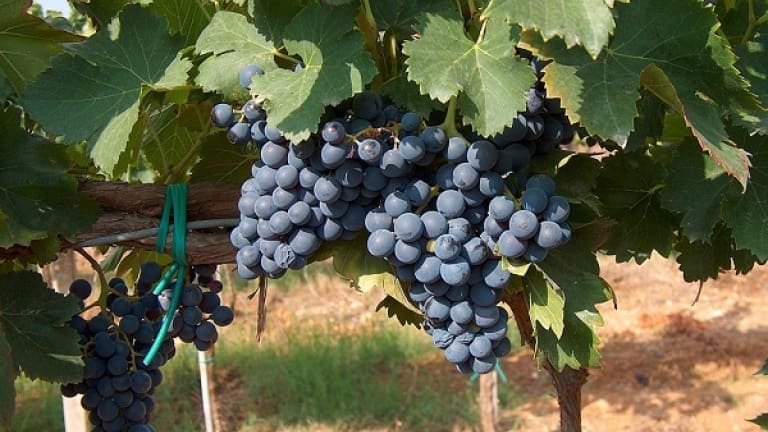
Cannonau di Sardegna is the red wine most closely associated with Sardinia, and for good reason. The grape is planted across the island, but its most compelling expressions often come from the mountainous interior and eastern zones, where altitude, granite, wind and old bush-trained vines give the wines a character that feels very different from Grenache grown in warmer, flatter Mediterranean regions.
The variety is genetically part of the wider Grenache/Garnacha family, yet Sardinian Cannonau has developed a deeply local identity. Depending on site and winemaking, the wines can range from bright and fragrant, with red cherry, raspberry and dried herbs, to broader and more powerful styles marked by ripe plum, Mediterranean scrub, spice, leather and warm alcohol. The denomination also includes Rosato, Riserva, Classico, Passito and fortified versions, making Cannonau di Sardegna considerably more diverse than the image of one robust island red suggests.
The DOC covers the entire island, but geography matters enormously. Oliena, Jerzu, Mamoiada, Orgosolo and the wider Nuoro-Ogliastra area generally produce some of the most distinctive wines, while southern Sardinia can give softer, rounder expressions from limestone and clay. The best producers increasingly focus on altitude, old vines and less intrusive oak, allowing Cannonau’s aromatic side to emerge instead of forcing every bottle into a heavy, extracted style.
The Basics
- Wine: Cannonau di Sardegna DOC
- Region: Sardinia
- Country: Italy
- DOC recognition: 1972
- Main grape: Cannonau
- Minimum Cannonau: 85%
- Classico minimum Cannonau: 90%
- Other permitted grapes: Up to 15% non-aromatic black grapes authorised in Sardinia; 10% for Classico
- Production area: Entire island of Sardinia
- Classico production area: Nuoro and Ogliastra
- Traditional subzones: Oliena or Nepente di Oliena, Jerzu, Capo Ferrato
- Styles: Rosso, Rosato, Riserva, Classico, Passito and Liquoroso
- Maximum grape yield: 11 tonnes/ha
- Maximum yield for Classico: 9 tonnes/ha
- Minimum alcohol, Rosso: 12.5%
- Minimum alcohol, Riserva: 13%
- Minimum alcohol, Classico: 13%
- Riserva ageing: Minimum 2 years, including at least 6 months in wood
- Classico ageing: Minimum 2 years, including at least 12 months in wood
- Typical aromas: Cherry, sour cherry, raspberry, plum, dried herbs, Mediterranean scrub and spice
- Body: Medium to full
- Tannin: Medium
- Acidity: Medium
- Typical alcohol: 13–15%, sometimes higher
- Serving temperature: Around 16–18°C
- Typical ageing potential: 4–8 years for straightforward wines; 8–15 years or more for serious Riserva and old-vine bottlings
Cannonau and Grenache: Same Family, Different Identity
Cannonau belongs to the broad genetic family that includes Grenache Noir in France and Garnacha Tinta in Spain. Italian national varietal registers recognise Garnacha Tinta and Grenache among the synonyms associated with Cannonau, although Sardinian research has also identified meaningful clonal and genetic distinctions among local biotypes.
That nuance matters. Saying that Cannonau is “just Grenache” is technically convenient but viticulturally reductive. Centuries of selection in Sardinia have produced local material adapted to the island’s drought, wind, soils and traditional training systems. Research in Sardinia has identified differences among Cannonau biotypes and between Sardinian material and other Mediterranean Grenache populations.
The grape therefore belongs to an international family while still possessing a local genetic history.
Wine regions work this way frequently. A variety can be shared across borders without producing interchangeable wines.
The Origin Debate
The historical origin of Cannonau has generated years of debate.
A long-standing theory connected the grape with Spanish rule in Sardinia and assumed that Garnacha arrived from the Iberian Peninsula. Archaeological discoveries of ancient grape seeds in Sardinia, together with later genetic research, complicated that simple narrative and encouraged arguments for a much older local history.
The evidence does not justify a simplistic declaration that Sardinia definitively invented Grenache. Genetic relationships across Mediterranean vineyards are more complex, and movement of vine material occurred repeatedly over centuries.
What can be said with confidence is that Cannonau has been part of Sardinian viticulture for a very long time and developed a distinctive set of local biotypes.
Its cultural identity in Sardinia is no longer in question even if its ultimate prehistoric birthplace remains debated.
Cannonau Is Sardinia’s Most Important Red Variety

Cannonau represents roughly a quarter to a third of Sardinia’s vineyard area, making it the island’s most widely planted grape. Regional agricultural sources place its share at around 27% of the island’s approximately 28,000 hectares under vine, with particularly strong concentrations in the central and eastern provinces.
This scale explains why there is no single Cannonau style.
An island-wide denomination inevitably includes coastal, inland, limestone, granite, low-altitude and mountainous vineyards. Southern Sardinia can produce broad, polished wines, while central mountain zones often deliver more aromatic lift and firmer structure.
The grape is therefore more useful as a lens through which to understand Sardinia than as one narrowly defined flavour profile.
Why the Interior Matters
Some of the most compelling Cannonau comes from the mountainous interior, particularly around Mamoiada, Orgosolo, Oliena and other parts of Nuoro, as well as the eastern slopes of Ogliastra.
Altitude changes the grape dramatically. Cooler nights slow ripening, helping preserve acidity and aromatic freshness despite intense daytime sun. Granite-derived soils are often poor and free-draining, naturally limiting vigour and yields.
Old bush vines can also develop extremely deep root systems, allowing them to survive dry summers without irrigation.
The resulting wines can be less jammy than lowland examples, showing sour cherry, wild strawberry, dried flowers, herbs and mineral tension alongside the warmth expected from Cannonau.
This fresher, more transparent style has become one of the most interesting directions in modern Sardinian red wine.
Granite and Cannonau
Granite is particularly important in central and eastern Sardinia.
Weathered granitic soils tend to be sandy, acidic, free-draining and relatively poor in organic matter. Vines often struggle naturally, producing smaller crops and less excessive canopy growth.
The relationship between granite and flavour should not be reduced to the idea that granite itself tastes like stone in the wine. The more important effect is physiological: drainage, root penetration, water availability and vine vigour all change.
In the glass, granite-grown Cannonau can feel more lifted and less broad than versions from deeper clay soils.
Fresh red fruit and herbs often remain clearer, while tannin can feel finer.
Limestone and Clay in Southern Sardinia
Southern Sardinia offers a different expression.
Around areas such as Serdiana, Parteolla and Trexenta, Cannonau can grow on limestone, marl and clay-rich soils under hotter and drier conditions.
These sites often produce wines with greater roundness and ripe red-fruit character. Cherry and morello cherry can move toward plum and jam, while tannins become softer and the palate broader.
Argiolas’ Cannonau vineyards provide a clear example of this southern interpretation, with some vines grown on white limestone and marl under intense sun and persistent wind.
The contrast with mountain Cannonau is useful.
One emphasises warmth and breadth.
The other often emphasises freshness and aromatic lift.
Oliena and Nepente di Oliena
The Oliena or Nepente di Oliena subzone is one of the denomination’s most historic names.
The authorised area includes the municipality of Oliena and part of neighbouring Orgosolo, on the eastern side of the mountainous Barbagia landscape near the Supramonte.
Altitude, limestone and strong day-night temperature swings can create Cannonau with ripe fruit but also considerable aromatic detail.
The word Nepente became famously associated with the wines of Oliena through Gabriele D’Annunzio, helping turn the name into one of Sardinia’s most evocative wine references.
Modern examples range from traditional, warm, rustic wines to much more precise versions built around old vines and controlled extraction.
At its best, Nepente combines Mediterranean maturity with the freshness of an inland mountain environment.
Jerzu and Ogliastra
Jerzu lies in Ogliastra, one of Cannonau’s most important historical territories.
Vineyards rise through a rugged landscape influenced by both mountains and the nearby eastern coast. Altitude, exposure and granite create significant variation within relatively short distances.
The Jerzu subzone covers vineyards around Jerzu and Cardedu and has long been associated with deeply coloured, structured Cannonau.
Cooperative viticulture has played an especially important role here. The Cantina di Jerzu grew from a cooperative movement established in the mid-twentieth century and helped preserve commercial viticulture in an area dominated by fragmented small holdings.
Modern Jerzu can show ripe cherry and plum, dried Mediterranean herbs and spicy depth without sacrificing the savoury character that distinguishes eastern Sardinian Cannonau.
Capo Ferrato
The Capo Ferrato subzone lies in southeastern Sardinia around municipalities including Muravera, Castiadas, San Vito, Villaputzu and Villasimius.
Conditions here are generally warmer and more strongly Mediterranean than in the mountainous interior.
Sea influence, wind and sandy or varied coastal soils can nevertheless prevent the wines from becoming uniformly heavy.
Cannonau from this area often leans toward ripe red and black fruit, Mediterranean herbs and softer tannins.
Capo Ferrato remains less internationally recognised than Oliena or the mountain wines around Nuoro, but it is an important reminder that the DOC extends far beyond one internal Sardinian terroir.
Cannonau di Sardegna Classico
The Classico designation is geographically restricted to the provinces historically corresponding to Nuoro and Ogliastra, effectively linking the category with the traditional central-eastern heartland of the grape.
The rules are stricter than for basic Cannonau di Sardegna. Cannonau must represent at least 90% of the blend, yields are limited to 9 tonnes per hectare and the minimum alcohol level is 13%.
Classico also requires at least two years of ageing, including a minimum of 12 months in wooden vessels.
The designation therefore combines geography with stricter production standards.
That does not automatically make every Classico superior, but it gives the category a clearer connection with the areas most strongly associated with traditional Cannonau culture.
Cannonau di Sardegna Riserva
Riserva requires a minimum alcohol level of 13% and at least two years of ageing, including six months in wood.
The style can range substantially according to cellar philosophy.
Traditional examples may develop dried cherry, leather, tobacco and warm spice through extended ageing in large casks.
More modern interpretations can use smaller oak vessels, producing sweeter spice, vanilla and greater polish.
The best Riserva wines avoid excessive extraction and wood because Cannonau’s natural strength is aromatic complexity rather than massive tannic structure.
Too much oak can easily make the wine taste international.
The strongest versions preserve cherry, herbs and Mediterranean character even after ageing.
Rosato
Cannonau also produces Cannonau di Sardegna Rosato, a style that deserves more attention than it generally receives.
The grape’s relatively pale colour and red-fruit aromatics make it naturally suited to rosé production. Short skin contact can produce delicate pink wines with strawberry, raspberry, cherry and floral notes.
Acidity is moderate rather than razor sharp, so successful producers rely on early picking and careful temperature control to maintain freshness.
Modern Sardinian rosato can therefore feel broader and more savoury than Provençal rosé without becoming heavy.
It is particularly interesting when the producer avoids residual sugar and lets herbs and saline character remain visible.
Passito Cannonau
The DOC also permits Passito, demonstrating how versatile Cannonau can become in Sardinia’s dry climate.
Grapes are partially dried to concentrate sugar, flavour and alcohol. The resulting wines can show dried cherry, plum, fig, Mediterranean herbs, chocolate and spice.
Minimum alcohol requirements are naturally higher than for dry red wine, and the style can become extremely rich.
Balance is essential because Cannonau already accumulates sugar easily.
Without enough acidity, Passito can feel heavy.
Successful versions use concentration to intensify the grape’s red-fruit and herbal character rather than simply producing sweetness.
Argiolas’ Antonio 100 is one contemporary example of the category.
What Does Cannonau di Sardegna Taste Like?
The classic profile begins with cherry and sour cherry, frequently accompanied by raspberry, wild strawberry and red plum.
Warm sites can move towards ripe plum, jam and dried fruit.
The most recognisably Sardinian dimension often comes from savoury aromatics: myrtle, rosemary, thyme, dried Mediterranean scrub, pepper and warm earth.
Bottle age introduces leather, tobacco and dried flowers.
Tannins are usually moderate rather than massive, particularly when yields are controlled and extraction remains gentle.
Alcohol can be high, yet the best wines avoid tasting sweet or hot.
Cannonau succeeds when warmth and perfume remain in balance.
Colour Is Often Lighter Than Expected
Cannonau can produce surprisingly pale red wine.
The grape’s skins do not always deliver the deep colour associated with varieties such as Syrah or Cabernet Sauvignon, especially when grown at moderate yields and handled gently.
Traditional examples can therefore appear medium ruby rather than opaque.
This lighter colour should not be confused with lack of concentration.
Grenache-family grapes often carry substantial alcohol, extract and aromatic intensity despite relatively modest pigmentation.
The renewed preference for less extraction has made this characteristic increasingly visible.
Modern high-quality Cannonau does not need to look black to taste serious.
Alcohol: The Main Structural Challenge
Cannonau accumulates sugar readily under Sardinia’s intense sun.
Alcohol levels of 14–15% are common in ripe vintages, and some wines move higher.
The challenge is maintaining freshness.
Altitude, early morning harvesting, sensible yields and careful extraction all help. Old vines can also achieve phenolic maturity without necessarily requiring extreme sugar accumulation.
The best producers no longer treat maximum ripeness as an automatic virtue.
A Cannonau at 14.5% with fresh cherry and herbs can feel beautifully balanced.
The same alcohol combined with jam, heavy oak and low acidity can become exhausting.
Climate makes power easy.
Precision requires more effort.
Bush Vines and Sardinian Viticulture
Traditional alberello training remains important in many old Cannonau vineyards.
Bush-trained vines sit low to the ground and can cope effectively with dry, windy Mediterranean conditions. The compact canopy protects grapes from excessive sun while deep root systems help vines survive prolonged drought.
The system is labour intensive because pruning and harvesting must generally be carried out by hand.
It also limits mechanisation and often keeps yields naturally moderate.
In old mountain vineyards, alberello Cannonau can produce particularly concentrated fruit without requiring excessive intervention in the cellar.
The training system is not automatically superior, but it remains closely adapted to Sardinian conditions.
Old Vines
Sardinia contains important parcels of old Cannonau vines, particularly in central and eastern areas where fragmented small holdings helped preserve traditional vineyards.
Old vines generally produce smaller crops and can achieve greater concentration at moderate yields.
Their deeper roots also provide resilience during drought.
The effect is not simply more power. Many old-vine wines show greater aromatic complexity, finer tannins and better balance because vine growth has naturally moderated over decades.
Old vines are increasingly central to the premium identity of areas such as Mamoiada and Orgosolo, even when the wines are bottled under broader designations.
Cannonau vs Grenache from the Southern Rhône
The comparison is inevitable because the grape family is the same.
Southern Rhône Grenache, particularly from Châteauneuf-du-Pape or Gigondas, commonly shows ripe strawberry, cherry, herbs and spice, often blended with Syrah, Mourvèdre and other Mediterranean varieties.
Cannonau can share the strawberry and herbal profile but often feels more savoury and less heavily structured, especially in high-altitude Sardinian examples.
Sardinian granite can also produce a distinctive freshness and aromatic lift.
The main difference is cultural as much as sensory.
Southern Rhône Grenache is commonly part of a blend.
Cannonau di Sardegna is frequently the central grape and often bottled close to varietal purity.
Cannonau vs Spanish Garnacha
Spanish Garnacha covers an enormous stylistic spectrum.
Warm areas of Aragón can produce full, ripe wines with plum, strawberry and high alcohol, while high-altitude Gredos has become famous for pale, delicate Garnacha with floral aromatics and mineral tension.
Sardinian Cannonau overlaps with both ends.
Lowland examples can resemble warm Aragón.
Mountain Cannonau from Mamoiada or Oliena can move closer to the transparent, fragrant logic of high-altitude Gredos.
The comparison demonstrates something important about Grenache.
Altitude and soil can alter its personality more dramatically than national borders.
Cannonau vs Carignano del Sulcis
Both are major Sardinian reds, but their structure is different.
Carignano generally produces deeper colour, firmer tannins and darker fruit. In Sulcis, sandy soils and maritime influence can soften the grape considerably, but the wines remain more structured than typical Cannonau.
Cannonau is usually more aromatic and red-fruited, with greater emphasis on cherry, herbs and warmth.
Carignano gives darker fruit and tannic grip.
Cannonau gives perfume and Mediterranean breadth.
The two varieties demonstrate two very different sides of Sardinian red wine.
Cannonau vs Monica
Monica is generally lighter, softer and less alcoholic.
Its wines can show red cherry, plum, flowers and gentle spice, often with relatively soft tannins.
Cannonau has greater body, alcohol and aromatic intensity.
The two can complement each other in blends, particularly when a producer wants to soften Cannonau or add fragrance.
Monica remains much less internationally recognised, but the comparison helps explain why Sardinian red wine cannot be reduced to one dominant grape.
Oak: Less Is Often More
Cannonau does not require heavy new oak.
The grape already provides warmth, ripe fruit and spice. Adding large quantities of new barrique can easily push the wine toward vanilla, sweet toast and excessive softness.
Traditional large casks often preserve the grape more clearly.
Concrete has also returned as an attractive option because it allows slow evolution without adding wood flavour.
Some of the most interesting contemporary producers use old barrels, large casks or neutral vessels to protect floral and herbal character.
The objective is increasingly to show Sardinia rather than cellar equipment.
Does Cannonau Age?
Basic Cannonau di Sardegna is generally best within four to six years, when cherry and herbal aromatics remain vivid.
More structured Classico and Riserva wines can develop for eight to fifteen years, while exceptional old-vine examples may last considerably longer.
With age, fresh cherry moves toward dried fruit, leather, tobacco, herbs and earthy complexity.
The grape’s moderate tannins mean longevity depends heavily on acidity, concentration and alcohol balance.
A hot, soft wine may fade sooner than expected.
A mountain Cannonau with fresh acidity can surprise after a decade.
Food Pairings

Cannonau belongs naturally beside the robust flavours of Sardinian cooking. Roast lamb, porceddu, grilled pork, wild boar and mature Pecorino Sardo all have enough intensity to match its alcohol and herbs.
Lighter, fresher examples can accompany sausage, roast poultry, tomato-based pasta and grilled aubergine, while mature Riserva suits braised meat and aged sheep’s cheese.
The wine’s Mediterranean herbal notes are especially convincing beside dishes seasoned with rosemary, thyme or myrtle.
Very spicy food is less successful because alcohol can magnify chilli heat.
The strongest pairings echo the wine’s savoury character rather than simply matching its weight.
Serving Cannonau
Young Cannonau is best around 16–17°C, while mature Riserva can be served closer to 17–18°C.
Serving it at warm room temperature is a mistake, particularly with wines above 14% alcohol. Excessive heat makes ethanol dominate and reduces aromatic definition.
A medium-to-large red-wine glass works well.
Young structured wines can benefit from 30–60 minutes of air, especially when reduction or firm tannins are present.
Older bottles should be opened more carefully because dried-fruit and tertiary aromas can develop rapidly once exposed to oxygen.
How Much Does Cannonau di Sardegna Cost?
Basic Cannonau di Sardegna remains relatively affordable. Reliable bottles often begin around €8–€12, while stronger estate wines usually sit between €12 and €20.
Classico, Riserva and old-vine wines commonly occupy the €18–€35 range.
Small-production mountain Cannonau and prestige cuvées can move into €35–€60 territory or higher.
The strongest value is generally around €15–€30, where old vines, altitude and careful cellar work begin to appear without the prestige pricing attached to more famous Italian regions.
Compared with serious Grenache from Châteauneuf-du-Pape or cult Gredos, Sardinia still offers substantial value.
Argiolas
Argiolas is one of Sardinia’s most important producers and provides a clear view of the southern interpretation of Cannonau.
The estate works vineyards in areas such as Parteolla and Trexenta, where limestone, marl, intense heat and wind produce rounder wines than the classic mountain zones.
Costera is the accessible Cannonau di Sardegna reference, while Senes moves into Riserva territory with greater concentration and spice. The estate also produces the sweet Cannonau Passito Antonio 100.
Argiolas is particularly useful because its wines demonstrate how Cannonau can retain regional identity outside the granite-dominated interior.
Giuseppe Sedilesu
The Sedilesu family in Mamoiada has become one of the key names associated with high-altitude, old-vine Cannonau.
Mamoiada sits at significant elevation in central Sardinia and has emerged as one of the most exciting areas for a fresher, more transparent expression of the grape.
The wines typically emphasise cherry, flowers and Mediterranean herbs rather than excessive oak or jam.
Traditional bush vines and relatively high elevations contribute concentration while preserving freshness.
Sedilesu helped make Mamoiada a reference point for serious Cannonau among specialist drinkers.
Cantina Dorgali
Cantina Dorgali is an important cooperative producer in eastern Sardinia and works extensively with Cannonau from vineyards around Dorgali.
The cooperative produces several levels of Cannonau, including Classico and Riserva bottlings, offering a useful introduction to the central-eastern style.
Its importance also reflects the economic structure of Sardinian viticulture, where cooperatives have often been essential for maintaining vineyards owned in small family parcels.
At its best, Dorgali combines ripe fruit with the herbaceous, savoury character typical of the region.
Cantina di Jerzu
Cantina di Jerzu is inseparable from the wine history of Ogliastra.
Founded as a cooperative in 1950, it brought together small growers and helped create a viable market for vineyards that might otherwise have become economically unsustainable.
The area’s steep and fragmented vineyards make cooperative organisation especially important.
Jerzu Cannonau commonly shows ripe cherry, plum, spice and a pronounced Mediterranean character.
The cooperative is not simply a large-volume producer.
It remains one of the key institutions preserving the viticultural identity of the subzone.
Pala
Pala offers another useful southern Sardinian interpretation.
Its Santuanni Cannonau di Sardegna Riserva comes from a single vineyard planted on calcareous soils and uses 100% Cannonau. The wine spends a year in large 3,000-litre oak vessels rather than relying on aggressive small-barrel flavour.
The resulting style emphasises ripe red fruit, structure and length while retaining a relatively clean varietal profile.
Pala demonstrates that serious southern Cannonau does not need to imitate the mountain wines of Nuoro.
Different soils can produce different legitimate expressions.
Oliena and Orgosolo Producers
The Oliena-Orgosolo area has become increasingly interesting because small producers are bottling wines from old vineyards rather than sending all fruit into larger blends.
Examples such as Fratelli Puddu and producers connected with Oliena’s cooperative tradition show how Nepente di Oliena can combine warmth with mountain freshness.
Orgosolo has also developed a reputation for small-scale Cannonau built around altitude, granite and old vines.
These wines can be less internationally polished than major estate bottlings, but they often show more geographical personality.
For serious exploration of Cannonau, this is one of the areas worth following most closely.
Why Mamoiada Has Become So Important
Mamoiada is not one of the official subzones of the Cannonau di Sardegna DOC, yet it has become one of the most discussed terroirs for the grape.
The explanation is altitude, old vines and producer focus.
Vineyards often lie several hundred metres above sea level, where cooler nights slow ripening despite intense Sardinian sun. Granite soils and traditional alberello training reinforce the sense of place.
The wines can be unexpectedly pale and aromatic, with wild strawberry, sour cherry, dried flowers and herbs rather than the heavy jam sometimes associated with Cannonau.
The rise of Mamoiada has changed the international understanding of the grape.
Power is no longer the only benchmark.
Climate Change and the Future of Cannonau
Cannonau is naturally well adapted to heat and drought, which gives Sardinia an advantage as Mediterranean climates become warmer.
But adaptation has limits.
Higher sugar levels can push alcohol beyond balance, while prolonged drought can eventually reduce photosynthetic activity and stop ripening rather than improving it.
Altitude, old vines, north-facing exposures and drought-resistant root systems are therefore increasingly valuable.
The future of premium Cannonau may depend on preserving exactly the vineyards that were once considered difficult or marginal.
Mountain sites are becoming strategic assets.
What Makes Great Cannonau di Sardegna?
Great Cannonau needs freshness more than additional power. The grape already provides alcohol, ripe fruit and warmth naturally, so the challenge is preserving enough acidity and aromatic detail to keep those elements in proportion.
The best wines show cherry, wild strawberry, herbs and spice before oak or jam. Tannins should provide structure without becoming coarse, while alcohol should widen the palate rather than burn through the finish. In mountain examples, floral and mineral notes can add another layer; in southern limestone sites, greater roundness can be equally convincing when the fruit remains clear.
Site matters, but producer judgement matters just as much. Cannonau becomes generic when it is overripe and over-oaked. It becomes distinctly Sardinian when fruit, Mediterranean herbs, warmth and landscape remain visible together.

