
What Is Zibibbo? From Dry Sicilian Whites to Passito di Pantelleria

Zibibbo is one of Sicily’s most instantly recognisable grapes. Smell a good glass and there is very little ambiguity: orange blossom, fresh grape, peach, apricot, citrus peel and Mediterranean herbs jump straight out of the glass.
But reducing Zibibbo to an aromatic sweet-wine grape misses half the story.
On Pantelleria, its spiritual home, the variety can produce everything from fragrant dry whites to skin-contact wines and some of Italy’s greatest sweet wines. The best Passito di Pantelleria combines almost outrageous concentration with acidity, bitter orange, saffron, herbs and a salty finish that keeps 150 or even 200 grams of residual sugar from becoming exhausting.
Zibibbo is exuberant, but great Zibibbo is never simple.
The Basics
- Grape: Zibibbo
- International name: Muscat of Alexandria
- Colour: White
- Country most closely associated with the name Zibibbo: Italy
- Historic Italian home: Pantelleria, Sicily
- Main styles: Dry white, skin-contact white, Moscato, Passito
- Typical dry-wine alcohol: 11.5–13.5% ABV
- Typical Passito alcohol: Around 13–15% ABV
- Acidity: Medium
- Body: Medium in dry wines; rich and concentrated in Passito
- Typical aromas: Orange blossom, fresh grape, peach, apricot, citrus peel, jasmine, herbs, honey
- Serving temperature: 10–12°C for dry wines; 12–14°C for Passito
- Ageing potential: 2–5 years for most dry styles; 10–20 years or more for the best Passito
- Typical price: Around €12–€25 for dry Zibibbo; €25–€40 for serious artisanal examples; top Passito can exceed €60–€80 depending on bottle size
What Is Zibibbo?
Zibibbo is the Sicilian name for Muscat of Alexandria, one of the oldest and most widely travelled members of the Muscat family. In Sicily, and especially on Pantelleria, the two names refer to the same grape.
The grape has large berries, thick skins and an unmistakably muscat-like aroma. Unlike more neutral white varieties, it can smell remarkably close to the grape itself: fresh berries, flowers, citrus and ripe stone fruit.
Genetic work places Muscat of Alexandria within the genuine Muscat family. It is a natural offspring of Muscat Blanc à Petits Grains and Axina de Tres Bias, rather than simply a vague historical relative.
Compared with Muscat Blanc à Petits Grains, Zibibbo is generally broader, riper and less delicate, leaning more toward orange preserve, apricot and ripe citrus than pure floral perfume. The best Pantelleria examples, however, can combine both sides beautifully, pairing orange blossom and jasmine with candied peel, herbs and Mediterranean warmth.
Where Does the Name Zibibbo Come From?
The name is generally linked to the Arabic word zabīb, meaning raisin or dried grape.
That connection makes perfect sense on Pantelleria, where drying grapes has been central to the island’s wine culture for centuries. Zibibbo was valued not only for wine but also as fresh fruit and raisins, a useful advantage during periods when Islamic rule discouraged wine production.
The exact historical journey of Muscat of Alexandria across the Mediterranean is complicated, and romantic stories about ancient Egypt are often repeated more confidently than the evidence allows.
What matters more is that the grape has been established around the Mediterranean for centuries and found an exceptionally convincing home on Pantelleria.
Pantelleria: Where Zibibbo Becomes Something Different
Pantelleria lies between Sicily and Tunisia, geographically much closer to North Africa than to many parts of mainland Italy.
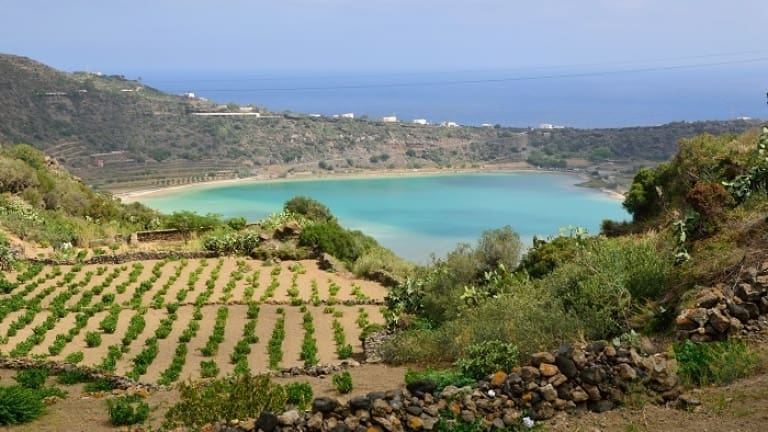
The island is volcanic, brutally windy and dry.
Rainfall is scarce, summers are hot, and vineyards grow on dark volcanic soils composed of lava-derived material, pumice and ash. The vines must survive both drought and strong Mediterranean winds.
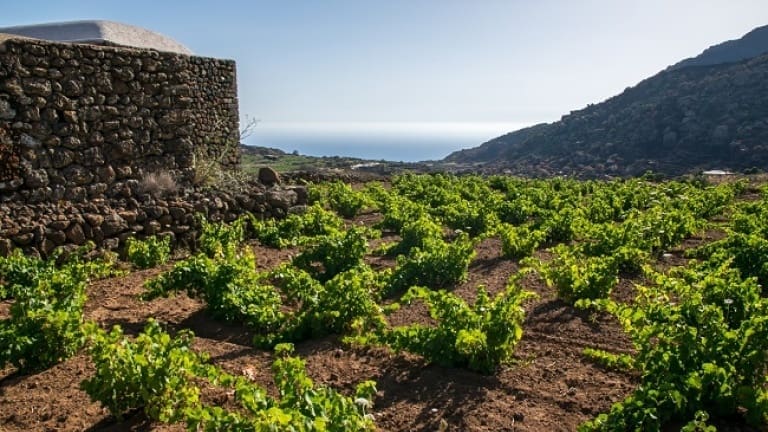
That environment created one of Europe’s most extraordinary vine-training systems: the alberello pantesco.
Each vine is planted inside a shallow depression and trained extremely close to the ground. The shape helps protect shoots and grapes from the wind while allowing the depression to collect and conserve scarce moisture.
In 2014, UNESCO recognised the traditional agricultural practice of cultivating the head-trained vines of Pantelleria as Intangible Cultural Heritage.
This is not picturesque vineyard theatre. It is survival engineering.
Zibibbo and the Pantelleria DOC
Current Pantelleria DOC regulations reserve several key styles exclusively for Zibibbo, including:
Moscato di Pantelleria, Passito di Pantelleria, Moscato Spumante, Moscato Dorato, Moscato Liquoroso, Passito Liquoroso and Pantelleria-Zibibbo Dolce.
The updated disciplinary rules also recognise Pantelleria Bianco, including a frizzante version. Most traditional categories must be produced entirely from Zibibbo; Pantelleria Bianco may contain up to 15% of other authorised white varieties.
This last category is significant because it formally acknowledges something producers had already demonstrated: Pantelleria does not have to mean sweet wine.
Zibibbo can make excellent dry whites.
What Does Zibibbo Taste Like?
The grape is unmistakably aromatic.
Typical notes include:
Fresh grape, orange blossom, jasmine, peach, apricot, mandarin, lemon peel, sage, rosemary and Mediterranean scrub.
What changes dramatically is the texture and concentration.
Dry Zibibbo
A dry Zibibbo usually shows fresh grape, citrus, white peach and flowers, followed by herbs and a slightly bitter almond or citrus-peel finish.
The acidity is rarely razor sharp. What keeps the best wines fresh is the combination of moderate acidity, phenolic grip, saltiness and bitter citrus.
Pantelleria examples often have an almost savoury herbal finish that stops the aromatic fruit from becoming perfumed or obvious.
Skin-Contact Zibibbo
Leave the juice with the skins and the grape changes gear.
Orange peel, tea, dried apricot, herbs and spice become more pronounced, while tannins add structure.
Marco De Bartoli’s Integer Zibibbo is a particularly useful reference. It is 100% Zibibbo from Pantelleria, fermented spontaneously on the skins in open vessels and amphora, then aged for roughly a year on its lees.
This style proves that Zibibbo can deliver far more than simple fragrance.
Passito di Pantelleria
This is where Zibibbo reaches its most famous form.
Selected grapes are harvested and dried under the Pantelleria sun. As water evaporates, sugars, acids and flavours become intensely concentrated.
The dried berries may then be added gradually to fermenting must, depending on the producer and technique.
The resulting wine can contain extraordinary levels of residual sugar, yet the finest examples remain balanced because the sweetness is countered by acidity, bitter citrus, herbs and phenolic grip.
Expect:
Dried apricot, candied orange, date, fig, honey, saffron, raisin, rosemary, caramel and dried Mediterranean herbs.
Donnafugata’s Ben Ryé can approach 200 g/l of residual sugar in some vintages, yet the wine remains remarkably balanced thanks to freshness, bitter citrus, herbs and intense aromatic complexity.
That balance is the difference between great Passito and liquid marmalade.
Moscato di Pantelleria vs Passito di Pantelleria
They are related, but they are not the same wine.
Moscato di Pantelleria is generally lighter, fresher and more directly aromatic. Orange blossom, grape, peach and citrus dominate, with less concentration from dried fruit.
Passito di Pantelleria is richer and denser because dried grapes play a central role. Expect apricot, fig, date, candied citrus, honey and spice.
If Moscato is about fragrance, Passito is about concentration.
Donnafugata’s Kabir, for example, represents the lighter Moscato side of the denomination, while Ben Ryé sits firmly in the intense Passito category.
Zibibbo vs Moscato Bianco
These two grapes belong to the same aromatic family but should not be confused.
Moscato Bianco, or Muscat Blanc à Petits Grains, tends to be more delicate and floral, with orange blossom, sage and fresh grape.
Zibibbo usually has larger berries and produces broader flavours: peach, ripe citrus, apricot and orange preserve.
Moscato Bianco is the grape behind Moscato d’Asti.
Zibibbo is the grape behind Passito di Pantelleria.
The first often works through lightness and perfume. The second is more comfortable with Mediterranean heat, drying and concentration.
Dry Zibibbo Is Worth Taking Seriously
Sweet wine made Zibibbo famous, but modern dry wines have become one of the most interesting parts of the category.
The obvious danger is perfume without structure.
A technically clean Zibibbo can smell spectacular but then collapse on the palate into soft fruit and alcohol. Better producers solve this through low yields, earlier harvesting, old vines, lees ageing, skin contact or restrained oxidative techniques.
Marco De Bartoli’s Pietranera is one benchmark: a dry Pantelleria Bianco DOC made from Zibibbo and served around 10–12°C.
At the more radical end, Integer uses prolonged skin contact and amphora to create a wine with genuine tannic and savoury structure.
This is the side of Zibibbo that deserves more attention.
Can Zibibbo Age?
Most simple dry Zibibbo is best young, generally within two to four years.
More serious examples made from old vines, lees ageing or skin contact can develop for five to eight years, occasionally longer.
Passito is another story.
Top Passito di Pantelleria can age for 15–20 years or more. Fresh apricot and orange gradually become dried fig, date, tobacco, caramel, saffron and nuts.
Good acidity and concentration are essential. A merely sweet wine gets heavier with age; a serious Passito becomes more complex.
Food Pairings

Dry Zibibbo works beautifully with couscous di pesce, grilled prawns, pasta with sardines, bottarga or lightly spiced North African dishes.
Skin-contact examples can handle roast chicken, aubergines, aged cheeses and richer seafood preparations.
Passito di Pantelleria is excellent with blue cheese, almond pastries, pistachio desserts or dark chocolate, but a good mature bottle is often better on its own.
Serving Zibibbo
Serve dry Zibibbo at 10–12°C.
Structured skin-contact wines can go slightly warmer, around 12–14°C, especially if tannins are prominent.
Passito di Pantelleria is best around 12–14°C. Serving it refrigerator-cold flattens the orange, saffron and herbal aromas and exaggerates sweetness.
Most wines do not need decanting. Skin-contact Zibibbo may benefit from 20–30 minutes of air.
How Much Does Zibibbo Cost?
Simple dry Zibibbo from Sicily can start around €10–€15, while more ambitious bottles generally fall between €18 and €30.
Artisanal Pantelleria wines, especially from old vines or involving amphora and skin contact, can reach €30–€50 or more.
Passito pricing needs to be read carefully because many bottles are 375 ml or 500 ml.
Donnafugata Ben Ryé 2023, for example, is currently around €34–€35 for 375 ml, while the 750 ml format sits around €59–€65. Kabir Moscato di Pantelleria is substantially cheaper, with the 375 ml format around €12–€13.
The sweet spot for serious dry Zibibbo is around €18–€30. For Passito, €30–€40 for a half bottle is entirely normal once yields, drying losses and manual labour are taken into account.
Zibibbo Producers to Know
Marco De Bartoli
One of the indispensable names on Pantelleria.
De Bartoli produces several interpretations of Zibibbo, from the dry Pietranera to the skin-contact Integer Zibibbo and the great sweet Bukkuram Padre della Vigna.
The estate’s vineyards in Contrada Bukkuram include old alberello-trained vines on volcanic terraces, and Integer is produced from yields as low as approximately 25 quintals per hectare.
If you want to understand the versatility of Zibibbo, this is one of the producers to study.
Donnafugata
The international reference for modern Passito di Pantelleria.
Ben Ryé combines dried Zibibbo grapes with fermenting must to produce an intensely aromatic wine built around apricot, candied orange, honey and Mediterranean herbs. Current vintages continue to receive strong international scores, while the wine remains widely available compared with many small Pantelleria estates.
Its Kabir is a lighter and less expensive introduction to Moscato di Pantelleria.
Salvatore Murana
A historic Pantelleria specialist whose wines are particularly interesting for anyone wanting to explore the island beyond the largest commercial names.
Murana has built its reputation around multiple expressions of Zibibbo, especially traditional sweet wines where concentration is balanced by the island’s saline, herbal character.
Coste Ghirlanda
An estate worth seeking for contemporary dry interpretations of Pantelleria.
The wines typically place greater emphasis on vineyard character, freshness and restrained winemaking rather than simple aromatic power.
Gabrio Bini – Serragghia
One of the cult names of natural Pantelleria wine.
Bini’s wines are produced from old vines and frequently involve amphora fermentation and extended skin contact. Production is tiny, availability limited and prices much higher than mainstream Zibibbo.
These are not introductory bottles, but they show just how far the grape can travel from conventional Moscato or Passito.
Is Zibibbo Always Sweet?
No.
That misconception survives because Passito di Pantelleria is so famous.
Zibibbo can produce bone-dry white wine, aromatic off-dry wine, skin-contact wine, Moscato and intensely sweet Passito.
The grape supplies aroma.
The winemaker decides what to do with it.
And increasingly, some of the most interesting Zibibbo wines are dry. That range is what makes Zibibbo one of Sicily’s most versatile grapes.

