
La Staffa and Radiz: The €17 Verdicchio That Makes Expensive Whites Look Nervous

Verdicchio is one of Italy’s most convincing answers to the idea that serious white wine must come from Burgundy, the Loire or the Rhine. It can be crisp and uncomplicated, but give it the right vineyard, sensible yields and a little patience in the cellar, and it develops a remarkably substantial personality.
Radiz SP 2024, made in collaboration with Riccardo Baldi of La Staffa, belongs to the more ambitious end of everyday Verdicchio. It comes from an established vineyard in the hills of San Paolo di Jesi and combines the generosity of ripe fruit with lively acidity, a firm savoury backbone and a pleasantly dry finish.
There is no expensive oak, no elaborate cellar treatment and no attempt to transform the wine into something fashionable. At €16.70, it makes a compelling argument for choosing a characterful Marche white over a predictable international variety.
The Basics
- Producer: La Staffa – Riccardo Baldi
- Project: Radiz, in collaboration with Callmewine
- Wine: SP
- Vintage: 2024
- Classification: Verdicchio dei Castelli di Jesi DOC Classico Superiore
- Region: Marche, Italy
- Production area: San Paolo di Jesi, province of Ancona
- Grape: 100% Verdicchio
- Vineyard: A hillside parcel planted in the 1980s
- Altitude: 350 metres
- Soils: Predominantly clay and limestone
- Viticulture: Certified organic
- Harvest: Manual
- Fermentation: Spontaneous, using indigenous yeasts in stainless steel
- Ageing: Concrete tanks, with fine-lees contact
- Oak: None
- Alcohol: 13.5% ABV
- Bottle size: 750 ml
- Serving temperature: 10–12°C
La Staffa: Riccardo Baldi and the Reinvention of Verdicchio
La Staffa is one of the most interesting small wineries in the hills around Staffolo, a medieval village overlooking the Esino Valley. The estate’s origins date to 1992, although its modern identity developed under Riccardo Baldi, who took over the family business while still very young.
Born in 1990, Baldi belongs to a generation of Marche winemakers who have helped overturn the old image of Verdicchio as a pleasant but inexpensive white wine. Rather than chasing international varieties or relying on conspicuous oak, he concentrated on the vineyards surrounding Staffolo and the remarkable potential of Verdicchio.
His approach combines organic farming, careful parcel selection, spontaneous fermentation and a particular preference for concrete.
The winery cultivates twelve hectares, predominantly planted with Verdicchio, across Contrada Castellaretta and nearby vineyard areas. Its wines range from the accessible, energetic Classico Superiore to the more demanding Rincrocca and Selva di Sotto Riservas.
The distinction between these bottles is important. They are not simply the same wine given longer ageing and a more expensive label. Different vineyard selections and maturation regimes produce substantially different expressions of the grape.
La Staffa has developed a reputation for combining concentration with freshness, particularly in wines that preserve Verdicchio’s natural acidity without exaggerating its aromatic character.
This philosophy makes the partnership with Radiz particularly interesting.
Radiz SP: A Collaboration, Not Another La Staffa Label
Radiz is a wine project developed by Callmewine in collaboration with selected Italian producers. Its objective is to offer bottles with a recognisable agricultural identity, relatively low-intervention winemaking and accessible prices.
The SP Verdicchio is produced with La Staffa, but it should not be confused with the winery’s regular Classico Superiore.
The grapes come from a vineyard planted during the 1980s, situated at approximately 350 metres above sea level in the hills of San Paolo di Jesi.
This location gives the wine a specific geographical identity within the wider Castelli di Jesi denomination. The vineyard is not simply a selection from the parcels traditionally associated with La Staffa’s regular bottling around Staffolo.
The wine is made entirely from Verdicchio, with spontaneous fermentation and maturation in neutral vessels. The result pursues freshness and a direct expression of the fruit rather than elaborate ageing.
The collaboration also raises an interesting question about contemporary wine production.
A retailer developing exclusive wines with independent producers is not inherently different from traditional négociant arrangements. What matters is whether the partnership preserves the winemaker’s identity and gives consumers access to a convincing wine at a sensible price.
In this case, the relationship is coherent. Baldi’s preference for organic agriculture, spontaneous fermentation and restrained cellar intervention fits naturally with the Radiz project.
There is no need to invent a romantic story about an undiscovered family vineyard or a forgotten ancient tradition. SP is a contemporary commercial collaboration, and its success depends on the quality of the wine in the glass.
San Paolo di Jesi: The Hills Behind the Wine
San Paolo di Jesi lies in the central part of the Verdicchio dei Castelli di Jesi production area, a landscape of cultivated hills, medieval villages and vineyards extending inland from the Adriatic coast.
The local climate combines Mediterranean influences with the cooling effects of elevation and air moving through the valleys.
Summers provide sufficient warmth for Verdicchio to ripen, while the hills help moderate temperatures and preserve some of the acidity essential to the variety’s balance.
The SP vineyard stands at approximately 350 metres, on predominantly clay-limestone soils.
Clay contributes to water retention, an advantage during periods of summer drought, while limestone-rich formations influence soil structure and the availability of nutrients.
These factors shape vine growth and grape maturity. They do not literally transfer the taste of limestone into the finished wine, despite the frequency with which that idea appears in romantic descriptions of terroir.
The more convincing consequences are found in fruit concentration, acidity and texture.
This is especially important for Verdicchio, a grape capable of developing considerable body while retaining enough freshness to avoid becoming cumbersome.
The denomination’s Classico designation refers to the historic production area rather than a particular level of quality. Superiore indicates a more demanding production category, including a higher minimum alcoholic strength.
SP therefore belongs to a traditional appellation, but its style is decidedly contemporary: a dry, expressive white with a substantial palate, clean acidity and no distracting oak.
Verdicchio: One of Italy’s Most Versatile White Grapes
Verdicchio deserves considerably more international attention than it receives.
Its greatest virtue is the combination of natural acidity, structural potential and a relatively restrained aromatic identity. Unlike Sauvignon Blanc, which can announce itself through unmistakably intense varietal aromas, Verdicchio often reveals its qualities more gradually.
Young examples can be crisp and direct, with moderate body and a characteristic bitter-almond finish. More ambitious wines develop substantial texture and can mature for many years without losing their freshness.
The grape is cultivated principally in two important Marche denominations: Verdicchio dei Castelli di Jesi and Verdicchio di Matelica.
The former occupies a broad area of hills inland from Ancona, where proximity to the Adriatic and variations in elevation create numerous different growing conditions.
Matelica lies farther inland, in a valley with a more pronounced continental influence. Its wines can display a particularly firm structure and a more austere character, although individual producers and vineyards complicate any simple division between the two territories.
The grape’s genetic relationship with Trebbiano di Soave is another interesting detail. Despite the different regional names, the two are regarded as the same variety, evidence of a much wider historical distribution across central and northeastern Italy.
For the drinker, however, the most important characteristic is Verdicchio’s ability to combine freshness with genuine substance.
SP makes good use of that quality. The wine has more body than a basic, inexpensive white, yet it remains sufficiently lively and dry to accompany food without becoming tiring.
The 2024 Vintage and Winemaking
The 2024 growing season in the Marche required careful vineyard management, with rainfall and warm periods creating different conditions across the region.
For Verdicchio, maintaining grape health and selecting the appropriate harvest date were particularly important. Excessive ripeness can produce substantial wines with insufficient freshness, while harvesting too early risks an aggressively acidic, relatively neutral result.
The grapes selected for SP come from an established vineyard whose moderate altitude provides favourable conditions for gradual ripening.
Harvesting is carried out manually, followed by spontaneous alcoholic fermentation in stainless steel using indigenous yeasts.
The wine subsequently matures in concrete tanks, remaining in contact with its fine lees.
This combination is particularly appropriate for Verdicchio.
Stainless steel provides a controlled environment for fermentation, while concrete allows the wine to develop without introducing the aromatic influence of oak.
Lees contact contributes texture and helps soften the impression of acidity, giving the palate greater continuity without relying on residual sugar or heavy barrel maturation.
The absence of wood is a deliberate stylistic choice.
Verdicchio can certainly benefit from oak in more ambitious expressions, but it does not need it to produce a substantial, convincing white.
SP demonstrates that a neutral maturation regime can preserve aromatic precision while allowing the grape’s naturally generous structure to emerge.
The wine is therefore best understood as a relatively youthful, gastronomic Verdicchio, intended to provide immediate pleasure with enough acidity and concentration for a few years of development.
Tasting Notes
Colour: Bright straw yellow with delicate golden reflections.
Bouquet: White peach, lemon peel and broom blossom introduce an expressive, well-defined nose. Fresh thyme and fennel add a delicate herbal character, while a restrained almond nuance gives the aromatic profile a recognisable Verdicchio identity.
Palate: Medium-bodied, fresh and pleasantly substantial, with ripe citrus fruit, lively acidity and a firm savoury backbone. The fine-lees maturation contributes a supple middle palate, while a slight phenolic grip prevents the texture from becoming excessively soft. The wine is more satisfying for its balance and energy than for extraordinary complexity.
Finish: Dry, persistent and distinctly savoury, with citrus peel, a delicate herbal echo and Verdicchio’s characteristic bitter-almond note.
Our Verdict
Radiz La Staffa SP Verdicchio dei Castelli di Jesi Classico Superiore 2024 is a very good white wine, with enough concentration, freshness and character to distinguish it from the crowded category of inexpensive Italian whites.
Its greatest strength is the relationship between acidity and texture. The wine has a generous middle palate, but the structure remains lively, with a firm savoury finish that makes it particularly attractive alongside food.
The use of indigenous yeasts and concrete maturation contributes to the production philosophy, although neither technique should be mistaken for an automatic guarantee of quality. The wine succeeds because its components are well balanced, not because the cellar follows a fashionable interpretation of minimal intervention.
There are limitations.
The aromatic complexity remains moderate, and the wine does not possess the depth or exceptional persistence of La Staffa’s more ambitious Riservas. Its youthful character is appealing, but there is little reason to pretend that it belongs among the great age-worthy Verdicchios of the Marche.
It is also not an especially delicate white. The 13.5% alcohol and substantial texture give it a noticeable presence, although the acidity keeps the overall balance convincing.
That makes SP more interesting than a simple aperitif wine.
It has enough substance for seafood pasta, grilled fish and moderately rich dishes, while its dry, savoury finish gives the palate a pleasantly refreshing conclusion.
A comparison with La Staffa’s regular Classico Superiore is particularly instructive. Both wines share Riccardo Baldi’s preference for organic farming, spontaneous fermentation and relatively neutral maturation, but SP comes from a specifically selected vineyard in San Paolo di Jesi.
It is a different expression of the territory rather than a replacement for the estate’s established label.
There is also a useful stylistic contrast with Fattoria Coroncino’s Verdicchio, which demonstrates how the variety can acquire a more substantial personality when vineyard selection and cellar maturation pursue greater concentration.
Serve at 11–12°C in a medium-sized white-wine glass. Avoid serving it too cold: the wine has enough substance to deserve a little attention.
Price
€16.70.
Food Pairings
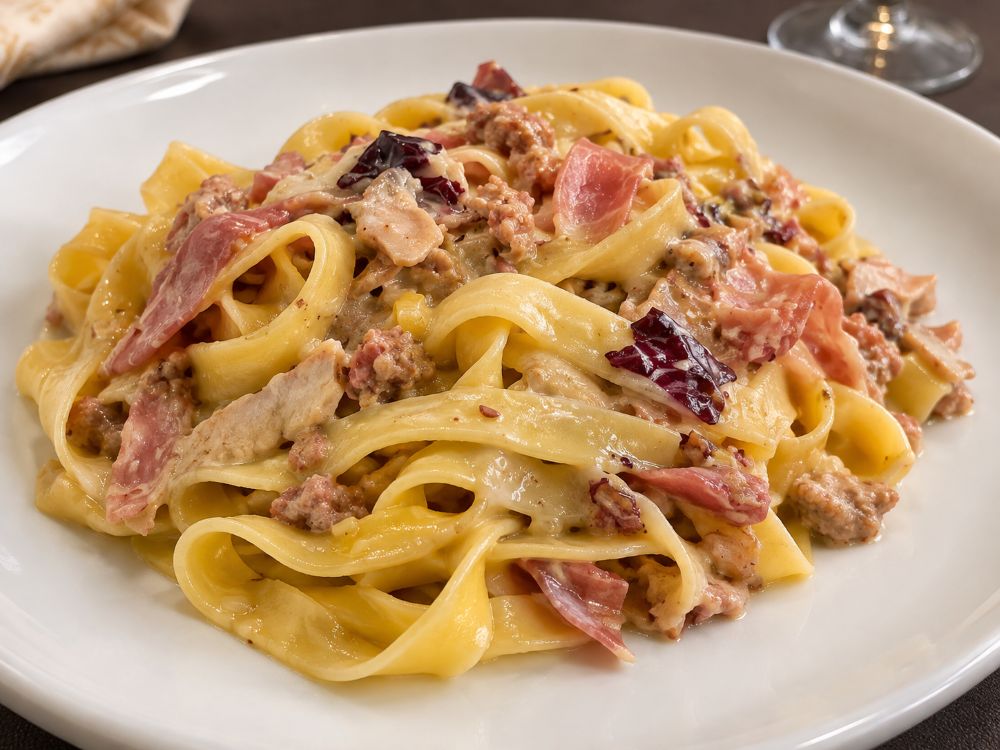
Paella, vitello tonnato, chicken curry, pulled pork, empanadas.

