
Monchiero Carbone Roero Arneis Riserva Vigna Renesio 2016 Review: Ten Years Old and Ready to Challenge Piedmont’s Great Whites
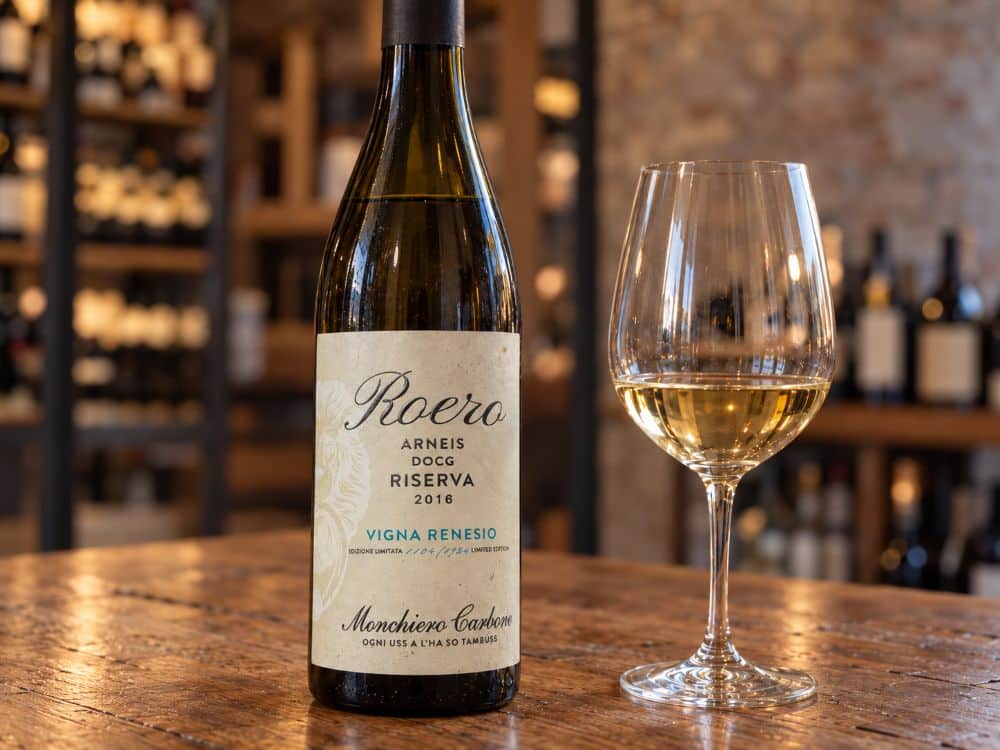
Most Roero Arneis is made for immediate pleasure. Fresh, fragrant and relatively uncomplicated, it is the sort of Piedmontese white that disappears from the table long before anyone starts discussing its ageing potential. Monchiero Carbone’s Vigna Renesio 2016 takes a more ambitious direction.
This limited-edition Riserva comes from one of the most historically important vineyards in Roero, where Arneis has been cultivated for centuries. Rather than releasing the wine after a few months in stainless steel, Francesco Monchiero gives it extended maturation in both wood and steel, pursuing greater depth, complexity and longevity.
The 2016 is particularly significant: it was the inaugural vintage, with just 1,924 numbered bottles produced. Ten years after the harvest, this is a serious, mature white with considerable substance, an assertive personality and enough freshness to challenge the idea that Arneis should always be consumed young.
The Basics
- Producer: Monchiero Carbone
- Wine: Vigna Renesio – Renesio Incisa Riserva
- Vintage: 2016
- Classification: Roero Arneis DOCG Riserva
- Region: Piedmont, Italy
- Production area: Canale, Roero
- Vineyard: Renesio Incisa
- Grape: 100% Arneis
- Vineyard altitude: 250 metres
- Exposure: Southeast
- Soils: Clay and sand
- Vineyard area: 1.5 hectares
- Training system: Guyot
- Harvest: Second half of September
- Ageing: Extended maturation in stainless steel and oak
- Alcohol: 13% ABV
- Production: 1,924 numbered bottles
- Bottle size: 750 ml
- Serving temperature: 12°C
Monchiero Carbone: Four Generations and an Unusual Faith in Arneis
Monchiero Carbone’s history is closely connected with the agricultural families of Canale, one of the principal wine-producing towns in Roero.
The family’s roots reach back to the early twentieth century. In 1918, Clotilde Valente purchased the Mombirone vineyard, beginning a tradition that eventually brought together the Monchiero and Carbone families.
The modern estate took shape under Marco Monchiero and Lucia Carbone, who consolidated their family vineyards and acquired a farmhouse in Canale in 1987.
Their son Francesco joined the business in 1995, bringing formal winemaking training and a particular interest in the relationship between individual vineyards and the wines they produce.
The estate gradually expanded its range, developing ambitious Nebbiolo-based reds alongside several interpretations of Arneis.
That last point is particularly important. Although Roero has achieved international recognition for its white wines, Arneis has often been treated as the easy-drinking alternative to the region’s more prestigious reds.
Monchiero Carbone sees considerably greater potential in the variety.
The regular Recit offers an accessible introduction to Arneis, while Cecu d’la Biunda explores additional concentration and personality. Renesio Incisa represents the most ambitious expression, with a production philosophy based on extended maturation and a much longer drinking window.
The vineyard was acquired in 2005, but Francesco Monchiero did not release the first Renesio Incisa until the 2016 vintage.
That decision says something about the seriousness of the project. Rather than immediately turning a famous vineyard name into another commercial label, the estate developed a wine intended to demonstrate what mature Arneis can achieve.
The result is not merely an expensive version of its everyday white. It belongs to a different stylistic category.
Renesio Incisa: The Vineyard That Helped Give Arneis Its Identity
Renesio is one of the historic vineyard areas of Canale, and its name has a particularly important connection with the history of Arneis.
Historical references to the variety in Roero are closely associated with this territory. Renesio therefore represents more than an attractive vineyard designation: it belongs to the agricultural history through which Arneis developed its regional identity.
Monchiero Carbone’s parcel lies within the Renesio Incisa geographical mention, at an altitude of 250 metres.
The vineyard faces southeast and occupies soils composed predominantly of clay and sand, a combination characteristic of several parts of Roero.
These soils contribute to a growing environment very different from the heavier marl formations found across much of the nearby Langhe.
The sandy component encourages drainage, while clay helps retain moisture and supports the vines during warmer periods. Exposure provides sufficient sunshine for Arneis to reach maturity, while the site’s position allows the producer to pursue a more structured style without relying on excessive ripeness.
The vineyard covers approximately 1.5 hectares, and the vines are trained using the Guyot system.
For the 2016, only 1,924 numbered bottles were released.
The production figure is significant, but not because scarcity automatically makes a wine better. What matters is the possibility of selecting fruit from a clearly defined site and following its evolution through a more demanding maturation programme.
Renesio Incisa is ultimately an argument for treating white-wine vineyards in Roero with the same seriousness traditionally reserved for great Nebbiolo sites.
Arneis: The Difficult Grape That Refuses to Stay Young
Arneis is one of Piedmont’s most distinctive indigenous white varieties.
Its modern reputation rests largely on fragrance, moderate acidity and an attractive balance between fruit and savoury character. It produces excellent everyday wines, but its relative lack of natural acidity can make prolonged ageing more demanding than with varieties such as Riesling or certain expressions of Chardonnay.
This is where vineyard selection and harvest timing become crucial.
Picking too late can produce a broad, alcoholic wine that loses freshness before developing meaningful complexity. Harvesting at the appropriate moment allows the producer to preserve structural tension while achieving the concentration required for maturation.
Renesio Incisa explores precisely that possibility.
The grapes are harvested during the second half of September, and the wine spends several years developing before release.
The result challenges the familiar image of Arneis as a simple, youthful white.
It is also an interesting counterpoint to the red wines of Roero, where Nebbiolo has traditionally attracted most of the attention given to serious ageing potential.
Arneis does not possess Nebbiolo’s formidable tannic structure, naturally. Its longevity depends instead on balance, concentration, phenolic character and careful protection from oxidation.
The finest examples gradually develop a richer texture and a more complex aromatic personality, acquiring an almost gastronomic dimension that makes them particularly versatile at the table.
Renesio Incisa belongs to this smaller, more ambitious category.
The 2016 Vintage: A Strong Foundation for Long Ageing
The 2016 growing season is remembered as an excellent vintage across much of Piedmont, particularly for its favourable late-season conditions.
After a relatively slow start, the summer provided sufficient warmth for ripening, while cooler nights towards harvest helped preserve freshness and aromatic definition.
The resulting conditions were well suited to producers seeking concentration without excessive sugar accumulation.
For Arneis, this balance was especially valuable.
The grape’s naturally moderate acidity requires careful handling, and the combination of ripe fruit and adequate freshness is essential when the wine is destined for extended maturation.
Monchiero Carbone selected the 2016 harvest for the inaugural Renesio Incisa, establishing the style of a wine designed to develop over many years rather than reveal everything immediately after bottling.
The choice has proved important for the identity of the label.
Ten years after the vintage, Renesio Incisa retains substantial structure while showing the more mature aromatic character expected from a white wine that has undergone extended development.
It has moved beyond the simple freshness of youthful Arneis and entered a more complex phase, where texture, savoury depth and persistence become increasingly important.
How Renesio Incisa Is Made
The production of Renesio Incisa is based on a relatively straightforward principle: allow carefully selected Arneis to mature slowly before introducing it to the market.
The grapes come exclusively from the Renesio Incisa vineyard, and the wine undergoes a prolonged maturation programme involving both stainless steel and oak.
The combination of materials is deliberate.
Stainless steel provides a neutral environment that protects the wine’s original aromatic character, while oak allows a different pattern of maturation and contributes to its textural development.
Unlike heavily barrel-fermented Chardonnay, Renesio Incisa does not depend on conspicuous toasted wood or buttery richness to establish its identity.
The objective is to develop a more substantial, complex expression of Arneis without obscuring the variety’s characteristic savoury personality.
The wine remains in the cellar for several years before release, a strategy that distinguishes it from more conventional Roero Arneis bottlings.
It is a demanding choice for a producer. Extended maturation ties up cellar space and capital, while the wine must retain sufficient freshness to justify the additional time.
For the 2016, that ambition is particularly interesting because the wine was conceived as a demonstration of the ageing potential of Arneis rather than a straightforward commercial extension of the range.
The result is a mature white whose identity rests on the relationship between fruit concentration, measured oak influence and gradual development.
Tasting Notes
Colour: Intense straw yellow with golden reflections, retaining an attractive brightness.
Bouquet: Ripe citrus, dried apricot and aromatic herbs emerge alongside white pepper and a delicate almond note. With aeration, more mature suggestions of beeswax and dried flowers add complexity. The aromatic profile is generous and expressive, without excessive oak.
Palate: Broad, substantial and remarkably fresh for a ten-year-old Arneis. The texture is supple, with good concentration and a pronounced savoury character. Acidity provides a welcome counterpoint to the wine’s richness, while a delicate phenolic grip adds definition. The balance is persuasive, although the substantial middle palate makes this a rather different proposition from the crisp, uncomplicated Arneis usually served as an aperitif.
Finish: Long, dry and slightly bitter, with persistent savoury notes and an attractive sense of maturity.
Our Verdict
Monchiero Carbone Renesio Incisa 2016 is a fascinating white wine, not simply because it has survived ten years, but because its maturity reveals a more ambitious expression of Arneis.
Its greatest strength is the combination of depth and freshness. The wine has considerable substance, yet its structure remains precise enough to sustain the weight of the mature fruit.
The aromatic development is particularly appealing, with a progression from ripe fruit towards more savoury, complex nuances. There is no need for extravagant oak or excessive concentration: the wine achieves much of its personality through vineyard selection and prolonged maturation.
There are limitations.
Its texture is fairly broad, and the finish retains a slightly bitter, phenolic character that will not appeal to everyone. It also lacks the cutting acidity that allows great Riesling to remain almost impossibly youthful after decades in bottle.
But that comparison would miss the point.
Renesio Incisa is not attempting to imitate a German Riesling or a great white Burgundy. It is an original interpretation of a Piedmontese grape whose potential has too often been judged exclusively through young, inexpensive wines.
The distinction becomes particularly clear when compared with a straightforward Roero Arneis such as Maurizio Abbona’s Tistin, whose appeal lies in immediate drinking pleasure rather than extended maturation.
Monchiero Carbone pursues greater complexity, depth and longevity, accepting a more substantial texture in exchange.
At ten years from the harvest, the 2016 is in an excellent drinking phase. The wine has developed the maturity that its producer intended, while retaining enough energy to support further evolution.
There is no urgency to open every remaining bottle, although another five years of ageing would be a matter of personal preference rather than necessity.
Serve at 12°C in a generous white-wine glass. Allow the wine a little time to develop after pouring, but avoid excessively low temperatures that would suppress its mature complexity.
Renesio Incisa 2016 is an outstanding example of what Arneis can become when treated as a serious ageing wine. Its character is distinctive, its maturation convincing and its limited production justified by the ambition behind the bottle. At €44.90, it is a particularly interesting purchase for anyone who enjoys mature Italian whites.
Price
€44.90.
Food Pairings
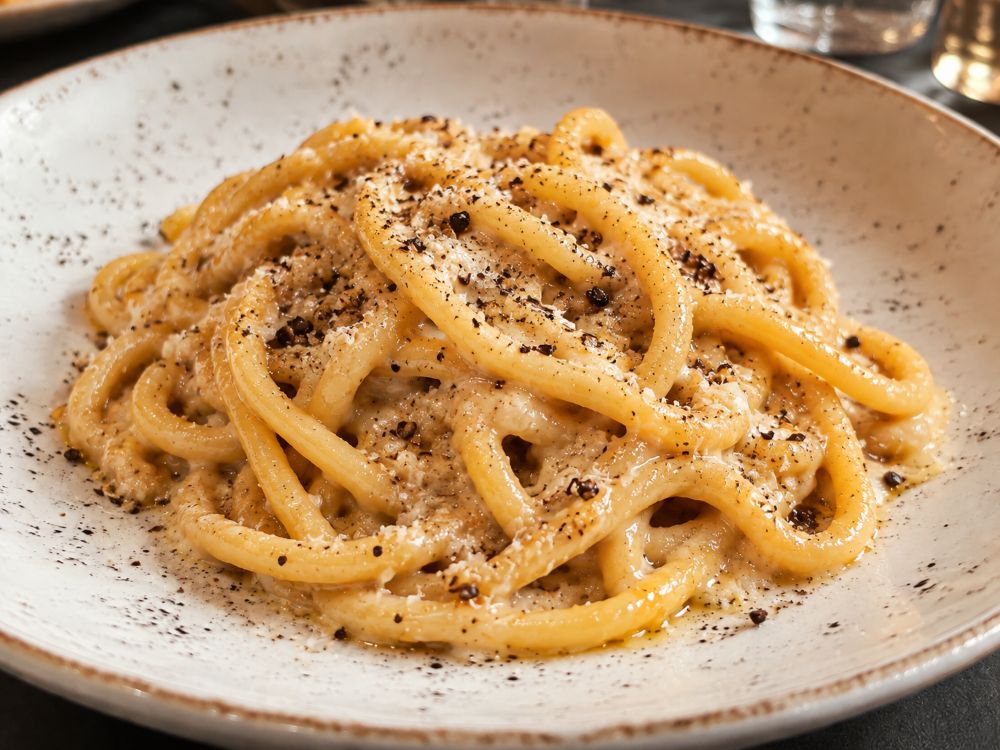
Paella, vitello tonnato, chicken curry.

