
Cherry Brandy: Is It Really Brandy? Inside the World of Cherry Liqueurs

Cherry Brandy has one of the most misleading names in the spirits world. Order a brandy and you would normally expect a dry distillate, often matured in oak. Order Cherry Brandy and you are much more likely to receive a sweet, ruby-red cherry liqueur, made by extracting fruit flavours into alcohol and adding sugar. The distinction is fundamental, yet the name has survived for centuries and remains a familiar ingredient in some of the world’s best-known cocktails.
The category has a remarkable history. Cherry Heering, founded in Copenhagen in 1818, became an international success long before modern cocktail culture developed. In Italy, the Luxardo family built its reputation around the marasca cherries of Dalmatia, eventually creating the dark, intensely flavoured liqueur now known as Sangue Morlacco. Dutch producers such as Bols and De Kuyper helped establish Cherry Brandy as a standard ingredient in European bars.
Despite that heritage, the product is frequently confused with Kirsch, Maraschino and fruit-infused brandy. They all involve cherries, but the raw materials, production techniques, sweetness and flavour profiles can be very different.
Cherry Brandy is best understood as a family of cherry-flavoured liqueurs rather than a single, rigidly defined recipe. The finest examples balance ripe fruit, acidity, controlled sweetness and the subtle almond-like aromas associated with cherry stones, creating a spirit that is as useful in cocktails as it is alongside chocolate and desserts.
The Basics
- Category: Cherry liqueur, traditionally called Cherry Brandy
- Historical centres: Denmark, the Netherlands, Italy and other European fruit-growing regions
- Principal fruits: Sweet cherries and sour cherries
- Important varieties: Marasca, Stevns and other locally selected cherries
- Alcohol base: Agricultural alcohol, fruit distillate, brandy or combinations, depending on producer
- Production: Fruit maceration, infusion, blending and sometimes distillation or wood maturation
- Minimum alcohol under EU liqueur rules: 15% ABV
- Typical strength: Approximately 20–30% ABV
- Sweetness: Usually medium-sweet to sweet, balanced by cherry acidity
- Colour: Ruby red to deep mahogany
- Characteristic aromas: Cherry, sour cherry, almond, dried fruit, spice and subtle oak
- Important producers: Cherry Heering, Luxardo, Bols and De Kuyper
- Classic cocktails: Singapore Sling and Blood & Sand
- Best serving temperature: Approximately 12–16°C when served neat
What Is Cherry Brandy?
Cherry Brandy is traditionally a sweet alcoholic preparation flavoured with cherries or sour cherries. Despite the word brandy, the finished drink is generally classified as a liqueur, not as a conventional fruit spirit.
Its production can involve macerating whole cherries, cherry juice or other fruit material in alcohol, followed by sweetening and blending. Some producers incorporate cherry distillate, wine brandy or other aromatic components, while others rely principally on fruit extraction.
The name developed through historical commercial usage, when the boundaries between fruit brandies, cordials and liqueurs were less clearly defined than they are today.
Under European Regulation 2019/787, Cherry Brandy is specifically recognised as an established compound term used for certain liqueurs. The word liqueur must appear alongside the compound name under the relevant labelling provisions.
The distinction matters because a bottle labelled Cherry Brandy should not automatically be treated as a dry spirit distilled exclusively from fermented cherries.
For drinkers and bartenders, the most important information is whether the bottle contains a sweet cherry liqueur or a genuine unsweetened cherry distillate. They perform very different roles in a cocktail.
The History of Cherry Brandy
Cherry-flavoured alcoholic drinks have deep roots in European fruit-growing regions.
Cherries were preserved in wine, spirits and sweetened preparations long before industrial liqueur production developed. Alcohol provided a means of extracting flavour and preserving highly perishable fruit, while sugar helped create the rich cordials and ratafias popular in European households.
During the seventeenth and eighteenth centuries, fruit liqueurs became increasingly sophisticated. Distillers worked with different cherry varieties, incorporating stones, herbs and spices to create more complex aromatic profiles.
Northern and central Europe developed strong traditions of cherry-based alcohol, while the eastern Adriatic became particularly associated with the aromatic marasca cherry.
By the nineteenth century, Cherry Brandy had become an internationally traded product. Its growth coincided with advances in glass bottling, commercial distillation and the expanding European trade in luxury alcoholic beverages.
The category eventually found an important second life in cocktail bars, where its combination of fruit, sweetness, acidity and colour made it especially useful.
Cherry Heering: The Danish Bottle That Made Cherry Brandy Famous
The history of commercial Cherry Brandy cannot be separated from Peter Frederik Heering, who established his business in Copenhagen in 1818.
Heering developed a cherry liqueur that became an important Danish export, reaching international markets through the commercial shipping networks of the nineteenth century.
The brand’s success was built around real cherries and a relatively complex preparation involving fruit extraction, botanicals and maturation. Rather than tasting simply of added cherry flavour, the traditional profile combines ripe fruit, gentle bitterness, almond-like notes and warm spice.
Cherry Heering became closely associated with international cocktail culture, eventually appearing in recipes such as the Singapore Sling and Blood & Sand.
The brand is now part of the De Kuyper group, but its historic Danish identity remains central.
Its importance extends beyond commercial success: Cherry Heering helped establish the flavour profile that bartenders still expect when a classic recipe specifies Cherry Brandy.
Italy, Dalmatia and the Marasca Cherry
The Italian contribution to Cherry Brandy is closely associated with the marasca cherry, a small, intensely flavoured sour cherry historically cultivated around the Adriatic.
Marasca cherries are prized for their dark colour, pronounced acidity and concentrated aroma. They provide an excellent foundation for liqueurs because their tartness can balance substantial quantities of sugar without allowing the result to become flat.
The most important name is Luxardo, founded in Zara, Dalmatia, in 1821 by Girolamo Luxardo. At the time, Zara was under Austrian administration; today the city is Zadar, Croatia.
The company became internationally famous for Maraschino, but cherry liqueurs were also part of its historic production.
Following the Second World War, Luxardo re-established its operations in Torreglia, near Padua, preserving its association with marasca cherries.
Its most distinctive dark cherry liqueur is Sangue Morlacco, a product whose name and history reflect the complicated cultural identity of the eastern Adriatic.
Sangue Morlacco: A Different Interpretation of Cherry Brandy
Luxardo Sangue Morlacco is one of the most characterful examples of the category.
Originally associated with the tradition of marasca ratafia, the liqueur takes its modern name from Gabriele D’Annunzio, who used the expression Sangue Morlacco during the Fiume period in 1919.
The production begins with marasca cherries. Part of the freshly pressed juice undergoes fermentation before alcohol is added, and the liquid is matured in oak before being transformed into the finished liqueur.
The result is deep red, intensely fruity and distinctly tart, with substantial texture and a persistent cherry character.
At 30% ABV, Sangue Morlacco is stronger than many mainstream cherry liqueurs and has enough structure to work both neat and in cocktails.
Its flavour is especially effective with dark chocolate, where the acidity of marasca cherries helps counterbalance cocoa’s bitterness and richness.
Sweet Cherries vs Sour Cherries
The choice of fruit is one of the most important factors in Cherry Brandy production.
Sweet Cherries
Sweet cherries belong principally to Prunus avium.
They can offer ripe red fruit, soft floral aromas and relatively gentle acidity.
When used in liqueurs, their natural flavour may require careful balancing because added sugar can easily create an excessively soft or confectionary profile.
Sour Cherries
Sour cherries belong to Prunus cerasus.
They generally contain more pronounced acidity and can produce darker, more concentrated flavours.
Marasca cherries, Morello cherries and other sour varieties are particularly suitable for liqueurs where sweetness must be balanced by freshness.
Sour-cherry liqueurs often display greater intensity and a more persistent finish than products based on mild sweet cherries, although fruit quality and production technique remain decisive.
Why the Variety Matters
Cherry Brandy depends on more than a recognisable cherry aroma.
The best examples combine fruit concentration, acidity, controlled sweetness and subtle bitterness.
A sour-cherry base makes that balance easier to achieve, which helps explain the historical importance of varieties such as Marasca and Stevns.
How Cherry Brandy Is Made
There is no single compulsory production method for every Cherry Brandy, but traditional examples generally follow several important stages.
1. Selecting and Preparing the Fruit
Fresh cherries are harvested when their flavour and sugar-acid balance are suitable for extraction.
The fruit may be crushed, pressed or used whole, depending on the recipe.
Some producers retain the stones during part of the process, allowing almond-like aromatic compounds to influence the finished liqueur.
The quality of the fruit is critical. Distillation or added sugar cannot fully compensate for weak, damaged or poorly selected cherries.
2. Maceration and Infusion
Cherries may be steeped in agricultural alcohol, brandy or another suitable alcoholic base.
Alcohol extracts colour, volatile aromas and other compounds from the fruit.
The duration can vary considerably, from relatively short controlled extractions to prolonged maceration.
Some producers also work with pressed cherry juice or partially fermented fruit.
The extraction method strongly affects texture and flavour. A long maceration may produce deeper colour and more intense fruit character, but excessive extraction can introduce unwanted bitterness.
3. Fermentation
Not every Cherry Brandy involves fermenting the cherries.
In some traditional recipes, however, cherry juice or fruit material undergoes partial fermentation before being fortified or further processed.
Fermentation transforms sugars into alcohol and creates additional aromatic compounds.
This can contribute greater complexity than a simple mixture of neutral alcohol, sugar and cherry flavour.
Luxardo Sangue Morlacco is an example of a cherry liqueur in which fermentation forms part of the production process.
4. Distillation and Blending
Some producers incorporate cherry distillate, Kirsch or brandy into the final blend.
Others use fruit maceration as the principal source of flavour without distilling the entire preparation.
The choice determines whether the finished liqueur emphasises fresh fruit, fermented cherry aromas, almond-like stone notes or the warmth of the underlying spirit.
Blending allows the producer to adjust strength, sweetness and aromatic balance.
5. Sweetening and Maturation
Sugar is essential to the identity of Cherry Brandy as a liqueur.
It contributes texture, rounds the acidity and makes the concentrated cherry flavour more approachable.
Some traditional preparations also undergo a period of maturation in oak or neutral vessels, allowing fruit and alcoholic components to integrate.
Wood can introduce subtle vanilla or spice, but it should not overwhelm the cherries.
The finest Cherry Brandies retain enough acidity and fruit intensity to remain lively despite their sweetness.
Why Cherry Stones Can Smell Like Almonds
One of Cherry Brandy’s most recognisable secondary aromas is bitter almond.
This is associated with compounds found in the kernels inside cherry stones, particularly those capable of releasing benzaldehyde, the molecule responsible for much of the familiar almond-like aroma.
The effect can be subtle, suggesting marzipan or toasted nuts, or more pronounced in liqueurs deliberately designed around stone-fruit character.
Traditional production methods sometimes include crushed stones to obtain this aromatic dimension.
However, cherry kernels also contain cyanogenic compounds, which can release hydrogen cyanide under certain conditions. Commercial producers must control extraction and composition to comply with food-safety requirements.
Almond notes are therefore desirable only when achieved through carefully managed production. The technique should not be confused with the uncontrolled use of crushed fruit stones in homemade spirits.
What Does Cherry Brandy Taste Like?
A traditional Cherry Brandy generally opens with ripe cherries, sour-cherry juice, almond and delicate spice.
The palate is sweet and rounded, often with a substantial fruit concentration and a texture approaching that of a syrup.
Acidity is essential to balance.
A well-made expression should offer enough freshness to prevent the sugar from dominating, while subtle bitterness or almond-like notes provide additional structure.
Some products emphasise bright red fruit, while others move toward black cherry, dried fruit, chocolate and warm spices.
The finish can range from soft and confectionary to surprisingly persistent and tart.
The most important distinction is between a liqueur that tastes convincingly of cherries and one dominated by sweetness and generic flavouring.
Cherry Brandy vs Kirsch
Kirsch, also called Kirschwasser, is a genuine cherry spirit rather than a sweet cherry liqueur.
It is traditionally made by fermenting cherries and distilling the resulting fruit mash.
Under European regulations, cherry spirit must satisfy the requirements governing fruit spirits, including a minimum alcoholic strength of 37.5% ABV.
Kirsch is generally clear, dry and substantially stronger in alcoholic impression than Cherry Brandy.
Its aroma can include cherry fruit, almond, floral notes and gentle spice, but without the pronounced sugar content of a liqueur.
Kirsch is particularly important in central European distilling traditions, especially around the Black Forest, Switzerland and Alsace.
The two products are not interchangeable in recipes.
Replacing Cherry Brandy with Kirsch removes sweetness and fruit concentration, while using Cherry Brandy instead of Kirsch can make a dish or cocktail excessively sweet.
Cherry Brandy vs Maraschino
Maraschino is another cherry liqueur, but its production and sensory identity differ significantly from dark Cherry Brandy.
Traditional Maraschino is closely associated with the marasca cherry and the Adriatic coast.
Luxardo Maraschino Originale, for example, is produced by infusing marasca cherries, including selected plant material, in alcohol before distillation in copper stills.
The distillate is rested in ash-wood vats and sweetened before bottling at 32% ABV.
Unlike dark Cherry Brandy, Maraschino is clear.
Its aromatic profile emphasises cherry stones, almond, floral notes, subtle bitterness and a dry-edged sweetness rather than the concentrated red-fruit character of a cherry syrup.
Maraschino is therefore essential in cocktails such as the Aviation, Last Word and Hemingway Daiquiri, where replacing it with dark Cherry Brandy would alter both flavour and appearance.
Cherry Brandy vs Cherry Liqueur
In modern commercial usage, Cherry Brandy and cherry liqueur frequently describe essentially the same type of drink.
The difference is often historical or related to marketing rather than a separate technical category.
Under European rules, Cherry Brandy is an established compound term for liqueurs made according to certain traditional methods.
The terminology should not imply that every bottle contains grape brandy.
Some products do incorporate brandy or fruit distillate, while others are based largely on neutral agricultural alcohol.
The label and production information provide more useful guidance than the word brandy alone.
Cherry Brandy vs Ginjinha
Ginjinha, also called ginja, is a Portuguese sour-cherry liqueur particularly associated with Lisbon and Óbidos.
It is made by macerating sour cherries in alcohol with sugar and sometimes additional ingredients.
The result can resemble Cherry Brandy in its dark colour and intense fruit character.
However, ginjinha has its own Portuguese drinking tradition and may be served with whole cherries in the glass.
The categories overlap technically but remain culturally distinct.
A good ginjinha usually emphasises the tartness of sour cherries, often with a relatively direct, lightly bitter finish.
The Most Important Cherry Brandy Producers
Cherry Heering
Cherry Heering remains one of the historic reference points for the category.
Founded in Copenhagen in 1818, it became internationally famous through export markets and classic cocktail recipes.
Its profile combines ripe cherry fruit, gentle almond-like notes, spice and substantial sweetness.
For anyone preparing traditional Singapore Slings or Blood & Sand cocktails, it is an especially relevant bottle.
Luxardo Sangue Morlacco
Sangue Morlacco is a rich Italian interpretation based on marasca cherries.
At 30% ABV, its dark colour, intense sour-cherry character and substantial texture make it particularly effective in cocktails requiring concentrated fruit flavour.
It is also convincing as an after-dinner liqueur alongside dark chocolate.
Bols Cherry Brandy
Bols Cherry Brandy is a Dutch liqueur designed to deliver pronounced cherry flavour with an almond-like accent.
The modern bottling is 24% ABV and incorporates cherry juice, cherry-kernel character and a brandy component.
Its vivid ruby colour and relatively accessible style make it useful in long drinks and classic cocktails.
De Kuyper Cherry Brandy
De Kuyper is another historic Dutch producer associated with cherry liqueurs.
Its Cherry Brandy range has included expressions made with marasca cherry flavour and Kirsch, creating a sweet, fruit-driven style suitable for mixing.
Product composition and alcoholic strength can differ between markets, so the exact bottling matters.
How Much Does Cherry Brandy Cost?
Cherry Brandy generally remains more affordable than mature grape brandies and many premium fruit spirits.
Entry-level European liqueurs commonly cost approximately €12–€18 for 70 cl. Bols Cherry Brandy, for example, is sold at around €14 for 70 cl.
More traditional or premium products such as Luxardo Sangue Morlacco and Cherry Heering often occupy a higher price range, depending on market and bottle size.
For cocktail use, price should not be the only consideration. A cheaper liqueur with insufficient fruit concentration may require larger quantities, making drinks excessively sweet.
A better Cherry Brandy often delivers more flavour from a smaller measure.
Cherry Brandy in Classic Cocktails
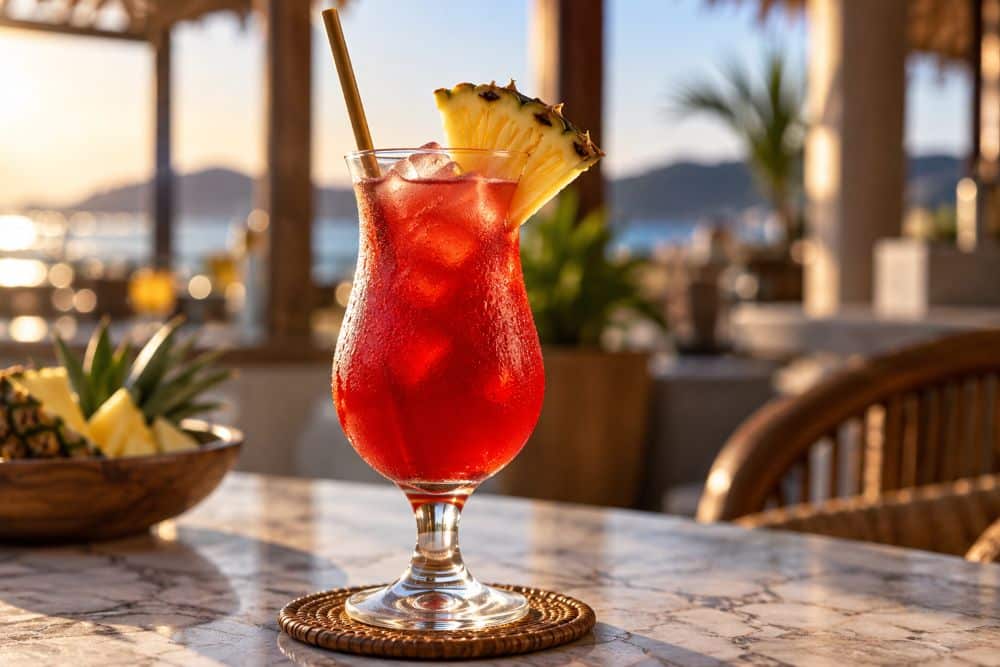
Cherry Brandy played an important role in the development of international cocktail culture.
Its combination of colour, sweetness, acidity and fruit made it particularly valuable in mixed drinks built around gin, whisky and citrus.
Two cocktails demonstrate its versatility especially well.
Singapore Sling
The Singapore Sling is one of the most famous cocktails associated with Cherry Brandy.
Its history developed within the colonial drinking culture of Singapore during the early twentieth century, particularly around gin-based slings served in hotels and clubs.
The modern drink is strongly associated with the Raffles Hotel and bartender Ngiam Tong Boon, traditionally credited with creating it around 1915. Earlier references to cherry-brandy slings show that the recipe evolved through a broader drinking tradition rather than appearing fully formed in a single moment.
A contemporary Singapore Sling generally includes gin, cherry liqueur, Bénédictine, orange liqueur, pineapple juice, lime and bitters.
Cherry Brandy contributes fruit, colour and sweetness, balancing the botanical intensity of gin and the herbal character of Bénédictine.
Blood & Sand
The Blood & Sand is a classic Scotch whisky cocktail associated with the 1920s and named after the film starring Rudolph Valentino.
The drink combines Scotch whisky, sweet vermouth, orange juice and Cherry Brandy.
Its proportions vary, but the combination works because cherry fruit softens the whisky while orange juice provides acidity and sweet vermouth adds herbal depth.
Using a strongly flavoured Cherry Brandy is important. A weak cherry liqueur can disappear behind the whisky and vermouth.
The cocktail is particularly revealing because it demonstrates how Cherry Brandy can add complexity without requiring a large quantity.
Other Cocktails Worth Making
Cherry Brandy Sour
Combine 50 ml Cherry Brandy, 25 ml fresh lemon juice and 10 ml simple syrup, adjusting the additional sugar according to the sweetness of the liqueur.
Shake with ice and strain into a chilled glass.
The acidity is essential because Cherry Brandy already contains considerable sweetness.
Cherry Brandy Highball
Mix 40 ml Cherry Brandy with chilled soda water and a squeeze of lemon.
The result is lighter and more refreshing than drinking the liqueur neat.
Cherry Old Fashioned
Add 10–15 ml Cherry Brandy to bourbon or rye whisky with aromatic bitters.
The liqueur can replace part of the usual sweetener while introducing dark fruit and subtle almond notes.
Use a restrained quantity to preserve the whisky’s structure.
How to Drink Cherry Brandy
Cherry Brandy can be enjoyed neat, lightly chilled or over ice.
A serving temperature around 12–16°C generally preserves the fruit aromas while reducing the perception of sweetness.
Over ice, dilution can make the liqueur more refreshing, particularly when the original product is rich and syrupy.
For tasting, use a small glass and avoid excessive chilling.
Food Pairings
Cherry Brandy is particularly effective with desserts containing chocolate, almonds and dark fruit.
Try dark chocolate fondant with sour-cherry compote, Black Forest gâteau, or almond frangipane tart with roasted cherries. The fruit’s acidity balances cocoa bitterness, while the almond-like notes complement pastry and nuts.
For cheese, choose Gorgonzola Piccante, Stilton and aged Gouda. Their salt and savoury depth provide the contrast needed to prevent the liqueur’s sweetness from becoming excessive.
Cherry Brandy in Desserts and Pastry
Cherry Brandy has long been useful in European pastry because it can reinforce fruit flavour without requiring large quantities of fresh cherries.
It can be incorporated into chocolate fillings, fruit sauces, sponge cakes and desserts featuring almonds.
However, its sweetness must be considered carefully.
When used in a dessert already containing substantial sugar, a small quantity is generally sufficient.
Kirsch is often preferable when the objective is a dry cherry aroma without additional sweetness, while Maraschino provides a more pronounced almond-like character.
Dark Cherry Brandy is most effective when the dessert benefits from concentrated fruit flavour and a deep red colour.
Does Cherry Brandy Improve with Age?
Most Cherry Brandy is designed to be consumed after bottling and does not improve significantly through extended storage.
Some producers mature their liqueurs before bottling, allowing fruit, alcohol and oak-derived compounds to integrate.
Once bottled, however, the product is relatively stable.
How to Choose a Good Cherry Brandy
The first consideration is the raw material.
A product clearly associated with genuine cherries or sour cherries generally provides a more convincing foundation than one relying primarily on generic fruit flavouring.
Acidity is especially important.
Cherry Brandy should be sweet, but the fruit must remain recognisable beneath the sugar.
For classic cocktails, choose a liqueur with sufficient concentration to remain perceptible alongside whisky, gin, citrus and vermouth.
Cherry Heering is an important traditional reference, while Luxardo Sangue Morlacco offers a distinctly tart and concentrated marasca character.
Bols and De Kuyper provide more accessible alternatives for mixed drinks.
How to make cherry brandy at home: the recipe

As previously stated, Cherry Brandy is made by macerating cherries in wine distillate or brandy. In theory, the fruit’s maceration releases sweetness and flavors, so not much sugar is required to sweeten. Maybe you can flavor it with cinnamon, nutmeg or vanilla. Of your choice.
Take 2 liters of brandy and put 600 grams of fresh cherries in it, then add a cinnamon stick, sealed in an amphora (joking) or in a container that you can hermetically seal and leave to macerate for 2 months. Drain, filter, and bottle the cherry brandy after adding 100 grams of sugar syrup. Shake and let it rest for 7 days, and then it’s ready. Obviously, cherries are not to be thrown away, but they should be eaten immediately or preserved in alcohol: in any case, they are delicious, so don’t throw them away.

