Directions

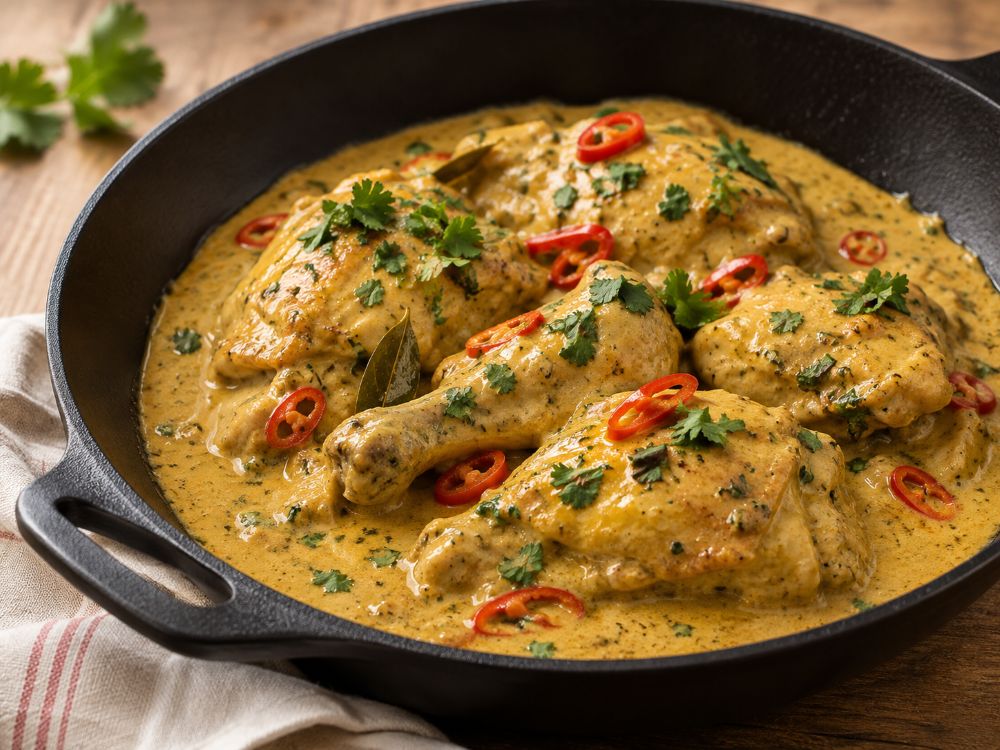
There are chicken curries that demand a cupboard full of spices, three different pans and most of your afternoon. This isn’t one of them. Creamy chicken curry is all about juicy chicken, a generous splash of coconut milk and a golden sauce so velvety you’ll want to spoon it over everything on your plate. A little fresh chilli adds heat, coriander brings a fragrant finish, and the whole thing comes together in one pan.
The trick is to use bone-in chicken thighs and drumsticks, let the onions soften properly and simmer everything gently until the meat is tender. Garlic, ginger, curry powder and a pinch of cumin give the sauce its warm, aromatic character, while coconut milk makes it wonderfully smooth without needing flour or heavy cream.
This is a simple, Indian-inspired chicken curry rather than a strictly traditional regional recipe. No chunky vegetables, dried fruit or unnecessary extras: just succulent chicken coated in a rich, fragrant sauce. Serve it with basmati rice or warm naan, and don’t expect leftovers.
Ingredients for 4 People
Preparation time: 15 minutes
Cooking time: 50 minutes
Total time: 1 hour 5 minutes
Difficulty: Easy
Servings: 4
Calories per serving: 510 kcal
Cost per serving: €4.00
- 1.2 kg bone-in chicken thighs and drumsticks, skin removed
- 300 ml full-fat coconut milk
- 150 g yellow onion
- 3 garlic cloves
- 15 g fresh ginger
- 15 g mild or medium curry powder
- 1 teaspoon ground cumin
- ½ teaspoon ground turmeric
- ½ teaspoon ground coriander
- 1 small red chilli, plus extra for garnish
- 15 g vegetable oil or extra virgin olive oil
- 100 ml chicken stock, preferably low in salt
- 15 ml fresh lime juice
- 10 g fresh coriander leaves
- ½ teaspoon fine salt, plus more if needed
- Freshly ground black pepper
- 1 bay leaf, optional
To serve: Basmati rice or warm naan bread. These accompaniments are not included in the nutritional values.
How to Make Creamy Chicken Curry
1. Prepare and Season the Chicken
Pat the chicken dry with kitchen paper. Keeping the thighs and drumsticks whole helps the meat stay juicy during the long, gentle simmer.
Season the pieces with salt, black pepper and about one-third of the curry powder. Rub the spices over the chicken so that every piece has a light, even coating.
Leave it for 10 minutes while you prepare the other ingredients.
Finely chop the onion, peel and grate the ginger, and crush the garlic. Slice the red chilli into thin rings, keeping a few aside for garnish. Remove the seeds if you prefer a gentler heat.
2. Brown the Chicken
Heat the oil in a large, heavy-bottomed frying pan over medium-high heat.
Add the chicken pieces in a single layer, leaving a little space between them. Cook for 4–5 minutes on each side, until they develop a light golden crust.
You’re not trying to cook the chicken through yet. A little browning is enough to develop those savoury flavours that make the finished sauce so good.
If your pan is crowded, brown the chicken in two batches. Otherwise, the pieces will release moisture and steam instead of taking on colour.
Transfer the chicken to a plate and keep all the juices.
3. Cook the Onion Until Soft
Lower the heat to medium-low and add the chopped onion to the same pan.
Cook for 8–10 minutes, stirring occasionally and scraping up the browned bits left by the chicken. If the pan looks too dry, add a tablespoon of water.
The onion should become very soft and lightly golden, not dark brown or crispy. This matters because it will form the base of the creamy curry sauce.
Add the garlic and grated ginger and cook for another minute.
Now stir in the remaining curry powder, cumin, turmeric and ground coriander. Cook for 30 seconds, stirring constantly.
The spices should become wonderfully fragrant. Keep the heat gentle: burnt curry powder tastes bitter, and there’s no rescuing it with extra coconut milk.
4. Make the Coconut Curry Sauce
Pour in the chicken stock and stir, scraping the bottom of the pan to release all those concentrated cooking juices.
Add the coconut milk and stir until the spices, onions and liquid come together into a smooth, golden sauce.
For an especially silky result, you can briefly blend the sauce with an immersion blender before returning the chicken to the pan. A smooth sauce is worth the extra minute, but make sure the mixture has cooled slightly before blending to avoid splashes.
Add the sliced chilli and bay leaf, if using.
Bring the sauce to a very gentle simmer. Taste it now: it should be fragrant, lightly spicy and rich, with the sweetness of coconut balancing the warmer spices.
Don’t add the lime juice yet. The fresh acidity is much more noticeable when added near the end.
5. Simmer the Chicken Slowly
Return the chicken and any collected juices to the pan, nestling the pieces into the sauce.
Turn them once so they are coated on both sides, then cover with a lid slightly ajar.
Cook over low heat for 30–35 minutes, turning the chicken halfway through.
The sauce should barely bubble. A vigorous boil can make the meat tighten and cause the coconut milk to separate, leaving an oily sauce instead of a creamy one.
Check occasionally that the bottom isn’t catching. If the sauce becomes too thick before the chicken is tender, add two or three tablespoons of hot water or stock.
The chicken must reach an internal temperature of at least 74°C (165°F), measured in the thickest part without touching the bone. Dark meat becomes particularly tender when cooked a little beyond that temperature.
6. Reduce the Sauce Until Creamy
When the chicken is fully cooked, remove the lid and let the sauce simmer gently for another 5–8 minutes.
It should gradually become thicker, glossy and rich enough to cling to the meat.
If necessary, transfer the chicken to a warm plate while you reduce the sauce. This lets you concentrate the flavours without overcooking the meat.
The finished sauce shouldn’t be watery, but it shouldn’t have the consistency of a thick paste either. You want something creamy enough to coat a spoon and still flow generously around the chicken.
Turn off the heat and stir in the lime juice. Taste again, adding a little salt if needed.
Scatter chopped coriander leaves over the chicken and finish with a few fresh red chilli rings.
Let everything rest for five minutes before serving.
How to Get a Perfectly Smooth Curry Sauce
The difference between an ordinary chicken curry and a really good creamy one often comes down to how you treat the onions, spices and coconut milk.
Cook the onions patiently. If they are still crunchy when you add the coconut milk, they will remain noticeable in the sauce. Soft onions bring sweetness and help create a richer texture.
Blend the sauce before adding the chicken back. This is the easiest way to remove visible onion pieces and give the curry a velvety consistency without adding flour or cream.
Choose full-fat coconut milk. Light coconut milk contains more water and produces a thinner sauce. Full-fat coconut milk brings enough richness to make additional cream unnecessary.
Keep the heat low. Once the coconut milk goes in, gentle simmering is your friend. Boiling too hard encourages separation and can toughen the outside of the chicken before the meat near the bone has softened.
Add lime at the end. A squeeze of lime cuts through the richness and makes the curry taste fresher. Add it gradually: the goal isn’t to make the sauce sour.
Can You Make Chicken Curry Without Coconut Milk?
Yes. For a different creamy chicken curry, replace the coconut milk with 200 ml of cooking cream and 100 ml of chicken stock.
The result is richer in dairy flavour, with less of the tropical sweetness that coconut brings. It is especially good with a mild curry powder and a little extra ginger.
You can also use plain Greek yoghurt, but it requires more care. Whisk it with a little warm cooking liquid and add it over very low heat after the chicken is cooked. Avoid boiling, or the yoghurt may split.
For this particular recipe, however, coconut milk remains the best choice for a smooth, golden sauce that balances the spices without becoming excessively heavy.
What to Serve with Creamy Chicken Curry
Basmati rice is the obvious companion. Its long, separate grains soak up the sauce without turning mushy, and the delicate aroma doesn’t compete with the spices.
For four people, cook approximately 240 g of dry basmati rice according to the package instructions.
Warm naan bread is another excellent choice, particularly if you prefer scooping up the curry rather than eating it with a spoon.
A simple cucumber salad with lime and fresh coriander provides a refreshing contrast. Keep it lightly dressed: the curry already has plenty of richness and flavour.
How to Make It Mild or Spicy
The easiest way to control the heat is to adjust both the curry powder and the fresh chilli.
For a mild chicken curry, use a gentle curry blend and leave out the fresh chilli during cooking. Garnish individual portions with chilli if anyone wants extra heat.
For a medium-spicy curry, use the quantities in the recipe.
For a hotter version, add another small red chilli or a pinch of cayenne pepper with the dry spices. Increase the heat gradually rather than throwing in several chillies at once.
Coconut milk softens the perception of chilli heat, but it doesn’t eliminate it. A curry that tastes pleasantly warm at the beginning can become considerably spicier after a few mouthfuls.
Wine Pairings for Creamy Chicken Curry
A creamy chicken curry needs a wine with enough acidity to refresh the palate, generous aromatics to stand alongside the spices and very little aggressive tannin.
Dr. Loosen Wehlener Sonnenuhr Riesling Kabinett, Mosel. Its lively acidity and delicate residual sweetness make it an excellent match for coconut milk, ginger and chilli. Particularly good when the curry has a little heat.
Trimbach Gewürztraminer, Alsace. Floral, spicy and full of ripe fruit, this wine brings enough aromatic intensity to stand up to the curry without overwhelming the chicken. Best with the mild version.
Elena Walch Pinot Grigio, Alto Adige. A drier, fresher alternative, with delicate fruit and a clean finish. Choose it when the curry is aromatic rather than fiercely spicy.
Guigal Côtes du Rhône Blanc. Its rounded texture and ripe fruit complement the creamy sauce, while the wine has enough freshness to keep the pairing from becoming heavy.
How to Store and Reheat Chicken Curry
Allow the curry to cool promptly and refrigerate it in a sealed container within two hours of cooking.
It will keep for up to 3 days in the refrigerator at 4°C (40°F) or below.
Reheat gently in a saucepan, adding a splash of water if the sauce has thickened. Stir occasionally and heat until the chicken is piping hot throughout, reaching 74°C (165°F).
You can also freeze individual portions for up to 2 months. Thaw overnight in the refrigerator before reheating. Coconut milk sauces can occasionally separate after freezing, but gentle heating and stirring usually bring them back together.
The spices often taste even more rounded the next day, which makes this an excellent dish for preparing ahead.
Nutritional Values per 100 g of Finished Chicken Curry
Energy: 176 kcal (736 kJ)
Carbohydrates: 3.5 g
of which sugars: 1.5 g
Protein: 14.5 g
Fat: 12 g
of which saturates: 6 g
Fibre: 0.7 g
Salt: 0.55 g
Calories per serving: 510 kcal
Cost per serving: €4.00