Directions

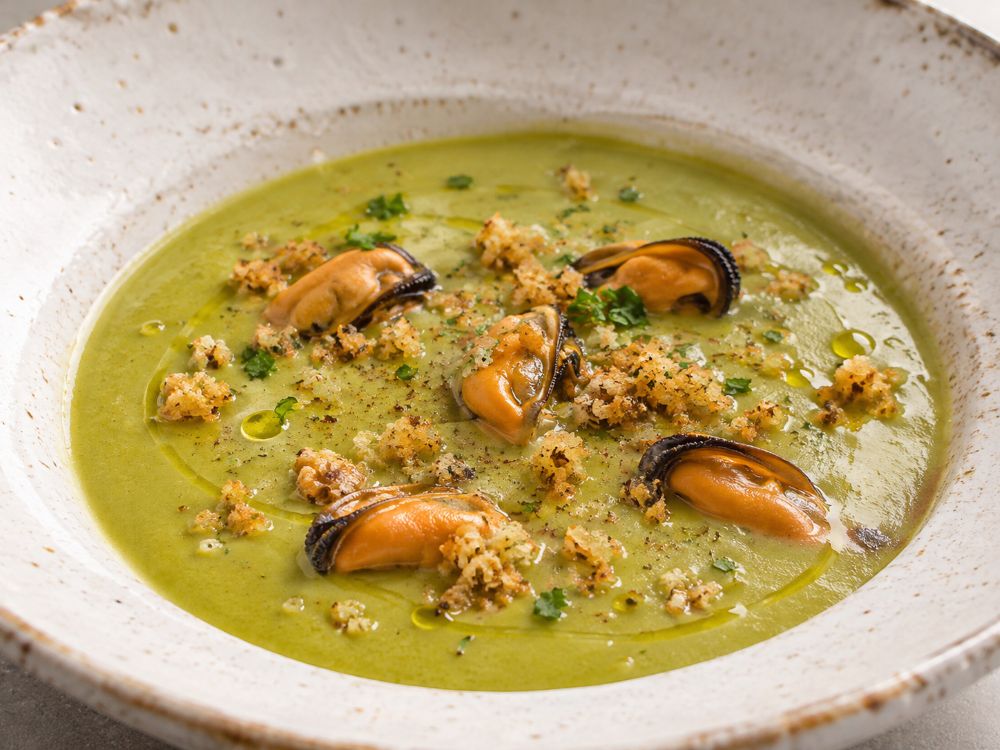
Broad beans and Pecorino are already one of Italy’s great culinary love affairs. Add a handful of sweet, juicy mussels, a little toasted bread and some good extra virgin olive oil, and suddenly that familiar countryside combination turns into something you might expect to find in a rather ambitious seafood restaurant.
The secret to broad bean, Pecorino and mussel cream is the contrast between three very different flavours. Broad beans bring a fresh, slightly grassy sweetness, Pecorino adds salty richness, and mussels contribute that unmistakable taste of the sea. A few golden breadcrumbs scattered over the top provide the crunch that a silky vegetable cream desperately needs.
There’s nothing particularly complicated about the recipe. The beans are briefly blanched, peeled and blended into a smooth green cream, while the mussels cook separately in white wine and garlic. Their cooking juices are far too delicious to waste, so we use a little to season the broad beans before finishing everything with Pecorino.
The result is a beautiful Italian seafood starter: creamy, fragrant, savoury and wonderfully fresh. Serve it warm, with enough crusty bread to clean the plate.
Ingredients for 4 People
Preparation time: 25 minutes
Cooking time: 20 minutes
Total time: 45 minutes
Difficulty: Medium
Servings: 4
Calories per serving: 350 kcal
Cost per serving: 4.50 €
For the Broad Bean and Pecorino Cream
- 450 g fresh broad beans, shelled weight, before removing their individual skins
- 45 g Pecorino Romano, finely grated
- 15 g extra virgin olive oil
- 1 small shallot, about 30 g
- 100–150 ml hot water or unsalted vegetable stock
- Freshly ground black pepper
- A few drops of lemon juice
- Salt, only if needed
For the Mussels
- 1.2 kg fresh mussels, in their shells
- 1 garlic clove
- 60 ml dry white wine
- 10 g extra virgin olive oil
- A few parsley stalks
For the Crispy Breadcrumbs
- 80 g rustic bread, preferably a day old
- 10 g extra virgin olive oil
- ½ teaspoon finely grated lemon zest
- 1 small sprig of thyme
- Fresh parsley or delicate salad leaves to garnish
How to Make Broad Bean, Pecorino and Mussel Cream
1. Clean the Mussels Carefully
Start with the mussels, because their cooking liquid will give the broad bean cream much of its flavour.
Rinse them under cold running water and scrub away any dirt or deposits from the shells. Remove the fibrous beards by pulling them firmly towards the hinge.
Discard mussels with broken shells. If any are open, tap them gently; those that remain open should also be discarded.
Don’t soak mussels in a bowl of fresh water for an extended period. They are saltwater shellfish, and prolonged soaking can damage them.
Once cleaned, keep them chilled while you prepare the pan.
2. Cook the Mussels and Save Their Juices
Heat 10 g of extra virgin olive oil in a large saucepan over medium heat.
Add the lightly crushed garlic clove and parsley stalks. Let them release their fragrance for about a minute without browning.
Add the mussels, pour in the white wine and immediately cover with a lid.
Cook over medium-high heat for approximately 3–5 minutes, shaking the pan occasionally. The shells will begin to open as the mussels cook.
Remove the opened mussels as they are ready so they don’t become rubbery. Discard any that remain closed after cooking.
Allow them to cool just enough to handle, then remove the meat from the shells. Keep a few attractive mussels aside for the final garnish.
Don’t throw away the cooking liquid. Strain it through a fine sieve lined with clean muslin or a suitable filter to remove grit and shell fragments.
Taste a small amount. Mussel liquor can be intensely salty, so we’ll add it gradually to the broad bean cream rather than pouring everything in at once.
3. Blanch the Broad Beans
Bring a saucepan of water to a boil and prepare a bowl of ice-cold water.
Add the shelled broad beans and blanch them for 2–3 minutes, depending on their size.
Drain immediately and transfer them to the cold water. This stops the cooking and helps preserve their fresh green colour.
Now remove the thin outer skin from each bean. Pinch one end gently and squeeze the bright green centre out.
Yes, peeling broad beans individually takes a little patience. But it makes an enormous difference: the skins can be tough and slightly bitter, while the tender centres blend into a much smoother cream.
You should obtain roughly 300–350 g of peeled beans, depending on their size and maturity.
Frozen broad beans can also be used. Blanch them according to their size and remove the skins in the same way.
4. Make the Broad Bean Cream
Finely chop the shallot.
Heat 15 g of extra virgin olive oil in a small saucepan over low heat and add the shallot. Cook gently for 4–5 minutes, stirring occasionally, until soft and translucent.
Don’t let it brown. We’re looking for a delicate sweetness that won’t overpower the broad beans.
Add the peeled beans and approximately 100 ml of hot water or unsalted vegetable stock.
Cook for another 3–4 minutes, just long enough for the flavours to come together.
Transfer everything to a blender and process until smooth.
Add two tablespoons of the filtered mussel cooking liquid and blend again. Taste before adding more: the broth should give the cream a subtle marine character, not make it taste overwhelmingly salty.
If the consistency is too thick, add a little more warm water or stock.
For an especially velvety finish, pass the cream through a fine-mesh sieve, pressing it gently with the back of a spoon.
The ideal texture is somewhere between a thick soup and a light vegetable purée: fluid enough to spread across a shallow plate, but creamy enough to hold the mussels and breadcrumbs on its surface.
5. Add the Pecorino Without Making the Cream Grainy
Let the broad bean cream cool slightly for a minute or two.
Add the finely grated Pecorino Romano and blend again until fully incorporated.
Avoid boiling the cream once the cheese has been added. High temperatures can cause the cheese proteins to tighten and form little grains rather than blending smoothly.
Pecorino Romano is naturally salty and quite assertive, so 45 g is enough to give the broad beans depth without covering their delicate vegetable flavour.
Add a few drops of lemon juice and a little black pepper. Taste carefully before adding any salt.
Between the cheese and the mussel liquor, you may not need any at all.
Keep the cream warm over very low heat, stirring occasionally.
6. Prepare the Crispy Breadcrumbs
Remove any particularly hard crust from the bread and break the crumb into small, irregular pieces.
You want something more substantial than fine commercial breadcrumbs, with a mixture of tiny crumbs and slightly larger crunchy fragments.
Heat 10 g of olive oil in a frying pan over medium heat.
Add the bread and cook for 4–5 minutes, stirring frequently, until golden and crisp.
During the final minute, add the thyme leaves and finely grated lemon zest.
The bread should smell toasted and fragrant, with a crisp exterior and no trace of raw, damp crumb.
Transfer it to a plate and let it cool. Don’t leave it sitting in the hot pan, where it can continue cooking and turn bitter.
7. Warm the Mussels and Assemble the Dish
Just before serving, warm the shelled mussels gently in a tablespoon or two of their filtered cooking juices.
They only need about 30–60 seconds. They’re already cooked, and reheating them for too long will make them tough.
Spoon the warm broad bean and Pecorino cream into four shallow bowls, spreading it into a generous, even layer.
Arrange the mussels over the cream, spacing them out so that each spoonful contains a little seafood and a little vegetable purée.
Scatter the crispy breadcrumbs around the mussels rather than covering everything with a thick layer.
Finish with fresh parsley or a few tender salad leaves, a small drizzle of extra virgin olive oil and freshly ground black pepper.
Serve immediately, while the cream is warm and the breadcrumbs are still crunchy.
How to Make the Cream Perfectly Smooth
This recipe looks quite sophisticated, but most of its success depends on a few straightforward details.
Peel every broad bean. Young beans have delicate skins, but even these can leave tiny fibrous fragments in the purée. Removing them produces a noticeably finer texture.
Use a blender rather than a fork or potato masher. The beans need to become a silky cream, not a rustic mash. Add warm liquid gradually until the texture is smooth without becoming watery.
Strain the mussel liquor. Even carefully cleaned mussels can release a little grit. A few grains of sand would be particularly unpleasant in such a delicate dish.
Be restrained with the Pecorino. Its sharp, salty flavour is wonderful with broad beans, but too much will bury the sweetness of the mussels. Add the cheese off the boil and taste before adjusting the seasoning.
Toast the breadcrumbs at the last minute. Their crunch is essential to the dish. Once they absorb moisture from the cream, they begin to soften.
Can You Make Broad Bean Cream with Frozen Beans?
Absolutely. Frozen broad beans are an excellent alternative when fresh beans are out of season.
Use 450 g frozen broad beans and blanch them in boiling water until tender. Depending on whether they have already been peeled, you may need to remove the outer skins.
Once peeled, continue with the recipe as usual.
Fresh broad beans have a slightly more delicate, grassy flavour, particularly in spring. Frozen beans are often sweeter and more consistent, making them a perfectly respectable choice for a smooth purée.
Avoid canned broad beans for this particular preparation. Their softer texture and more pronounced cooked flavour make it harder to achieve the same bright, fresh character.
Which Pecorino Is Best?
Pecorino Romano gives the dish a robust, savoury character, with plenty of salt and a pleasant sharpness that stands up to the mussels.
For a gentler result, use a young Pecorino Toscano, which has a creamier texture and a milder, more buttery flavour.
You can also combine the two: 25 g of Pecorino Romano and 20 g of young Pecorino Toscano create a pleasant balance between intensity and sweetness.
Whichever you choose, grate the cheese very finely so it incorporates more readily into the warm cream.
What to Serve with Broad Bean, Pecorino and Mussel Cream
This dish is best served as an elegant seafood starter, followed by something relatively simple.
A grilled sea bass with lemon and herbs is an excellent choice, as is a plate of spaghetti with clams or a delicate baked fish.
If you’re planning a longer seafood dinner, avoid following it with another very creamy preparation. The broad beans and Pecorino already give the first course plenty of richness.
A few slices of toasted sourdough are more than enough alongside the cream, especially if you enjoy scooping up the last spoonfuls.
Wine Pairings
The combination of mussels and Pecorino calls for a white wine with lively acidity, moderate body and a clean, savoury finish. The broad beans add a green, slightly earthy note, while the toasted bread brings a gentle roasted character.
Vermentino di Gallura DOCG – Canayli, Cantina Gallura. Fresh, Mediterranean and gently saline, with enough body to accompany the Pecorino without overwhelming the mussels.
Verdicchio dei Castelli di Jesi Classico Superiore – Villa Bucci. A particularly good match thanks to its firm acidity, almond-like finish and subtle savoury character. It handles both the seafood and the richness of the cheese.
Etna Bianco – Benanti. Carricante brings citrus freshness, mineral tension and a restrained texture that suits the sweetness of the mussels and the grassy broad beans.
Nutritional Values per 100 g
Energy: 155 kcal (649 kJ)
Carbohydrates: 10.5 g
of which sugars: 1.5 g
Protein: 11 g
Fat: 7.5 g
of which saturates: 2.2 g
Fibre: 2.2 g
Salt: 0.85 g
Calories per serving: 350 kcal
Cost per serving: 4.50 €