
Double IPA Revolution: How American Brewers Turned Hops, Alcohol and Bitterness into a New Beer Language
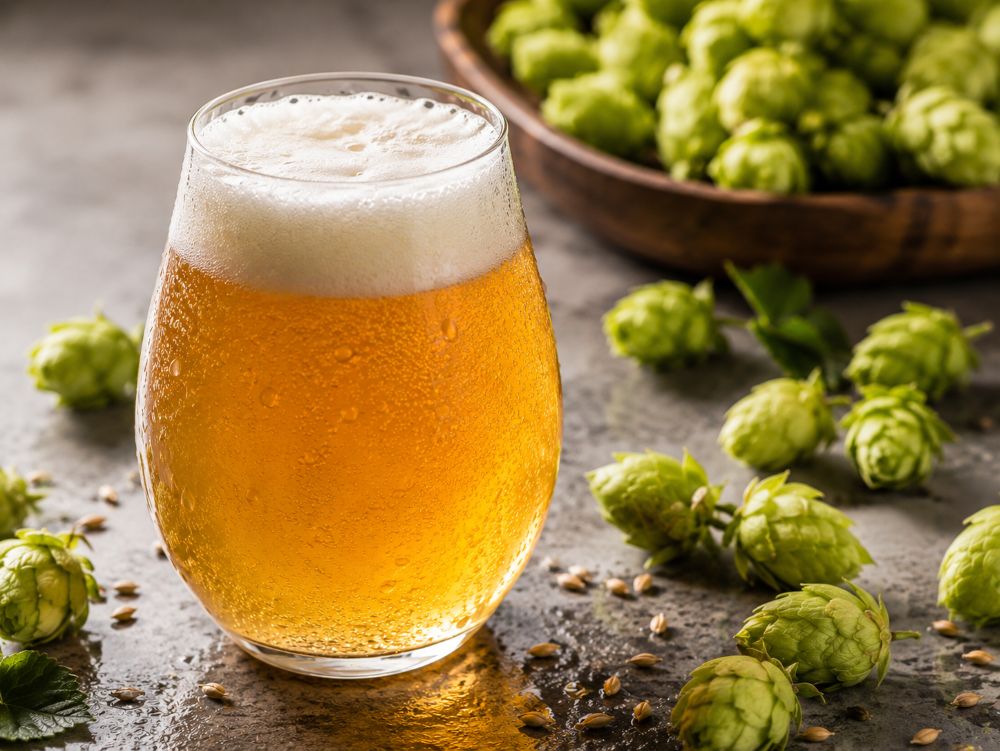
Double IPA was never supposed to be polite. It emerged when American craft brewers stopped asking how closely they should imitate British IPA and started asking how far they could push bitterness, hop aroma, alcohol and attenuation before the beer became impossible to drink.
The answer turned out to be much further than expected.
By the late 1990s and early 2000s, a new generation of American beers was appearing with 7.5–10% alcohol, massive late hopping, aggressive dry hopping and bitterness levels that often climbed beyond 70 IBU. The style acquired several names—Double IPA, Imperial IPA, IIPA—but the idea remained consistent: take American IPA and increase everything that made it American, while somehow preserving enough dryness and structure to stop the result becoming sweet hop syrup.
The best Double IPA therefore depends on a contradiction. It is excessive by design, yet it still needs balance. Hop aroma should be enormous, but malt cannot disappear completely. Alcohol should provide structure without tasting hot. Bitterness can be intense, but the finish must remain clean enough for another sip.
When those elements align, Double IPA becomes one of the clearest expressions of American craft brewing’s most important period.
The Basics
- Style: Double IPA / Imperial IPA
- Origin: United States
- Modern emergence: Mid-to-late 1990s
- BJCP category: 22A Double IPA
- Typical ABV: 7.5–10%
- BJCP bitterness: 60–100 IBU
- Original gravity: 1.065–1.085
- Final gravity: 1.008–1.018
- Colour: Gold to light orange-copper
- Body: Medium-light to medium
- Carbonation: Medium to medium-high
- Typical malt profile: Clean, light bread, cracker, restrained caramel
- Hop character: Very high to intense
- Common hop aromas: Citrus, pine, resin, tropical fruit, stone fruit, dank herbs
- Typical yeast: Clean American ale yeast
- Dry hopping: Central to most modern examples
- Serving temperature: Around 8–11°C
- Freshness: Critical
- Typical serving size: Smaller than standard-strength IPA
- Best known examples: Russian River Pliny the Elder, Bell’s Hopslam, Firestone Walker Double Jack, Dogfish Head 90 Minute IPA, Stone Ruination IPA
Why Double IPA Had to Happen
American IPA had already begun moving away from its British ancestor by the 1980s and early 1990s. American hop varieties such as Cascade, Centennial, Chinook and later Simcoe offered far more assertive citrus, pine and resin than traditional English hops, while the emerging craft market actively rewarded intensity.
Once brewers discovered that customers wanted hoppier beer, the escalation was almost inevitable. More late hops created greater aroma. More bitterness required more malt and alcohol to keep the beer from becoming skeletal. Higher original gravity then allowed still more hops to be added without collapsing the structure.
Double IPA emerged from that cycle.
The style was not created by one brewery working from a formal recipe. It developed through experimentation among West Coast brewers who were independently pushing American IPA toward greater strength and hop intensity.
By the beginning of the 2000s, the category had become distinct enough to deserve its own name.
Vinnie Cilurzo and the First Double IPA
One of the most important names in the story is Vinnie Cilurzo.
Before founding Russian River Brewing, Cilurzo brewed at Blind Pig Brewing Company in Temecula, California, where he produced a beer in 1994 that is widely cited as one of the earliest clear examples of what would later be called Double IPA.
The beer was stronger and more heavily hopped than conventional American IPA, driven partly by necessity. Cilurzo reportedly increased the hop load to compensate for limitations in the brewery’s equipment and oxidation problems, effectively using hop intensity as both flavour and camouflage.
The irony is perfect.
One of the most influential modern beer styles emerged partly because a young brewer was trying to solve practical brewery problems.
The concept evolved rapidly from there.
Pliny the Elder Changes the Standard
If Blind Pig helped establish the idea, Pliny the Elder turned Double IPA into a reference point.
Russian River first brewed Pliny the Elder in 2000, originally for the inaugural Double IPA Festival at the Bistro in Hayward, California. The beer took its name from the Roman naturalist Pliny the Elder, historically associated with early descriptions of hops.
The modern beer became famous for combining very high hop intensity with an unusually dry, controlled structure. Instead of covering enormous bitterness with heavy caramel malt, Pliny relied on a relatively lean malt base and a clean fermentation profile, allowing citrus, pine, resin and hop oils to dominate.
That approach became enormously influential.
The central lesson was simple: Double IPA did not need to taste heavy just because it was strong.
For many brewers, that idea became the blueprint.
What Makes a Double IPA Different from IPA?
The obvious answer is strength, but that is only part of it.
BJCP guidelines place Double IPA around 7.5–10% ABV, compared with lower ranges for standard American IPA. Bitterness rises to 60–100 IBU, and hop aroma is expected to be very high to intense.
The bigger difference lies in concentration.
A standard IPA can be hop-forward while still leaving significant space for malt. Double IPA pushes the hop contribution much further and requires additional alcohol and body simply to keep the beer structurally coherent.
That does not mean the beer should taste sweeter.
In fact, many great Double IPAs finish surprisingly dry. The stronger beer needs enough attenuation to prevent alcohol and malt from turning intense hopping into something sticky.
More hops require more structure.
More structure does not mean more sweetness.
The Imperial Naming Problem
The terms Double IPA and Imperial IPA are often used interchangeably.
“Imperial” entered American craft vocabulary as a general indicator of increased strength and intensity, borrowed conceptually from Imperial Stout. Breweries began attaching the word to stronger versions of many styles, whether or not there was any historical connection to imperial courts or export traditions.
Double IPA is the more descriptive term because it simply signals a more intense version of American IPA.
Neither name guarantees a specific recipe.
A beer labelled Imperial IPA may be 8% or 11%, aggressively bitter or surprisingly soft, brilliantly clear or hazy.
Style guidelines create boundaries for competition.
Brewers have always treated those boundaries more flexibly.
The West Coast Blueprint
Classic Double IPA developed primarily on the American West Coast and inherited the region’s preference for dryness, bitterness, citrus, pine and resin.
The malt base was usually deliberately restrained. Pale malt did most of the work, with small quantities of crystal malt sometimes added for colour and structure.
The hop bill carried the personality.
Cascade supplied grapefruit and flowers.
Centennial brought more intense citrus.
Chinook contributed pine and resin.
Columbus delivered pungency and bitterness.
Simcoe added pine, citrus and a distinctly dank edge.
Amarillo later contributed orange and floral character.
This created the classic Double IPA profile: golden to copper, dry, bitter, aromatic and unapologetically American.
Why Too Much Crystal Malt Became a Problem
Early American IPA and Double IPA often relied more heavily on crystal malt than many modern versions.
The idea made sense initially. Strong bitterness needed enough malt sweetness to remain palatable, and crystal malt contributed caramel, body and colour.
But excessive crystal created a predictable problem.
As alcohol rose, caramel malt could make the beer heavy, sweet and sticky. Combine that with massive bitterness and the result became exhausting rather than refreshing.
During the 2000s and 2010s, many brewers gradually reduced crystal malt and moved toward simpler pale malt bills.
The change allowed hops to appear brighter and the finish to become cleaner.
Modern Double IPA generally benefits from less caramel than its early predecessors.
Bitterness: 100 IBU Does Not Mean Twice as Bitter as 50
Double IPA became closely associated with extreme IBU numbers, but sensory bitterness does not increase in a simple linear relationship with laboratory measurements.
The BJCP range of 60–100 IBU reflects the style’s historical intensity, yet perceived bitterness depends on residual sugar, alcohol, sulfate levels, hop compounds and final gravity.
There is also a practical analytical limit to how much iso-alpha acid can remain dissolved in finished beer. Brewers claiming theoretical bitterness values far above 100 IBU were often describing recipe calculations rather than what the drinker actually experienced.
The IBU arms race eventually became more marketing than sensory science.
A well-designed 70-IBU Double IPA can taste more aggressively bitter than a poorly attenuated beer theoretically calculated at 100.
Numbers are useful.
The palate gets the final vote.
Late Hopping Changed Everything
Traditional brewing used most hops primarily for bitterness, adding them early in the boil.
American craft brewers increasingly moved hops later.
Late-boil additions preserve more volatile aromatic compounds, while whirlpool additions allow extraction at lower temperatures. Dry hopping then adds enormous aroma without significant conventional bitterness.
Double IPA accelerated this development because the style’s identity depended increasingly on hop flavour and aroma rather than bitterness alone.
By the 2010s, a serious Double IPA recipe could contain huge whirlpool and dry-hop charges that would have seemed economically absurd a generation earlier.
This shift transformed the meaning of “hoppy”.
A beer no longer needed to taste brutally bitter to contain an enormous quantity of hops.
Dry Hopping Becomes the Main Event
Dry hopping is now central to most Double IPA.
Hops added after primary boiling preserve volatile oils responsible for aromas such as grapefruit, orange, mango, passion fruit, peach, pine, resin and cannabis-like dankness.
The technique is simple in principle but difficult in practice. Massive dry-hop loads can introduce vegetal flavours, harsh polyphenols and a phenomenon known as hop burn, where the beer feels rough or abrasive when extremely fresh.
Dry hopping can also trigger hop creep, because enzymes in hop material break down previously unfermentable dextrins into sugars that yeast can consume. This can restart fermentation, change carbonation and increase diacetyl risk after packaging.
The modern Double IPA therefore requires much more fermentation management than “add more hops” implies.
The Rise of Citra, Mosaic and Galaxy
The flavour of Double IPA changed dramatically as new hop varieties entered the market.
Early West Coast versions leaned heavily towards grapefruit, pine and resin. Citra, released commercially in the late 2000s, pushed beer toward mango, citrus and tropical fruit. Mosaic added blueberry-like fruit, tropical character and dank complexity, while Australian Galaxy became famous for passion fruit and peach.
Nelson Sauvin introduced white grape and gooseberry-like character.
Strata later brought passion fruit, cannabis and berry notes.
These varieties changed drinkers’ expectations. Hop aroma could now be intensely fruity without relying on fermentation esters or added fruit.
Double IPA moved from pine forest to fruit market.
Both traditions still coexist.
West Coast Double IPA
Classic West Coast Double IPA remains the clearest expression of the original revolution.
Colour is generally bright gold to light copper. Fermentation is clean. Malt remains restrained. Hop aroma combines citrus, pine, resin, flowers and dank herbs, while bitterness is obvious and the finish is dry.
Clarity also matters aesthetically.
A well-made West Coast DIPA should often look polished rather than opaque, although modern brewers increasingly blur that line.
Alcohol may be substantial, but the beer should not taste sugary or hot.
The defining sensation is one of controlled aggression.
The hops hit hard.
The finish still asks for another sip.
Hazy Double IPA
The rise of New England IPA created a completely different branch of Double IPA.
Hazy DIPA generally uses high-protein grains such as wheat and oats, softer water chemistry and enormous late-hop additions. Bitterness is lower in perception, while hop aroma moves toward mango, peach, orange, pineapple and other ripe fruit.
Yeast can contribute additional esters, strengthening the illusion of fruit juice.
Texture becomes fuller and creamier than in classic West Coast DIPA.
This style changed the market dramatically because many drinkers preferred huge hop aroma without aggressive bitterness.
Purists may argue that hazy DIPA represents a separate branch rather than the original Double IPA concept.
Commercially, that argument has already been lost.
Both now exist under the same broad family.
West Coast DIPA vs Hazy DIPA
The contrast is one of the most useful in modern beer.
West Coast DIPA is typically clearer, drier and more bitter, with citrus, pine, resin and dank hop character.
Hazy DIPA is softer, fuller and more fruit-driven, with lower perceived bitterness and greater emphasis on tropical hop aroma.
Water chemistry differs.
Malt composition differs.
Yeast behaviour differs.
Hop timing differs.
Yet both pursue the same underlying idea: concentrate hop character beyond standard IPA while maintaining enough alcohol and body to support it.
One style sharpens the edges.
The other rounds them.
Why Double IPA Should Finish Dry
This is one of the style’s most important technical principles.
High original gravity naturally creates the risk of excessive residual sugar. If fermentation stops too high, the beer becomes syrupy, and strong hop bitterness then clashes with sweetness rather than balancing it.
Good Double IPA therefore relies on highly attenuative yeast and careful mash management.
Mash temperatures may be kept relatively low to produce more fermentable wort, while simple sugars can occasionally be used to increase alcohol without adding additional malt body.
A final gravity around 1.008–1.018 is typical under BJCP guidelines.
The exact number matters less than the sensation.
The beer should feel strong, not sticky.
Alcohol Is Part of the Structure
At 8–10% ABV, alcohol cannot be treated as an incidental by-product.
It contributes body, carries hop aroma and can enhance the perception of sweetness. It also extracts and dissolves aromatic hop compounds effectively.
The challenge is hiding rough ethanol.
A young or poorly fermented Double IPA can smell solvent-like or feel hot in the throat. Proper yeast health, oxygenation, fermentation temperature and conditioning are therefore essential.
The best examples can reach 9% ABV while feeling remarkably composed.
That deceptive drinkability is part of the style’s appeal and part of its danger.
A beer can taste like citrus and pine while carrying the alcohol of a strong wine.
Water Chemistry and the West Coast Snap
Water became one of the most important hidden tools in Double IPA.
Higher sulfate levels sharpen hop bitterness and create the dry, crisp finish associated with many classic West Coast beers. Chloride increases body and softness.
Traditional West Coast DIPA generally favours a sulfate-forward balance.
Modern hazy DIPA often reverses the equation, increasing chloride relative to sulfate to build a rounder, softer mouthfeel.
The difference can be dramatic even when malt and hops remain similar.
Water does not merely support the recipe.
It changes how bitterness and texture are perceived.
Pliny the Elder
Russian River Pliny the Elder remains one of the most important reference beers in the style.
Its influence comes less from maximum strength than from structure. The beer is intensely hopped, but the malt profile remains lean and the finish comparatively dry.
Hop character centres on pine, citrus and resin, with enough bitterness to remain unmistakably West Coast.
Pliny also became famous for freshness.
Russian River has repeatedly emphasised that the beer should be consumed young, and its packaging famously turned hop deterioration into part of the beer’s identity.
That message helped educate an entire generation of drinkers.
IPA is not wine.
Age usually destroys the thing you are paying for.
Pliny the Younger
If Pliny the Elder defined Double IPA, Pliny the Younger helped create the modern phenomenon of beer tourism and limited-release hype.
Russian River first brewed it in 2005 as a stronger and even more heavily hopped Triple IPA.
Annual release events eventually attracted drinkers from across the United States and beyond, generating long queues and enormous local economic impact.
The beer became a symbol of early craft-beer scarcity culture.
Its influence went far beyond recipe design. Pliny the Younger demonstrated that beer could create the same kind of pilgrimage, anticipation and collector mentality already familiar in wine.
That changed brewery marketing permanently.
Dogfish Head 90 Minute IPA
Dogfish Head 90 Minute IPA approached hop intensity differently.
Instead of relying only on conventional hop additions, the brewery developed a system of continuous hopping, gradually adding hops throughout the boil rather than in a few discrete charges.
The beer is maltier and richer than the classic West Coast model, with a stronger caramel and toffee component supporting substantial bitterness.
At around 9% ABV, it sits firmly within Double IPA territory.
Its importance lies in demonstrating that the style never had only one route.
Russian River pursued dryness and lean structure.
Dogfish Head pursued continuous hopping and greater malt depth.
Both helped define the category.
Stone Ruination IPA
Stone Ruination IPA became one of the defining aggressive West Coast Double IPAs of the early 2000s.
The name itself told drinkers what to expect.
This was beer marketed through excess: enormous hop character, high bitterness and a confrontational identity that fit perfectly with early Stone Brewing.
Ruination helped establish the idea that bitterness could be a selling point rather than something brewers needed to soften for mainstream consumers.
That attitude became central to the craft-beer culture of the period.
The original version was eventually discontinued and reformulated, but its historical role remains significant.
Bell’s Hopslam
Bell’s Hopslam Ale took Double IPA in a slightly different direction.
Strongly hopped and high in alcohol, it also uses honey to help create a beer that is powerful without becoming excessively heavy.
The honey ferments largely away, increasing alcohol while helping maintain a relatively dry finish.
Hop character is intensely citrusy and floral, with tropical notes depending on vintage and hop supply.
Hopslam became one of the seasonal beers American drinkers actively hunted each year, reinforcing the association between Double IPA and freshness-driven limited releases.
It also demonstrated how fermentable adjuncts could improve structure rather than cheapen the beer.
Firestone Walker Double Jack
Firestone Walker Double Jack became another benchmark for polished West Coast DIPA.
The beer combined substantial hop intensity with unusually careful fermentation and a comparatively clean malt profile.
It showed that Double IPA could be aggressive without being rough.
Firestone Walker’s technical precision helped push the category away from the assumption that huge hops justified fermentation flaws or excessive sweetness.
That mattered as the style matured.
The early revolution had proved that more was possible.
The next generation had to prove that more could also be precise.
Triple IPA and the Logical Extreme
Once Double IPA became normal, escalation continued.
Triple IPA pushed alcohol beyond 10%, increased hopping further and created beers that sometimes approached Barley Wine strength while attempting to remain hop-dominant.
The challenge becomes progressively harder at these levels.
More alcohol creates greater sweetness and heat.
More malt can obscure hops.
More dry hopping increases harshness.
Great Triple IPA exists, but the margin for error is much smaller.
Double IPA often represents the practical upper limit where intense hopping and real drinkability can still coexist comfortably.
Beyond it, excess begins fighting the beer.
Why Freshness Is Critical
Few styles deteriorate more visibly than Double IPA.
Hop aroma compounds are volatile and chemically unstable. Oxygen rapidly converts bright citrus, tropical fruit and resin into duller, sweeter or stale flavours.
A fresh DIPA may smell of grapefruit and pine.
Months later, the same beer can taste muted, honeyed or vaguely marmalade-like.
Cold storage slows deterioration but does not stop it.
This is why packaging date matters far more than vintage prestige.
A famous Double IPA that spent six months warm on a shelf may be less interesting than a local beer canned two weeks ago.
Freshness beats reputation.
Does Double IPA Age?
No, not in the way Barley Wine, Imperial Stout or Gueuze can.
High alcohol may keep the beer microbiologically stable, but hop aroma—the defining characteristic of the style—declines rapidly.
Some malt-heavy older Double IPAs can develop sherry, honey or caramel notes with time, but that transformation generally means the beer is becoming something different rather than improving as Double IPA.
The best drinking window is usually measured in weeks or a few months, especially for heavily dry-hopped examples.
Drink it fresh.
There is no medal for forgetting IPA in the cellar.
How to Serve Double IPA
Serve Double IPA around 8–11°C.
Too cold and the hop aroma becomes muted. Too warm and alcohol becomes increasingly obvious.
A tulip, IPA glass or medium-sized stemmed glass works well because it concentrates aroma while providing enough room for a substantial head.
Pour gently and avoid unnecessary agitation if the beer is extremely fresh and heavily dry hopped, since excessive foam can strip volatile aromatic compounds.
Serving size also matters.
A 9% Double IPA does not need to arrive in a full imperial pint.
Around 250–330 ml is often enough to appreciate the beer without aromatic fatigue.
Food Pairings
Double IPA needs strongly flavoured food because delicate dishes disappear quickly beneath the hops.
Classic West Coast examples work well with spicy fried chicken, burgers, barbecue pork, mature Cheddar and blue cheese. Citrus-driven versions pair naturally with tacos, grilled meat and dishes involving coriander, chilli and lime.
Hazy DIPA can work with spicy Asian food because tropical hop character complements chilli, ginger and aromatic herbs, although excessive heat can amplify perceived alcohol.
Very bitter beers can clash with intensely bitter food, so avoid pairing them automatically with heavily charred vegetables or bitter greens.
The goal is contrast and intensity, not punishment.
Double IPA vs American Barley Wine
These styles can overlap in alcohol and even bitterness, but their priorities differ.
American Barley Wine places more emphasis on malt depth, caramel, toast and alcohol, with hops playing an important but supporting role.
Double IPA reverses that relationship.
The malt exists primarily to carry hops.
A fresh DIPA should smell overwhelmingly of hop oils, while an American Barley Wine should remain recognisably malt-driven even when aggressively hopped.
Ageing also separates them.
Barley Wine can improve for years.
Double IPA usually cannot.
Double IPA vs Triple IPA
Triple IPA is essentially the next escalation: more alcohol, more original gravity and usually even more hopping.
The boundary is not legally fixed, but beers above roughly 10% ABV are commonly marketed as Triple IPA.
The danger is losing the dry, drinkable quality that makes great DIPA successful.
When sweetness and alcohol begin dominating, the beer moves toward strong ale territory regardless of how many hops were added.
Double IPA therefore occupies a particularly useful sweet spot.
It is excessive enough to be dramatic but still capable of remaining recognisably beer-like and refreshing.
Why Double IPA Changed Craft Beer
The style changed more than hop quantities.
It altered consumer expectations.
Drinkers began actively seeking bitterness.
Hop varieties became selling points on labels.
Freshness became part of marketing.
Limited releases created queues.
Breweries began competing for increasingly aromatic hops.
Entire agricultural programmes developed around new cultivars designed for craft beer.
Double IPA also helped move American brewing away from European imitation. German lager and British ale had provided the original technical models, but Double IPA was unmistakably American in its appetite for scale and experimentation.
It was not trying to recreate history.
It was trying to outperform yesterday.
The Hop Arms Race
During the 2000s, breweries increasingly advertised IBU numbers as evidence of intensity. 80 IBU became 100. 100 became theoretical 120 or 150.
This was partly sincere experimentation and partly marketing theatre.
Eventually, the market learned that bitterness alone had limits. Drinkers began valuing hop aroma more than pure IBU, and brewing technology moved toward whirlpool additions, dry hopping and softer extraction.
The hazy IPA revolution accelerated this change dramatically.
The modern hop arms race is no longer primarily about who can make the bitterest beer.
It is about who can create the most saturated aroma without producing harshness.
Double IPA survived because it evolved with that shift.
From Bitterness to Saturation
Early Double IPA often announced itself through bitterness.
Modern DIPA increasingly announces itself through hop saturation.
This means enormous quantities of aroma packed into a beer without necessarily producing correspondingly aggressive bitterness. Techniques such as whirlpool hopping, staged dry hopping, cryogenic hop products and concentrated lupulin preparations allow brewers to increase aromatic intensity while reducing vegetal material.
The sensory objective has changed from “How bitter can this be?” to “How much hop character can we fit into this glass?”
That is a more sophisticated question.
It is also much harder to execute cleanly.
Cryo Hops and Concentrated Lupulin
Modern hop processing has transformed Double IPA again.
Products such as Cryo Hops separate and concentrate lupulin glands, reducing the amount of leafy vegetal material entering the beer while increasing hop oils and resins.
This can produce more intense aroma with less green matter, potentially reducing some grassy flavours and excessive beer loss during dry hopping.
Brewers can therefore push tropical fruit, citrus and resin further without simply dumping enormous quantities of whole pellets into fermentation vessels.
The technology fits Double IPA perfectly because the style has always chased higher hop concentration.
The method changed.
The obsession did not.
What Makes a Great Double IPA?
A great Double IPA should smell intense before the first sip: citrus, pine, resin, tropical fruit, stone fruit or dank herbs, depending on hop selection.
The palate should have enough malt to support the alcohol but should not become caramel-heavy or sweet. Bitterness may be firm or relatively soft according to substyle, yet the finish must remain clean enough to avoid fatigue.
Alcohol should be integrated.
Hop burn should be minimal.
Vegetal character should remain absent.
Most importantly, the beer should retain a sense of momentum. The first sip may be dramatic, but the second should still be attractive.
Intensity without drinkability is merely excess.
The best Double IPA turns excess into structure.
Final Thoughts
Double IPA became one of the defining styles of American craft beer because it captured the culture’s most characteristic instinct: if IPA was good, why not push it further?
The early West Coast brewers increased hops, bitterness and alcohol until the beer became something new. Pliny the Elder demonstrated that the result could remain dry and precise. Dogfish Head explored continuous hopping. Stone turned bitterness into identity. Bell’s made seasonal hop intensity an event, while later generations replaced some of that bitterness with tropical saturation and hazy texture.
The style changed repeatedly, but the central idea survived.
Double IPA is still a beer built around more hops than should reasonably fit into a balanced pint, supported by enough alcohol and malt to keep the structure intact.
That contradiction is the whole point.
American craft brewing did not invent hops.
Double IPA invented the modern obsession with them.

