
Best Bitter vs ESB: Understanding the Beer Britain Actually Drinks by the Pint

Best Bitter is one of those beer styles that looks simple until you pay attention. The colour is usually somewhere between amber and copper, the alcohol rarely climbs much above 4%, the carbonation is restrained and the aroma can seem almost modest beside modern IPA. Yet that apparent simplicity hides a style built around extraordinarily fine balance: bready malt, biscuit, light caramel, earthy or floral hops, fruity British yeast and a dry, bitter finish all have to remain visible without any one element taking control.
It is also a beer that makes more sense in a British pub than in a tasting flight. Traditional Best Bitter was developed as draught beer and is still at its most convincing when served fresh from cask through a hand pump at cellar temperature. Low carbonation, moderate strength and enough bitterness to reset the palate make it a beer designed for another pint rather than a dramatic first sip.
That emphasis on drinkability is not a euphemism for blandness. A great Best Bitter can be intensely characterful at 4% ABV because British brewing learned to create flavour through malt selection, expressive yeast, traditional hops and careful conditioning rather than brute strength.
The Basics
- Style: Best Bitter
- Country: England
- Beer family: British Bitter
- BJCP category: 11B Best Bitter
- Typical colour: Pale amber to medium copper
- BJCP colour range: 8–16 SRM
- Typical ABV: 3.8–4.6%
- BJCP bitterness: 25–40 IBU
- Original gravity: 1.040–1.048
- Final gravity: 1.008–1.012
- Body: Medium-light to medium
- Carbonation: Low in traditional cask examples
- Typical malt character: Bread, biscuit, light toast, optional caramel or toffee
- Typical hop character: Earthy, floral, resinous or gently fruity
- Typical yeast character: Moderate British fruity esters
- Common base malt: British pale ale malt
- Other malts: Crystal, amber and occasionally small quantities of darker malt
- Adjuncts: Sugar is historically common; wheat or maize may also appear
- Traditional hops: East Kent Goldings, Fuggles and other British varieties
- Serving method: Traditionally cask conditioned and dispensed by hand pump or gravity
- Serving temperature: Around 10–13°C
- Typical glass: Nonic pint
- Best consumed: Extremely fresh
What Does “Best Bitter” Actually Mean?
The terminology of British Bitter is less rigid historically than modern style guidelines might suggest. Breweries have used names such as Bitter, Best Bitter, Special Bitter, Premium Bitter and Extra Special Bitter according to their own traditions, so a pub pump clip does not always correspond perfectly to a competition category.
The BJCP nevertheless provides a useful framework. Within its British Bitter family, Ordinary Bitter occupies the lowest strength range, Best Bitter sits in the middle and Strong Bitter covers the more alcoholic end. Best Bitter therefore represents a stronger and usually slightly fuller version of traditional session Bitter without reaching the weight of ESB or other Strong Bitter interpretations.
The crucial point is that “best” historically does not mean extreme. A Best Bitter is still fundamentally a session-strength pub beer, and drinkability remains one of the style’s defining qualities.
Where Did Bitter Come From?
British Bitter developed out of the nineteenth-century Pale Ale tradition. Pale malt became increasingly practical as improvements in malt kilning allowed brewers to produce lighter-coloured malt without scorching it, while the growing popularity of hopped Pale Ale created a market for refreshing beer with a noticeably bitter finish.
By the late nineteenth century, breweries were increasingly distinguishing between bottled Pale Ale and the related draught beer sold in pubs. The word “bitter” became a convenient consumer term for this relatively pale, hop-forward draught ale, particularly when contrasted with sweeter and darker Mild Ale.
The BJCP places the emergence of the modern British Bitter family as a draught product after the late 1800s. Crystal malt became increasingly common after the First World War, contributing the biscuit, caramel and toffee notes now associated with many examples.
Over time, Bitter became one of the foundations of British pub culture, available at different strengths according to brewery and region.
Why Best Bitter Is a Pub Beer
Best Bitter was designed around the economics and rhythm of the public house. Alcohol remains low enough for multiple pints, bitterness encourages another sip, and cask conditioning gives the beer enough texture and complexity to remain interesting despite modest gravity.
This context explains why evaluating Best Bitter through the same criteria used for modern American IPA can be misleading. Aromatic intensity is not the objective. Neither is maximum bitterness, heavy dry hopping or dense malt sweetness. The pleasure comes from the way several restrained flavours remain in equilibrium across an entire pint.
A beer that seems merely pleasant during a 50 ml tasting can become extraordinarily convincing halfway through a properly served pint.
The format matters because the style was created for drinking rather than judging.
Cask Condition Is Central to the Traditional Experience
Traditional Best Bitter is closely associated with cask-conditioned real ale. After primary fermentation, beer is transferred to a cask containing enough viable yeast and fermentable material for secondary conditioning. Natural carbonation develops inside the vessel, but at a much lower level than most modern keg beer.
The beer is then served either directly by gravity or pulled through a hand pump, usually without additional carbon dioxide pressure. This creates a softer mouthfeel and allows malt, hops and esters to appear with less carbonic bite.
Cask beer is also alive and relatively fragile. Once a cask is vented and put on service, oxygen begins interacting with the beer, so turnover matters. A busy pub serving a well-conditioned Bitter rapidly can offer a completely different experience from a venue where the same cask has been sitting for days.
Freshness is not a minor detail here. It is part of the style.
Why Best Bitter Has So Little Carbonation
Low carbonation is one of the features that often surprises drinkers accustomed to lager, Belgian beer or American craft ale. Traditional cask Bitter can seem almost flat on the first sip, but the lower carbon dioxide level changes the way the beer presents itself.
Malt feels softer and broader, hop bitterness becomes less sharp, and yeast-derived fruit is easier to perceive. The beer also becomes remarkably easy to drink because there is little gas filling the stomach over a full pint.
Low carbonation does not mean lifelessness. A properly conditioned cask beer still has enough natural carbon dioxide to produce freshness and, depending on dispense method, a modest head.
Bottled and kegged examples are commonly more carbonated, which can make the same beer feel noticeably sharper and thinner than its cask counterpart.
What Does Best Bitter Taste Like?
The malt profile usually begins with fresh bread, biscuit and light toast, occasionally joined by caramel or toffee. Those sweeter notes should remain restrained; an excessively caramel-heavy beer quickly loses the dryness and drinkability that define the category.
British yeast contributes another layer. Light-to-moderate fruity esters can suggest orange marmalade, red apple, pear or subtle stone fruit, depending on the strain and fermentation conditions. This fruitiness is traditional and should not be confused with hop-derived tropical aroma.
Hops generally add earthy, floral, woody, herbal or gently resinous notes. Bitterness is medium to moderately high, but the finish should remain balanced enough for malt and fermentation character to survive.
The overall impression is dry, refreshing and quietly complex rather than aggressively bitter.
The Malt Bill
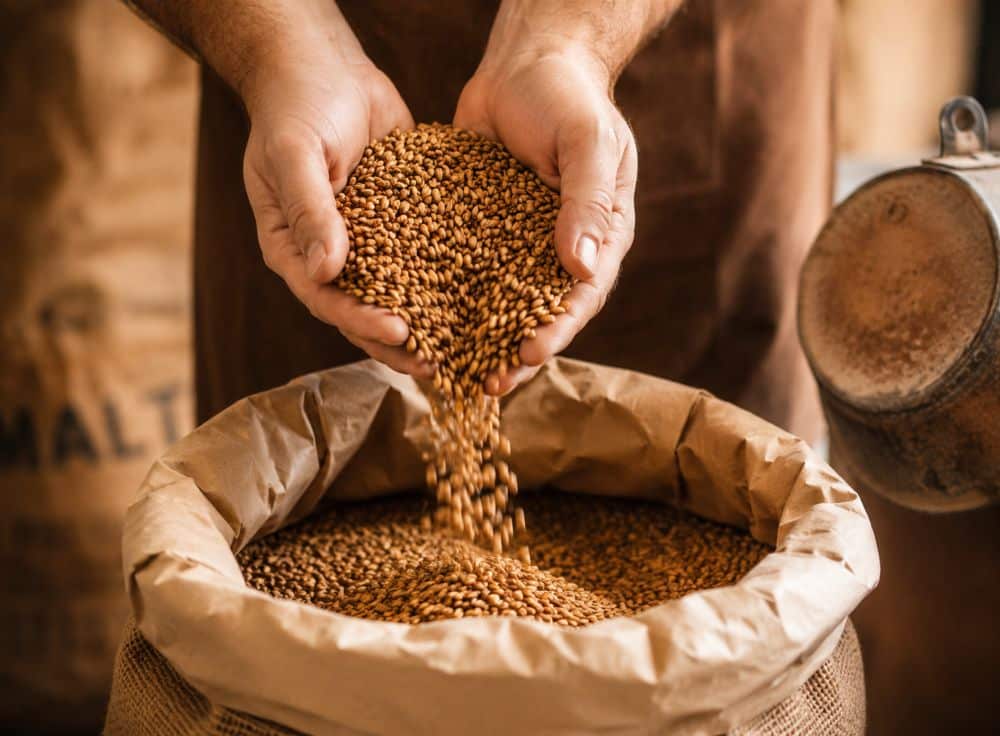
British pale ale malt forms the backbone of most traditional recipes. Compared with extremely neutral lager malt, good British pale malt can contribute a recognisable base of bread crust, biscuit and gentle toast, which is important in a beer where the original gravity may only sit around 1.040–1.048.
Crystal malt became increasingly important during the twentieth century and can add caramel, toffee and colour. The mistake is assuming that Best Bitter should taste strongly caramelised. The BJCP specifically warns against over-emphasising caramel because some bottled export examples develop additional caramel-like flavours through oxidation.
Small amounts of amber malt or darker malt can provide colour and complexity without creating roast character. The result should remain unmistakably pale-ale-derived rather than moving toward Brown Ale or Porter territory.
A relatively simple malt bill often works best because yeast and hops also need room.
Sugar Is Not Cheating
Traditional British brewers have long used brewing sugars, and their presence in Best Bitter should not be interpreted as an attempt to make cheap beer. Sugar can increase fermentability, lighten body and allow a beer to reach its intended alcohol level without becoming excessively malty.
That is particularly useful in Bitter because the style needs enough malt flavour to remain satisfying but should still finish dry enough to encourage another pint.
Different invert sugars historically contributed varying levels of colour and flavour, from relatively neutral fermentable sugar to darker products capable of adding subtle caramel or dried-fruit character.
Modern craft brewing sometimes treats all-malt recipes as intrinsically superior. British brewing history provides plenty of evidence that this assumption is too simplistic.
Ingredient choice matters more than ideological purity.
Traditional British Hops
Classic Best Bitter is closely associated with British hop varieties such as East Kent Goldings and Fuggles, although many others have historically been used.
East Kent Goldings can bring floral, honeyed, earthy and gently spicy aromas. Fuggles tends towards earth, herbs and wood. Challenger, Northdown and Target provide additional options with varying degrees of bitterness and aromatic intensity.
The purpose is usually not to create an explosive hop nose. British hops are commonly integrated into the overall profile, supporting bitterness and adding enough flavour to remain identifiable without turning the beer into modern Pale Ale.
The BJCP allows non-British hops, including American varieties, but specifically recommends restraint. Once grapefruit, pine or tropical fruit become dominant, the beer starts moving stylistically away from traditional Best Bitter.
Bitterness Without IPA Aggression
Best Bitter sits at 25–40 IBU under BJCP guidelines, a range that overlaps with several stronger modern beers. Yet it rarely tastes as aggressively bitter as those numbers might suggest.
Part of the explanation lies in balance. Malt, yeast esters and serving temperature soften the perception of bitterness, while traditional hop schedules place greater emphasis on the bittering addition rather than huge late-hop or dry-hop loads.
The bitterness should become increasingly apparent towards the finish, drying the palate and making another sip attractive. It should not scrape the tongue or leave an aggressively resinous aftertaste.
In a well-made Best Bitter, the hops control the finish without controlling the whole beer.
British Yeast Is Part of the Flavour
A completely neutral yeast would remove an important dimension from traditional Best Bitter. British ale strains often generate moderate fruity esters that complement both malt and hops, creating a flavour profile far more complex than the beer’s low gravity would suggest.
Different breweries developed distinctive fermentation signatures over generations. Some strains attenuate relatively strongly and leave a dry finish, while others produce more fruit or retain additional malt body.
A trace of diacetyl is permitted under BJCP guidelines, although it should remain extremely low. Large amounts of butter or butterscotch are faults, not proof of British authenticity.
The goal is yeast character without obvious fermentation problems.
The Importance of Water
British brewing regions developed around very different water profiles, and water chemistry contributed substantially to regional beer styles.
High-sulfate water famously associated with Burton-on-Trent accentuates hop bitterness and can produce a dry, mineral finish. Softer water creates a rounder impression, while chloride emphasises malt and body.
Modern breweries can adjust water chemistry precisely, but traditional regional differences help explain why Best Bitter never developed one universal sensory template.
A Burton-influenced beer may taste sharper and more hop-focused.
A southern English Bitter can feel softer and more balanced towards malt.
Both can remain completely authentic.
Best Bitter vs Ordinary Bitter
Ordinary Bitter is the lighter member of the family. BJCP places it at 3.2–3.8% ABV, compared with 3.8–4.6% for Best Bitter, and original gravity is correspondingly lower.
The flavour architecture remains similar: bready malt, British yeast esters, traditional hops and a bitter finish. Best Bitter simply has a little more body, malt presence and alcoholic weight, allowing ingredients to express themselves more fully without sacrificing sessionability.
The distinction can be subtle in the pub because brewery naming conventions do not always follow BJCP terminology.
In sensory terms, Ordinary Bitter should feel leaner and more delicate, while Best Bitter offers enough additional malt and body to become a more complete pint without becoming heavy.
Best Bitter vs Strong Bitter
Strong Bitter moves further in the same direction, with greater alcohol, body and malt intensity. Some beers labelled ESB fit into this territory, although ESB itself originated as a specific Fuller’s brand name rather than an ancient generic British category.
Best Bitter remains more obviously session-oriented. It should rarely feel warming, dense or sweet, and the finish generally becomes dry quickly enough to make another pint attractive.
Strong Bitter can support more caramel, alcohol and hop character because the higher gravity creates more structure.
The difference is not merely a few tenths of a percent alcohol. The whole balance becomes more substantial as gravity rises.
Best Bitter vs English Pale Ale
Historically, the distinction between Pale Ale and Bitter is complicated because they belong to the same family. Bitter developed largely as the draught pub expression of pale ale brewing, while Pale Ale was often associated more strongly with bottled beer.
Modern labels have blurred the distinction even further.
In practical sensory terms, traditional Best Bitter tends to emphasise cask condition, modest alcohol and drinkability, while beers marketed as English Pale Ale may be somewhat stronger, more carbonated or more hop-aromatic.
The names alone therefore tell only part of the story. Brewery tradition and serving method can matter more.
Best Bitter vs American Pale Ale
American Pale Ale takes the basic framework of pale malt plus noticeable hops and pushes the hop character in a different direction. Citrus, grapefruit, pine and tropical fruit commonly dominate, bitterness can become more assertive and carbonation is usually higher.
Best Bitter is more integrated. British yeast fruit, biscuit malt and earthy hops remain equally important, while late hopping is restrained compared with American craft practice.
American Pale Ale is often designed to display hops.
Best Bitter is designed to make hops part of a balanced pint.
That difference in intention becomes obvious long before the laboratory numbers do.
What Should Best Bitter Look Like?
The classic colour ranges from pale amber to medium copper, roughly 8–16 SRM. Clarity should be good to brilliant when the beer has been properly conditioned and handled.
Head can vary considerably. Some regional cask traditions produce very little foam, while others, particularly when a sparkler is used on the hand pump, create a dense creamy head.
Both can be traditional depending on location and pub practice.
A large Belgian-style tower of foam would look unusual, but a virtually headless pint is not automatically defective.
British beer culture contains strong regional opinions about this subject, sometimes stronger than the chemistry deserves.
The Sparkler Debate
A sparkler is a perforated nozzle fitted to the end of a hand-pump spout. Forcing beer through the small holes knocks carbon dioxide out of solution and creates a dense, creamy head with a softer mouthfeel.
Sparkler use is particularly associated with northern England.
In parts of southern England, traditionalists prefer cask beer served without one, producing a flatter-looking pint with less foam and a different aromatic presentation.
This is not merely cosmetic. Heavy foam formation can change perceived bitterness, aroma and texture.
Arguments over sparklers have therefore become part of British pub folklore. There is no need to declare one method universally superior.
They represent different regional traditions of serving the same family of beer.
Why Cellar Temperature Matters
Traditional Bitter should not be served warm, but neither should it be served at near-freezing lager temperature.
A range around 10–13°C allows malt, yeast and hop aromas to remain clear while preserving refreshment. At 3–4°C, the beer becomes muted and thin; at room temperature, low-gravity malt and ester character can feel loose.
The traditional British cellar naturally provided this intermediate temperature before mechanical refrigeration became universal.
The phrase “warm British beer” is therefore misleading. Proper cask ale is cool.
It is simply not ice cold.
Fuller’s London Pride
London Pride is one of the classic reference points for Best Bitter and appears among the BJCP commercial examples for the style.
Its profile illustrates the traditional balance well: biscuit and caramelised malt, restrained fruit, earthy-floral hops and a clean bitter finish. The beer is particularly instructive when tasted from well-kept cask because the lower carbonation gives it a softer texture than bottled or kegged versions.
Fuller’s historic Griffin Brewery in Chiswick also helped preserve one of Britain’s most famous brewery yeast traditions.
London Pride shows why Best Bitter should not be judged by aromatic intensity. The beer becomes convincing through integration rather than excess.
Timothy Taylor Landlord
Timothy Taylor Landlord is another benchmark and one of the beers most frequently used to explain the higher-toned, aromatic side of Best Bitter.
Brewed in Keighley, West Yorkshire, it combines pale malt character with a notably floral and citrusy hop profile and a clean, dry finish. On cask it can be remarkably elegant, with enough yeast fruit and mineral bitterness to remain interesting across an entire pint.
Landlord also demonstrates how regional water, fermentation and dispense can create very different results inside the same broad style category.
It is brighter and more hop-driven than some southern English bitters without becoming remotely similar to American IPA.
Harvey’s Sussex Best
Harvey’s Sussex Best Bitter is one of southern England’s great cask-ale references and another BJCP-listed example.
The Lewes brewery produces a particularly balanced interpretation in which malt, hops and yeast remain closely integrated. Bread, biscuit, fruit and earthy hop character develop gradually rather than arriving as separate flavour blocks.
Sussex Best also benefits from being deeply connected with local cask culture. This is a beer whose reputation depends heavily on being drunk fresh in pubs that understand cellar management.
It illustrates a truth that applies to much traditional British beer: distribution can be less important than condition.
A perfectly kept pint close to the brewery can tell you far more than a bottle shipped halfway around the world.
Adnams Southwold Bitter
Adnams Southwold Bitter represents another established regional interpretation. Brewed on the Suffolk coast, it combines traditional British malt character with a dry, bitter finish and restrained hop aroma.
Its relatively moderate strength makes it an excellent demonstration of how British breweries build flavour without requiring high alcohol.
Adnams also has a long brewing history in Southwold and remains closely identified with East Anglian pub culture.
Like many classic bitters, Southwold Bitter makes most sense when consumed in the environment for which it was designed: fresh, cool and from cask rather than treated as a special-occasion bottle.
How Fresh Should Best Bitter Be?
Very fresh.
Unlike Imperial Stout, Barley Wine or Gueuze, Best Bitter gains nothing from extended ageing. Hop aroma fades, oxidation increases caramel-like flavours and the delicate interaction between yeast, malt and bitterness becomes duller.
Cask examples are even more sensitive because once the cask is opened to air, condition begins changing rapidly.
A pub with high turnover is therefore essential.
The ideal Best Bitter is not rare, old or collectible. It is the pint that has travelled the shortest possible distance between brewery, cellar and glass.
That philosophy places the style almost completely at odds with modern beer collecting.
Food Pairings

Best Bitter is exceptionally versatile because low alcohol, moderate bitterness and savoury malt rarely overwhelm food. It works naturally with fish and chips, pork pies, bangers and mash, roast chicken, sausages, shepherd’s pie and mature Cheddar.
Bitterness cuts through fried food and fat, while biscuit malt complements pastry, roast meat and caramelised surfaces. Fruity British yeast can also work surprisingly well with pork and dishes containing onion or apple.
The only obvious mistake is pairing such a restrained beer with food so spicy or intensely sweet that the pint disappears completely.
How to Serve Best Bitter
The ideal version is cask conditioned, pulled through a hand pump and served around 10–13°C in a clean pint glass. A traditional nonic pint is particularly appropriate because the bulge improves grip and helps protect the rim when glasses are stacked.
Bottled Best Bitter should be allowed to warm slightly after refrigeration. Drinking it directly from a refrigerator at 3°C removes much of the biscuit, fruit and earthy hop character.
Carbonation should remain moderate. If a bottled version pours with the aggressive fizz of a Pilsner, its texture will inevitably differ from the classic cask experience.
Serving method changes this style more dramatically than it changes many stronger beers.
Why Best Bitter Can Be Difficult to Export
Best Bitter is almost engineered to resist long-distance distribution. Its best form is low-carbonation cask ale served fresh, but that requires careful cellar management and rapid turnover.
Bottling or kegging solves the stability problem but changes the beer. Carbonation is usually higher, and export products may also differ in strength or recipe from the draught version sold in Britain.
Oxidation during long storage can further increase caramel-like flavours, which has contributed to the mistaken idea that heavy caramel is a necessary feature of British Bitter.
For anyone trying to understand the style properly, drinking a fresh cask pint in Britain remains substantially more informative than relying entirely on export bottles.
Why Best Bitter Still Matters
Best Bitter represents an approach to brewing that modern craft beer periodically forgets: flavour does not have to increase in proportion to alcohol, hops or ingredients.
At around 4% ABV, a good pint can contain biscuit malt, fruit, earth, flowers, bitterness and yeast character while remaining light enough to drink without fatigue. Creating that balance requires excellent raw materials and highly controlled fermentation because there is nowhere for defects to hide.
The style also preserves the cultural importance of cask-conditioned beer. Conditioning, cellar practice and dispense are not afterthoughts; they are extensions of the brewing process.
A bad pub can ruin a good Best Bitter.
A great pub can make a modest beer unforgettable.
What Makes a Great Best Bitter?
A great example should begin with enough malt to feel substantial but finish dry enough that sweetness never becomes tiring. Bread and biscuit should remain clearer than caramel, while British yeast contributes restrained fruit rather than fermentation heaviness.
Hop bitterness should be obvious but civilised. Earthy, floral or lightly fruity hop notes can emerge, yet aggressive late-hop aroma would disturb the balance.
Low carbonation should produce a soft, flowing mouthfeel rather than flatness, and alcohol should be almost invisible.
Above all, the pint should become more attractive as you drink it.
Best Bitter is one of the few styles where the desire for a second pint may be a more useful quality measure than the intensity of the first sip.That may be one of brewing’s hardest tricks.

