Directions

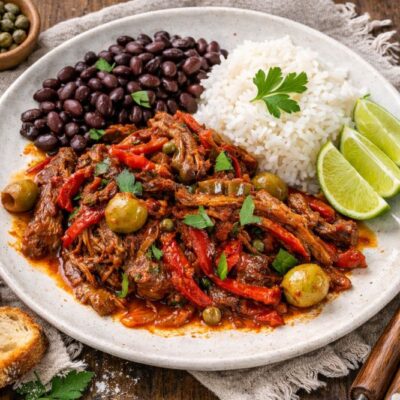
Arroz tapado is one of the most immediate and familiar recipes in Peruvian cuisine: a dome of white rice enclosing a juicy filling of ground beef, onions, chili peppers, olives, hard-boiled eggs, and, in many versions, raisins. The name literally means “covered rice” and accurately describes the dish’s structure: a layer of rice on the bottom of the mold, the filling in the center, and a second layer that closes everything before inverting the portion onto a plate.
It’s not a baked flan and doesn’t require gelling agents or eggs mixed into the rice. The shape is obtained simply by pressing the still-hot ingredients into a bowl or individual mold. The rice must therefore be dry, well-cooked, and loose, while the filling must be moist but free of free liquid: if it’s too dry, the dish becomes compact and lacks balance; if it’s watery, the dome will break as soon as it’s removed from the mold.
The origins of arroz tapado are unclear. In Peru, it is generally considered a Creole and family-style dish, particularly associated with the northern regions, although today it is prepared throughout the country. More than a codified recipe, it represents an adaptable home-cooked dish: the rice encloses a picadillo , a base of minced meat flavored with onion, garlic, chili pepper, and sweet and savory ingredients.
The combination of raisins, olives, and hard-boiled eggs recalls numerous Latin American fillings, from empanadas to papa rellena. The balance works because each element has a specific role: the raisins provide a measured sweetness, the olives introduce salt and a slight bitterness, the egg softens the filling, and the ají panca adds depth without making the dish overly spicy.
Arroz tapado is often served as a complete meal, accompanied by a fresh salsa criolla or, in the variant called a lo pobre (poor man’s sauce) , a fried egg, fried ripe plantains, and sometimes chips. The complete version is richer and more substantial; the classic version, with onion and lime salsa, maintains a better balance of rice, meat, and freshness.
Ingredients for 6 people
For the rice
- 480g long grain rice
- 750 ml of water
- 2 cloves of garlic
- 25 ml of oil
- 8 g of salt
For the meat filling
- 600 g minced beef
- 2 large red onions, about 320g
- 3 cloves of garlic
- 35 g of ají panca paste
- 15 g of ají amarillo paste
- 2 ripe tomatoes, about 250 g
- 60 g of raisins
- 80 g Peruvian black olives or flavorful black olives
- 3 eggs
- 40 ml of oil
- 1 teaspoon ground cumin
- half a teaspoon of dried oregano
- 80 ml of meat broth
- 2 tablespoons chopped parsley
- salt
- black pepper
For the salsa criolla
- 1 large red onion
- 2 lime
- 1 fresh chili pepper or half a yellow ají
- 2 tablespoons chopped coriander
- salt
Times
Prep: 35 minutes
Cook: 40 minutes
Rest: 10 minutes
Total time: approximately 1 hour and 25 minutes
How to prepare rice
Rinse the rice two or three times in cold water, without scrubbing excessively, until the water becomes less cloudy. This step removes some of the surface starch and helps produce more distinct grains.
Heat the oil in a saucepan and sauté the two crushed garlic cloves for about a minute, without letting them brown. Add the well-drained rice and toast it for two minutes, stirring until each grain is coated in a thin layer of fat.
Pour in the water, add salt, and bring to a boil. Reduce the heat to low, cover, and cook for 14-16 minutes, stirring constantly. Then, turn off the heat and let the rice rest, covered, for another 10 minutes.
Remove the garlic and gently separate the grains with a fork. The rice should be cooked but dry, as it will need to hold the shape of the mold. If it’s too moist, spread it out on a platter for a few minutes before assembling the dish.
How to prepare eggs, olives and raisins
Place the eggs in a saucepan, cover with cold water, and cook for nine minutes from the moment they reach a boil. Cool them immediately, peel them, and cut them into cubes or small wedges.
Cover the raisins with warm water and let them soak for ten minutes. Drain and dry them well. This step prevents them from absorbing too much of the filling liquid during cooking.
Pit the olives and slice them thickly. Traditional Peruvian olives, dark and fleshy, have a more intense flavor than the common supermarket black olives. If you can’t find them, choose dried Greek olives or plain black olives, avoiding those that are too bland and watery.
How to prepare the meat filling
Finely chop the onions and garlic cloves. Peel the tomatoes, remove the watery part with the seeds, and dice the pulp.
Heat the oil in a large skillet and cook the onion over medium-low heat for about ten minutes. It should soften and turn lightly golden, without burning at the edges. Add the garlic and cook for a minute.
Combine the ají panca and ají amarillo pastes. Cook for four or five minutes, stirring frequently, until the base turns dark red and the oil begins to separate slightly from the aderezo. Cooking the chili pastes thoroughly is important to remove the raw flavor and develop their fruity, toasted notes.
Add the ground beef and raise the heat slightly. Break it up with a wooden spoon, but don’t grind it too finely: the filling should retain a noticeable consistency.
Brown the meat for six or seven minutes, until it completely loses its pink color and begins to brown. Season with cumin, oregano, pepper, and a pinch of salt.
Add the tomatoes and cook for another five minutes. Pour in the broth and let the filling simmer over medium heat until the liquid is almost completely reduced. The final mixture should be soft and juicy, but there should be no water left on the bottom of the pan.
Add the raisins, olives, and hard-boiled eggs. Mix gently and garnish with chopped parsley. Taste before adding more salt, as olives can be quite salty.
Let the filling rest for five minutes. It should remain warm, but not boiling, when poured into the molds.
How to assemble arroz tapado
Lightly grease the insides of six individual bowls or molds, each holding about 350-400 ml. You don’t need much oil: a thin layer is enough to help the rice release.
Fill each mold about a third full with warm rice. Press it gently with the back of a spoon, making sure it adheres to the sides. Don’t press too hard, or the portion will become too compact.
Add four or five generous spoonfuls of filling to the center, leaving a small margin along the edge. Level the meat and cover with more rice until it reaches the rim of the pan.
Press gently again and let it rest for a minute. Place the plate on the mold, invert both with a firm motion, and slowly lift the bowl.
The dome must maintain a regular shape, while the filling must remain completely enclosed between the two layers of rice.
How to prepare criolla sauce
Slice the red onion very thinly. Soak it in cold water for ten minutes, then drain and pat dry. The soaking reduces the most aggressive flavor without eliminating the crunchiness.
Season with lime juice, salt, finely chopped chili pepper, and cilantro. Let it rest for only five minutes before serving: if it sits in the lime juice too long, it will lose its consistency and become duller in color.
Place a small amount of salsa criolla next to the rice tapado or on top of the dome. Its acidity is important because it lightens the sweet and savory character of the filling.
How should arroz tapado be?
The rice should be well-cooked but not mushy, with distinct grains and enough structure to hold its shape. It shouldn’t become a sticky mass or pressed together like a timbale.
The filling should be fragrant, moist, and well-bound. The meat adds flavor and structure, the ají panca adds depth, the raisins introduce a brief sweetness, and the olives create a sharp salty contrast.
The amount of rice and meat must be balanced. A dome made almost entirely of rice will be dry; conversely, too much filling will make it difficult to unmold the dish. The ideal ratio is approximately two parts cooked rice to one part picadillo.
How to Substitute Peruvian Ingredients
Ají panca is a Peruvian chili pepper with a fruity, slightly smoky, and moderately spicy flavor. It’s available in paste form in Latin American grocery stores. If you don’t have one, you can use a blend of sweet paprika, a little smoked paprika, and a pinch of chili pepper.
Yellow ají has a fresher, more tropical flavor. It can be substituted with fresh yellow chili pepper and a small amount of roasted yellow bell pepper, although the flavor won’t be the same.
Peruvian black olives can be replaced with well-drained Kalamata olives. They are more flavorful and vinous than regular black olives and maintain a more distinct presence in the filling.
Arroz tapado a lo pobre
The “a lo pobre” variation transforms the dish into a particularly rich meal. The rice dome is served with a fried egg, slices of fried ripe plantain, and sometimes potatoes.
To prepare it, cut two very ripe plantains diagonally and fry them in a little oil until golden and caramelized. Cook an egg sunny-side up for each guest, leaving the yolk still soft, and place it on top of the dome.
This is a hearty version, where the egg yolk becomes almost a sauce and the plantain accentuates the sweetness of the picadillo. In this case, it’s best to slightly reduce the raisins in the filling to prevent the dish from becoming too sweet.
Variations of arroz tapado
The beef can be replaced with minced chicken, pork, tuna, or a mix of vegetables and legumes. There are also versions made with leftover roasts, an effective home solution for using up already-cooked meat without drying it out.
The tuna version is more delicate and requires less intense frying, while the vegetarian version can be prepared with lentils, mushrooms, olives, and hard-boiled eggs.
Not all families use raisins or tomatoes. Some prepare a drier filling, based exclusively on onion, garlic, meat, ají, olives, and eggs. The basic structure remains the same: rice, savory filling, and a second layer of rice.
How to store and reheat arroz tapado
The rice and filling can be prepared a few hours in advance, but they should be cooled quickly and stored separately in the refrigerator.
Assembled arroz tapado will keep for a day, tightly covered. To reheat it, it’s best to steam it or microwave it with a lid, adding a few drops of water to the rice. A traditional oven tends to dry out the surface.
For food safety reasons, cooked rice should not be left at room temperature for many hours. Once cooled, it should be immediately placed in the refrigerator and reheated only once.
Which wine to pair with arroz tapado?
The meat, olives, raisins, and ají call for a juicy red wine, low in tannins and with a spicy note. A particularly suitable pairing is Cacique Maravilla’s País “Pipeño Tinto ,” artisanally produced in Chile’s Bío-Bío region: it has fresh red fruit, a slight rusticity, and a supple structure, capable of accompanying the filling without stiffening the rice.
For a more intense version, especially with fried egg and plantain, the Listán Negro “7 Fuentes” from Suertes del Marqués works well , a volcanic wine from Tenerife with notes of pepper, dark fruits and a saline vein that effectively balances the sweetness of the dish.
Those who prefer a white can choose Bodega Cueva’s Moscatel “La Misión ,” a handcrafted Valencian maceration with a dry, citrusy, and slightly tannic aroma. Its intensity holds up well with ají, olives, and salsa criolla without being overly sweet.
Cocktail
Nutritional values per 100 g
- Calories: 184 kcal
- Carbohydrates: 24.2 g
- Protein: 8.8 g
- Fat: 5.7 g
- Fiber: 1.1 g
- Sodium: 285 mg