
From Lafite to Latour: The Pauillac AOC That Rules Global Wine Auctions
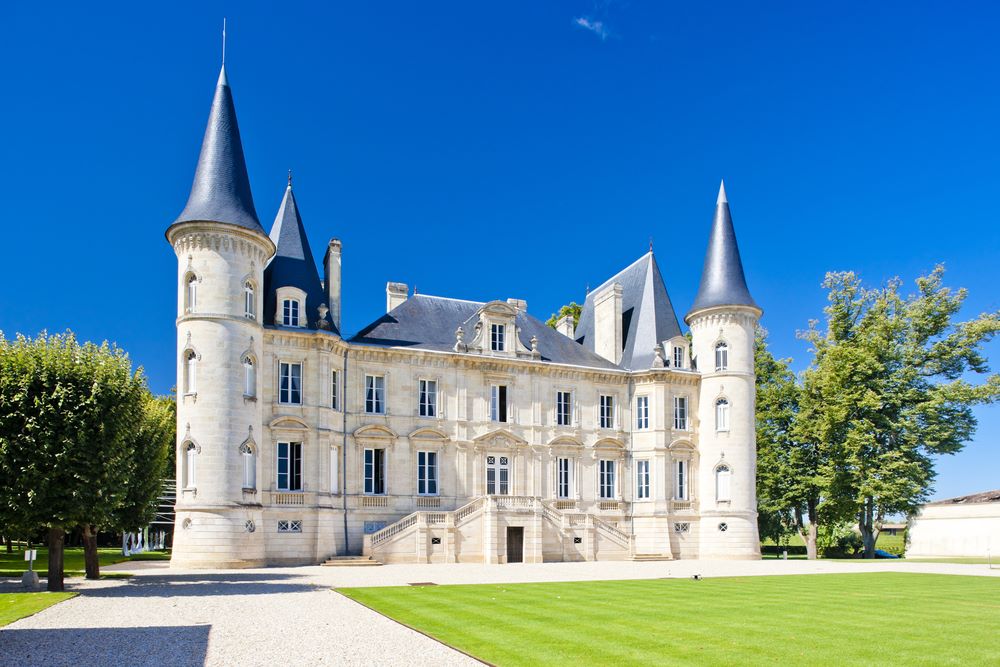
Pauillac is one of the clearest places in Bordeaux to understand why Cabernet Sauvignon became the defining grape of the Left Bank. The appellation occupies a narrow strip of the Médoc along the Gironde estuary, where deep gravel terraces, excellent drainage and a temperate oceanic climate create conditions that suit late-ripening Cabernet almost perfectly.
Its reputation is extraordinary even by Bordeaux standards. Pauillac contains 18 Grands Crus Classés from the 1855 classification, including three of the five First Growths: Château Lafite Rothschild, Château Latour and Château Mouton Rothschild. Yet prestige alone does not explain the appellation. The real fascination lies in how much variation exists within roughly 1,220 hectares of vineyard, from the powerful southern gravel around Bages and Saint-Lambert to the refined northern sectors near Lafite and the Saint-Estèphe border.
Classic Pauillac combines blackcurrant, blackberry, cedar, graphite, mint, tobacco and firm tannin, usually with enough acidity to support very long ageing. The strongest wines can remain compelling for several decades, but the modern style has moved away from the notion that seriousness requires brutality. Better viticulture, more precise extraction and improved tannin management have made many contemporary Pauillacs more approachable without sacrificing structure.
The Basics
- Appellation: Pauillac AOC / AOP
- Region: Bordeaux
- Subregion: Médoc
- Bank: Left Bank
- AOC recognition: 1936
- Wine colour: Red only
- Vineyard area: About 1,220 hectares
- Number of growers: Around 47
- 1855 Grands Crus Classés: 18
- First Growths: Lafite Rothschild, Latour, Mouton Rothschild
- Main grape: Cabernet Sauvignon
- Other authorised grapes: Merlot, Cabernet Franc, Petit Verdot, Carmenère and Malbec
- Minimum planting density: 7,000 vines/ha
- Maximum standard yield: 57 hl/ha
- Minimum natural alcohol: 11%
- Main soils: Gravel, sandy gravel, clay and underlying limestone/marl
- Typical aromas: Cassis, blackberry, cedar, graphite, mint, tobacco
- Body: Medium-full to full
- Tannin: Medium-high to high
- Acidity: Medium to medium-high
- Typical ageing: 8–15 years for simpler wines; 15–30+ years for serious classified growths
- Serving temperature: Around 16–18°C
Where Pauillac Sits

Pauillac lies in the central Médoc, roughly 50 kilometres north of Bordeaux, between Saint-Julien to the south and Saint-Estèphe to the north. The vineyards stretch along the left bank of the Gironde estuary, with the best parcels occupying low gravel ridges rather than steep slopes.
The landscape appears gentle, but small elevation differences matter enormously. The official geological description places the gravel terraces between roughly 3 and 30 metres above sea level, with successive ridges cut by streams and drainage channels.
These slight rises create the famous croupes de graves, mounds of deep gravel that drain quickly after rain and warm efficiently in sunlight. Cabernet Sauvignon, with its late ripening cycle, benefits particularly strongly from those conditions.
Pauillac is therefore less about altitude than about micro-topography.
The Three Main Gravel Systems
The appellation can be read through three broad gravel sectors.
The southern system, around Saint-Lambert and Bages, is the largest and contains several major estates including Latour, the two Pichons, Lynch-Bages, Grand-Puy-Lacoste and others.
The central sector is structured around Artigues and includes Mouton Rothschild and neighbouring properties.
The northern gravel system, around Pouyalet, extends toward Lafite and the Saint-Estèphe border.
These sectors are separated by small valleys and drainage channels, which influence both soil depth and local water movement.
This helps explain why Pauillac cannot be reduced to one uniform style despite its compact size.
Why Gravel Matters
Gravel is the foundation of Pauillac’s reputation, but its role is often oversimplified.
The stones themselves do not transmit a literal graphite or mineral flavour into the wine. Their importance is physical: they promote drainage, warm rapidly during the day and force vine roots to explore deeper layers where clay, marl or limestone can provide more stable access to moisture.
That combination is especially valuable for Cabernet Sauvignon, which needs a long season to ripen seeds, skins and tannins properly.
Too much water encourages vigour and dilution.
Too little water can stop ripening.
Pauillac’s best gravel ridges regulate this balance unusually well.
Gravel Is Not the Whole Soil
The classic image of Pauillac is pale gravel, but the subsoil is more complex.
Quaternary gravel terraces often sit above older Eocene and Oligocene limestone and marl, while windblown sand and clay appear in different proportions across the appellation.
The official production zone deliberately excludes poorly drained modern alluvium, excessive aeolian sand and parcels sitting on impermeable subsoil.
This matters because the greatest vineyards depend on drainage without complete dehydration.
At Lafite, for example, deep fine gravel mixes with windblown sand over a well-drained limestone subsoil. At Duhart-Milon, gravel is mixed with meaningful clay content, producing a slightly broader texture.
Pauillac’s hierarchy is therefore built on combinations, not one soil type.
The Gironde Estuary
The Gironde moderates temperature throughout the growing season.
Its large body of water reduces climatic extremes, helping limit severe frost and moderating heat during summer. This is particularly important in a region where Cabernet Sauvignon needs enough warmth to mature but also benefits from a long, gradual ripening period.
The Atlantic Ocean provides another moderating influence.
Together they create a temperate oceanic climate with significant vintage variation.
Rain can disrupt flowering, véraison or harvest, while warm dry autumns can produce exceptional Cabernet maturity.
This vintage sensitivity is fundamental to classic Bordeaux.
Pauillac is never exactly the same two years in a row.
Cabernet Sauvignon Is the Structural Core
Cabernet Sauvignon dominates the finest Pauillac blends because the local soils suit its needs exceptionally well.
The grape contributes cassis, blackcurrant, cedar, mint and firm tannin, with strong acidity and significant ageing potential.
Its small berries and thick skins provide colour and phenolic structure, while the gravel encourages complete ripening without excessive water availability.
This explains why the proportion of Cabernet can become very high in top wines.
Certain vintages of Lafite, Latour or Mouton can approach or exceed 90% Cabernet Sauvignon.
The grape does not simply appear in Pauillac.
It defines the architecture of the appellation.
Merlot Is More Important Than It Looks
Merlot plays the crucial supporting role.
It ripens earlier than Cabernet Sauvignon and contributes plum, blackberry, softness and mid-palate volume, helping round the tannic framework of the blend.
Its proportion changes according to estate, parcel and vintage.
Clay-influenced sectors can favour Merlot more strongly, while the deepest gravel ridges typically privilege Cabernet Sauvignon.
Modern warming has also changed the balance. Cabernet now ripens more reliably than it did historically, reducing the need to rely on Merlot simply for softness.
This partly explains the increasingly Cabernet-dominant style of several leading estates.
Cabernet Franc
Cabernet Franc is usually a minor component but can add violet, redcurrant, raspberry and aromatic lift.
It generally performs best on sites with enough warmth and drainage to avoid vegetal flavours.
In Pauillac it rarely dominates a blend, but small proportions can make a major aromatic difference.
The grape is particularly useful in vintages where perfume and freshness need reinforcement.
Its role is subtle rather than structural.
Petit Verdot
Petit Verdot is even later ripening than Cabernet Sauvignon and historically struggled to mature fully in cooler Bordeaux vintages.
Climate change has made it more reliable.
At full maturity, it adds colour, blueberry, violet, spice and firm tannin, often in small proportions.
Too much can make the wine aggressive.
A few percentage points can contribute remarkable energy.
Several modern Pauillac blends use Petit Verdot more confidently than in the past.
Carmenère and Malbec
Both Carmenère and Malbec remain legally authorised in Pauillac, though their practical importance is minimal.
They are part of the historical Bordeaux varietal family and survive more as regulatory possibilities than major contemporary components.
Their presence in the disciplinare is a reminder that Bordeaux was once far more varietally diverse than the modern Cabernet-Merlot shorthand suggests.
For serious Pauillac today, however, Cabernet Sauvignon remains overwhelmingly dominant.
What Pauillac Tastes Like
Classic young Pauillac begins with blackcurrant, blackberry and dark plum, often joined by graphite, cedar, mint and tobacco.
Oak contributes spice, smoke and toast, but in serious wines these notes should integrate with time rather than dominate.
Young tannins can be firm, sometimes severe.
With age, the fruit becomes less primary and more complex aromas emerge: cigar box, leather, forest floor, dried herbs, pencil shavings and truffle.
The transition can take a decade or more.
That slow evolution is one of the appellation’s defining qualities.
Graphite and Pencil Shavings
Few tasting descriptors are more closely associated with Pauillac than graphite and pencil lead.
These are sensory analogies rather than literal geological transfers.
Cabernet Sauvignon, oak ageing, reduction and the aromatic compounds created during maturation can combine to produce impressions reminiscent of graphite, cedar and sharpened pencil.
Because Pauillac often combines high Cabernet proportions with long barrel ageing, these notes appear particularly consistently.
They are therefore useful descriptors even if the mechanism is not as simple as “gravel tastes like stone.”
Cedar
Cedar is another hallmark of mature Pauillac.
The aroma often emerges from the interaction between Cabernet Sauvignon’s varietal profile and long ageing in French oak.
In good bottles, cedar becomes integrated with cassis and tobacco rather than feeling like a separate barrel flavour.
It is one of the clearest signals that a young fruit-driven Pauillac is beginning to move into secondary complexity.
Too much obvious cedar in a young wine can indicate aggressive oak.
In mature Pauillac, it becomes part of the identity.
Tannin: The Backbone of the Appellation
Pauillac is built around tannin.
Cabernet Sauvignon naturally brings significant phenolic structure, and low-yielding gravel sites can concentrate it further.
Historically, extraction was sometimes severe, producing wines that needed decades simply to soften.
Modern cellar work is more precise. Temperature control, gentler pumping over and parcel-specific extraction allow producers to preserve structure without making wines unnecessarily hard.
The best contemporary Pauillac still has grip.
It simply carries that grip more cleanly.
Why Pauillac Ages So Well
Longevity comes from the combination of tannin, acidity, concentration and Cabernet Sauvignon’s aromatic stability.
Young fruit fades slowly because the wines possess enough phenolic material to resist oxidation and evolve gradually.
Good village-level or unclassified Pauillac can age for eight to twelve years.
Classified growths routinely develop for fifteen to thirty years.
Top First Growths from strong vintages can remain alive for half a century or longer.
Ageing changes texture as much as flavour.
Firm tannin becomes increasingly silky, while the wine gains aromatic complexity without necessarily losing freshness.
The 1855 Classification
No appellation is more deeply tied to the 1855 Bordeaux Classification than Pauillac.
The classification was created for the Paris Exposition Universelle under Napoleon III and organised Médoc estates largely according to market reputation and price at the time.
Pauillac contains 18 classified growths, an extraordinary concentration within such a small area.
The modern hierarchy includes three First Growths, two Seconds, one Fourth and twelve Fifth Growths.
There are no Third Growths in Pauillac.
This odd distribution reflects historical commerce rather than a geometric quality ladder.
The Three First Growths
Pauillac contains Château Lafite Rothschild, Château Latour and Château Mouton Rothschild.
Only Margaux and Haut-Brion sit alongside them within the top 1855 rank.
Mouton was originally classified Second Growth and was promoted to First Growth in 1973, the only major alteration to the hierarchy.
The three Pauillac First Growths are stylistically distinct.
Lafite is generally associated with finesse and aromatic precision.
Latour is usually the most powerful and structurally monumental.
Mouton often combines richness, exotic fruit and more flamboyant texture.
Their shared appellation does not make them interchangeable.
Château Lafite Rothschild
Lafite occupies the northern edge of Pauillac near Saint-Estèphe.
Its vineyard covers around 112 hectares, with deep fine gravel and windblown sand over tertiary limestone.
Cabernet Sauvignon dominates, supported by Merlot, Cabernet Franc and Petit Verdot.
Lafite’s reputation rests on a paradoxical style: immense longevity without obvious heaviness.
The wines can be austere in youth but develop extraordinary cedar, cassis, tobacco and mineral detail with age.
Among Pauillac’s great estates, Lafite is often the most restrained.
Château Latour
Latour sits farther south near the Gironde on one of the appellation’s most famous gravel ridges.
The core vineyard, the Enclos, is heavily Cabernet-driven and produces some of the most structurally powerful wine in Bordeaux.
Latour combines density, tannin and extraordinary persistence.
Young bottles can be imposing.
Mature bottles often retain remarkable freshness even after several decades.
The château also differs commercially from most Bordeaux estates because it withdrew from the traditional en primeur release system and now releases wines only when considered ready.
Château Mouton Rothschild
Mouton occupies the central-northern section of Pauillac and is known for a richer, more extroverted style than Lafite.
Cabernet Sauvignon remains dominant, but the fruit often feels more opulent, with cassis, blackberry, spice and exotic oak complexity.
Mouton’s label tradition, with a different artist commissioned for each vintage, made the estate culturally famous far beyond wine.
The vineyard’s quality, however, is what secured its promotion to First Growth in 1973.
Modern vintages combine concentration with increasing precision.
Pichon Baron
Château Pichon Longueville Baron is one of Pauillac’s two Second Growths.
Its vineyards lie south of the town near Latour, on deep gravel soils particularly suited to Cabernet Sauvignon.
The style is typically structured and classical, with blackcurrant, graphite, cedar and firm tannin.
Pichon Baron can be stern young but ages superbly.
For drinkers who want classic Pauillac architecture without First Growth pricing, it remains one of the clearest reference points.
Pichon Comtesse de Lalande
Across the road, Château Pichon Longueville Comtesse de Lalande often produces a somewhat more supple interpretation.
The estate historically carried a larger proportion of Merlot and other varieties than some neighbouring properties, giving the wine additional perfume and mid-palate generosity.
Modern blends are increasingly Cabernet-focused, but the style still tends toward finesse rather than sheer force.
Pichon Comtesse shows how dramatically two adjacent estates can express Pauillac differently.
Lynch-Bages
Château Lynch-Bages is officially a Fifth Growth, but its market reputation has long exceeded that rank.
The estate lies in the Bages sector and produces broad, dark-fruited Pauillac with cassis, cedar and generous structure.
Modern vintages combine richness with far greater precision than many older examples.
Lynch-Bages is particularly useful for understanding how little the 1855 rank necessarily predicts present-day reputation.
Classification is historical.
Estate evolution is continuous.
Grand-Puy-Lacoste
Grand-Puy-Lacoste is another Fifth Growth with a reputation well above what the number might suggest.
The style is often described as especially classical: Cabernet-dominant, structured, restrained in youth and highly age-worthy.
Blackcurrant, graphite, cedar and tobacco become more expressive with bottle age.
For drinkers who value traditional Pauillac more than immediate ripeness, Grand-Puy-Lacoste is one of the strongest references in the appellation.
Pontet-Canet
Pontet-Canet sits opposite Mouton Rothschild and has become one of Pauillac’s most discussed estates of the modern era.
The château moved toward biodynamic viticulture, introduced amphorae alongside oak and significantly changed its farming philosophy.
The wines became richer, more textural and often more expressive in youth than traditional Pauillac.
Pontet-Canet helped show that a Fifth Growth could reinvent itself completely without leaving the identity of the appellation.
It also demonstrates how producer philosophy now matters almost as much as historical classification.
Duhart-Milon
Duhart-Milon is Pauillac’s only Fourth Growth and belongs to the Lafite Rothschild group.
Its vineyards contain sandy gravel with varying proportions of clay, and the estate currently plants roughly two-thirds Cabernet Sauvignon and one-third Merlot.
The wines generally feel less monumental than Lafite but share some of the same restrained, cedar-driven character.
Duhart-Milon can offer a particularly clear view of northern Pauillac without entering First Growth pricing.
Batailley
Château Batailley is a classic Fifth Growth from the southern Pauillac sector.
The wines tend toward firm Cabernet structure, cassis, cedar and relatively traditional élevage.
Batailley is often less glamorous than Lynch-Bages or Pontet-Canet, which can make it more attractive for drinkers interested in classic style rather than prestige.
It usually benefits from several years of bottle age.
Haut-Batailley
Haut-Batailley lies close to the Saint-Julien border and can show a slightly more polished, less massive expression of Pauillac.
The estate has undergone significant redevelopment in recent years, with renewed vineyard and cellar investment.
Its location helps explain the stylistic transition between the broader power of central Pauillac and the more refined texture often associated with Saint-Julien.
Clerc Milon and d’Armailhac
Both estates sit near Mouton Rothschild and belong to the same broader Rothschild sphere.
Clerc Milon often produces a more structured and complex wine, while d’Armailhac can be somewhat earlier drinking and more supple.
Both remain Cabernet-driven but include meaningful proportions of Merlot and other varieties depending on vintage.
These wines provide a useful way to study central Pauillac without moving immediately into Mouton pricing.
Pédesclaux
Château Pédesclaux has undergone major redevelopment and now produces a much more precise style than its historical reputation might suggest.
Modern vineyard mapping, gravity-flow cellar design and stricter selection have increased consistency significantly.
It is a strong example of how the Fifth Growth category contains estates whose current quality differs enormously from their nineteenth-century commercial rank.
Northern Pauillac
The northern sector around Lafite and the Saint-Estèphe border often produces wines with slightly more linear, aristocratic structure.
Gravel remains deep, but clay and limestone influence can become more important.
The wines can feel less broad than those from Bages and more reserved in youth.
Lafite defines the prestige end of this style.
Duhart-Milon provides another interpretation from nearby soils.
Central Pauillac
The central gravel system around Artigues and Mouton produces some of the appellation’s richest Cabernet.
Mouton, Clerc Milon and d’Armailhac illustrate how nearby vineyards can share dark fruit and structure while differing markedly in texture and oak integration.
These wines often feel more generous than northern Pauillac without becoming as monumental as Latour.
Southern Pauillac
The southern sector around Bages and Saint-Lambert contains an extraordinary density of famous estates.
Latour, Pichon Baron, Pichon Comtesse, Lynch-Bages, Grand-Puy-Lacoste and several others all sit within this wider system.
The wines commonly show strong black fruit, graphite and substantial tannic depth.
Proximity to Saint-Julien can soften the stylistic boundary in certain parcels, but the best southern Pauillac still feels unmistakably Cabernet-driven.
Pauillac vs Saint-Estèphe
Saint-Estèphe lies immediately north and generally contains more clay in the soil.
This often produces wines with firmer tannin, darker savoury character and slightly greater rusticity in youth.
Pauillac usually feels more polished and Cabernet-pure, with cassis and graphite more clearly defined.
Modern winemaking has narrowed the difference, but it remains useful.
Saint-Estèphe often feels earthier.
Pauillac feels more architectural.
Pauillac vs Saint-Julien
Saint-Julien lies to the south and is often considered the most balanced or refined of the major Médoc communes.
Its wines generally carry slightly softer tannins, more floral detail and less overt mass than Pauillac.
Pauillac usually delivers greater black-fruit density and a firmer Cabernet backbone.
The distinction becomes especially interesting along the border, where geology changes gradually rather than suddenly.
Saint-Julien tends toward finesse.
Pauillac tends toward authority.
Pauillac vs Margaux
Margaux is the most aromatic and perfumed of the major Médoc appellations.
Violet, red fruit and silky texture appear more frequently, while tannins can feel finer.
Pauillac is darker and more structured, with cassis, cedar and graphite at the centre.
Both can age for decades.
The difference lies less in quality than in shape.
Margaux expands aromatically.
Pauillac tightens structurally.
Pauillac vs Pessac-Léognan
Both regions produce Cabernet Sauvignon on gravel, but Pessac-Léognan lies much farther south and includes both red and white wines.
Its reds often show smoke, earth and tobacco alongside black fruit, with a slightly warmer profile.
Pauillac generally displays more pure cassis, cedar and graphite.
The Gironde’s influence and deeper Médoc gravel give Pauillac a distinct structural style.
Oak Ageing
French oak remains central to Pauillac.
Most classified growths age their Grand Vin for roughly 16–20 months, though exact practices vary.
New-oak proportions can be high because Cabernet Sauvignon has enough structure and fruit concentration to absorb it.
The danger is obvious: excessive toast, vanilla and wood tannin can obscure vineyard character.
Modern top producers increasingly focus on oak integration rather than oak display.
After a decade in bottle, barrel flavour should have become part of the wine rather than a separate layer.
Extraction
Pauillac historically rewarded firm extraction because long ageing was expected.
That approach could produce extremely austere young wines.
Today extraction is more parcel-specific.
Gentler pumping over, lower temperatures and greater attention to seed and skin maturity allow winemakers to preserve tannin without forcing it.
The modern objective is not less structure.
It is finer structure.
This distinction explains why recent top vintages can be more approachable in youth without losing longevity.
Harvest Timing
Cabernet Sauvignon requires patience.
Picking too early produces green tannin and herbal flavours.
Picking too late can push alcohol too high and reduce acidity.
Climate change has made full Cabernet maturity easier, but it has also compressed harvest decisions.
The best estates now focus heavily on parcel-by-parcel picking rather than waiting for one general moment.
Pauillac’s complexity comes partly from harvesting many small blocks at different levels of maturity.
Climate Change
Pauillac has benefited from warmer vintages in one important sense: Cabernet Sauvignon now reaches full phenolic maturity more consistently.
The challenge is preserving freshness.
Hotter summers can raise sugar quickly, while drought increases water stress on free-draining gravel.
Clay layers and deeper root systems are becoming more important as climate buffers.
Many estates are also adjusting canopy management, soil work and planting material.
The appellation is well adapted to heat compared with cooler regions, but resilience is not unlimited.
Vintage Variation
Vintage remains crucial in Pauillac.
Cool years emphasise acidity, cedar and more austere tannin.
Warm dry vintages produce greater cassis ripeness, softer texture and higher alcohol.
Great years combine full phenolic maturity with freshness and a long dry finish.
Modern cellar precision has reduced the number of genuinely poor vintages, but it has not erased vintage character.
A 2016 and a 2018 Pauillac can come from the same estate and still feel very different.
That variation is part of Bordeaux’s identity.
Can Pauillac Be Drunk Young?
Yes, particularly second wines and less ambitious estates.
Modern tannin management also makes some classified growths more expressive earlier than historical examples.
Yet the greatest Pauillac still benefits from time.
A young bottle may show cassis and oak impressively, but the real complexity appears when cedar, tobacco and tertiary aromas emerge.
For serious Grand Vin, five years is usually only the beginning.
Ten to fifteen years often reveal far more.
Second Wines
Second wines are increasingly important because they offer access to major estates at lower prices.
Examples include Carruades de Lafite, Les Forts de Latour, Petit Mouton, Echo de Lynch-Bages and Les Griffons de Pichon Baron.
These wines generally contain more Merlot, younger-vine fruit or parcels not selected for the Grand Vin.
They are usually softer and earlier drinking.
Quality can still be exceptionally high.
The distinction is one of selection and style, not simple inferiority.
The Problem with the 1855 Ranking
The 1855 classification remains historically important but should not be treated as a precise modern quality score.
Lynch-Bages, Pontet-Canet and Grand-Puy-Lacoste are all Fifth Growths despite commanding reputations comparable with higher-ranked estates.
Conversely, not every classified château performs at the same level every vintage.
The ranking records nineteenth-century commercial reputation.
Modern quality depends on vineyard work, investment, selection and winemaking.
Pauillac is one of the best places to see that gap.
What Makes Great Pauillac?
Great Pauillac begins with Cabernet Sauvignon that is fully ripe but still fresh. Cassis, blackberry and cedar should sit above a firm tannic structure without becoming jammy or over-extracted.
The middle of the palate needs density, but the finish should tighten rather than spread.
Graphite, tobacco and oak-derived spice should add complexity without obscuring fruit.
Most importantly, the wine should have enough internal balance to improve for decades.
Power alone is easy to achieve.
Precision is what separates the great bottles.
What Makes Great Pauillac Different from Generic Left Bank Bordeaux?
The distinction is density and definition.
Generic Médoc or Haut-Médoc can show the same Cabernet vocabulary, but top Pauillac concentrates it into a more structured form.
Cassis becomes deeper.
Tannin becomes more persistent.
Cedar and graphite become more clearly articulated.
The wine also evolves more slowly.
This is why great Pauillac often feels less immediately charming than softer Bordeaux but substantially more complete after bottle age.
Serving Pauillac
Serve young Pauillac around 16–18°C.
Too warm and alcohol and oak become obvious; too cold and tannin feels harder.
Young classified growths may benefit from one to two hours of decanting.
Mature bottles should be decanted more cautiously, mainly to remove sediment.
Large Bordeaux glasses suit the wine’s aromatic profile and tannic structure.
Food Pairings
Keep pairings compact and savoury: roast lamb, rib of beef, duck, venison, braised beef and mature hard cheese suit Pauillac’s Cabernet structure.
The local Agneau de Pauillac is the traditional reference pairing, particularly with mature wines.
How Much Does Pauillac Cost?
Pauillac covers one of the widest price ranges in Bordeaux.
Less famous estates and second-label wines can begin around €30–€50.
Good classified growths often sit between €60 and €150, while Lynch-Bages, Pontet-Canet, Pichon Baron or Pichon Comtesse can move substantially higher depending on vintage.
First Growth pricing belongs to another category entirely. Recent vintages of Lafite commonly trade around €600–€900 per bottle, with older or more sought-after vintages significantly higher.
This pricing is driven by scarcity, classification, global demand and investment value as much as pure drinking quality.
Where the Value Is
The most interesting buying zone is usually below First Growth level.
Grand-Puy-Lacoste, Batailley, Haut-Batailley, Duhart-Milon and selected vintages of Clerc Milon or d’Armailhac can deliver very clear Pauillac character without entering the most extreme pricing.
Second wines can also make sense when provenance is good and the objective is earlier drinking.
The less useful strategy is paying heavily for classification alone.
Producer, vintage and bottle condition matter more.
Why Pauillac Still Defines the Left Bank
Pauillac’s reputation is not simply the result of famous labels. The appellation brings together almost every structural element associated with serious Left Bank Bordeaux: deep gravel, Cabernet Sauvignon, maritime moderation, low-yielding old vines and long barrel ageing.
The concentration of historic estates then amplifies those natural advantages through centuries of investment and selection.
What makes Pauillac particularly compelling is that power rarely exists alone. Lafite can be delicate, Latour monumental, Mouton flamboyant, Pichon Comtesse refined and Grand-Puy-Lacoste classical, yet all remain recognisably Pauillac because cassis, tannin, cedar and gravel-driven structure bind them together.
That combination of internal variation and clear communal identity is why Pauillac remains one of Bordeaux’s most convincing appellations rather than merely one of its most expensive.

