Gravel, Clay and Legend: How Saint-Estèphe Defines Classic Bordeaux
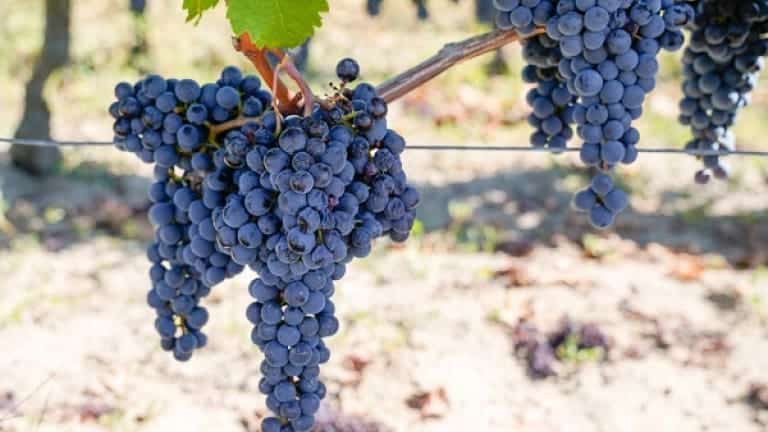
Saint-Estèphe is the northernmost of the great communal appellations of the Médoc, and that position matters. The wines share the Left Bank’s classic Cabernet Sauvignon structure, but the soils generally contain more clay than those of Pauillac, giving the appellation a reputation for greater density, darker fruit and firmer tannin. Historically, this could make young Saint-Estèphe feel austere. Modern viticulture and more precise extraction have changed that picture considerably, allowing the best wines to preserve their power while becoming more refined.
The appellation covers roughly 1,200–1,250 hectares and includes five Grands Crus Classés from the 1855 classification, alongside a large group of Crus Bourgeois and Crus Artisans. Cabernet Sauvignon remains the dominant grape, but Merlot is unusually important here, representing around 40% of plantings and thriving in the clay-rich sectors where it can provide roundness and early accessibility.
Classic Saint-Estèphe combines blackcurrant, blackberry, plum, violet, cedar, tobacco, liquorice and spice, often with a cooler, more earthy profile than Pauillac. The strongest examples can age for decades, but the appellation should not be reduced to hard tannin and patience. Its real interest lies in the way gravel and clay interact, creating a style that is both powerful and increasingly nuanced.
The Basics
- Appellation: Saint-Estèphe AOC / AOP
- Region: Bordeaux
- Subregion: Médoc
- Bank: Left Bank
- AOC recognition: 1936
- Wine colour: Red only
- Vineyard area: About 1,200–1,250 ha
- Number of estates: Around 69
- Approximate vineyard share: Cabernet Sauvignon 50%, Merlot 40%, Cabernet Franc 7%, Petit Verdot 3%
- Grape varieties: Cabernet Sauvignon (dominant), Merlot, Cabernet Franc, Petit Verdot, Malbec
- Main soils: Gravel, clay-gravel, clay, limestone and mixed sandy-gravel sectors
- 1855 Grands Crus Classés: 5
- Typical aromas: Cassis, blackberry, plum, violet, liquorice, tobacco, cedar, spice
- Body: Medium-full to full
- Tannin: Medium-high to high
- Acidity: Medium to medium-high
- Typical ageing: 8–12 years for good estate wines; 15–30+ years for major classified growths
- Serving temperature: 16–18°C
Where Saint-Estèphe Sits
Saint-Estèphe lies immediately north of Pauillac, along the Gironde estuary. It is the most northerly of the four major Médoc communal appellations, and the vineyards occupy a landscape of low gravel ridges broken by small valleys and drainage channels.
The proximity to the estuary moderates temperature, while the Atlantic climate keeps vintage variation significant. Rain during flowering or harvest can complicate ripening, but warm dry summers followed by stable autumns allow Cabernet Sauvignon to mature fully.
The northern position historically made complete Cabernet ripeness slightly more difficult than in Pauillac. This is one reason Merlot became so important locally: it ripens earlier and performs especially well in the heavier clay sectors.
Climate change has reduced that historical gap, and Cabernet now reaches full maturity more reliably than it once did.
Why Saint-Estèphe Is More Clay-Driven
Saint-Estèphe’s most important geological distinction is the greater presence of clay beneath and between the gravel terraces.
Gravel still provides the drainage and warmth associated with classic Médoc Cabernet, but clay stores water more effectively and regulates vine stress during dry summers. This gives the wines greater mid-palate breadth and can make Merlot particularly successful.
The combination is critical. Pure gravel can produce highly linear Cabernet. Gravel over clay adds weight, water resilience and texture.
Saint-Estèphe therefore tends to feel denser than Pauillac even when alcohol and Cabernet proportions are similar.
Gravel Still Matters
The appellation is not simply heavy clay.
The best vineyards occupy well-drained gravel rises, sometimes with limestone or sandy elements, while less favourable low-lying or poorly drained soils are excluded from serious production.
This creates considerable internal variation.
Cos d’Estournel sits on particularly prominent gravel near the Pauillac border. Montrose occupies gravel terraces directly facing the Gironde. Calon Ségur combines thick Quaternary gravel with a predominantly clay subsoil.
All are Saint-Estèphe.
They do not taste the same.
The Role of Limestone
INAO documentation also identifies limestone as part of the appellation’s geology.
Its importance is less visually obvious than the gravel and clay, but calcareous subsoils can contribute drainage and influence root development.
Estates such as Capbern work a mix of sandy-gravelly, clayey-gravelly and chalky soils, illustrating how heterogeneous the appellation can be even within one property.
Saint-Estèphe is therefore better understood as a mosaic than as one uniform clay terroir.
Cabernet Sauvignon: The Spine
Cabernet Sauvignon represents about half of the planted vineyard and provides the appellation’s structural identity.
Expect blackcurrant, blackberry, cedar, graphite, mint and firm tannin, with substantial ageing capacity.
On the gravel ridges, the grape can ripen very slowly, developing thick skins and high phenolic concentration. In strong vintages, the wines are dark and powerful without becoming excessively alcoholic.
Compared with Pauillac, the tannic texture can feel broader and more earthy.
The fruit often sits slightly lower in the register.
Why Merlot Matters More Here
Merlot accounts for roughly 40% of the vineyard, an unusually high proportion for a prestigious Left Bank communal appellation.
The explanation is largely geological.
Clay retains water and remains cooler than gravel during the hottest periods, conditions in which Merlot can perform exceptionally well. It brings plum, blackberry, softness and mid-palate volume, helping balance Cabernet’s firmness.
In cooler vintages, Merlot can also provide the ripe fruit that Cabernet struggles to achieve.
This is why some Saint-Estèphe second wines and certain estates can use surprisingly high Merlot percentages without losing regional identity.
Cabernet Franc
Cabernet Franc occupies a smaller role, around 7% of the vineyard.
It contributes violet, red berry and herbal complexity, particularly in parcels where full aromatic maturity is achieved.
The variety is rarely dominant, but it can add lift to blends that might otherwise feel too dark or dense.
Its importance becomes more obvious in cooler years and in mature bottles where floral notes remain visible after primary fruit has softened.
Petit Verdot
Petit Verdot is used sparingly but can be extremely effective.
It adds colour, spice, violet and additional tannin, particularly in warm years when it reaches complete ripeness.
Historically, its late cycle made it risky this far north in the Médoc.
Warmer recent vintages have made it easier to use confidently.
A small percentage can give the final blend considerable energy.
What Saint-Estèphe Tastes Like
The classic profile begins with cassis, blackberry and dark plum, often joined by violet and graphite.
Earth, liquorice, tobacco and cedar appear early in more structured wines, while oak can bring coffee, toast and spice.
With age, the fruit becomes less primary and more savoury notes emerge: leather, forest floor, truffle, dried herbs and cigar box.
Compared with Pauillac, the wines generally feel broader and darker.
Compared with Saint-Julien, they are more tannic and less immediately polished.
Tannin Is the Defining Structural Feature
Saint-Estèphe built its reputation on tannin.
Historically, some examples were almost forbidding in youth, combining Cabernet’s natural phenolics with firm extraction and relatively cool vintages.
That stereotype is increasingly outdated.
Modern estates monitor berry maturity more carefully, extract more selectively and harvest parcel by parcel. The wines still have grip, but tannin quality is far finer than it was several decades ago.
The best bottles remain structured without feeling brutal.
Why the Wines Age So Well
Longevity comes from the combination of tannin, acidity, fruit concentration and moderate alcohol.
Good estate-level Saint-Estèphe can develop for a decade or more, while classified growths routinely evolve for twenty years and beyond.
Calon Ségur still cites historic vintages such as 1947, 1953 and 1982 as examples of the estate’s ability to retain freshness over extraordinary periods.
Ageing changes the wine profoundly. The rough edges soften, black fruit becomes more complex and cedar, tobacco and earthy aromas move forward.
This is an appellation where bottle age often reveals more than decanting ever can.
The Five 1855 Grands Crus Classés
Saint-Estèphe has five classified growths:
- Château Cos d’Estournel – Second Growth
- Château Montrose – Second Growth
- Château Calon Ségur – Third Growth
- Château Lafon-Rochet – Fourth Growth
- Château Cos Labory – Fifth Growth
This is far fewer than Pauillac, but the quality at the top is exceptionally high.
Cos d’Estournel and Montrose in particular operate at a level that regularly places them among the most serious wines of the Left Bank.
The hierarchy below them is also increasingly competitive.
Cos d’Estournel
Cos d’Estournel sits close to the Pauillac border on the famous Cos gravel rise and is one of the most distinctive estates in Bordeaux.
The vineyard combines deep gravel with clay beneath, allowing Cabernet Sauvignon to achieve full ripeness while maintaining substantial water reserves.
The style is often rich and exotic, with blackcurrant, spice, tobacco and dark fruit, but recent vintages have become more precise and less overtly opulent than some earlier modern releases.
Cos can be flamboyant without losing the tannic architecture expected from Saint-Estèphe.
It is one of the clearest examples of the appellation’s ability to combine mass and refinement.
Château Montrose
Montrose occupies a remarkable position directly above the Gironde on gravel terraces formed by the river.
Its vineyard is heavily oriented toward Cabernet Sauvignon and has historically produced one of Saint-Estèphe’s most severe, long-lived styles.
Modern Montrose remains powerful, but the texture has become much more refined.
The wines typically show cassis, black cherry, violet, graphite and firm tannin, with exceptional freshness.
Among the appellation’s great estates, Montrose often feels the most architectural.
Calon Ségur
Calon Ségur lies farther north and is one of the oldest historically documented estates in the Médoc.
Its soils combine a thick layer of Quaternary gravel with a predominantly clay Tertiary subsoil, plus a thin clay layer near the surface in some sectors.
The estate currently plants approximately 57% Cabernet Sauvignon, 34% Merlot, 7% Cabernet Franc and 2% Petit Verdot.
The Grand Vin is aged for around 18–20 months, traditionally with a very high proportion of new oak.
Modern Calon Ségur balances Saint-Estèphe’s density with considerable finesse and has become one of the appellation’s most consistently precise wines.
Lafon-Rochet
Lafon-Rochet is the sole Fourth Growth of Saint-Estèphe.
Its vineyards sit close to Cos d’Estournel and benefit from a mix of gravel and clay-rich soils.
The style generally combines black fruit, graphite and spice with substantial tannin, but recent investment has increasingly emphasised freshness and more careful extraction.
Lafon-Rochet often offers one of the more accessible routes into classified Saint-Estèphe without entering the price category of Cos or Montrose.
Cos Labory
Cos Labory is the appellation’s Fifth Growth and sits on the same broader gravel rise as Cos d’Estournel.
The wine tends to be more direct and less monumental, but good vintages show classic Saint-Estèphe traits: dark fruit, tobacco, spice and firm tannin.
Recent examples have gained greater polish without losing structure.
It remains one of the more affordable classified-growth entries in the appellation.
Capbern
Château Capbern is one of the most useful non-classified references.
Owned by the same group as Calon Ségur, it benefits from similar technical expertise but comes from separate vineyards with sandy-gravel, clay-gravel and calcareous soils.
The estate is planted roughly half Cabernet Sauvignon and almost half Merlot, producing wines with considerable Saint-Estèphe identity but earlier accessibility.
For value, Capbern is difficult to ignore.
Phélan Ségur
Phélan Ségur is one of the best-known unclassified estates in the appellation.
Its vineyards lie between Montrose and Calon Ségur, giving it exceptional neighbours despite its absence from the 1855 hierarchy.
The wines are generally Cabernet-led, dark-fruited and firm but polished, with significant ageing capacity.
Phélan Ségur illustrates how incomplete the 1855 classification becomes when used as a modern quality map.
Meyney
Château Meyney is another crucial Saint-Estèphe estate outside the classified-growth system.
Its vineyards sit close to Montrose and the Gironde, on gravel over clay.
The wines are typically powerful, savoury and Cabernet-driven, with dark fruit and substantial structure.
Meyney is particularly attractive because prices remain far below the appellation’s elite while the terroir is extremely serious.
It is one of the best places to look for value.
Haut-Marbuzet
Haut-Marbuzet represents a more generous stylistic interpretation.
The estate became famous for using a high proportion of Merlot and significant new oak, producing rounder, richer Saint-Estèphe than the austere historical stereotype.
Ripe black fruit, vanilla, tobacco and spice are often prominent.
The style is more immediate than Montrose or Calon Ségur, but still unmistakably grounded in the appellation’s density.
It remains a useful reminder that Saint-Estèphe has never been stylistically uniform.
Ormes de Pez
Ormes de Pez belongs to the Cazes family, owners of Lynch-Bages in Pauillac.
The estate generally produces a balanced, approachable version of Saint-Estèphe with substantial Merlot influence.
The wines combine dark fruit and cedar with softer tannin than the more monumental estates.
This makes Ormes de Pez particularly useful for drinkers who want appellation character without waiting fifteen years.
The Northern Sector
Northern Saint-Estèphe around Calon Ségur tends to show more clay influence and often greater Merlot importance.
The wines can be broad, deep and slow to evolve, with black fruit and earthy complexity.
This sector also benefits from good water retention during dry years, which is becoming increasingly valuable under warmer conditions.
The structure is often substantial but less overtly gravel-driven than the southern border with Pauillac.
The Southern Border with Pauillac
The southern sector around Cos d’Estournel and Cos Labory lies directly against Pauillac and contains some of the appellation’s most famous gravel.
Cabernet Sauvignon performs particularly well here.
The wines can feel more linear and polished than the heaviest northern examples, narrowing the stylistic gap with Pauillac.
This is where Saint-Estèphe most clearly demonstrates that communal boundaries do not create sudden geological changes.
Terroir shifts gradually.
The Montrose Sector
Montrose’s position near the Gironde creates another distinct style.
The vineyards are strongly influenced by river moderation and lie on well-drained gravel terraces with important clay beneath.
The wines combine high Cabernet percentages with exceptional water regulation.
This helps explain both their concentration and their ability to retain freshness in warm vintages.
Montrose is perhaps the best demonstration of how gravel and clay can cooperate rather than compete.
Saint-Estèphe vs Pauillac
This is the essential comparison.
Pauillac usually gives more pure cassis, cedar and graphite, with a slightly more linear Cabernet structure.
Saint-Estèphe often carries more clay-derived breadth, darker fruit and greater earthy depth.
Merlot also plays a larger role in Saint-Estèphe.
Historically, Pauillac felt more polished and Saint-Estèphe more austere. Modern winemaking has narrowed that distinction considerably.
The fundamental difference now is texture rather than quality.
Saint-Estèphe vs Saint-Julien
Saint-Julien generally produces more refined and immediately harmonious Cabernet blends.
Its tannins tend to feel finer, and floral notes are often more visible.
Saint-Estèphe is darker, firmer and broader.
Where Saint-Julien often feels balanced from the start, Saint-Estèphe can require more time before all components align.
This makes Saint-Estèphe particularly compelling for drinkers who value structure and evolution over immediate polish.
Saint-Estèphe vs Margaux
Margaux emphasises perfume, red fruit and silky texture.
Saint-Estèphe sits at the opposite end of the Médoc spectrum, with more dark fruit, earth and tannic weight.
Both can age beautifully, but they develop along different trajectories.
Margaux becomes more ethereal with age.
Saint-Estèphe becomes more integrated and savoury.
The Importance of Cru Bourgeois
Saint-Estèphe’s identity is not built solely around its five classified growths.
The appellation contains around twenty Crus Bourgeois and several Crus Artisans, creating one of the Médoc’s deepest benches of affordable serious wine.
This matters enormously for drinkers because many of these estates occupy excellent soils but lacked the historical commercial status required for classification in 1855.
Modern vineyard work has narrowed the gap.
A strong Cru Bourgeois Saint-Estèphe can offer far more appellation character per euro than many famous labels.
Oak Ageing
French oak remains central to the top wines.
Major estates generally age their Grand Vin for roughly 16–20 months, with new-oak proportions ranging from moderate to 100% depending on château.
Calon Ségur, for example, uses a very high proportion of new barrels for its Grand Vin, while second and third wines rely more heavily on used oak.
The appellation’s dense fruit and tannin can absorb significant wood.
The risk is still over-marking the wine.
Great Saint-Estèphe should smell of cassis, earth and cedar rather than vanilla alone.
Extraction
Extraction has historically been one of the critical issues.
Dense Cabernet fruit on clay-gravel soils already provides significant tannin. Aggressive pumping over or long hot maceration can push the wine into unnecessary hardness.
Modern practice increasingly focuses on finer extraction, lower fermentation temperatures and shorter or more carefully judged macerations.
The result is a style that remains powerful but opens earlier.
Saint-Estèphe has not become lighter.
It has become more precise.
Second Wines
Second wines can be particularly interesting here because they often contain more Merlot and younger-vine fruit.
Le Marquis de Calon Ségur, for example, uses much higher average Merlot proportions than the Grand Vin and is designed around a softer, more immediate texture.
Cos d’Estournel, Montrose and other major estates also produce second labels that give access to estate terroir without the concentration or price of the flagship wine.
These bottles can be useful for understanding house style before committing to the Grand Vin.
Climate Change
Climate change has altered Saint-Estèphe in two contradictory ways.
Cabernet Sauvignon now ripens more reliably, reducing green tannins and making the wines more polished.
At the same time, hotter summers and drought increase the importance of clay because it retains water more effectively than pure gravel.
This may actually strengthen one of Saint-Estèphe’s traditional advantages.
The challenge will be avoiding excessive sugar and alcohol while preserving acidity.
Future vineyard value may depend increasingly on water regulation rather than warmth alone.
Vintage Variation
Cool vintages produce more linear, herbal and tannic wines.
Warm dry years bring riper blackberry and cassis, softer tannin and greater immediate volume.
The best years combine full Cabernet maturity with fresh acidity and enough rain or clay-based water reserves to avoid vine shutdown.
Saint-Estèphe can be particularly successful in warm vintages because its clay helps regulate drought stress.
This has made recent hot years increasingly favourable when farming is precise.
Can You Drink Saint-Estèphe Young?
Yes, more easily than the old stereotype suggests.
Cru Bourgeois, second wines and Merlot-rich estates can be attractive within three to six years.
Major classified growths remain another matter.
Montrose, Cos, Calon Ségur and top Phélan Ségur generally benefit from much more time.
Even modern examples often gain significant complexity after ten years.
Youth gives fruit and structure.
Age gives integration.
Serving Saint-Estèphe
Serve around 16–18°C.
Young structured wines can benefit from one to two hours of decanting, particularly if Cabernet dominates.
Mature bottles should be decanted gently for sediment rather than exposed aggressively.
A large Bordeaux glass suits the combination of dark fruit, cedar and tannin.
Food Pairings

Keep the pairings straightforward and savoury: roast lamb, rib of beef, duck, venison, braised beef and mature hard cheese all suit the appellation.
How Much Does Saint-Estèphe Cost?
Saint-Estèphe remains one of the more interesting value zones among the great Médoc communes.
Good unclassified or Cru Bourgeois bottles can still begin around €25–€40.
Strong names such as Capbern, Meyney, Ormes de Pez or selected Haut-Marbuzet vintages often sit around €35–€70.
Lafon-Rochet and Cos Labory frequently occupy roughly the €45–€70 range depending on vintage.
Calon Ségur, Montrose and Cos d’Estournel operate much higher, often around €140–€250+, with individual vintages moving significantly beyond that.
Where the Value Is
Saint-Estèphe’s value lies below the elite tier.
Meyney, Capbern, Phélan Ségur, Ormes de Pez, Lafon-Rochet and Cos Labory can deliver substantial appellation character without Pauillac-level pricing.
The best buying strategy is to focus on estate trajectory and vintage rather than historical classification alone.
Several unclassified properties now outperform weaker classified wines regularly.
Saint-Estèphe rewards attention more than status chasing.
What Makes Great Saint-Estèphe?
Great Saint-Estèphe needs power without coarseness. Blackcurrant, blackberry and plum should be supported by tobacco, liquorice and cedar, while tannins need enough grain and freshness to carry the wine for years without making it exhausting in youth.
The clay component should add depth rather than heaviness, and Merlot should soften the mid-palate without blurring Cabernet’s structure. Oak can contribute spice and texture but should disappear into the wine with time.
The strongest bottles retain a distinct northern Médoc character: darker, broader and earthier than Pauillac, yet increasingly refined.