
Vermentino di Sardegna: Why This Mediterranean White Wine Is Becoming Italy’s Most Gastronomic Secret
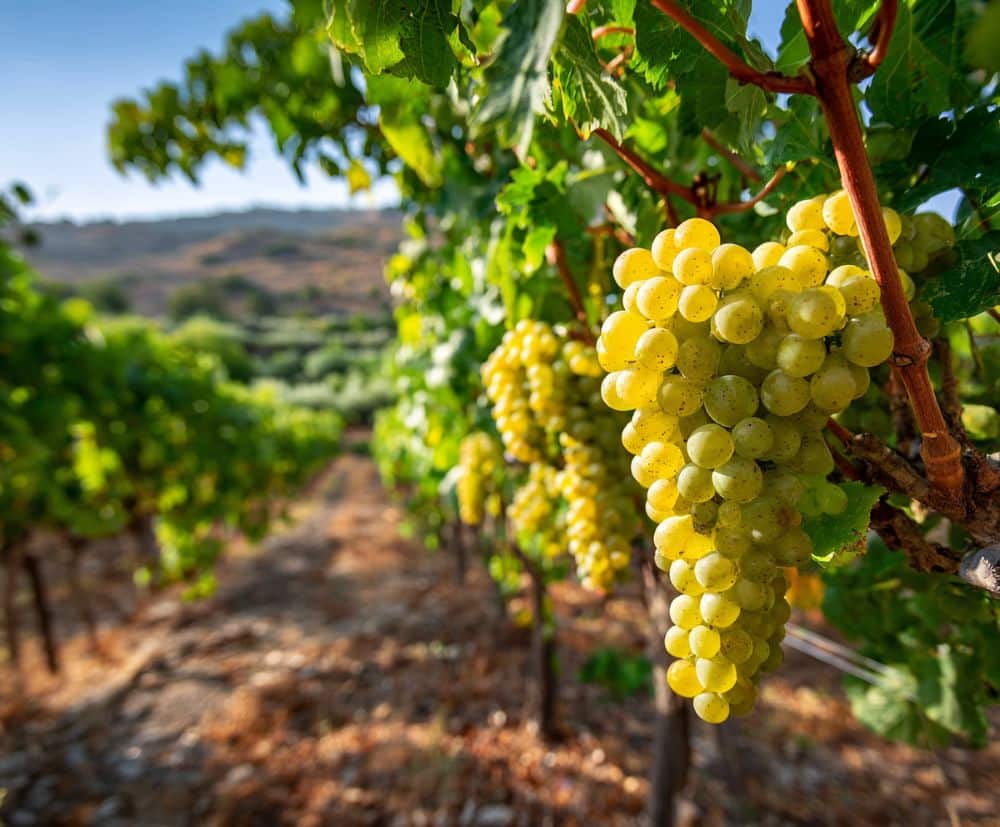
Vermentino di Sardegna is one of the Italian white wines that best captures the Mediterranean in the glass. It’s not just a summer or aperitif wine: in the right areas, it becomes savory, deep, capable of aging, and above all, extremely gastronomical. Sardinia offers Vermentino ideal conditions—constant wind, intense light, poor soils, and proximity to the sea—transforming a grape variety common in the Tyrrhenian Sea into a more assertive and distinctive version. Here, the wine takes on a distinct character: aromatic freshness, surprising structure, and a recognizable savory signature.
The Basics
- Year of establishment: 1988
- Region: Sardinia
- Vineyard area: approximately 4,500 hectares
- Grape variety: Vermentino minimum 85%
- Production area: the whole island
- Climate: breezy Mediterranean
- Soils: disintegrated granites, sands, limestones and coastal clays
- Vineyard altitude: from sea level up to 500 m
- Types: still, superior, occasionally refined
- Average alcohol: 12.5–14% vol
- Serving temperature: 10–12 °C
- Average price: €10–35
Territory and identity
Unlike Vermentino di Gallura , which has a more defined DOCG territorial designation, Vermentino di Sardegna covers the entire island and therefore exhibits many climatic nuances. However, the northeastern and western coastal areas remain the most suitable. The Mistral , the dominant wind, reduces humidity and keeps the grapes healthy even in the hottest years. The strong light favors complete ripening without losing acidity.
The granite soils of Gallura lend verticality and mineral tension, while the southern and western areas produce softer, more Mediterranean versions. This variability is one of the most interesting aspects of the denomination.
The vine
Vermentino is a variety perfectly adapted to maritime climates. Its thick skin, good drought resistance, and relatively late ripening allow it to withstand challenging climate conditions. In Sardinia, it develops more intense aromas than in other Italian regions, while maintaining a sufficient acidity to sustain the wine over time.
Harvest management is crucial: picking too late leads to broad, alcoholic wines, while slightly anticipating the ripening process preserves precision and momentum.
Production method
Most Vermentino di Sardegna is vinified in stainless steel , with temperature-controlled fermentation to preserve aromatic integrity. More and more producers are focusing on extended maturation on the fine lees to enhance complexity and texture.
Some interpretations call for partial aging in large oak barrels or concrete, a choice that can provide greater depth without losing varietal freshness. The modern style tends to favor balance and tension rather than excessive aromaticity.
Organoleptic characteristics
In the glass, it appears a bright straw yellow , often tinged with greenish reflections in younger versions. The aromatic profile combines ripe citrus, yellow apple, Mediterranean herbs, myrtle, coastal scrub, and fresh almond , with a marine note that emerges especially in wines from vineyards close to the sea.
On the palate, Vermentino di Sardegna displays a broader structure than many Italian whites, supported by freshness and a savory finish that prolongs the sip. The best examples avoid excessive softness and focus on balance, tension, and drinkability.
Evolution and style
While often consumed young, the best Vermentino di Sardegna can age for 5–8 years , developing notes of light honey, dried herbs, and warm stone without losing energy. Versions from older vineyards or granite soils show the greatest potential for aging.
Food pairings
It’s one of the most versatile wines for Mediterranean cuisine. It pairs naturally with grilled fish, shellfish and fregola with seafood, veal with tuna sauce , spaghetti with clams , spaghetti carbonara , and pad thai . It balances well with cheeses, especially with a young Fiore Sardo , a mature ricotta salata , and a semi-cooked Pecorino Sardo , where flavor and freshness interact without overpowering each other.
Reference producers
- Capichera – among the pioneers of modern Vermentino with great structure
- Argiolas – balanced and qualitatively consistent interpretation
- Santadi – technical precision and strong territorial identity
- Mesa – contemporary, clean and Mediterranean style
- Sella & Mosca – a historic reference point for Sardinian winemaking
Price: base and diamond
Base (€10–14)
Costamolino – Argiolas
Direct, fresh and territorial Vermentino, perfect for understanding the style of the denomination.
Artisanal (€18–25)
First White – Mesa
Greater aromatic depth and more defined structure, without losing drinkability.
Iconic (€40–70)
Capichera VT (Late Harvest)
Iconic version that demonstrates the evolutionary potential of Sardinian Vermentino.

