
Lambrusco Is Not What You Think: 14 Bottles That Explain Why

For decades, Lambrusco was exported as an idea rather than understood as a wine: red, fizzy, inexpensive, often sweet and meant to disappear quickly. That version still exists, but it explains modern Lambrusco about as well as generic supermarket Chianti explains Tuscany.
The real landscape is far more complicated. Lambrusco di Sorbara can be pale pink, aggressively acidic and almost saline; Grasparossa can be dark, tannic and grown on the hills around Castelvetro; Salamino can give deep colour and serious structure; Maestri can become unexpectedly powerful when planted on poor hillside soils. Then there are the methods: Martinotti, ancestral refermentation, undisgorged bottle fermentation and Metodo Classico with years on the lees.
Emilia is also full of growers who have stopped treating Lambrusco as a commodity. Some are recovering old clones, some work biodynamically, others bottle tiny quantities from single vineyards or almost forgotten Lambrusco biotypes. These twelve bottles do not form a ranking. Together, they explain why talking about “Lambrusco” as one style no longer makes much sense.
1. Paltrinieri Radice – Lambrusco di Sorbara DOC

Start here if your image of Lambrusco is dark red and slightly sweet, because Radice looks almost like the opposite wine. Alberto Paltrinieri produces it from 100% Sorbara in the historic Cristo di Sorbara area, the narrow strip of land between the Secchia and Panaro rivers where loose, silty and sandy soils suit this notoriously pale and high-acid variety.
Radice undergoes natural refermentation in bottle and remains with its lees, giving it a slightly cloudy salmon-pink appearance. Grapefruit, wild strawberry, rose and pomegranate sit over fierce acidity and a distinctly salty finish. At around 11% alcohol, it has more in common structurally with a razor-sharp rosé sparkling wine than with the old stereotype of red Lambrusco.
It also shows why Sorbara matters: this is not a grape trying to produce colour or weight. Its quality comes from tension, fragrance and acidity.
2. Cantina della Volta Trentasei – Lambrusco di Sorbara Metodo Classico

Christian Bellei has spent years demonstrating that Sorbara can survive a completely different treatment. Trentasei is 100% Lambrusco di Sorbara made by Metodo Classico and aged for a minimum of 36 months on the lees, with secondary fermentation in bottle followed by riddling, disgorgement and dosage.
That extended ageing moves Sorbara away from simple fresh strawberry and toward marasca cherry, redcurrant, wild rose, citrus and autolytic complexity, while the grape’s natural acidity keeps the wine remarkably tight. The mousse is finer and creamier than a conventional frizzante, but the characteristic savoury edge remains.
If anyone still thinks Metodo Classico belongs only to Chardonnay and Pinot Noir, Trentasei is a useful correction. It shows that Lambrusco can absorb long lees ageing without losing regional identity.
3. Fattoria Moretto Canova – Lambrusco Grasparossa di Castelvetro
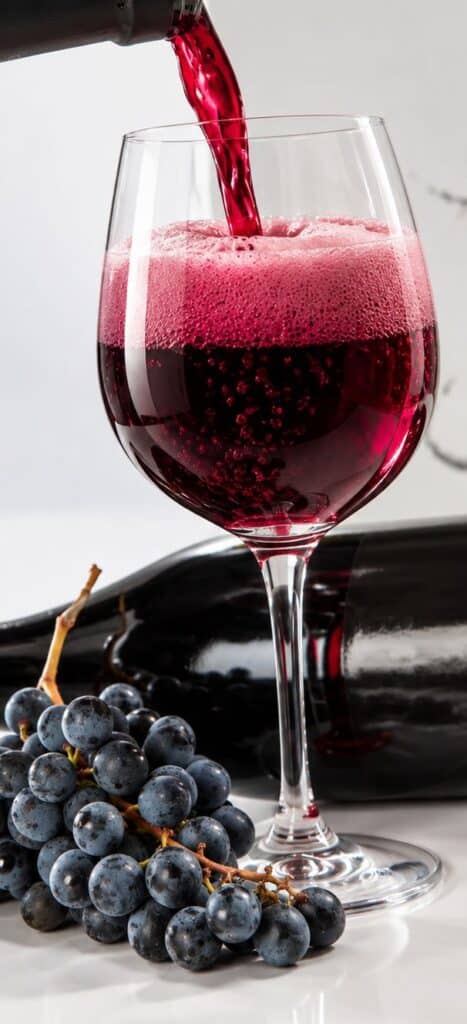
The move from the plains of Sorbara to the hills of Castelvetro changes Lambrusco completely. Fattoria Moretto farms organically on the slopes of Monte Barello, and Canova comes from 100% Grasparossa selected from a single vineyard more than 55 years old.
The colour is deeper, the fruit darker and the tannin far more obvious than in Sorbara. Wild strawberry and red fruit are joined by the grape’s characteristic vinosity, but the important feature is the palate: dry, savoury and genuinely tannic, with enough grip to make the wine useful with food rather than simply refreshing between bites.
Canova is the bottle for anyone who still thinks sparkling red wine cannot have structure. Grasparossa behaves like a red wine first and a sparkling wine second.
4. Podere Il Saliceto Falistra – Lambrusco di Sorbara
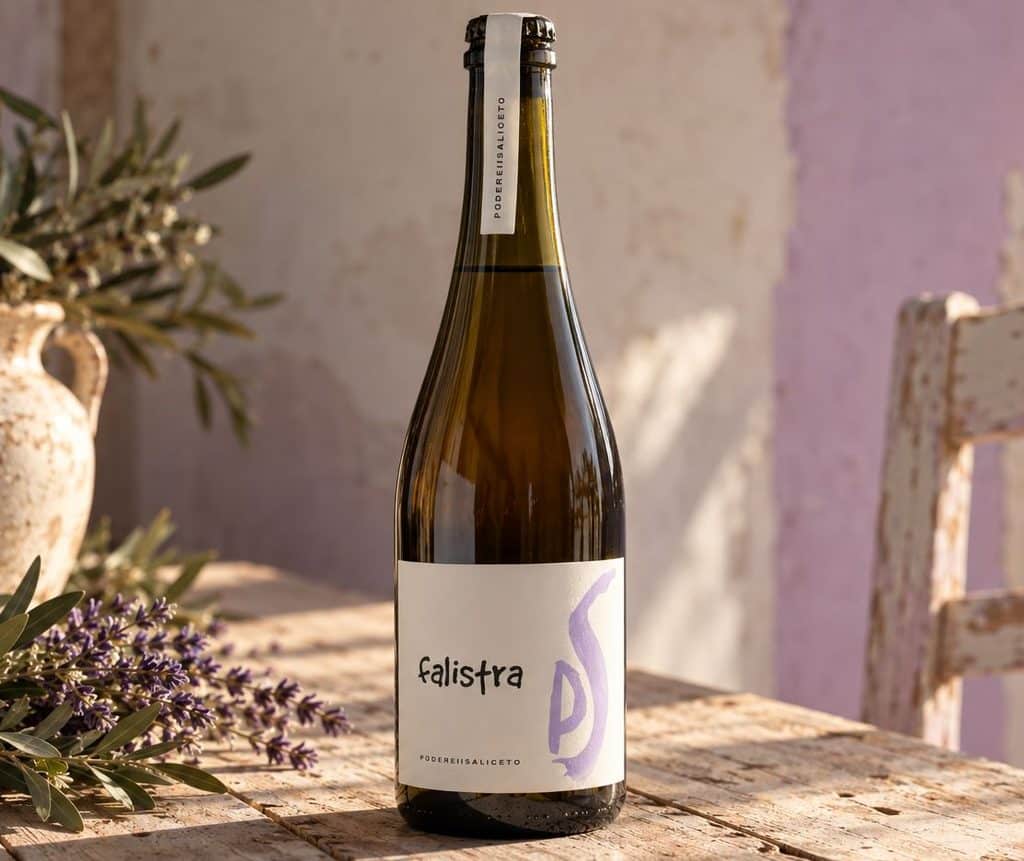
Gian Paolo Isabella and Marcello Righi take Sorbara back toward the old Emilian tradition of refermentation in bottle. Falistra is 100% Sorbara, dry, naturally sparkling and left to develop through its second fermentation in the bottle.
The profile is sharper than polished commercial Lambrusco: morello cherry, wild strawberry and redcurrant, followed by pronounced acidity and a mineral vein. The point is not pristine technical neutrality but energy, and Falistra carries enough bite to work with everything from salumi to marinated fish.
It is also a reminder that bottle-refermented Lambrusco did not arrive in Emilia because pét-nat became fashionable. Emilia had been doing versions of it long before anyone invented the hashtag.
5. Terrevive No Autoclave – The Other Face of Salamino
The name leaves little room for ambiguity. No Autoclave is Terrevive’s rejection of the idea that Lambrusco automatically needs industrial tank fermentation.
The base is Lambrusco Salamino di Santa Croce, joined by Sorbara and Pignoletto in proportions that can vary with the vintage, and the wine completes its refermentation in bottle. Terrevive farms biodynamically at Gargallo di Carpi on sandy-silty soils and works with old local clones rather than chasing maximum yields.
Salamino gives deeper fruit and colour than Sorbara, while the white grapes and Sorbara prevent the blend from becoming too broad. The result has dark berry fruit, acidity and a more rustic, vinous texture, showing why traditional Emilian field blends can be more interesting than varietal purity when the ingredients are good.
6. Vigneto Saetti RossoViola – Lambrusco Salamino di Santa Croce
Luciano Saetti’s RossoViola comes from organically farmed Salamino vines around forty years old. The grapes are harvested manually, macerated for roughly six days, and the wine undergoes its second fermentation strictly in bottle before spending at least six months on the fine lees and being disgorged.
This is darker, more substantial Lambrusco, with violet, red berries and genuine tannic weight rather than Sorbara’s pale delicacy. Saetti also works without added sulphites, but the important point is not ideology; it is what Salamino can become when yields and cellar work are treated seriously.
RossoViola explains one of Lambrusco’s central contradictions beautifully: bubbles do not necessarily mean lightness. This has enough structure to sit at the table like a proper red.
7. Camillo Donati Lambaro – Lambrusco Maestri from the Hills
Lambrusco Maestri is often associated with productive vineyards on the Parma plain, but Camillo Donati grows it at around 300 metres in the hills near Felino, where poorer soils, no irrigation and severe Guyot pruning change its behaviour dramatically.
The result is Lambaro, a wine that can reach 12–13% alcohol and has substantially more body than most Lambrusco. Donati works with spontaneous fermentations and extremely low-intervention cellar practices, and he explicitly considers the wine capable of developing for five years or more.
That ageing potential alone makes Lambaro valuable to this list. Lambrusco is usually sold as something that should be drunk immediately; Maestri grown this way demonstrates that certain examples can become deeper and more complex with bottle age.
8. Vittorio Graziano Fontana dei Boschi – Grasparossa Before “Natural Wine” Became a Category
Vittorio Graziano was making dry, naturally refermented Lambrusco around Castelvetro long before the current fascination with ancestral sparkling wine. Fontana dei Boschi is based on Grasparossa and has become one of the reference bottles for the bottle-refermented Modenese tradition.
The appeal is not cosmetic precision. It is the combination of dark fruit, earth, acidity, dry tannin and energetic bubbles, with the sediment and bottle fermentation forming part of the wine rather than being treated as defects to remove.
Graziano matters historically as much as stylistically. Many younger Emilian producers now working with spontaneous fermentation and second fermentation in bottle are operating on terrain that growers like him helped reopen.
9. Cinque Campi Rio degli Sgoccioli – Red Metodo Classico from Reggio Emilia
Cinque Campi in Puianello di Quattro Castella pushes the category in yet another direction. Rio degli Sgoccioli is a red Lambrusco Metodo Classico produced in very small quantities — around 1,300 bottles in the technical data available — from organically farmed vineyards on clay soils rich in silica and gypsum.
The wine macerates briefly on the skins, spends around six months in concrete and then 8–12 months on the lees in bottle before disgorgement. It reaches around 13% alcohol, making it markedly more substantial than the standard commercial image of Lambrusco.
Strawberry and raspberry are present, but there is also tannin, minerality and enough structure to make this a genuine red sparkling wine rather than a red-coloured aperitif.
10. Podere Sottoilnoce Trifalco – Lambrusco del Pellegrino Refuses to Disappear
This is where Lambrusco becomes almost archaeological. Max Brondolo’s tiny biodynamic Podere Sottoilnoce works only about 6.5 hectares around Castelvetro, preserving local varieties that barely appear outside the area.
Trifalco is made from Lambrusco del Pellegrino, also known locally as Lambrusco Fioranese or Lambruscaun. The fruit comes from hillside vineyards, fermentation is spontaneous, and secondary fermentation takes place in bottle using grape must rather than industrial carbonation or tank fermentation.
It is darker, earthier and more rustic than polished Sorbara, combining wild red fruit with tannin and a distinctly agricultural character. Trifalco is important precisely because it shows that the Lambrusco family extends far beyond the three or four grape names that dominate export markets.
11. Tenuta Pederzana Puntamora – Grasparossa Pushed Toward Full Ripeness
At Solignano Vecchio, Tenuta Pederzana preserves an old selection of Grasparossa grafted onto Golia rootstock across around fourteen hectares of hilly land. Different exposures allow the estate to pick parcels at different stages of maturity, and Puntamora represents one of its more concentrated interpretations of Grasparossa.
This is a useful bottle because it explores ripeness without turning Grasparossa into a sweet wine. The variety naturally brings colour and tannin; allowing it to reach greater maturity adds darker fruit and volume, creating a style much closer to a serious sparkling red than a simple thirst-quencher.
Pederzana also connects modern Lambrusco to old local plant material, something that matters increasingly as producers begin distinguishing between clones and vineyard origins rather than treating “Grasparossa” as one uniform commodity.
12. Francesco Vezzelli Il Selezione – A Reminder That Charmat Is Not the Enemy
It would be easy to build a list like this entirely around ancestral and bottle-refermented wines, but that would create another stereotype. Good Lambrusco does not require sediment or natural-wine aesthetics.
Francesco Vezzelli’s Il Selezione is 100% Sorbara from the floodplain soils around Sozzigalli and Soliera. The best bunches are selected manually, undergo long cold maceration, and the second fermentation takes place in tank using the Charmat method.
The result is ruby rather than pale pink, with rose, violet, forest berries, fine bubbles and a dry, savoury palate. It is clean, controlled and technically polished, yet still recognisably Sorbara.
Its place here is important. Lambrusco’s revival is not a contest between “natural” and “industrial” methods; it is about treating the grape, vineyard and final style seriously.
13.Podere Cipolla Rosa dei Venti

Podere Cipolla Rosa dei Venti takes Grasparossa in almost the opposite direction. Made primarily from Lambrusco Grasparossa with a small proportion of Malbo Gentile, it is vinified as a rosato without skin maceration, ferments spontaneously and undergoes ancestral refermentation in bottle without filtration or disgorgement. At around 11% alcohol, it is pale, floral, red-fruited and markedly more agile than a conventional dark Grasparossa, with a dry, lightly savoury finish. Rosa dei Venti is valuable precisely because it shows how much the same grape can change when colour and extraction are deliberately reduced: Grasparossa does not have to be black, tannic and muscular to remain recognisable.
14.Quarticello Neromaestri

Quarticello Neromaestri is another bottle that deserves attention if you want to understand how serious bottle-refermented Lambrusco can become outside the most obvious Modenese names. Roberto Maestri works in Montecchio Emilia, in the Val d’Enza, following organic and biodynamic principles and fermenting spontaneously with indigenous yeasts. Neromaestri blends 70% Lambrusco Maestri with 30% Grasparossa, undergoes six to eight days of skin maceration and then completes its natural refermentation in bottle without filtration. The result is a dark, dry, structured Lambrusco with more body and tannin than Sorbara, but enough acidity and bottle-fermentation energy to keep it moving. It is a very good example of how the Reggio side of Emilia can produce Lambrusco with both rustic depth and real precision.
Bonus Bottle: Angol d’Amig Scaramusc – Lambrusco dell’Emilia IGP

Scaramusc by Angol d’Amig is the kind of Lambrusco that makes the word itself feel too broad. Marco Lanzotti works in Castelvetro di Modena, blending Lambrusco Grasparossa, Sorbara and Salamino from organically farmed vineyards, with the grapes picked by hand and given around five days of skin maceration before spontaneous bottle refermentation using preserved must from the same wine. The result is dark, dry and vividly fruit-driven, with plum, dark cherry, violet and pomegranate over a light tannic grip and a gentle natural mousse.
What makes Scaramusc especially useful in this article is that it brings all three major Modenese Lambrusco personalities into the same bottle. Grasparossa provides colour and structure, Sorbara brings acidity and lift, while Salamino adds fruit and body, creating a wine that feels broader and more vinous than a pure Sorbara but more agile than a heavily extracted Grasparossa. At around 11.5% ABV and with only a few thousand bottles produced, it is an excellent example of how traditional bottle refermentation and careful blending can make Lambrusco feel both deeply local and completely contemporary.

