
Can a €14 Liqueur Still Be an Icon? Disaronno Makes the Case
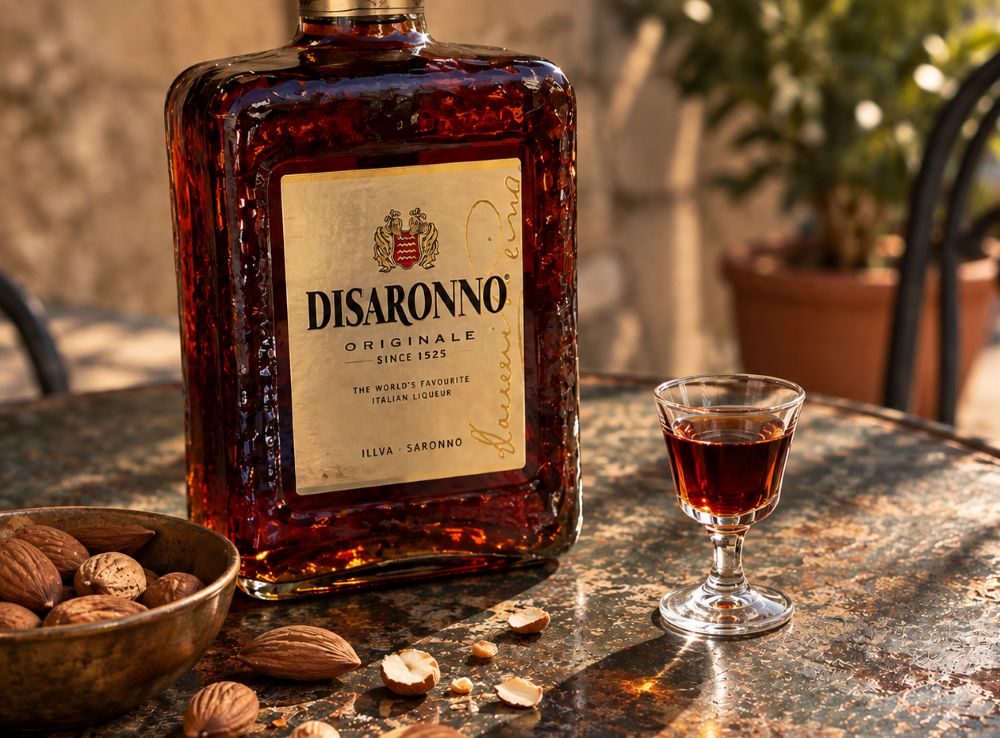
Disaronno Originale is so familiar that it is easy to stop tasting it. The square bottle, the dark amber colour and the unmistakable marzipan-like aroma have become shorthand for an entire category, yet the product itself is more interesting than the stereotype of “sweet amaretto” suggests.
Its identity is tied to Saronno in Lombardy, where the Reina family developed and commercialised the liqueur in the early twentieth century. The much older 1525 story involving Bernardino Luini and the Madonna dei Miracoli belongs to the brand’s founding legend rather than to fully documented production history, but the connection to Saronno is real and central. What matters in the glass is a sweet, intensely aromatic liqueur at 28% ABV, built around fruit, spice and a distinctive marzipan-like profile rather than simple sugar.
The Basics
- Producer: ILLVA Saronno
- Product: Disaronno Originale
- Origin: Saronno, Lombardy
- Category: Italian liqueur / amaretto-style liqueur
- Alcohol: 28% ABV
- Recipe: Proprietary and secret
- Profile: Sweet, fruity, marzipan-like, citrusy, gently spiced
- Colour: Deep amber
- Allergen note: Nut-allergy free
- Best serve: Neat, on ice, or in cocktails
- Current price: Around €14 for 70 cl
Appearance
Deep amber with warm copper reflections. The colour is rich and immediately suggests sweetness, but it remains bright rather than opaque.
Nose
The nose is unmistakable: marzipan, apricot-like stone fruit, orange peel and vanilla arrive first, followed by a warm spice note and a faint caramelised edge.
The aroma is intense but not especially complex. Its strength lies in clarity and recognition rather than subtle evolution, and that is part of why Disaronno works so well in cocktails: the aromatic identity survives dilution easily.
Palate
The palate is sweet and rounded, with marzipan, candied citrus and ripe stone fruit dominating the entry. Vanilla and soft spice appear through the middle, while the 28% alcohol adds enough warmth to keep the texture from becoming completely syrupy.
There is very little bitterness and almost no tannic grip, so the structure depends on sweetness, aroma and alcohol rather than on herbal tension. That makes Disaronno much softer than an amaro and more immediately accessible than most dry digestifs.
The key is balance within that sweetness. The liqueur is rich, but there is enough citrus and alcoholic warmth to stop it from becoming one-dimensional.
Finish
Medium-long, sweet and warming, with marzipan, orange peel, vanilla and a light spice note. The finish remains soft rather than bitter, which reinforces its role as a liqueur rather than a digestif in the stricter herbal sense.
How to Drink It
Disaronno works well neat at room temperature or over a large cube of ice, where dilution reduces the sweetness and opens the citrus side.
Its strongest use, however, is in cocktails. A Disaronno Sour works because lemon gives the liqueur the acidity it lacks on its own, while a Godfather with Scotch or blended whisky adds smoke, grain and dryness to counterbalance the sweetness.
The liqueur is much more versatile when treated as a sweet aromatic modifier rather than as the whole drink.
Food Pairings
Disaronno suits desserts and savoury dishes that can use its marzipan and citrus character without doubling down on sweetness. Try pear and almond tart, apricot crostata with toasted hazelnuts, or roast duck with orange and five-spice glaze.
For cheese, choose Gorgonzola Piccante, Taleggio and Parmigiano Reggiano 30 months. Their salt and savoury intensity create the contrast Disaronno needs.
Price and Value
Current retail is around €14 for 70 cl.
At that price, value is strong. Disaronno is not a niche artisanal liqueur, but it is highly consistent, instantly recognisable and genuinely useful behind the bar. Its fame can make it seem ordinary, yet very few bottles at this price have such a clear aromatic identity.
What Defines Disaronno
Disaronno is defined by recognition rather than complexity. The profile is immediate: marzipan, fruit, citrus and warmth, all delivered with a polished sweetness that makes the liqueur easy to understand from the first sip.

