
Can Italy Make a Serious Brandy Outside Cognac? Vecchia Romagna Etichetta Nera Makes a Better Case Than Its Price Suggests

Vecchia Romagna is one of those bottles that became so familiar in Italy that its historical importance is easy to overlook. The story begins in Bologna in 1820, when Jean Buton, from a French distilling family, established an experimental distillery after settling in Emilia-Romagna. By 1939 the brand had taken the Vecchia Romagna name, along with the triangular bottle and Bacchus emblem that would make it instantly recognisable for generations.
That background matters because Etichetta Nera is not trying to imitate Cognac mechanically. It sits in a specifically Italian tradition of wine distillation, using both continuous and discontinuous distillation and then combining smaller-barrel maturation with larger oak casks. The 40% bottling pictured here has slightly more alcoholic grip than the current 38% release, and that extra strength suits the style well, giving the fruit and spice a little more definition.
The Basics
- Producer: Vecchia Romagna
- Owner: Gruppo Montenegro
- Product: Etichetta Nera
- Category: Italian brandy
- Origin: Emilia-Romagna
- Historical roots: Bologna, 1820
- Bottle reviewed: Older 40% ABV bottling
- Current release: 38% ABV
- Distillation: Blend of continuous and discontinuous distillates
- Discontinuous still: Charentais-style alembic
- Ageing: First in barriques, then in larger oak casks
- Colour: Coppery antique gold
- Style: Rounded, fruity, spicy and oak-driven
- Best serving temperature: Around 18°C
- Current European retail: Around €30 for the 38% release
Appearance
Deep amber-gold with copper reflections. The colour suggests a clear oak influence without moving into the dark mahogany territory of heavily aged brandy.
Nose
The nose is broad and immediately approachable, with baked pear, pineapple and ripe tropical fruit followed by vanilla, cinnamon and clove. There is also a praline-like sweetness and a light caramelised edge that makes the aromatic profile feel warmer than the alcohol level suggests.
What keeps it interesting is the balance between fruit and spice. The pear is not fresh and crunchy; it is more like oven-baked pear with brown sugar, while the oak adds vanilla and clove rather than overt tannin.
On the older 40% bottling, the aromatic profile should feel slightly firmer and less soft than the current 38% version, especially after a few minutes in the glass.
Palate
The palate is smooth and rounded, with caramelised pear, vanilla and sweet spice leading the way. Cinnamon appears through the middle, while clove becomes more evident toward the back of the palate.
The 40% strength gives the spirit a useful backbone. It is still soft and accessible, but there is enough warmth to stop the oak sweetness from becoming flat.
There is no attempt at the austere dryness of a very old Cognac or Armagnac. Vecchia Romagna Etichetta Nera is built around immediacy, with fruit, oak and spice integrated into a soft, generous texture.
Finish
Medium-long, with clove, vanilla, baked pear and a slightly nutty caramel note. The finish is warm rather than fiery, with spice lingering longer than the fruit.
How to Drink It
Serve neat at around 18°C in a tulip-shaped brandy glass.
It can also work in classic brandy cocktails, especially a Brandy Crusta or Sidecar, where the baked-fruit character gives the drink a slightly richer profile than Cognac would.
Food Pairings
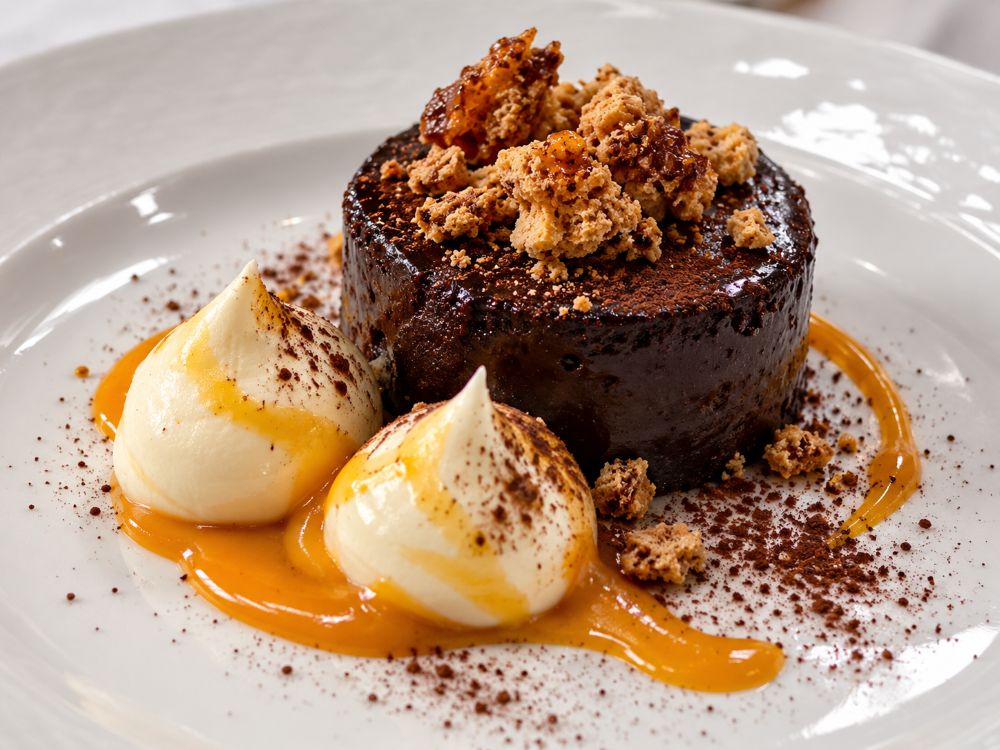
Keep the pairings rich but precise. Try pear tarte Tatin with toasted almonds, roast pork loin with apple and mustard, or chestnut cake with dark chocolate.
For cheese, choose Parmigiano Reggiano 36 months, Taleggio and Castelmagno. The salt and nuttiness balance the sweet spice and caramelised fruit without making the brandy feel heavier.
Price and Value
The current 38% release sells in European specialist retail at around €15 for 70 cl, which keeps Vecchia Romagna in a very accessible position compared with French brandy of similar ambition.
At ordinary retail level, though, Etichetta Nera remains strong value. The production method is more elaborate than its mass-market image suggests, and the spirit has a clearly recognisable profile rather than tasting anonymous.

