
Kirschwasser: Why Europe’s Great Cherry Spirit Is Nothing Like Cherry Brandy
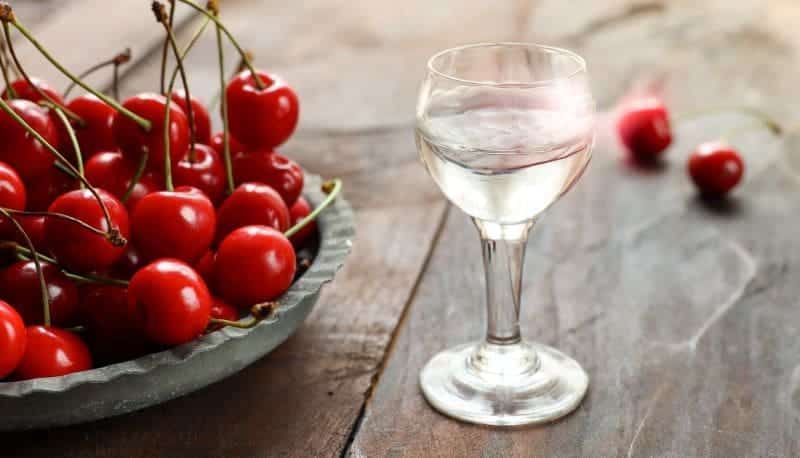
Kirschwasser is one of Europe’s great fruit spirits, yet its reputation has suffered from a persistent misunderstanding. The name is frequently associated with sweet cherry liqueurs, cocktail ingredients and Black Forest cake, when genuine Kirschwasser is something entirely different: a clear, dry spirit distilled from fermented cherries, without the fruit syrups or pronounced sweetness of Cherry Brandy.
Its finest expressions come from a long distilling tradition that stretches across southern Germany, Switzerland and eastern France. The Black Forest is famous for its powerful cherry eaux-de-vie, the Swiss canton of Zug has built a remarkable identity around local distilling cherries, and Alsace produces elegant examples in which fresh fruit and delicate almond notes remain clearly recognisable.
Kirschwasser is particularly interesting because cherries are difficult raw materials for distillation. Their delicate aromas can disappear during fermentation, while the stones contain compounds that require careful handling. The distiller must preserve the fruit’s character without allowing excessive bitterness, harsh alcohol or undesirable stone-derived substances to dominate.
A good Kirschwasser is consequently more subtle than its name suggests. Rather than tasting like fresh cherry juice, it can express white flowers, ripe cherries, bitter almond, dried fruit and gentle spice, supported by a dry, warming palate. Its apparent simplicity conceals considerable technical skill and a history closely connected with the orchards and culinary traditions of central Europe.
The Basics
- Category: Fruit spirit / cherry eau-de-vie
- German name: Kirschwasser, meaning cherry water
- Common shortened name: Kirsch
- Principal countries: Germany, Switzerland, France and Austria
- Raw material: Fermented cherries
- Botanical species: Primarily Prunus avium and, in some traditions, Prunus cerasus
- Production: Cherry fermentation followed by distillation
- Traditional equipment: Copper pot stills
- Typical distillation: Single or double distillation, depending on producer
- Minimum alcohol under EU fruit-spirit rules: 37.5% ABV
- Typical bottling strength: 40–45% ABV
- Colour: Usually clear and colourless
- Sweetness: Dry, with no significant liqueur-like sweetness
- Characteristic aromas: Cherry, almond, white flowers, gentle spice and fruit stones
- Protected regional expressions: Schwarzwälder Kirschwasser, Kirsch d’Alsace, Zuger Kirsch and Rigi Kirsch
- Important distilleries: Schladerer, Etter, Morand, Massenez and Miclo
- Traditional uses: Neat tasting, Swiss cheese fondue, Black Forest gâteau and Zuger Kirschtorte
What Is Kirschwasser?
Kirschwasser is a fruit spirit produced by fermenting cherries and distilling the resulting alcoholic mash or must.
The German name translates literally as cherry water, although the term belongs to the traditional vocabulary of European eaux-de-vie rather than describing a diluted cherry beverage.
Under EU Regulation 2019/787, Kirschwasser falls within the category of fruit spirits. Production must begin with fermented fruit or fruit must, and distillation must preserve the characteristic aroma and flavour of the raw material.
The law establishes a minimum alcoholic strength of 37.5% ABV, prohibits the addition of alcohol from external sources and does not permit flavouring. Limited sweetening is allowed to round the taste, but the finished product cannot contain more than 18 grams of sweetening products per litre, expressed as invert sugar.
Traditional high-quality Kirschwasser is considerably drier than that legal maximum might suggest.
This separates it from Cherry Brandy, which is generally a sweet cherry liqueur, and from products made by flavouring neutral alcohol with cherry extracts.
The finished spirit is usually transparent, although a limited number of producers experiment with oak maturation.
The Origins of Kirschwasser
Cherry distillation developed in the fruit-growing regions of central Europe, particularly where orchards produced large quantities of cherries unsuitable for long-distance transport.
The exact origins are difficult to assign to one country or distillery. Germany, Switzerland and Alsace share a long history of fruit cultivation, fermentation and small-scale agricultural distillation.
Distillation had spread through Europe during the late Middle Ages, initially for medicinal and pharmaceutical purposes. As equipment improved, farmers and distillers began transforming locally available fruit into stronger, more stable spirits.
Cherries were particularly valuable in regions with favourable orchard conditions, but their short harvest season and susceptibility to spoilage made preservation difficult.
Fermentation and distillation provided a practical solution.
Over time, the process evolved from a way of preserving agricultural produce into a specialised craft, with producers selecting particular cherry varieties for their sugar concentration, aromatic character and suitability for fermentation.
By the nineteenth century, Kirschwasser had become closely associated with the Black Forest, the Swiss cherry-growing cantons and the distilling communities of Alsace.
These regions remain central to its identity.
The Black Forest: Germany’s Historic Kirschwasser Region
The Schwarzwald, or Black Forest, is one of Europe’s most recognisable landscapes, with wooded mountains, deep valleys, traditional villages and agricultural land extending into the warmer foothills of southwestern Germany.
Cherry cultivation has a long history in this region, particularly where the climate and soils favour fruit growing.
The area’s distillers developed an important tradition of producing Schwarzwälder Kirschwasser, a protected regional cherry spirit.
The designation is tied to a defined geographical area encompassing the Black Forest and its immediate surroundings.
The cherries must come from the authorised production territory, and the spirit must be produced according to its geographical specification.
Unlike the general EU fruit-spirit minimum of 37.5% ABV, Schwarzwälder Kirschwasser must contain at least 40% alcohol.
The protected specification also prohibits sweetening, reinforcing the dry character of the traditional style.
The Black Forest remains particularly associated with small, intensely flavoured distilling cherries, whose relatively high proportion of stone to flesh contributes to the characteristic almond-like aromatic dimension.
The Cherries Behind Black Forest Kirschwasser
Not every cherry is equally suitable for distillation.
Large dessert cherries may be attractive to eat, but traditional distillers often favour smaller varieties with concentrated sugars, pronounced aromas and a suitable balance between flesh and stone.
Among the varieties associated with Black Forest production are Dollenseppler and Benjaminler.
These cherries can develop concentrated fruit character and distinctive stone-derived aromas.
Their relatively high stone-to-flesh ratio is important because the stone contributes to the aromatic profile, particularly the subtle bitter-almond character that distinguishes traditional Kirschwasser.
However, the stone must be managed carefully. Excessive crushing or inappropriate fermentation can introduce undesirable compounds.
The skill of the distiller begins in the orchard, long before the fruit reaches the still.
Switzerland: The Great Tradition of Zuger Kirsch
Switzerland is another historic centre of cherry distillation.
The region around Lake Zug and Mount Rigi has developed a particularly strong relationship with Kirschwasser, supported by orchards, traditional distilleries and a distinctive regional food culture.
Zuger Kirsch and Rigi Kirsch hold Swiss protected designations of origin, registered in 2013 and governed by a specification updated in December 2024.
The protected area includes the canton of Zug and designated municipalities in neighbouring Schwyz and Lucerne.
Production, from cherry cultivation through fermentation, distillation and bottling, must take place within the authorised territory.
The minimum alcoholic strength is 40% ABV, and the spirit is made from regional cherries.
Swiss producers have historically worked with numerous distilling varieties, often blending several to achieve the desired aromatic balance.
The result can be particularly elegant, with fresh cherry fruit, almond, floral notes and a relatively refined texture.
Why Zuger Kirsch Is Important
The Lake Zug region demonstrates how a fruit spirit can acquire a geographical identity comparable to that of wine or cheese.
Local cherry varieties, orchard management and traditional distillation have shaped a recognisable regional product.
The protected denomination supports that relationship by requiring the use of cherries from the authorised area and local production.
Some distilleries produce blends of different cherry varieties, while others release more specialised expressions or longer-rested selections.
The most important quality remains the preservation of cherry character.
Zuger Kirsch should not be judged principally by its alcoholic strength or a sensation of smoothness. Its value lies in aromatic clarity, concentration and the balance between fruit and stone-derived notes.
Alsace: The French Interpretation of Kirschwasser
Alsace has a long tradition of producing fruit eaux-de-vie, including Mirabelle, Quetsch, Framboise and Kirsch.
The region’s continental climate and established orchards provide favourable conditions for cherries, particularly in villages where fruit cultivation remains part of the agricultural landscape.
Kirsch d’Alsace is a protected geographical indication covering a clear fruit spirit made from fermented fresh cherries.
The authorised fruit consists principally of dark sweet cherries known locally as guignes, with wild cherries, or merises, also permitted.
The spirit is distilled in copper stills and must mature for at least six months after distillation.
Its protected specification requires a minimum strength of 45% ABV, considerably higher than the general European minimum for fruit spirits.
The 2025 revision of the Kirsch d’Alsace specification confirms these requirements.
A well-made Alsatian Kirsch is usually transparent, aromatic and relatively firm, with cherry and almond notes supported by a clean, dry palate.
The Importance of Alsatian Cherry Varieties
Alsace preserves a number of local cherry varieties associated with its traditional orchards.
Among the best-known are the Noire de Westhoffen and Guigne Noire d’Osenbach, both linked to the region’s cherry-growing heritage.
These varieties can provide concentrated aromas suited to distillation.
The fruit’s sugar content affects potential alcohol yield, while acidity, ripeness and stone characteristics influence fermentation and the finished spirit.
Unlike a cherry liqueur, Kirschwasser cannot rely on substantial added sugar to create body or disguise weak fruit.
The selection of cherries therefore remains one of the decisive elements of quality.
Sweet Cherries, Sour Cherries and Wild Cherries
Kirschwasser can be made from different types of cherries, depending on regional tradition and production rules.
Sweet Cherries
Sweet cherries belong to Prunus avium.
They are particularly important in traditional Swiss and German distillation and can offer ripe fruit, floral notes and relatively delicate acidity.
Specific small-fruited distilling varieties may be preferred over large dessert cherries.
Sour Cherries
Sour cherries belong to Prunus cerasus.
Their pronounced acidity and intense fruit character make them valuable for certain spirits, although they are more strongly associated with some cherry liqueur traditions.
They should not automatically be assumed to be the principal raw material for every regional Kirschwasser.
Wild Cherries
Wild or small-fruited cherries can contribute concentrated aromas and a relatively strong stone-derived character.
In Alsace, merises are included within the authorised fruit types for Kirsch d’Alsace.
The best fruit depends on the producer’s intended style, local availability and regulatory requirements.
How Kirschwasser Is Made
Traditional Kirschwasser production follows a relatively simple sequence: harvesting, crushing, fermentation, distillation, resting and bottling.
The apparent simplicity is misleading because the quality of the finished spirit depends on careful decisions at every stage.
1. Harvesting the Cherries
Cherries are harvested when they have reached suitable ripeness and sugar concentration.
Because the fruit is delicate and deteriorates quickly, prompt handling is essential.
Overripe or damaged cherries can introduce undesirable microorganisms and fermentation problems.
Traditional producers may select fruit from several orchards or varieties, creating a blend that balances sweetness, acidity and aromatic concentration.
The objective is not necessarily to use the sweetest possible cherries, but to obtain healthy fruit capable of producing a clean, expressive distillate.
2. Crushing and Preparing the Fruit
The cherries are crushed to release their juice and create a fermentable mash.
Some producers leave the stones intact, while others allow a limited degree of stone breakage to influence the aromatic profile.
This stage requires particular care.
The kernels inside cherry stones contain compounds capable of releasing benzaldehyde, responsible for bitter-almond aromas, alongside substances that can generate hydrogen cyanide.
Traditional Kirschwasser often benefits from a controlled stone character, but excessive extraction can produce an unpleasant or unsafe result.
Modern production standards consequently include specific limits for potentially harmful compounds.
3. Fermentation
Yeasts convert the natural sugars in the cherries into alcohol.
The fermentation may take several days or longer, depending on temperature, fruit composition and the methods used.
Modern distilleries frequently control fermentation temperatures to preserve delicate aromas and reduce the formation of undesirable compounds.
Traditional producers may use selected yeasts or rely partly on naturally occurring microorganisms, although uncontrolled fermentation carries greater technical risks.
The resulting cherry mash contains alcohol, fruit-derived aromatic compounds and fermentation by-products.
Unlike Cherry Brandy, the process does not involve creating a sweet cherry syrup as the final product.
The fermented fruit itself provides the alcohol that will be concentrated through distillation.
4. Distillation
Kirschwasser is traditionally produced using copper pot stills.
The fermented cherry mash or must is heated, allowing alcohol and volatile aromatic compounds to pass into the vapour phase before condensation.
Copper helps reduce certain undesirable sulphur compounds, while the shape and operation of the still influence aromatic concentration.
Some producers distil twice, while others use carefully controlled single distillation.
The objective is to preserve the fruit’s character without carrying excessive unwanted compounds into the finished spirit.
The distiller separates the early, central and late fractions, selecting the portion that provides the desired balance between alcohol and aroma.
A narrow heart cut can produce a particularly clean spirit, but excessive rectification risks removing the delicate cherry character.
5. Resting and Maturation
After distillation, Kirschwasser often rests before bottling.
Stainless steel, glass or other neutral containers are commonly used to preserve the clear appearance and fruit-derived aromas.
Resting allows the spirit to settle and can improve the integration of alcohol and volatile compounds.
Most traditional Kirschwasser is bottled without substantial oak influence.
Some producers experiment with wooden casks, but this changes the aromatic balance by introducing vanilla, spice and other wood-derived compounds.
For protected regional products, maturation must respect the applicable geographical specification.
6. Bottling Strength
Kirschwasser is usually bottled between 40% and 45% ABV, although the exact minimum depends on the category and geographical designation.
A general European cherry spirit can legally be bottled at 37.5%, while Schwarzwälder Kirschwasser requires at least 40% and Kirsch d’Alsace at least 45%.
Alcohol strength affects aromatic delivery and texture.
A higher-strength spirit can retain greater intensity, but balance remains more important than concentration alone.
The finest Kirschwasser has enough structure to carry its cherry and almond notes without becoming harsh.
Why Cherry Stones Matter
The characteristic almond-like aroma of Kirschwasser comes partly from compounds associated with cherry stones.
The most important is benzaldehyde, responsible for much of the familiar bitter-almond and marzipan-like scent.
In small quantities, this aromatic dimension adds complexity and helps distinguish genuine cherry distillate from a spirit dominated entirely by fresh fruit.
However, cherry kernels also contain cyanogenic compounds that can release hydrogen cyanide under certain conditions.
The EU fruit-spirit regulation therefore sets a maximum hydrocyanic acid content of 7 grams per hectolitre of pure alcohol for stone-fruit spirits.
This requirement highlights an important aspect of traditional distillation: the pleasant almond note must be obtained without compromising product safety.
Careful preparation of the cherries, fermentation management and distillation technique are essential.
What Does Kirschwasser Taste Like?
A good Kirschwasser has a delicate but recognisable cherry character.
The nose may open with ripe cherry, white flowers, gentle almond and subtle fruit-stone aromas, followed by light spice or a slightly vinous note.
The palate is dry and warming, often much less overtly fruity than drinkers expect.
The sweetness associated with fresh cherries is largely absent because the sugars are converted during fermentation and do not pass through ordinary distillation.
Instead, the impression of fruit comes from volatile aromatic compounds.
The most refined examples balance cherry freshness with almond-like complexity and a clean alcoholic structure.
The finish can be relatively long, with subtle fruit, spice and stone-derived notes lingering after the initial warmth.
Poorly made Kirschwasser may appear excessively sharp, solvent-like or dominated by bitter almond.
The best expressions remain precise and balanced.
Kirschwasser vs Cherry Brandy
The difference is fundamental.
Kirschwasser is a dry spirit distilled from fermented cherries. Cherry Brandy is generally a sweet cherry liqueur.
Kirschwasser derives its alcohol from the cherries themselves and should retain the aromatic character of the fermented fruit.
Cherry Brandy may be produced through maceration, infusion or blending with alcohol and sugar, often resulting in a dark red, sweet product.
Kirschwasser is normally clear and contains little or no perceptible sweetness.
The two products behave differently in cocktails and desserts.
Using Cherry Brandy instead of Kirschwasser introduces additional sugar and concentrated fruit flavour.
Replacing Cherry Brandy with Kirschwasser removes sweetness and may create a much drier result.
They should not be treated as interchangeable ingredients.
Kirschwasser vs Maraschino
Maraschino is another cherry-derived product, but its production and flavour differ from Kirschwasser.
Traditional Maraschino is a sweet liqueur, strongly associated with the marasca cherry and the historical distilling traditions of Dalmatia and northern Italy.
Luxardo Maraschino Originale is clear, like Kirschwasser, but its sweetness and pronounced almond-like character place it in a different category.
Kirschwasser is distilled from fermented cherries and remains essentially dry.
Maraschino typically provides a sweeter, more intensely aromatic profile suited to cocktails such as the Aviation and Last Word.
The visual similarity can therefore be misleading.
A transparent spirit is not necessarily a dry eau-de-vie.
Kirschwasser vs Grappa
Both are traditional European fruit-derived spirits, but the raw material differs.
Grappa is distilled from grape pomace, including skins and other solids remaining after winemaking.
Kirschwasser is distilled from fermented cherries or cherry must.
Grappa can display marc, herbal and sometimes earthy aromas, depending on grape variety and production.
Kirschwasser emphasises cherry fruit and stone-derived almond notes.
Both may be bottled clear and unaged, but their agricultural origins create distinctly different aromatic profiles.
Kirschwasser vs Williams Pear Eau-de-Vie
Williams pear eau-de-vie provides a useful comparison because both spirits belong to the broader family of European fruit distillates.
Williams pear spirits frequently display an immediately recognisable ripe-pear aroma, often supported by floral and delicate spice notes.
Kirschwasser can be more restrained and structurally dry, with a stronger almond-like dimension.
The difference is partly botanical and partly technical.
The volatile compounds responsible for pear aroma behave differently during fermentation and distillation from those associated with cherries.
Tasting the two side by side demonstrates how profoundly the raw fruit influences the character of an unaged spirit.
The Most Important Kirschwasser Producers
Schladerer
Schladerer, based in Staufen in Germany’s Black Forest region, is one of the best-known names in traditional German fruit distillation.
Its Schwarzwälder Kirschwasser, bottled at 42% ABV, represents the classic Black Forest style.
The spirit emphasises cherry fruit, almond-like aromas and a firm, dry finish.
Schladerer is an important reference for understanding the relationship between small distilling cherries and the traditional German production method.
Etter
Etter, based in Zug, has been associated with cherry distillation since the nineteenth century.
The family traces its commercial distilling tradition to 1870, while earlier generations were already involved in producing spirits from local fruit.
Etter Zuger Kirsch vieux et noble AOP, bottled at 41% ABV, is one of the most recognisable examples of protected Swiss cherry spirit.
The company also produces more specialised expressions, including Vieille Kirsch Barrique at 42% ABV, demonstrating how carefully controlled wood contact can change the texture and aromatic profile.
Etter is particularly interesting for its emphasis on regional distilling cherries and the blending of different production batches.
Morand
Louis Morand, based in Martigny in the Swiss canton of Valais, is another important name in fruit distillation.
Its Kirsch Vieux, bottled at 43% ABV, is made from Swiss cherries and emphasises fruit concentration, almond notes and a relatively rounded palate.
Morand is especially relevant to the culinary use of Kirschwasser, particularly in Swiss preparations where the spirit’s aromatic contribution matters more than its alcoholic strength alone.
Massenez
Distillerie Massenez, based in Alsace, produces a range of traditional fruit eaux-de-vie.
Its Kirsch Vieux, bottled at 40% ABV, is made from fermented cherries and distilled in copper.
The spirit is associated with cherry fruit, almond and gentle spice, offering a relatively approachable introduction to the broader Alsatian tradition.
The 40% bottling should not be confused with the protected Kirsch d’Alsace specification, which requires a higher minimum strength.
This distinction is important when evaluating labels and geographical claims.
Miclo
Distillerie Miclo, based in Lapoutroie in Alsace, is another established producer of traditional fruit eaux-de-vie.
Its range includes cherry distillates alongside Mirabelle, Williams pear and other regional specialities.
Miclo provides a useful reference for the Alsatian approach to preserving fruit aromatics through controlled fermentation and distillation.
How Much Does Kirschwasser Cost?
Kirschwasser generally costs more than ordinary cherry liqueur because production requires substantial quantities of fresh fruit, fermentation and careful distillation.
In European retail, standard commercial bottles commonly occupy a broad range of approximately €25–€45 for 70 cl.
Premium regional expressions and specialist distilleries can cost considerably more.
In Switzerland, where protected Zuger Kirsch has a strong domestic market, Etter Zuger Kirsch AOP 70 cl is sold at approximately CHF 52.50, while Morand Kirsch Vieux 70 cl is priced around CHF 42.75.
Limited editions, single-variety bottlings and longer-rested expressions may command higher prices.
Value should be judged through fruit quality, aromatic precision and balance rather than alcoholic strength or elaborate packaging.
How to Drink Kirschwasser
Kirschwasser is best appreciated in a small tulip-shaped glass.
A serving temperature around 14–18°C allows its delicate cherry and almond aromas to emerge without excessive alcoholic warmth.
Very cold service can suppress the fruit character, while high temperatures make alcohol more prominent.
Pour a modest measure and allow it a few minutes in the glass.
Unlike sweet cherry liqueurs, Kirschwasser is not designed to provide an immediately rich or syrupy experience.
Its appeal lies in subtle aromatic detail and a dry, clean structure.
Some traditional settings serve it chilled, particularly when consumed as a digestif, but serious tasting benefits from a moderate temperature.
Kirschwasser and Swiss Cheese Fondue
One of Kirschwasser’s most famous culinary roles is in Swiss cheese fondue.
Traditional recipes may include a small quantity of Kirsch, often mixed with cornflour before being incorporated into melted cheese.
The spirit contributes a subtle aromatic accent, while its alcohol and cherry-derived compounds interact with the rich cheese mixture.
The quantity is usually modest because excessive Kirsch can overwhelm the cheese.
The connection is particularly strong in Switzerland, where cherry distillation and alpine cheese production have developed within neighbouring agricultural traditions.
Kirschwasser can also be served separately alongside fondue, although its role in the recipe and its role as a drink should not be confused.
Kirschwasser in Black Forest Gâteau
Schwarzwälder Kirschtorte, or Black Forest gâteau, is one of Europe’s most recognisable desserts.
Its traditional identity is closely associated with chocolate sponge, cherries, whipped cream and Kirschwasser.
The spirit is used to flavour or moisten the cake, bringing a dry cherry aroma that complements chocolate without introducing the excessive sweetness of a liqueur.
This distinction is important.
Cherry Brandy may provide colour and fruit concentration, but its sugar content changes the balance of the dessert.
A good Kirschwasser reinforces the flavour of cherries while allowing the chocolate and cream to remain prominent.
In Germany, the use of genuine Kirschwasser is an important element of traditional Black Forest cake preparation.
Zuger Kirschtorte: Switzerland’s Great Kirsch Dessert
The Zuger Kirschtorte is another famous example of Kirschwasser’s importance in European pastry.
Created in Zug in 1915 by confectioner Heinrich Höhn, the cake combines delicate sponge layers, Japonais meringue, buttercream and a generous quantity of Kirsch.
The sponge is soaked in Kirsch syrup, while the buttercream also carries the spirit’s aromatic character.
The result is quite different from Black Forest gâteau.
Rather than combining chocolate, cherries and cream, Zuger Kirschtorte emphasises the relationship between alcohol, almonds, hazelnuts and butter.
The dessert holds Swiss geographical protection, and the traditional specification requires Zuger Kirsch or Rigi Kirsch.
It is one of the clearest examples of a regional distillate becoming an essential ingredient in a protected pastry speciality.
Kirschwasser in Cocktails
Kirschwasser is less common in modern cocktail bars than Cherry Brandy or Maraschino, but its dry fruit character can be extremely useful.
Its greatest advantage is the ability to introduce cherry and almond-like aromas without significantly increasing sweetness.
Kirschwasser Sour
Combine 50 ml Kirschwasser, 25 ml fresh lemon juice and 15 ml simple syrup.
Shake with ice and strain into a chilled glass.
The acidity reinforces the fruit character, while the controlled amount of sugar prevents the spirit from becoming excessively sharp.
Kirschwasser Collins
Use 45 ml Kirschwasser, 25 ml lemon juice and 15 ml simple syrup, then top with chilled soda water.
The drink highlights the fresh, floral side of cherry distillation.
Kirschwasser and Dry Vermouth
Combine 45 ml Kirschwasser with 20 ml dry vermouth, stir with ice and serve with a lemon twist.
This produces a particularly dry, aromatic cocktail in which the subtle cherry and almond notes remain visible.
Kirschwasser is best used in relatively restrained recipes, where strong liqueurs or excessive sweetness do not overwhelm its delicate character.
Food Pairings
Kirschwasser suits dishes that echo its cherry and almond aromas or provide enough richness to balance its dry alcoholic structure.
Try Black Forest gâteau made with dark chocolate and sour cherries, Zuger Kirschtorte with almond buttercream, or roast duck breast with a reduced cherry and red-wine sauce.
For cheese, choose Gruyère d’Alpage AOP, Appenzeller Extra and Comté 24 months. Their salt, nutty character and firm texture provide an effective contrast to the spirit’s delicate fruit and almond notes.
Does Kirschwasser Improve with Age?
Most Kirschwasser is intended to be consumed after bottling.
The finest clear expressions develop their character through fruit selection, fermentation, distillation and resting rather than prolonged oak maturation.
Some producers offer barrel-aged versions, but wood contact introduces another aromatic dimension and can reduce the prominence of fresh cherry notes.
Once bottled, Kirschwasser does not undergo the beneficial maturation associated with wine.
How to Choose a Good Kirschwasser
The first consideration is whether the bottle is a genuine fruit spirit rather than a sweet cherry liqueur.
Look for terms such as Kirschwasser, Kirsch, eau-de-vie de cerise or cherry spirit, accompanied by a clear indication of origin and producer.
Protected regional names provide additional information.
Schwarzwälder Kirschwasser identifies a German regional tradition, Kirsch d’Alsace follows its own French geographical specification, and Zuger Kirsch AOP guarantees production within the protected Swiss territory.
Alcohol strength also helps distinguish styles, although stronger does not automatically mean better.
A carefully distilled Kirschwasser should have a recognisable cherry aroma, a clean almond-like accent and a dry finish without aggressive alcoholic heat.
For a first comparison, choose one Black Forest expression and one Swiss or Alsatian bottle.
What Defines Great Kirschwasser
Great Kirschwasser depends on the successful preservation of delicate fruit character through fermentation and distillation.
The best examples reveal ripe cherry, white flowers, almond and subtle spice, with enough concentration to remain recognisable despite the absence of sugar.
The palate should be dry and precise, supported by controlled alcoholic warmth and a persistent finish.
Stone-derived almond notes are an important part of the tradition, but they should never dominate the fruit or introduce excessive bitterness.

