
Comiteco: The Forgotten Spirit of Chiapas Made from Living Agave

Most Mexican agave spirits begin with harvesting the entire plant. Tequila, mezcal, Bacanora and raicilla traditionally rely on the carbohydrate-rich heart of mature agaves, which is processed to release fermentable sugars. Comiteco follows a different route: its traditional raw material is aguamiel, the sweet sap collected from a living maguey.
The spirit comes from Comitán de Domínguez, in the southern Mexican state of Chiapas, where producers developed a distinctive method of fermenting aguamiel with panela, an unrefined sugarcane product. The resulting liquid is distilled into an aguardiente whose character differs considerably from that of spirits made with roasted agave hearts.
Once a recognised regional drink, Comiteco lost much of its commercial importance during the twentieth century as taxation, agricultural pressures and declining maguey cultivation weakened the industry. Production survived on a smaller scale, and renewed interest eventually led to the protection of Comiteco de Comitán, Chiapas, as a geographical indication in 2025.
Its revival adds an important chapter to Mexico’s spirits culture. Comiteco is not simply another mezcal: its history, raw materials and production techniques reflect the agricultural traditions of the Chiapas highlands.
The Basics
- Country: Mexico
- Region: Meseta Comiteca-Tojolabal, Chiapas
- Historic centre: Comitán de Domínguez
- Geographical Indication: Comiteco de Comitán, Chiapas, protected in 2025
- Traditional raw material: Aguamiel extracted from mature maguey
- Protected botanical reference: Agave americana L.
- Additional fermentable ingredient: Piloncillo or panela
- Minimum agave-derived reducing sugars: 70% under NOM-199-SCFI-2017
- Alcohol: 40–50% ABV under NOM-199
- Production: Sap extraction, preparation of the must, fermentation and distillation
- Distillation: Traditional clay or copper stills, with modern equipment also used
- Styles: Clear, wood-aged and flavoured expressions
- Typical aromas: Herbs, flowers, gentle fruit, earth and subtle cane-derived notes
- Best introduction: An unflavoured Comiteco from a named producer
Where Comiteco Comes From
Comiteco belongs to the Meseta Comiteca-Tojolabal, a highland region near the Guatemalan border. Its protected geographical area includes nine municipalities: Comitán de Domínguez, Las Margaritas, La Independencia, La Trinitaria, Tzimol, Socoltenango, Las Rosas, Chanal and Amatenango del Valle.
The landscape combines agricultural valleys, wooded slopes and elevated plateaus. Seasonal rainfall and relatively cool highland conditions distinguish this part of Chiapas from the dry environments more commonly associated with Mexican agave spirits.
Comitán is the historic centre of production. The surrounding communities have long cultivated maize, beans, sugarcane and maguey, creating the agricultural foundation from which the spirit developed.
The combination of agave sap and cane sugar is therefore closely connected with local farming rather than being a variation on the production methods of Jalisco or Oaxaca.
Maguey Comiteco and the Importance of Aguamiel
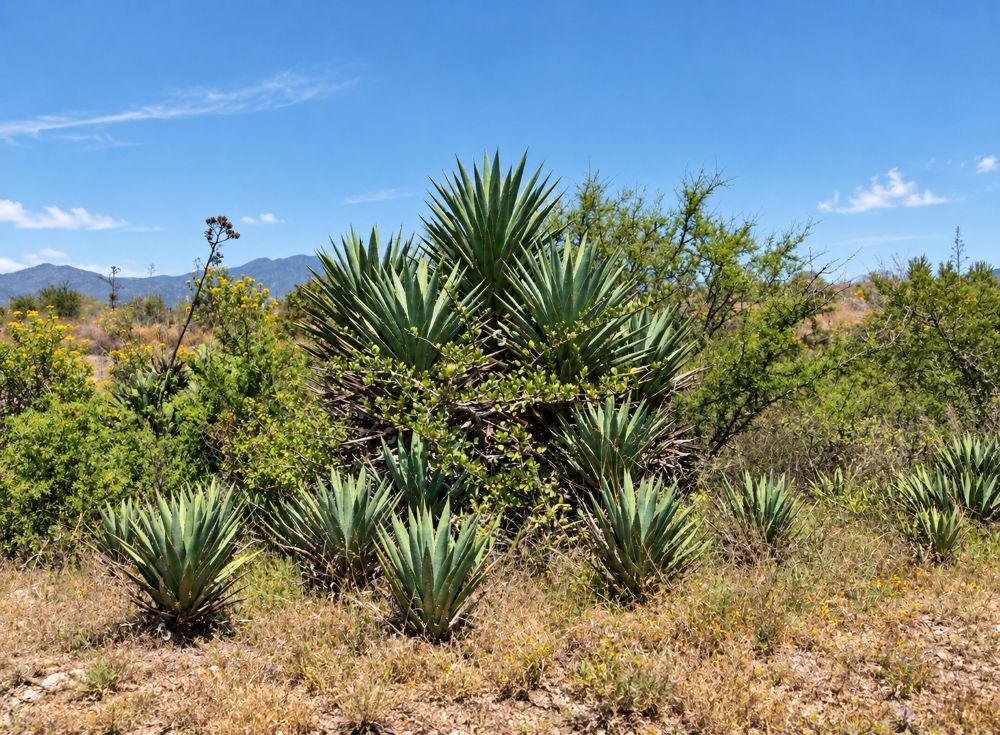
The plant associated with the protected geographical indication is Agave americana, locally known as maguey comiteco.
Like other agaves, it grows slowly and accumulates carbohydrates as it approaches reproductive maturity. Plants may require eight years or longer before they are suitable for tapping, depending on climate and cultivation.
Instead of cutting away the leaves and harvesting the central heart, the producer prepares a cavity in the mature plant. Sweet sap accumulates inside and is collected repeatedly, sometimes several times a day.
This liquid is called aguamiel, literally honey water. It contains sugars, minerals and other compounds that make it suitable for fermentation.
A mature plant can yield several hundred litres over its productive period, although quantities vary with plant size, vigour and extraction practices.
The process demands regular labour and careful handling. Fresh aguamiel is highly perishable, and naturally occurring microorganisms can begin fermenting it soon after collection.
Tapping also affects the plant’s normal development. Although the entire agave is not harvested immediately, repeated extraction diverts resources from reproduction and eventually exhausts its productive capacity.
This makes long-term cultivation and the replacement of mature plants essential to the future of Comiteco.
The History of Comiteco
The use of maguey sap in southern Mexico predates European colonisation. Indigenous communities cultivated agave and consumed fermented beverages made from aguamiel, establishing traditions that remain important in different parts of the country.
Distillation arrived later, during the colonial period. In Chiapas, the expansion of sugarcane cultivation and the introduction of distilling equipment created the conditions for a spirit combining maguey sap with unrefined cane sugar.
The history of Comiteco is often associated with the Dominican presence in Comitán during the sixteenth century. Although this provides a plausible historical setting, precise accounts of the first distillation are difficult to establish.
By the nineteenth and early twentieth centuries, Comiteco had become a recognised regional aguardiente. Commercial production expanded, and the spirit reached markets beyond Chiapas, including parts of Central America.
Its fortunes changed during the twentieth century. Higher taxation, restrictions affecting production and declining availability of mature maguey made the traditional industry increasingly difficult to sustain.
By the 1960s, commercial output had contracted sharply. Smaller producers continued making Comiteco, preserving the agricultural and distilling knowledge on which the modern revival depends.
The geographical protection granted in October 2025 marks an important stage in that recovery.
Comiteco’s Protected Geographical Indication
Comiteco de Comitán, Chiapas, received protection as a Mexican geographical indication in 2025.
This is an important distinction: Comiteco holds an Indicación Geográfica, not the same legal designation as the Denominaciones de Origen protecting tequila and mezcal.
The designation recognises the relationship between the spirit, its raw materials, production techniques and the Meseta Comiteca-Tojolabal.
The modern protected description identifies Agave americana as the botanical reference, although botanical studies of historical Comiteco production also recorded the use of Agave salmiana.
The broader technical definition of Comiteco under NOM-199-SCFI-2017 permits maguey-derived juice, aguamiel or syrup, enriched with piloncillo or panela. At least 70% of the reducing sugars must originate from the agave.
Consequently, while fresh aguamiel is central to the traditional identity of Comiteco, the regulated category is not restricted exclusively to sap collected immediately before fermentation.
How Comiteco Is Made
Production begins with mature maguey and proceeds through sap collection, preparation of the fermentation must and distillation. The equipment and precise methods vary between producers.
Harvesting the Aguamiel
The producer prepares the central cavity of a mature maguey and collects the sap that accumulates inside. The cavity is regularly scraped to maintain production.
Freshness is important because aguamiel begins changing microbiologically soon after extraction. Clean equipment and prompt processing help preserve the desired characteristics.
Adding Panela
The aguamiel is enriched with piloncillo or panela, traditionally made by concentrating sugarcane juice until it solidifies.
Panela increases the amount of fermentable sugar in the must and contributes compounds that may influence fermentation and aroma.
The proportion depends on the recipe and the sugar concentration of the original sap, within the applicable regulatory requirements.
The cane-sugar component distinguishes Comiteco from spirits made exclusively from agave, but the legally required contribution of maguey remains fundamental to its identity.
Fermentation
Yeasts transform the available sugars into alcohol.
Traditional producers may rely on naturally occurring microorganisms, while modern distilleries can use more controlled techniques.
Fermentation may take several days, depending on temperature, sugar concentration and yeast activity. The choice of vessel and the presence of bacteria can also influence the aromatic result.
Careful fermentation is particularly important because aguamiel is microbiologically active. Poorly managed fermentation can create excessive acidity or unwanted aromas that become more obvious after distillation.
Distillation
The fermented liquid is distilled to concentrate alcohol and selected aromatic compounds.
Traditional Comiteco production has employed copper and clay stills, while modern operations may use stainless-steel equipment.
Some producers distil once, while others use a second distillation or more selective fractioning.
The distiller’s decisions determine how much of the fermented must’s herbal, floral and fruit character survives. Precise separation of the different fractions also helps prevent harshness and unwanted volatile compounds.
Unlike many traditional mezcals, Comiteco does not require cooking an agave heart in an underground oven. Its characteristic raw material has already been collected as liquid sap.
That difference is central to both its production and flavour.
What Does Comiteco Taste Like?
Comiteco is a relatively diverse category, and its aromatic character depends on the composition of the must, fermentation, distillation and any subsequent maturation.
A traditional clear expression may show fresh herbs, floral notes, gentle fruit, earth and a subtle impression of sugarcane. Some examples display rounded, honey-like aromas, while others are drier and more rustic.
The use of panela does not necessarily make the finished spirit sweet. Most fermentable sugars are converted into alcohol, and ordinary distillation does not carry significant quantities of sugar into the final liquid.
Aromas reminiscent of honey or cooked sugar should therefore be distinguished from actual residual sweetness.
The absence of compulsory pit roasting also means that smoke is not a defining feature. Comiteco can be far less roasted in character than many traditional mezcals.
A good example should have controlled alcohol, a recognisable aromatic structure and a clean finish, without excessive fermentation defects.
The Different Styles of Comiteco
Blanco or Joven
Clear, unaged or minimally rested Comiteco provides the most direct expression of the fermented maguey and panela must.
It is the most useful style for understanding the traditional spirit.
Wood-Aged Comiteco
Some producers mature Comiteco in wooden barrels, developing colour, texture and additional aromas of vanilla, spice and toasted wood.
The result may resemble aged aguardiente or brandy in its softer, more rounded profile.
Wood influence varies between producers, and ageing terminology should not automatically be interpreted using tequila’s regulatory framework.
Fruit-Infused Comiteco
Chiapas also has a tradition of flavouring Comiteco with fruits and aromatic ingredients.
Examples include níspero, peach, blackberry, nance and anise.
These expressions form part of local drinking culture, although the added ingredients make them less suitable for assessing the underlying distillate.
Comiteco vs Mezcal
Both Comiteco and mezcal come from Mexican traditions involving agave, fermentation and distillation, but their principal production methods differ.
Traditional mezcal is generally made by harvesting mature agave hearts, cooking them to release fermentable sugars and fermenting the processed material.
Comiteco traditionally begins with aguamiel extracted from a living maguey, combined with panela before fermentation.
This produces a different agricultural and aromatic foundation.
Mezcal frequently develops cooked-agave, roasted and sometimes smoky characteristics. Comiteco may emphasise herbal, floral and fermentation-derived notes, often with less obvious roast.
The legal distinction is equally important: Comiteco is not covered by the Mezcal Denomination of Origin.
Comiteco vs Tequila
Tequila uses blue Weber agave, grown and processed within its protected geographical area.
Its production depends on converting carbohydrates from harvested agave hearts into fermentable sugars.
Comiteco traditionally relies on aguamiel and includes a permitted contribution from cane sugar.
A Blanco tequila may show citrus, pepper and cooked-agave sweetness, while Comiteco can be more herbal and less obviously roasted.
The two spirits share an agave origin but follow different paths from plant to bottle.
Comiteco vs Pulque
Pulque is the closest relative in terms of raw material.
Both traditions use aguamiel collected from mature maguey.
The crucial difference is that pulque is fermented but not distilled. It retains a relatively low alcohol content, a characteristic texture and the acidity created by fermentation.
Comiteco takes an aguamiel-based must through distillation, producing a concentrated spirit.
The two drinks therefore share an agricultural foundation but occupy entirely different positions at the table.
Comiteco vs Rum and Charanda
The addition of panela creates an interesting comparison with cane spirits.
Rum and Mexico’s Charanda are fundamentally associated with sugarcane-derived materials, including cane juice, syrup and molasses.
Comiteco differs because agave supplies the required majority of fermentable sugars.
The cane component contributes to the recipe, but it does not replace maguey as the defining raw material.
Comiteco is consequently best understood as a distinctive regional aguardiente rather than being forced into the categories of rum or mezcal.
Producers and Bottles Worth Knowing
Comiteco remains a relatively small category, with limited international distribution and a significant number of regional producers.
Solera Azul
Solera Azul, associated with Bebidas Espirituosas de Chiapas, is among the contemporary names connected with the revival of Comiteco.
Its importance lies in bringing a traditional regional spirit into a more structured commercial format while retaining the relationship with maguey and panela.
An unaged expression provides a useful introduction to the category.
Don Elías Reserva Especial
Don Elías Reserva Especial represents the wood-aged side of Comiteco.
Its maturation gives greater prominence to oak-derived aromas such as vanilla, spice and toasted wood, creating a richer and rounder profile than a traditional clear expression.
It is particularly interesting when comparing how different maturation choices influence the same regional spirit.
Traditional Producers Around Comitán
Small producers in the Comitán region remain essential to the category’s identity.
Their bottlings may differ significantly in raw-material preparation, fermentation, distillation and alcohol strength.
For serious exploration, bottles that identify the producer, production area and principal ingredients are more informative than generic labels presenting the spirit simply as traditional aguardiente.
The new geographical indication provides an opportunity to improve traceability and recognition for these smaller operations.
How Much Does Comiteco Cost?
Comiteco is difficult to find outside Chiapas, and reliable international retail prices remain scarce.
Local prices vary according to producer, bottle size, maturation and distribution. Clear expressions are generally more accessible than extended wood-aged or specialised releases.
Unlike tequila or mezcal, Comiteco does not yet have a sufficiently developed international market to establish dependable price categories in euros.
For a first purchase, provenance and raw-material information are more useful than choosing the most expensive bottle.
How to Drink Comiteco
Unaged Comiteco is best tasted neat at approximately 16–20°C, using a small tulip-shaped glass.
A modest serving allows the herbal and floral notes to emerge without excessive alcoholic intensity.
Very cold service can suppress the more delicate aromas, while higher-strength expressions may benefit from a few drops of water.
Wood-aged Comiteco can be served slightly warmer, allowing vanilla and spice to become more apparent.
Fruit-infused versions may suit cooler service depending on their sweetness.
Comiteco in Cocktails
Comiteco can work in cocktails that preserve its herbal character rather than burying it beneath sugar.
A simple Comiteco Highball combines 50 ml of unaged spirit with chilled soda water and lime peel.
For a Comiteco Sour, mix 50 ml Comiteco, 25 ml fresh lime juice and approximately 15 ml simple syrup, adjusting the sweetness to the bottle. Shake with ice and strain into a chilled glass.
A grapefruit and Comiteco highball is another effective combination. Fresh grapefruit provides bitterness and acidity that complement the spirit’s softer fruit and herbal sensations.
Food Pairings
Comiteco suits dishes combining roasted ingredients, moderate spice and fresh herbs.
Try cochito chiapaneco, tamales de chipilín with fresh cheese, or grilled prawns with lime, coriander and roasted green chilli. The savoury character of these preparations provides contrast without overwhelming the spirit.
For cheese, choose queso de bola de Ocosingo, Cotija añejo and aged Manchego. Their salt and firm textures balance the herbal and rounded elements of Comiteco.
Fruit-infused versions can also accompany desserts based on níspero or peaches, although the sweetness of the particular bottling should determine the pairing.
Sustainability and the Future of Maguey Comiteco
The revival of Comiteco depends on a reliable supply of mature maguey.
Because plants require years to become productive, increasing output demands long-term agricultural planning rather than simply collecting more sap from existing populations.
Nurseries, responsible cultivation and the preservation of local plant material are important for rebuilding the resource.
Repeated tapping also requires considerable labour, making fair compensation for agricultural producers a practical issue.
The 2025 geographical indication may help strengthen regional identity and market recognition, but its long-term value will depend on whether small growers and distillers can participate effectively.
The survival of Comiteco requires preserving both the plant and the knowledge needed to use it.
How to Choose a Good Comiteco
Start with an unflavoured expression that clearly identifies its producer and geographical origin.
Look for information about the maguey, the use of aguamiel or other permitted agave-derived material, the addition of panela and the distillation method.
A good bottle should retain a recognisable herbal and floral character, with controlled alcohol and a clean finish.
Ageing and fruit infusions can be interesting, but they are better explored after tasting a traditional clear Comiteco.
Quality depends on careful raw-material handling, fermentation and distillation, not simply on claims of ancestral production.
Why Comiteco Matters
Comiteco demonstrates how incomplete the international understanding of Mexican agave spirits remains.
Most famous examples rely on harvested plants and cooked hearts. Comiteco preserves a different agricultural tradition, built around sap collected from mature living maguey and fermented with unrefined cane sugar.
Its history connects the Indigenous use of aguamiel with colonial sugar production and the regional distilling culture of Chiapas. Its subsequent decline shows how vulnerable traditional spirits can become when agricultural resources, regulation and commercial conditions change.
The protection granted in 2025 provides a new opportunity for producers, but the spirit’s future will depend on the cultivation of maguey and the preservation of traditional expertise.
Comiteco does not need to imitate mezcal’s smoke or tequila’s polished image. Its distinction is already clear in the way it is made: a regional aguardiente whose character begins with the sweet sap of a living agave.

