
Can Bacanora Become Mexico’s Next Great Spirit Without Losing Its Soul?

Bacanora spent most of the twentieth century doing something that tequila never had to do: surviving outside the law. For 77 years, distillers in the mountains of Sonora continued making their agave spirit despite a prohibition that drove production into isolated ranches, hidden ravines and makeshift distilleries. When legal production returned in 1992, Bacanora was barely known beyond northwestern Mexico, even though its history stretched back centuries.
Today, this remarkable spirit is emerging from the shadow of tequila and mezcal, bringing with it an identity shaped by the Sonoran Desert, the Sierra Madre Occidental, Agave angustifolia and generations of clandestine distillation. Its character can be smoky, earthy and peppery, but the best examples also show remarkable floral delicacy, cooked agave sweetness, citrus and dry mineral sensations.
The comparison with mezcal is inevitable, especially because traditional Bacanora is often made by roasting agave underground before fermenting and distilling it. Yet Sonora has its own geography, agricultural traditions and distilling methods. Bacanora is not a copy of Oaxaca’s most famous spirit, and it deserves to be understood on its own terms.
Its modern revival raises another question. Can a spirit built on remote communities, slow-growing agave and small-scale production become internationally successful without losing the qualities that make it special?
The Basics
- Country: Mexico
- State: Sonora
- Protected origin: 35 municipalities in Sonora
- Denomination of Origin: 2000
- Production standard: NOM-168-SCFI-2005
- Agave: 100% Agave angustifolia Haw.
- Local agave names: Pacífica, Yaquiana, maguey Bacanora
- Raw material: Mature agave hearts, or piñas
- Production: Cooking, milling, fermentation and distillation
- Traditional ovens: Underground pits heated with wood and stones
- Typical fuel: Mesquite, sometimes combined with other local woods
- Fermentation: Wild or managed yeast, depending on producer
- Distillation: Traditionally double distillation
- Alcohol: Legally 38–55% ABV
- Official classes: Blanco, Joven/Oro, Reposado, Añejo
- Classic aromas: Cooked agave, earth, pepper, citrus, herbs, light smoke
- Best serving temperature: Approximately 18–22°C
- Best introduction: An unaged, 100% agave Bacanora from a named vinatero
Where Bacanora Comes From
Bacanora belongs to Sonora, the vast northwestern Mexican state bordering Arizona and New Mexico, with the Gulf of California to the west and the Sierra Madre Occidental along its eastern side.
The protected area occupies 35 municipalities, largely within the mountainous eastern and southern parts of the state. Important historic centres include Bacanora, Sahuaripa, Aconchi, Yécora, Álamos, Ures, Arizpe and Rosario de Tesopaco.
The name comes from the small town of Bacanora, but the spirit’s geographical identity extends well beyond that municipality. Production developed through scattered ranches and agricultural settlements where families harvested agave, cooked it in primitive ovens and distilled the fermented liquid using whatever equipment was available.
These landscapes differ considerably from the better-known agave regions of Jalisco and Oaxaca. Sonora combines intensely dry lowlands, river valleys, rocky mountain slopes and cooler highland environments, creating widely varying conditions for agave growth and maturation.
The appellation is consequently more geographically diverse than the term desert spirit might suggest.
The Sonoran Desert and the Sierra Madre Occidental
The geography of Bacanora is central to its identity.
Much of Sonora experiences intense sunshine, low rainfall and substantial temperature variation. The Sierra Madre Occidental introduces higher elevations, rocky terrain and cooler conditions, particularly at night and during winter.
Agave angustifolia is adapted to demanding environments, storing water in thick succulent leaves and using a specialised photosynthetic pathway known as Crassulacean Acid Metabolism, or CAM. This allows the plant to open its stomata mainly at night, reducing water loss during hot daylight hours.
Such efficiency makes agave remarkably resilient, although not immune to extreme drought. Water availability, soil depth, exposure and temperature all influence plant growth and the accumulation of carbohydrates.
Mountainous Sonora also presents serious logistical challenges. Remote vineyards can be cultivated on narrow terraces, but agave often grows on rough slopes accessible only by difficult tracks. Harvesting mature plants and transporting their heavy hearts can be extraordinarily labour-intensive.
These conditions help explain why traditional Bacanora remained a regional spirit for so long, even before prohibition disrupted its commercial development.
Agave angustifolia: The Plant Behind Bacanora
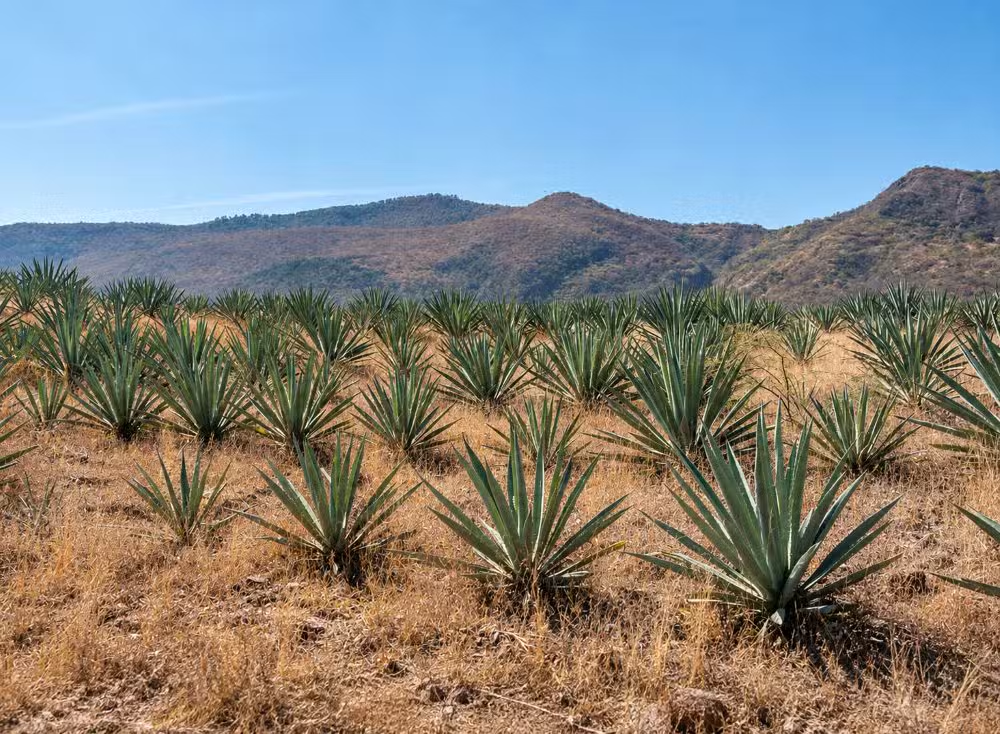
Unlike mezcal, which can legally be produced from numerous agave species, protected Bacanora must use Agave angustifolia Haw.
The species belongs to a widespread and variable group of agaves found in different parts of Mexico. The Sonoran forms are commonly called Pacífica, Yaquiana or maguey Bacanora, while the closely related southern forms include the familiar Espadín cultivated extensively in Oaxaca.
These local names should not be treated as proof that every population represents a completely separate botanical species. The taxonomy and genetic relationships within the Agave angustifolia complex are more complicated.
In Sonora, the plant can grow in both wild populations and cultivated fields. Its narrow, pointed leaves form a rosette around a central heart that accumulates carbohydrates as the plant approaches maturity.
The age at harvest varies with site, climate and cultivation, but many producers work with agaves approximately seven to ten years old, sometimes older.
The long growth cycle is essential to understanding both the spirit’s flavour and its economic vulnerability.
Why Agave Takes So Long to Mature
Agave is not harvested annually like grapes or cereals. A producer may have to wait most of a decade before a plant yields its first and only harvest.
During growth, the plant stores carbohydrates, particularly fructans, in its central tissues. These complex sugars are not immediately suitable for alcoholic fermentation, which is why cooking is necessary.
As the agave approaches reproductive maturity, its internal carbohydrate balance changes. Producers judge readiness through a combination of age, plant development and local experience.
Harvesting too early can reduce sugar yield and aromatic complexity. Waiting too long can also be problematic if the plant begins directing significant resources toward flowering.
Once a mature agave sends up its flowering stalk, it is entering the final stage of its life cycle. Most species in this group are monocarpic, meaning the plant flowers once and subsequently dies.
Careful harvest timing therefore affects both production quality and the regeneration of the agave population.
The Role of Wild Agave
Wild harvesting remains an important part of Bacanora’s identity, particularly among producers working in remote mountain districts.
Wild plants grow under less controlled conditions than cultivated agave, experiencing competition, variable rainfall, rocky soils and different degrees of sunlight exposure. Such factors can influence size, sugar concentration and physiological development, although wild origin alone does not guarantee superior flavour.
The commercial appeal of wild agave has also created a conservation problem.
Removing mature plants before flowering reduces seed production and can weaken the genetic diversity and regenerative capacity of local populations. Because an agave may take many years to mature, overharvesting can cause damage that takes decades to reverse.
The most responsible producers increasingly combine cultivation, managed harvesting and propagation programmes. Preserving wild populations is essential if Bacanora is to expand without exhausting the resource that created it.
Before Bacanora Had a Name
Agave played an important role in northern Mexican cultures long before European colonisation.
Indigenous communities used different agave species for food, fibres, tools and fermented beverages. The Hohokam and other societies of the wider Sonoran region developed sophisticated relationships with desert plants, including cultivation and processing techniques.
Cooking agave underground is an ancient practice. Heating the plant makes its carbohydrates more digestible and transforms its flavour, producing sweetness and roasted aromas.
Distillation came later, after European contact introduced or expanded the use of distilling equipment and techniques in the region.
By the eighteenth century, the production of distilled agave beverages in Sonora was sufficiently established to attract detailed descriptions from European observers. Jesuit missionary Ignaz Pfefferkorn, who spent time in Sonora during the eighteenth century, recorded the use of stone-lined pits for cooking agave before distillation.
The essential method has survived remarkably well, even as equipment and commercial conditions have changed.
The 1915 Prohibition That Nearly Erased Bacanora
The most extraordinary chapter in Bacanora’s history began in 1915, when Sonora governor Plutarco Elías Calles introduced prohibitionist measures intended to restrict alcohol production and consumption.
Calles, who would later become president of Mexico, associated alcohol with social disorder and moral decline. Although restrictions on other alcoholic beverages were subsequently relaxed, Bacanora remained prohibited.
The ban endured until 1992, turning what had been a legitimate regional industry into an underground activity.
Producers faced confiscation of equipment, destruction of distilleries, imprisonment and sometimes severe violence. Traditional vinatas were moved into remote locations, and distillation was often carried out with improvised equipment that could be hidden or transported quickly.
Production did not disappear, however. Families continued making Bacanora for local consumption, private exchange and clandestine sale, transmitting their knowledge across generations.
That continuity explains why some modern producers still use techniques strongly associated with illegal distillation, including metal drums, portable stills and improvised condensers.
These methods were not necessarily expressions of romantic artisanal purity. Many developed because producers had to remain invisible.
Legalisation and the Denomination of Origin
The prohibition finally ended in 1992, allowing Bacanora to re-enter the formal economy.
In 2000, Mexico granted the spirit its own Denominación de Origen, protecting production within 35 municipalities of Sonora.
A technical standard followed, published in December 2005 as NOM-168-SCFI-2005, establishing requirements for raw materials, production, chemical composition, ageing, labelling and certification.
These rules created a legal identity for a spirit that had spent much of its modern history operating outside official institutions.
They also introduced new costs.
Certification requires documentation, inspections, raw-material traceability and compliance with technical standards. For established commercial producers, these procedures can support quality control and export. For very small traditional vinateros, they may represent a substantial financial and administrative burden.
The relationship between traditional production and certification remains one of Bacanora’s important contemporary challenges.
What Makes Bacanora Legally Different?
Protected Bacanora must be made from 100% Agave angustifolia Haw., harvested within the authorised territory.
The spirit must also meet defined physicochemical standards, including an alcoholic strength between 38% and 55% ABV.
This distinguishes Bacanora from standard tequila, which may legally contain a proportion of non-agave fermentable sugars unless specifically labelled 100% agave.
However, Bacanora’s 100% agave requirement should not be confused with an absolute prohibition on every form of post-distillation adjustment. The production standard allows limited abocamiento, or mellowing, within specified limits.
The regulations also permit different approaches to cooking and fermentation, meaning that traditional underground roasting is not a universal legal requirement.
A certified bottle therefore guarantees certain elements of origin and composition, but it does not automatically reveal whether the agave was wild, whether fermentation was spontaneous or which still was used.
Those details require closer attention to the individual producer.
How Bacanora Is Made
Traditional production follows a sequence familiar to many Mexican agave spirits: harvesting, cooking, crushing, fermentation and distillation.
The techniques vary between vinatas, and those variations have a direct influence on flavour.
1. Harvesting the Agave
Mature agaves are cut by hand, removing the long spiny leaves and exposing the central heart, known as the piña.
The tool may be a specialised axe or a locally adapted cutting implement rather than the circular coa closely associated with tequila production.
A piña can be extremely heavy, and transporting it across difficult mountainous terrain requires substantial labour.
The quality of trimming also matters. Leaving excessive leaf tissue can introduce more bitter, fibrous or vegetal material into the cooked agave.
2. Cooking in Underground Ovens
Traditional Bacanora is commonly cooked in underground ovens lined with stone, heated using burning wood and hot rocks.
Mesquite is particularly associated with Sonoran production. Once the fire has heated the stones, the agave hearts are placed inside, covered and allowed to cook slowly.
Cooking may take several days, depending on the size of the oven and the quantity of agave.
Heat hydrolyses the stored fructans into fermentable sugars while producing the caramelised, roasted and sometimes smoky aromas associated with cooked agave.
Some producers now use alternative equipment, including masonry ovens or autoclaves, either alongside or instead of traditional pits.
The choice has important sensory consequences, particularly for the amount and character of smoke in the finished spirit.
3. Crushing the Cooked Agave
After cooking and cooling, the agave is broken down to release its sugars.
Traditional methods include chopping the cooked hearts with axes or pounding them manually, while modern small-scale producers may use mechanical shredders.
The goal is to create a fermentable mixture of juice and fibrous material.
Some vinatas ferment with the bagazo, the cooked agave fibre, while others separate a greater proportion of the solids before fermentation.
Fermenting with fibre can influence extraction, microbial activity and aromatic complexity, but it is not necessarily an indication of quality by itself.
4. Fermentation
Fermentation is one of the most variable stages of Bacanora production.
Traditional producers often rely on ambient yeasts and microorganisms present in the environment, equipment and raw material. Others use more controlled techniques.
Fermentation vessels can include wooden vats, masonry structures, plastic containers or stainless steel tanks.
Water is added according to the sugar concentration and working method. Some producers use spring or well water from their own properties.
Fermentation may take around six to twelve days, although temperature, yeast activity and must composition can shorten or lengthen the process.
During this stage, sugars are converted into alcohol and numerous aromatic compounds. Esters, higher alcohols and fermentation-derived acids all contribute to the final profile.
A particularly clean Bacanora may owe as much to careful fermentation as to the species of agave.
5. Distillation
Traditional Bacanora is generally distilled twice.
The first distillation separates alcohol and volatile compounds from the fermented agave mixture, producing an intermediate spirit that requires further concentration and refinement.
The second distillation, often referred to locally as resaque, allows the producer to separate different fractions and adjust the balance of alcohol and aromatic compounds.
Traditional stills may contain copper, stainless steel or combinations of materials, and some continue to reflect the improvised equipment developed during prohibition.
The vinatero’s decisions during distillation are fundamental. Early fractions can contain undesirable volatile compounds, while later fractions carry heavier aromatic material that can contribute body but also roughness.
Good distillation requires controlling these fractions without stripping away the agave’s distinctive aromas.
This is especially important in Bacanora because the best examples often derive their character from the interaction between cooked agave, fermentation and a relatively robust distillation profile.
Why Bacanora Is Often Smoky
Bacanora’s smoky reputation comes primarily from traditional pit roasting, particularly when wood combustion compounds reach the agave during cooking.
Mesquite can create recognisable smoky, woody and roasted aromas, but the intensity depends on combustion conditions, oven construction, cooking duration and the way the agave is covered.
Smoke should not automatically dominate the spirit.
Some Bacanoras display only a delicate roasted accent, leaving pepper, citrus, cooked agave and fresh herbs in the foreground. Others are noticeably smokier and more rustic.
An intensely smoky Bacanora is not necessarily more authentic than a restrained one, especially because traditional production methods differ between families and regions.
The most successful versions integrate smoke into the broader flavour structure rather than using it to conceal poor raw material or imprecise distillation.
The Four Official Types of Bacanora
Mexican regulations recognise four classes, determined principally by treatment after distillation.
Bacanora Blanco
Blanco is the clearest expression of the raw material and production process. It is not matured in oak and normally retains the most direct combination of cooked agave, herbs, spice and fermentation-derived aromas.
For anyone seriously studying the category, this is the logical starting point.
Bacanora Joven or Oro
Joven, also called Oro, can include blends of Blanco with aged Bacanora or undergo permitted adjustments that change its appearance and texture.
The term therefore does not guarantee a specific natural colour or a particular period in wood.
Bacanora Reposado
Reposado must spend at least two months in oak or encino containers.
The contact with wood introduces additional texture, vanilla, spice and sometimes light caramelised notes, depending on barrel type and previous use.
Short maturation can soften the spirit without necessarily obscuring its agave character.
Bacanora Añejo
Añejo requires at least one year in oak or encino, in containers with a maximum capacity of 200 litres.
The greater wood influence can produce a rounder, darker style with pronounced vanilla, spice and toasted notes.
Ageing does not automatically make Bacanora superior. Many of the category’s most distinctive aromas are most clearly expressed in Blanco, where they remain unaltered by wood.
What Does Bacanora Taste Like?
Bacanora can be surprisingly complex, particularly when it retains enough alcoholic strength to preserve the aromatic character of the agave.
A classic unaged example may show roasted agave, white pepper, green herbs, citrus peel, dry earth and a subtle smoky note.
Some producers develop a more floral register, with orange blossom and delicate fruit, while others emphasise mineral sensations, mesquite smoke or a slightly vegetal bitterness.
The palate is generally dry, often with an impression of natural sweetness from cooked agave despite the absence of significant residual sugar.
Texture varies from lean and sharply defined to broad and oily.
A good Bacanora should finish with persistent agave character, clean spice and enough freshness to prevent the roasted elements from becoming tiring.
The Importance of Alcohol Strength
Alcohol strength has a substantial effect on the expression of Bacanora.
Commercial bottles often appear around 40–45% ABV, while some small-batch versions are bottled at higher strength.
Additional alcohol can intensify aromatic delivery and preserve a more substantial texture, although too much warmth can dominate delicate floral notes.
Water dilution changes the balance between volatile compounds, sweetness perception and texture.
A well-made 43% Bacanora can be more harmonious than a poorly balanced 50% bottling, while a carefully distilled higher-proof version may reveal remarkable aromatic depth.
The useful question is not simply how strong the spirit is, but whether dilution has preserved the character of the distillate.
Bacanora vs Mezcal
Bacanora belongs to the broader historical family of Mexican agave spirits often called mezcales, but it has its own protected denomination.
The principal difference is geographical and regulatory. Bacanora comes from specified municipalities in Sonora and must use Agave angustifolia, whereas Mezcal DO production extends across several designated Mexican states and permits a much wider selection of agave species.
Traditional techniques overlap considerably, including underground roasting, spontaneous fermentation and double distillation.
Sensory differences are less absolute. A Bacanora can be peppery, earthy and moderately smoky, while an Oaxacan Espadín may display more pronounced roast and tropical fruit. Yet production choices can reverse that comparison completely.
The two categories should therefore be compared through individual bottles rather than rigid generalisations about smoke or strength.
Bacanora vs Tequila
Tequila and Bacanora share an agave foundation, but their identities diverge through raw material, geography and production.
Tequila must use Agave tequilana Weber var. azul, commonly called blue Weber agave. Bacanora uses Agave angustifolia from Sonora.
Modern tequila production frequently uses steam cooking, controlled fermentation and more standardised distillation processes, although traditional and experimental methods also exist.
Bacanora’s historic production is more closely associated with underground roasting, mesquite, spontaneous fermentation and small vinatas.
The resulting flavour often feels more earthy and roasted than mainstream Blanco tequila, with a stronger herbal and peppery register.
The comparison becomes particularly interesting when tasting 100% agave Blanco tequila alongside an unaged Bacanora of similar strength. Differences in plant material and cooking methods become immediately apparent.
Bacanora vs Raicilla
Raicilla is another protected Mexican agave spirit, principally associated with Jalisco.
Its producers may work with several agave species and employ a wide range of cooking, fermentation and distillation techniques.
Some raicillas are floral and fruit-driven, while others show pronounced fermented, vegetal or smoky characteristics.
Bacanora is more tightly defined botanically because its denomination permits only Agave angustifolia.
The distinction illustrates how the Mexican agave world cannot be understood through one scale running from tequila to smoky mezcal.
Each regional tradition has its own raw materials and production history.
Bacanora vs Sotol
Sotol is frequently confused with Bacanora because both are associated with northern Mexico and arid landscapes.
The botanical distinction is fundamental.
Sotol is made from Dasylirion, often called desert spoon, rather than from Agave.
Protected Sotol production is associated with Chihuahua, Coahuila and Durango, although traditional Dasylirion distillation also exists beyond those boundaries.
The resulting spirits may share dry, grassy, peppery and mineral sensations, but the plants and regulatory categories are different.
This distinction becomes especially important with producers such as Rancho Tepúa, which also offers a Sonoran spirit made from Dasylirion. That expression should not be confused with the producer’s Bacanora.
The Vinatero: Bacanora’s Master Distiller
In Sonora, the person making Bacanora is traditionally called a vinatero.
The term reflects regional usage and a long history of local alcohol production. It occupies a role broadly comparable to the maestro mezcalero in Oaxaca.
A skilled vinatero controls far more than the still. Harvest timing, cooking conditions, crushing, fermentation and distillation all influence the finished spirit.
During prohibition, this expertise also included practical knowledge of concealment, equipment repair and working in remote locations with limited resources.
The modern revival has made individual vinateros increasingly important to the identity of Bacanora.
For serious buyers, the name of the person responsible for production can be as informative as the commercial brand.
Producers and Bottles Worth Knowing
Bacanora remains a relatively small category, particularly outside Mexico. International availability changes, and some producers release batches that differ in strength or production details.
The following names provide useful entry points into its traditional and contemporary expressions.
Rancho Tepúa
Rancho Tepúa is one of the most important names for understanding traditional Bacanora.
The Contreras family has worked for generations in Aconchi, in the Río Sonora region. The family tradition survived prohibition and eventually became one of the first to bring legally exported Bacanora to international markets.
Its Blanco expression uses Agave angustifolia cooked in an underground oven with mesquite, followed by mechanical crushing, spontaneous fermentation and double distillation.
The profile can combine roasted agave, orange blossom, earth, pepper and smoke, with a substantial texture and an unmistakably rustic edge.
This is an excellent reference for the relationship between family production, Sonoran geography and traditional Bacanora.
Cielo Rojo
Cielo Rojo is closely associated with the same Contreras family tradition in Aconchi.
Its importance lies partly in the early international commercialisation of Bacanora after legalisation.
The brand offers another opportunity to understand the regional style built around cooked Agave angustifolia, local fermentation practices and traditional distillation.
Santo Cuviso
Santo Cuviso is a useful reference for a dry, robust and clearly defined Bacanora Blanco.
A documented production approach includes underground stone ovens, fermentation lasting approximately six to twelve days and double distillation in copper.
At 45% ABV, the Blanco has enough strength to carry earthy, peppery and lightly smoky aromas without requiring oak ageing.
It is particularly interesting for drinkers accustomed to artisanal mezcal who want to explore Sonora’s more restrained and dry expression of cooked agave.
Kilinga
Kilinga represents a more contemporary interpretation of Bacanora.
Produced in the Álamos area by Rodrigo Bojórquez Bours, it combines an emphasis on Agave angustifolia with a more controlled approach to production and presentation.
The range demonstrates that Bacanora can pursue refinement and consistency without abandoning its geographical identity.
Kilinga is a useful counterpoint to more rustic, strongly smoked versions and helps explain how the category is developing beyond small-scale traditional production.
Yoowe
Yoowe is another recognisable name in the export market and provides an accessible introduction to Bacanora’s drier aromatic profile.
The 43% expression is associated with earthy, peppery and mineral sensations rather than an overtly sweet style.
Its importance is partly commercial: labels such as Yoowe help bring a category once confined largely to Sonora into specialist international spirits shops.
Batuq
Batuq is interesting for its combination of traditional agave techniques with modern equipment.
Its production has involved both underground cooking and more controlled heating, spontaneous fermentation and stainless-steel/copper distillation equipment.
It demonstrates why Bacanora cannot be defined by one fixed model of artisanal production.
The final character depends on the choices made at each stage, not simply on whether a distillery looks traditional.
How Much Does Bacanora Cost?
Bacanora is generally more expensive than mainstream tequila because production remains relatively limited, raw material grows slowly and international distribution is narrow.
Accessible export bottlings commonly occupy a broad range of approximately €50–€90, although price depends heavily on bottle size, alcohol strength, import costs and availability.
Yoowe 43%, for example, has appeared at around €73 for 70 cl in specialist retail.
Small-production expressions associated with established vinateros may command higher prices, particularly when they use wild or carefully selected agave and are released in limited quantities.
Price alone does not establish authenticity or quality. A transparent producer offering cultivated agave and a clear production method may provide a more convincing spirit than an expensive bottle relying entirely on claims of wilderness and tradition.
How to Choose a Good Bacanora
Start with Blanco, preferably from a producer that identifies its geographical origin and vinatero.
Look for clear information about the agave, cooking method, fermentation, distillation and actual alcohol strength.
A named municipality such as Aconchi, Bacanora or Álamos adds useful context, while a documented production method makes the bottle more informative than a generic statement about artisanal tradition.
Higher alcohol is not automatically better, but Bacanora should retain enough strength to show its aromatic complexity.
For a first serious tasting, an unaged expression around 43–48% ABV can offer an excellent balance between definition and accessibility.
How to Drink Bacanora
Bacanora deserves to be tasted neat before being mixed.
Use a small, open tasting glass and serve at approximately 18–22°C. Excessive chilling suppresses its herbal, floral and roasted-agave aromas.
Begin with a modest pour and allow the spirit a few minutes in the glass. The first impression may be dominated by alcohol, while citrus, cooked agave, pepper and earth become more distinct after aeration.
A few drops of water can help explore higher-proof bottlings, but aggressive dilution may flatten delicate aromatic notes.
Traditional drinking customs vary across Sonora, and Bacanora is frequently enjoyed without elaborate service.
Its complexity does not require a ceremonial presentation.
Bacanora in Cocktails
Bacanora can be a compelling cocktail ingredient because it combines agave sweetness with savoury, peppery and sometimes smoky character.
A Bacanora Margarita works when fresh lime is balanced carefully against the spirit’s roasted notes, avoiding excessive sweetness. A Bacanora Paloma can be even more revealing: grapefruit, sparkling water and a small amount of salt highlight its citrus and mineral register.
For a spirit-forward drink, Bacanora can replace tequila in a Oaxaca Old Fashioned-style cocktail, although the amount of sweetener should remain restrained.
The objective is to preserve the identity of the spirit rather than cover it with fruit juice or sugar.
Food Pairings
Bacanora suits dishes where smoke, acidity and savoury depth complement its cooked-agave character. Try carne asada sonorense with flour tortillas and roasted chiltepín salsa, grilled octopus with charred citrus, or cochinita pibil with pickled red onion.
For cheese, choose Cotija añejo, queso de Ocosingo and aged Manchego. Their salt and firm texture balance the spirit’s peppery warmth and roasted notes without overwhelming the agave.
Why the Best Bacanora Is Not Necessarily Aged
Wood maturation can make Bacanora smoother, but it also changes the aromatic priorities.
Vanilla, toasted oak and sweet spice gradually compete with cooked agave, herbs and fermentation-derived character.
That transformation may be attractive, particularly for drinkers accustomed to aged tequila or whisky, but it is not automatically an improvement.
The most distinctive Bacanora usually reveals its identity most clearly without wood.
A carefully made Blanco allows the origin, agave maturity, cooking method and distillation choices to remain visible.
The Sustainability Problem
Bacanora’s modern success could become a threat to its future if production expands faster than the supply of mature agave.
Wild harvesting is particularly sensitive because the plants require many years to mature and may be removed before flowering and seed production.
Cultivation offers part of the solution, but relying excessively on vegetative propagation can reduce genetic diversity.
A more sustainable system requires cultivated plants, responsible wild harvesting, seed-based reproduction, habitat protection and long-term planning.
The economic challenge is equally serious. Small producers cannot simply replace harvested plants and recover their investment the following season; the production cycle may take most of a decade.
The future of Bacanora therefore depends on agricultural decisions being made long before the spirit reaches the still.
Can Bacanora Become the Next Mezcal?
International interest in regional Mexican spirits creates an obvious opportunity for Bacanora.
Consumers increasingly want traceable production, distinctive raw materials, regional identity and smaller-scale distillation.
Bacanora has all four.
Its history also gives it a narrative unlike almost anything else in the spirits industry: a regional tradition that survived decades of prohibition and re-emerged with a protected geographical identity.
Yet treating Bacanora simply as the next fashionable mezcal would risk repeating some of the pressures already affecting other agave regions.
Rapid expansion could encourage overharvesting, industrial standardisation and the displacement of small producers unable to meet commercial or certification costs.
The most promising model is one that allows Bacanora to remain recognisably Sonoran while improving quality control, agricultural resilience and the economic position of traditional vinateros.
What Makes Great Bacanora?
Great Bacanora begins with mature, well-grown agave and careful cooking that develops sweetness without allowing smoke or burnt material to dominate.
Fermentation should add complexity without producing excessive volatile acidity or distracting off-flavours, while distillation must preserve enough agave character to give the spirit depth and definition.
A compelling Blanco combines cooked agave, pepper, earth, citrus, herbs and controlled smoke in a palate that remains dry, clean and persistent. Alcohol should carry the aromas without overwhelming them, and the finish should reveal more than heat.
Most importantly, the spirit should have a recognisable relationship with its raw material and production method. The distinction between rusticity and character matters: traditional equipment can produce exceptional results, but technical defects do not become virtues simply because the process is old.
Sonora’s Agave Spirit Has a Future Beyond Prohibition
Bacanora’s greatest distinction lies in the relationship between geography, plant and people. Agave angustifolia grows slowly in demanding Sonoran landscapes, while generations of vinateros developed methods capable of turning that difficult raw material into an unusually expressive distillate.
The period of prohibition shaped the industry profoundly, preserving certain practices while also disrupting production, investment and the transmission of knowledge. Today’s producers are rebuilding that tradition under circumstances that previous generations could scarcely have imagined: international distribution, protected origin, certification and growing demand for artisanal agave spirits.

