
Happy Samurai Canterbury Review: Black-Garlic Ramen, Sashimi and a Japanese Kitchen That Likes to Have Fun

Happy Samurai occupies a small address on Butchery Lane, almost in the shadow of Canterbury Cathedral, yet the menu travels considerably farther than the medieval streets outside. Ramen provides the backbone, but sushi, sashimi, izakaya dishes, donburi, katsu curry, bao and yakisoba turn the restaurant into something closer to a compact Japanese canteen than a specialist noodle bar.
The kitchen traces its recipes and know-how through five generations of family cooking, and that sense of continuity is most persuasive in the simpler dishes. Grilled mackerel needs salt rather than decoration; shoyu ramen depends on broth and noodles; sashimi lives or dies by the fish. Elsewhere, Happy Samurai loosens its collar with black garlic, spicy sesame broths, fried chicken, bao and some extravagant sushi rolls.
On our 2026 visit, the attraction was precisely that range. This is not hushed Japanese dining conducted with ceremonial precision. The room is informal, colourful and energetic, and the food is designed to be shared, slurped, dipped and occasionally attacked with less dignity than expected.
Begin with Izakaya Rather Than Filling the Table with Sushi
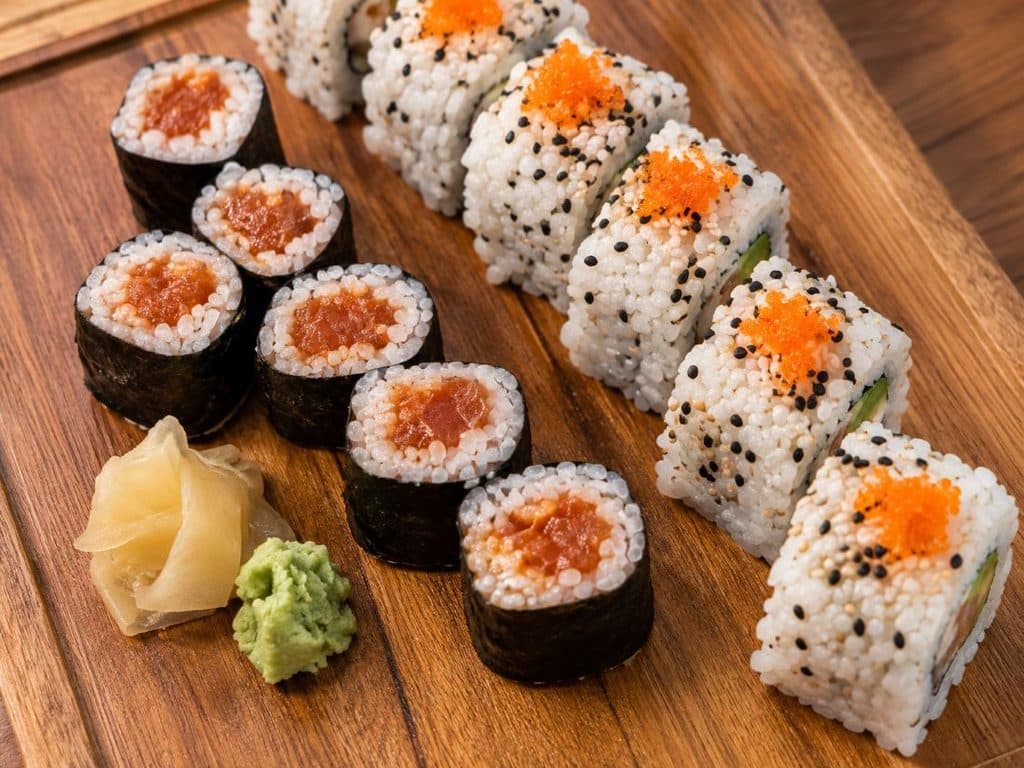
The compact izakaya section is the smartest introduction because it moves quickly between textures.
Takoyaki cost £4.90, while kushi okonomiyaki are £6.20. Karaage starts at £8.50, and gyoza with chicken, pork, duck or vegetables cost £4.60.
Takoyaki should arrive hot enough to demand patience: soft batter surrounds octopus, while the browned exterior gives just enough resistance before the centre collapses. They are richer than their size suggests, so sharing them makes sense.
The karaage has broader appeal. Japanese fried chicken needs a light, irregular coating rather than armour. Juicy meat, crisp edges and enough seasoning to survive without being drowned in mayonnaise make it an excellent companion to beer.
Then there is saba no shioyaki, grilled mackerel seasoned simply with salt. It is one of the menu’s least theatrical dishes and one of the most useful. Mackerel has enough natural oil and character to make complicated sauces redundant.
Tonkotsu Is Comfort; Mayu Has the Sharper Personality
The ramen section is extensive enough to require some discipline.
The Tonkotsu, priced at £17.50, is the obvious comfort bowl: thick, cloudy broth, egg, shredded leek, beansprouts, black fungus, seaweed and bamboo shoots, finished with chicken, cha shu pork or vegetables.
Its pleasure lies in density. The broth clings to the thick, slightly curly noodles, while black fungus and bamboo shoots prevent the bowl from becoming an uninterrupted sequence of softness.
More interesting is the Mayu, at £17.80 on the restaurant’s full ramen menu. Black garlic and sesame darken a creamy broth and give it roasted, almost smoky depth. This is the bowl for diners who find standard tonkotsu a little too polite.
Black garlic should remain aromatic rather than bitter. Used correctly, it adds a sweet, fermented shadow that gives pork broth another dimension without turning it muddy.
Tantan Ramen Brings Heat without Abandoning the Broth
The Tantan ramen, at £17.50, uses a rich sesame-based spicy broth with minced pork, leek, beansprouts, bamboo shoots and chilli.
This is the loudest ramen on the menu, but not merely because of chilli.
Sesame gives the broth a creamy, almost nutty roundness, while minced pork adds savoury weight. The thicker noodles are the correct choice because they need enough structure to carry such a substantial broth.
Heat should arrive late rather than obliterate the first spoonful. When that balance is right, Tantan has far more going on than straightforward chilli burn.
Dashi Ramen Gives Seafood a Cleaner Stage
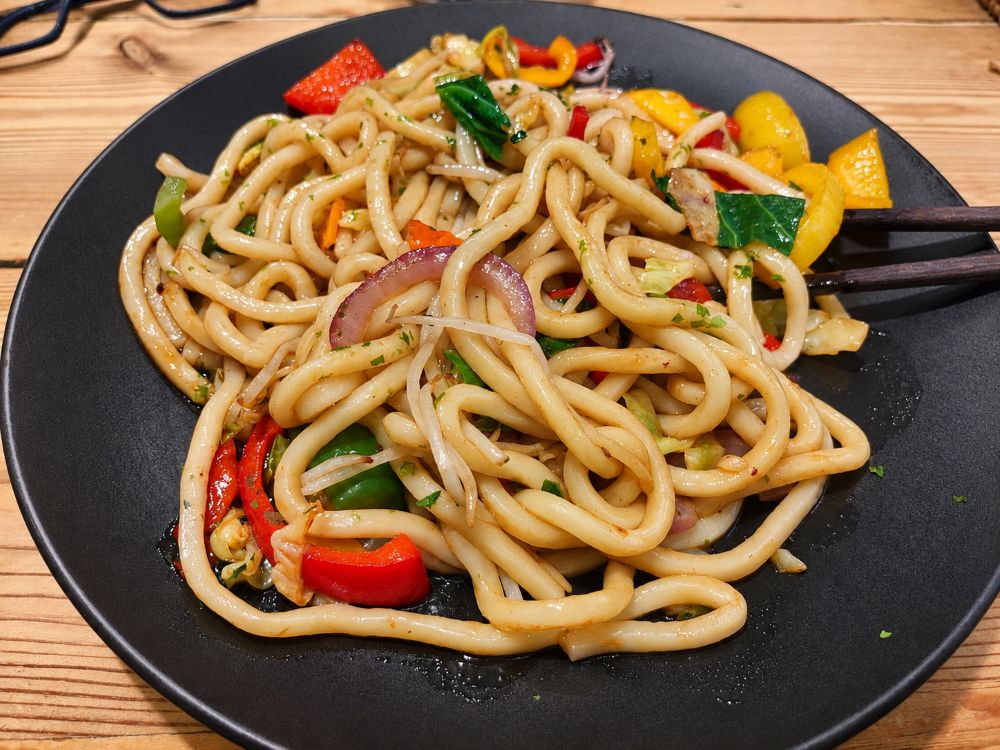
The Dashi ramen, priced at £18.90, changes register completely.
Its pale fish-based broth comes with shredded leek, seaweed and beansprouts, topped either with sea bass or a mixed seafood combination of shrimp, squid, octopus and mussels.
The thinner noodles suit the lighter broth, allowing the seafood to remain distinct rather than disappearing inside a creamy soup.
This is a particularly useful contrast if two people are ordering ramen. Put Dashi beside Tonkotsu or Tantan and the differences in broth, noodle and aromatic weight become much clearer.
Sashimi Deserves Attention Beyond the Ramen
Happy Samurai is not simply bolting sushi onto a noodle menu.
The sashimi selection includes salmon at £4.80 for three pieces, tuna at £5.95, octopus at £5.60, sea bass at £6.30, sweet shrimp at £5.95 and mackerel at £5.60. A small sashimi platter costs £20, while the larger one is £25.88.
Salmon and tuna are the obvious orders, but mackerel and sweet shrimp make the selection more interesting.
Saba brings oily richness and a deeper marine character; amaebi contributes softness and pronounced sweetness. Between them, the platter starts behaving like a tasting rather than a collection of familiar pink fish.
The best sashimi does not need an essay of sauces. Soy and wasabi should remain supporting actors.
The Dragon Rolls Are Where Restraint Leaves the Building
Happy Samurai also serves elaborate signature rolls, including combinations such as Spicy Samurai Salmon, Sumo, Azzurri and Oniko.
This is a different language from sashimi.
Sauces, avocado, fried elements and multiple fillings make these rolls richer, sweeter and more extroverted. They are enjoyable when treated as their own category rather than judged against minimalist sushi orthodoxy.
Order one for the table after simpler nigiri or sashimi. Several in succession quickly blur into the same mixture of rice, sauce and richness.
Katsu Curry Delivers Exactly the Comfort It Promises
The katsu curry starts at £14.80, with chicken, pork, vegetables or fried shrimp served alongside rice, salad and pickles.
Japanese curry is deliberately different from the highly aromatic curries of India or Thailand. It is thick, gently sweet, savoury and almost gravy-like.
That softness needs the texture of panko.
A pork or chicken cutlet should remain crisp where it has not touched the sauce, creating alternate bites of crunch and curry-soaked coating. Pickles are more important than they look; their acidity stops the plate from becoming monotonous halfway through.
This is straightforward cold-weather happiness rather than a dish asking for intellectual analysis.
Unagi Donburi Is the Richer Rice-Bowl Choice
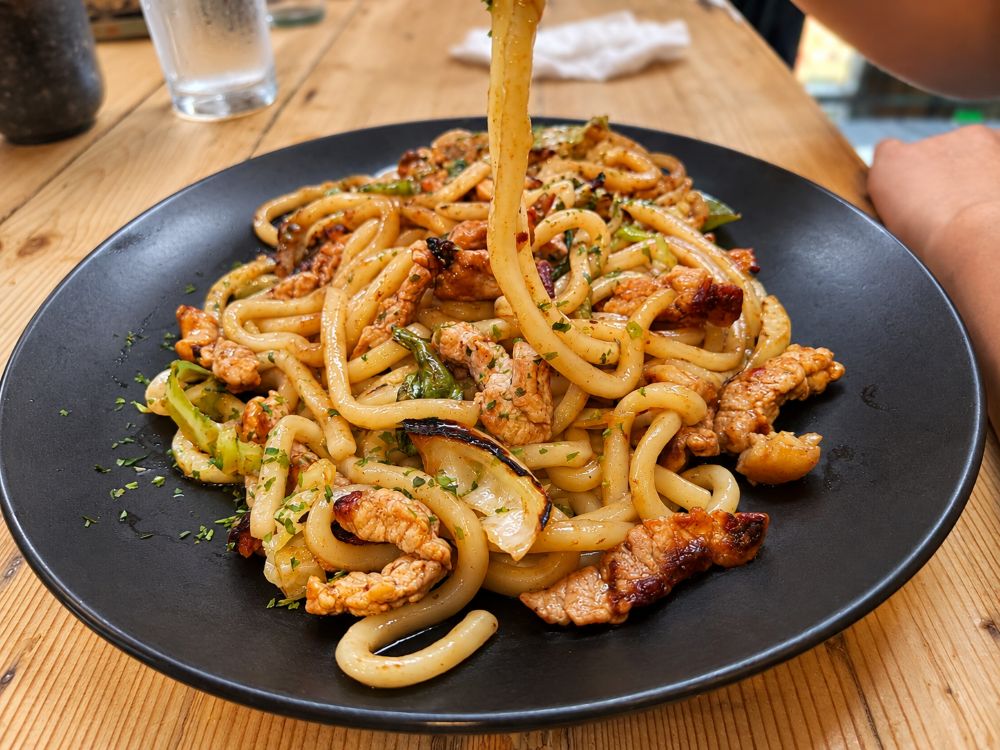
The donburi section moves from teriyaki chicken to beef, tempura and unagi, with eel priced at £20 on the full menu.
Eel has enough fat and sweetness to dominate plain rice, which is precisely why the combination is so satisfying. The glaze brings caramelised savouriness, while rice absorbs the sauce and tones down its intensity.
For diners who do not want soup, this is one of the most complete single-dish meals on the menu.
Drink Pairings
Sashimi: a dry Junmai Ginjo sake — clean, restrained and delicate enough for raw fish.
Tonkotsu or Mayu ramen: Asahi Super Dry — crisp bitterness cuts through the richer broth.
Katsu curry: Kirin Ichiban — light malt sweetness and carbonation suit fried panko and curry sauce.
Mochi and Dorayaki Keep Dessert Playful
Dessert stays firmly in casual territory.
Mochi ice cream costs £4.30, with flavours including vanilla, mango, coconut and green tea. Dorayaki cost £3.20, filled with chocolate, matcha, red bean, strawberry or custard.
Dorayaki are the more characterful finish. Two small pancake-like cakes enclose a sweet filling, producing something softer and less cold than mochi.
Red bean keeps the Japanese reference clearest, while matcha introduces a welcome bitterness after rich ramen.
Service, Atmosphere and Prices
Happy Samurai is casual in the best sense. The menu is broad, but service does not turn dinner into a guided seminar on Japanese cuisine. Order a few small plates, choose ramen or rice, and let the table become messy.
Prices sit comfortably in the middle of Canterbury’s casual-dining range. Gyoza (£4.60), Tonkotsu ramen (£17.50) and dorayaki (£3.20) produce a substantial meal for £25.30 before drinks. Adding sashimi or several izakaya dishes pushes dinner towards £35–£45 per person.
Sushi can naturally move the bill higher, particularly when several sashimi selections and larger rolls reach the table.
The restaurant closes on Monday. Tuesday to Thursday service runs 12:00–3:00 pm and 4:00–8:30 pm, Friday and Saturday continuously from 12:00–9:00 pm, and Sunday from 12:00–4:00 pm.
Useful Information
- Address: 4 Butchery Lane, Canterbury, Kent CT1 2JR
- Cuisine: Japanese ramen, sushi, sashimi, izakaya, donburi and katsu curry
- Family tradition: Recipes and cooking knowledge extending across five generations
- Ramen to try: Tonkotsu, Mayu, Tantan and Dashi
- Izakaya to try: Takoyaki, karaage, gyoza and grilled mackerel
- Tonkotsu ramen: £17.50
- Tantan ramen: £17.50
- Dashi ramen: £18.90
- Katsu curry: From £14.80
- Sashimi platter: £20 small; £25.88 large
- Mochi: £4.30
- Dorayaki: £3.20
- Closed: Monday
- Tuesday–Thursday: 12:00 pm–3:00 pm and 4:00 pm–8:30 pm
- Friday–Saturday: 12:00 pm–9:00 pm
- Sunday: 12:00 pm–4:00 pm
- Telephone: +44 1227 851109
- Email: [email protected]
- Vegetarian ramen: Available
- Vegan options: Available
- Gluten-sensitive dishes: Dedicated choices available
- Takeaway: Available
- Best for: Ramen, informal Japanese dining, sushi and sharing several izakaya dishes
Our Rating of Happy Samurai
Food: 8.7/10
Broad, colourful Japanese comfort food with enough technical substance beneath the playful presentation.
Izakaya: 8.8/10
Karaage, takoyaki and grilled mackerel make sharing more interesting than ordering a single starter each.
Ramen: 9/10
Mayu and Tantan have the most personality; Dashi provides a lighter and more precise counterpoint.
Sushi and Sashimi: 8.8/10
Good breadth, with mackerel and sweet shrimp giving the selection more range than the usual salmon-and-tuna routine.
Rice and Curry: 8.6/10
Katsu curry and unagi donburi provide generous alternatives when another bowl of broth feels excessive.
Desserts: 8.3/10
Small, cheerful and appropriately Japanese, with dorayaki more interesting than a generic restaurant pudding.
Drinks: 8.5/10
Sake, Japanese beer and cocktails cover the menu comfortably.
Service: 8.8/10
Relaxed, quick and refreshingly free of unnecessary ceremony.
Atmosphere: 8.7/10
Compact, animated and casual enough for ramen while still making a table of sushi feel like dinner.
Value for Money: 8.8/10
A substantial ramen meal can remain around £25 before drinks, while sharing dishes allow the table to scale the bill naturally.
Overall Rating: 8.8/10

