
I Dù dela Contrada Brescia Review: Fresh Pasta, Braised Meat and Wine in the Carmine

Some restaurants in Brescia announce themselves with polished dining rooms and precise tasting menus. I Dù dela Contrada belongs to another species entirely. Hidden in Contrada del Carmine, one of the most animated quarters of the historic centre, it is an osteria built around the idea that dinner should feel closer to being invited into somebody’s house than attending a gastronomic performance.
The restaurant opened in 2012, created by Davide Ratto and Andrea Ronconi after years working in hospitality. Their starting point was deliberately simple: traditional cooking, seasonal ingredients, small producers, wine and a room capable of becoming a meeting place rather than merely somewhere to eat.
That philosophy still defines the food. The kitchen begins with Brescian tradition but does not treat it as a museum piece. Fresh pasta, slow-cooked meats, salumi, cheese and vegetables move with the season, while the daily offer changes according to what is worth cooking.
On our 2026 visit, the most persuasive quality was this lack of rigidity. I Dù dela Contrada feels local without becoming folkloric, casual without being careless and contemporary without needing to dismantle every traditional dish before serving it.
The Antipasto Is Meant to Turn the Table into a Conversation
Sharing is fundamental here.
The opening section revolves around things that naturally belong in the middle of the table: salumi, cheeses, gnocco fritto, small frittate and seasonal preparations. The idea is less about constructing a formal starter than creating a collection of bites that encourages everybody to reach across the table.
Gnocco fritto is particularly dangerous in this context.
Hot, puffed dough has very little flavour on its own, which is precisely why it suits cured meat so well. Fat from salami or coppa begins to soften against the warmth, while the crisp exterior of the dough gives the salumi a texture they would never achieve with ordinary bread.
Add cheese and the opening course can become a meal surprisingly quickly.
Restraint is useful.
Fresh Pasta Is One of the Kitchen’s Real Strengths
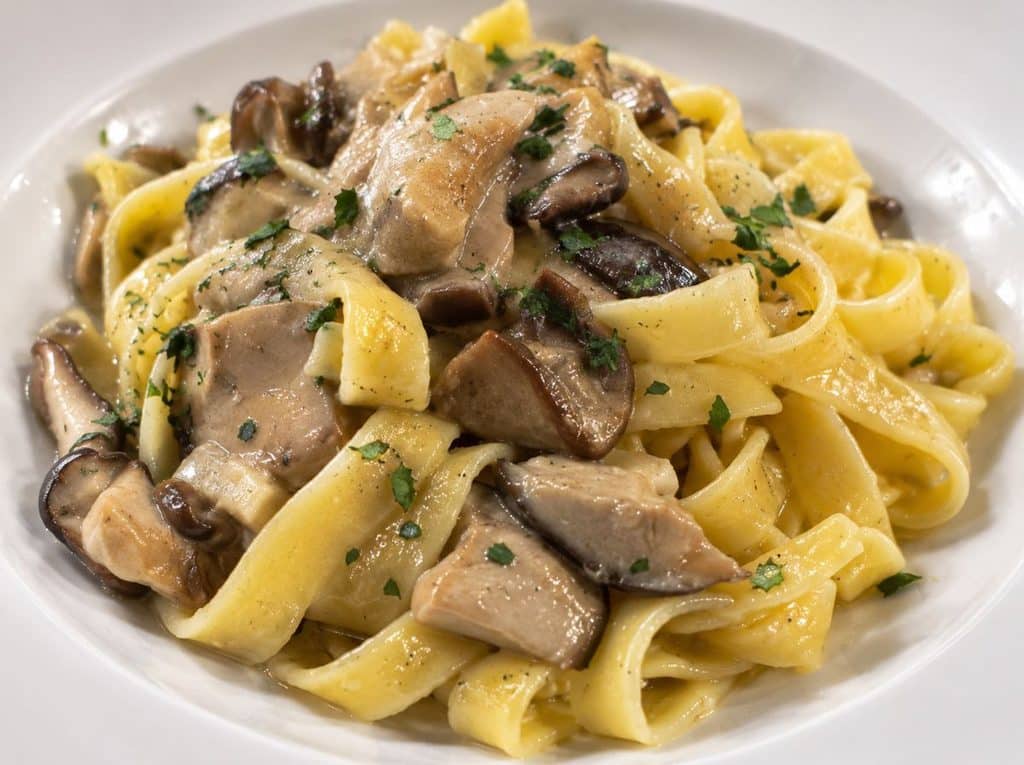
The restaurant has always given particular attention to fresh pasta, and this is where its home-cooking identity becomes most convincing.
Brescian cuisine offers an obvious reference point in casoncelli, but the kitchen is not confined to one regional shape or filling. Vegetable-based pastas and richer meat preparations appear according to the season.
The important element is that the pasta remains recognisably handmade rather than merely carrying a traditional name.
Fresh dough has a different softness and elasticity from dried pasta, particularly around a filling. Butter, cheese and meat sauces therefore need less aggression because the pasta itself contributes richness.
This is the section of the menu we would explore first.
Brescian Cooking Is More Than Casoncelli
It is easy for visitors to reduce Brescia to stuffed pasta and polenta.
I Dù dela Contrada goes further.
Its culinary language includes roasts, braised meats, pork, offal and the kind of dishes that historically relied on inexpensive cuts and patient cooking. These foods are naturally seasonal: substantial in winter, greener and lighter as temperatures rise.
That daily rhythm is fundamental to the restaurant.
Rather than forcing the same famous local dishes onto the table every night of the year, the kitchen allows Brescia to appear through technique and ingredients as much as through specific recipes.
It makes the cooking feel alive rather than preserved.
Maialino alla Bresciana Shows the Richer Side of the Kitchen
One of the restaurant’s characteristic meat preparations is Brescian-style suckling pig filled with prune and speck.
The combination is clever because pork naturally responds to both smoke and fruit.
Speck intensifies the savoury side, adding salt and cured depth, while prune contributes sweetness and enough acidity to lighten the fatty meat. The filling also protects the interior from drying as it cooks.
This is exactly the sort of dish that can become overly sweet if handled without restraint.
The fruit should remain a counterpoint, not a sauce.
With polenta or seasonal vegetables alongside, it becomes unmistakably northern Italian comfort food.
Braised Veal Cheek Is Built Around Time
The braised veal cheek heads even deeper into slow-cooked territory.
Cheek begins tough because of its connective tissue. Give it enough time, however, and collagen turns to gelatin, producing one of the most succulent textures available from beef or veal.
There is little benefit in rushing the process.
The finished meat should surrender to the fork without collapsing into dry fibres, while the cooking liquid needs enough reduction to become glossy rather than watery.
This is food that explains why the osteria format still matters. A relatively humble cut becomes considerably more interesting than many expensive ones once patience enters the equation.
Baccalà Provides the Fish Counterpoint
Fish plays a smaller role than meat, but baccalà fits naturally into the traditional vocabulary.
Salt cod belongs to inland northern Italian cooking almost paradoxically. Long before refrigeration made fresh sea fish routinely available, preserved cod travelled enormous distances and entered regional cuisines far from the coast.
Its flavour is concentrated and distinctive, and correct soaking is as important as cooking.
Baccalà pairs naturally with polenta because the grain absorbs both salt and sauce while giving the fish a softer, sweeter background.
It is the fish dish that makes most sense in an osteria like this precisely because it belongs to history rather than fashion.
Seasonality Keeps the Vegetable Side Interesting
Vegetarian dishes are not relegated to a permanent plate of grilled vegetables.
Fresh pasta and daily cooking allow greens, mushrooms, artichokes, pumpkin, aubergine and other seasonal ingredients to become proper courses whenever they are at their best.
That approach is more persuasive than maintaining the same meat-free dish through every month of the year.
Vegetables need seasonality more than almost any other ingredient.
A good artichoke in spring or mushroom in autumn already has a stronger identity than a complicated substitute engineered simply to occupy space on a menu.
Wine Pairings
Salumi and gnocco fritto: 1701 Franciacorta Brut Nature — dry, energetic bubbles clear the palate between cured meats.
Fresh stuffed pasta: Pasini San Giovanni Valtènesi — bright red fruit and freshness keep butter and cheese lively.
Braised veal cheek: Noventa Pià della Tesa Botticino DOC — savoury local character and sufficient structure for long-cooked meat.
The Wine Cellar Is Part of the Restaurant’s Personality
Wine has never been an accessory here.
The selection is built primarily around Italian bottles and smaller producers, with particular attention to the territory around Brescia: Franciacorta, Garda, Botticino, Capriano del Colle and Valcamonica.
That local breadth is worth exploring because Brescia is frequently reduced to Franciacorta alone.
The province also produces compelling still wines, from the lighter reds of the Garda area to more structured Botticino and Capriano del Colle.
A traditional osteria is exactly where these bottles should make sense.
The point is not to chase prestige labels but to find wine that behaves well with salumi, butter, polenta and braised meat.
Carmine Gives the Restaurant Its Energy
The Carmine district matters.
This is one of central Brescia’s liveliest neighbourhoods, a network of narrow streets, bars, restaurants and old buildings where evenings naturally move from aperitivo to dinner and then somewhere else.
I Dù dela Contrada fits that rhythm perfectly.
The restaurant occupies a historic building and spreads across two dining rooms, with a small outdoor area during the warmer months. Wooden tables, exposed architectural details and an intentionally informal arrangement suit the food far better than polished minimalism would.
This is a room meant to fill with voices.
Quiet romantic isolation is not really the point.
A Restaurant That Likes Things Happening Around the Food
The identity extends beyond cooking.
Wine, cultural events and social gatherings have long been part of the restaurant’s character. That gives I Dù dela Contrada a slightly different energy from a conventional trattoria whose entire existence begins and ends with service.
There is a sense of neighbourhood life around it.
That can make dinner feel spontaneous, particularly later in the evening when Carmine itself becomes busier.
The restaurant is at its best when approached with the same spirit: come hungry, order several things for the table and avoid turning the meal into a checklist.
Dessert Should Stay Brescian
A restaurant built around traditional food does not need to conclude with architectural pastry.
A slice of sbrisolona, seasonal cake or another simple homemade dessert makes far more sense.
Sbrisolona is particularly appropriate because its crumbly almond texture changes the pace after soft pasta and braised meat. It also invites the obvious companion: a small glass of sweet wine or grappa.
The cake is meant to fracture.
Trying to cut a perfectly neat wedge somewhat misses the point.
Service, Atmosphere and Prices
Service is deliberately informal, matching the concept of an osteria where conversation matters as much as choreography.
The restaurant opens primarily in the evening, with dinner service every day from around 7:00 pm. Saturday and Sunday also include lunch service, making the weekend the better choice for anyone who wants to explore Carmine during the day before settling into a long meal.
The menu changes too frequently to justify pretending that a fixed dish-by-dish 2026 price list exists when it does not.
A sensible expectation is roughly €25–€35 per person for two courses before drinks, with the final total naturally rising according to wine and the number of shared starters.
That keeps I Dù dela Contrada firmly within osteria territory rather than pushing it towards destination-restaurant pricing.
Useful Information
- Address: Contrada del Carmine 18/B, 25122 Brescia
- Area: Carmine, historic centre
- Opened: 2012
- Founders: Davide Ratto and Andrea Ronconi
- Chef: Matteo
- Cuisine: Seasonal Brescian and Italian osteria cooking
- Specialities: Fresh pasta, traditional meat dishes, braises, salumi, cheeses and baccalà
- Menu philosophy: Changes frequently according to season and available ingredients
- Wine: Strong focus on small Italian producers and wines from the Brescia area
- Local wine areas represented: Franciacorta, Garda, Botticino, Capriano del Colle and Valcamonica
- Typical spend: Approximately €25–€35 per person for two courses before drinks
- Dinner: Daily from approximately 7:00 pm
- Weekend lunch: Saturday and Sunday
- Telephone: +39 392 9253416
- Indoor seating: Around 70 seats
- Outdoor seating: Small seasonal dehors
- Best for: Traditional Brescian food, natural and small-producer wines, convivial dinners and an evening in the Carmine district
Our Rating of I Dù dela Contrada
Food: 9/10
Seasonal home-style cooking feels deliberate rather than nostalgic, particularly when pasta and slow-cooked meat take the lead.
Starters: 9/10
Gnocco fritto, salumi, cheese and small shared plates immediately establish the osteria’s convivial character.
Fresh Pasta: 9.2/10
One of the clearest reasons to eat here, with the daily format allowing fillings and sauces to follow the season.
Traditional Brescian Cooking: 9.2/10
The restaurant looks beyond the obvious classics towards braises, pork, baccalà and older domestic preparations.
Meat: 9.1/10
Slow cooking suits the kitchen particularly well, from veal cheek to richer pork preparations.
Vegetarian Cooking: 8.8/10
Seasonal vegetables and fresh pasta provide real alternatives rather than token substitutions.
Wine List: 9.3/10
Small producers and a serious interest in Brescia’s lesser-known wine territories give the cellar genuine personality.
Service: 8.9/10
Relaxed and conversational, in keeping with a place designed to feel closer to an osteria among friends than formal dining.
Atmosphere: 9.2/10
Historic Carmine, wooden tables and a lively room give dinner a distinctly urban Brescian energy.
Value for Money: 9.1/10
Moderate pricing and a flexible daily menu make it particularly attractive for an informal night in central Brescia.
Overall Rating: 9.1/10

