
Can You Still Eat Proper Roman Food in Campo de’ Fiori? Antica Hostaria Romanesca Says Yes
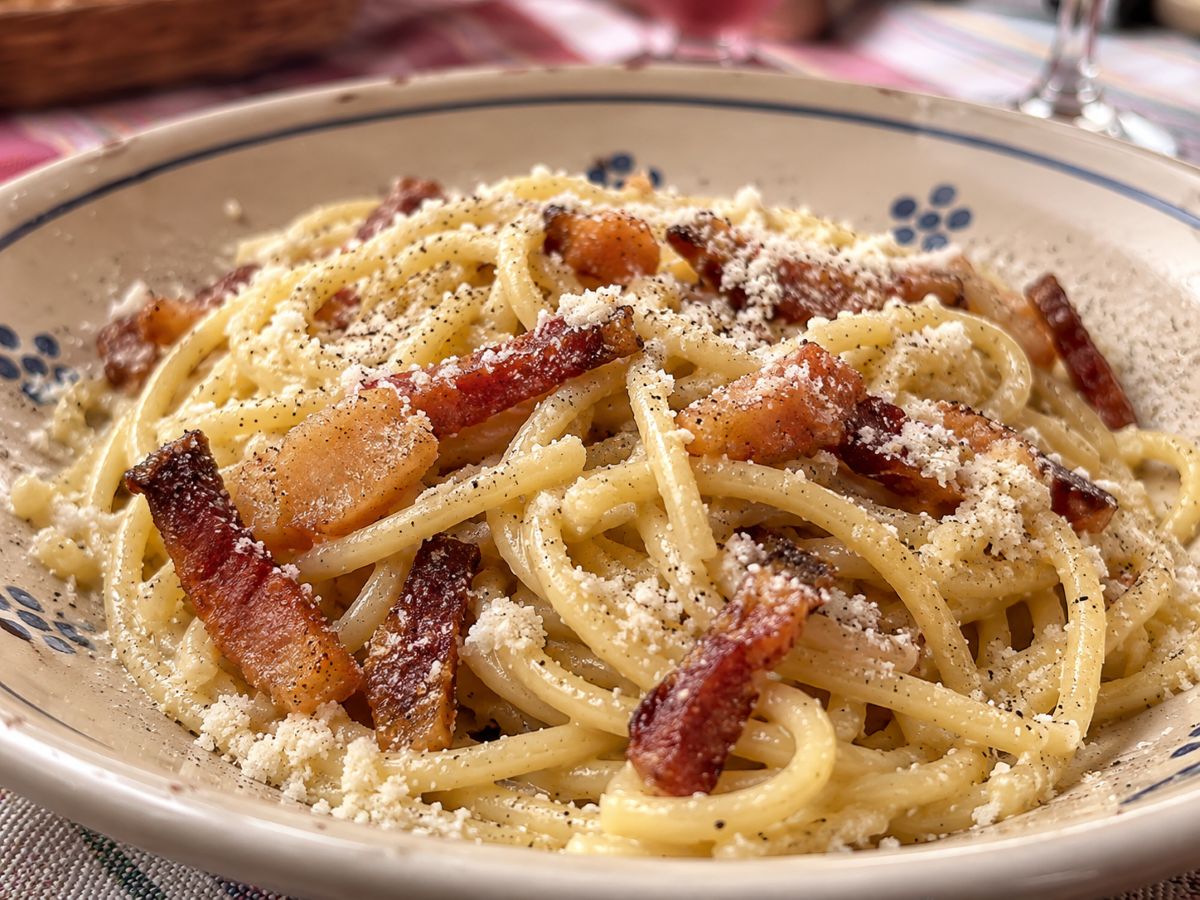
Campo de’ Fiori is not where you automatically expect restraint. The square is one of Rome’s great stages, permanently suspended between market life, nightlife, visitors, history and restaurants competing for attention. Antica Hostaria Romanesca, at number 40, takes a more recognisably Roman route: handwritten-menu energy, close tables, seasonal vegetables, handmade pasta and the canonical sequence of carbonara, gricia, coda alla vaccinara, trippa, abbacchio and carciofi.
The setting could easily push the restaurant towards postcard Rome. The cooking is more interesting when it ignores the postcard altogether. Here, a plate of fettuccine, a braised oxtail or a properly bitter portion of puntarelle says considerably more than elaborate presentation ever could.
Our 2026 meal left very little room for cynicism. Rome is full of osterie trading on tradition; this one still feels genuinely inhabited by it. We ate extraordinarily well, without ceremony and with enormous pleasure — the kind of meal where coda, gricia and artichokes keep arriving and nobody at the table is interested in slowing down.
Carciofo alla Romana Is the Natural Beginning
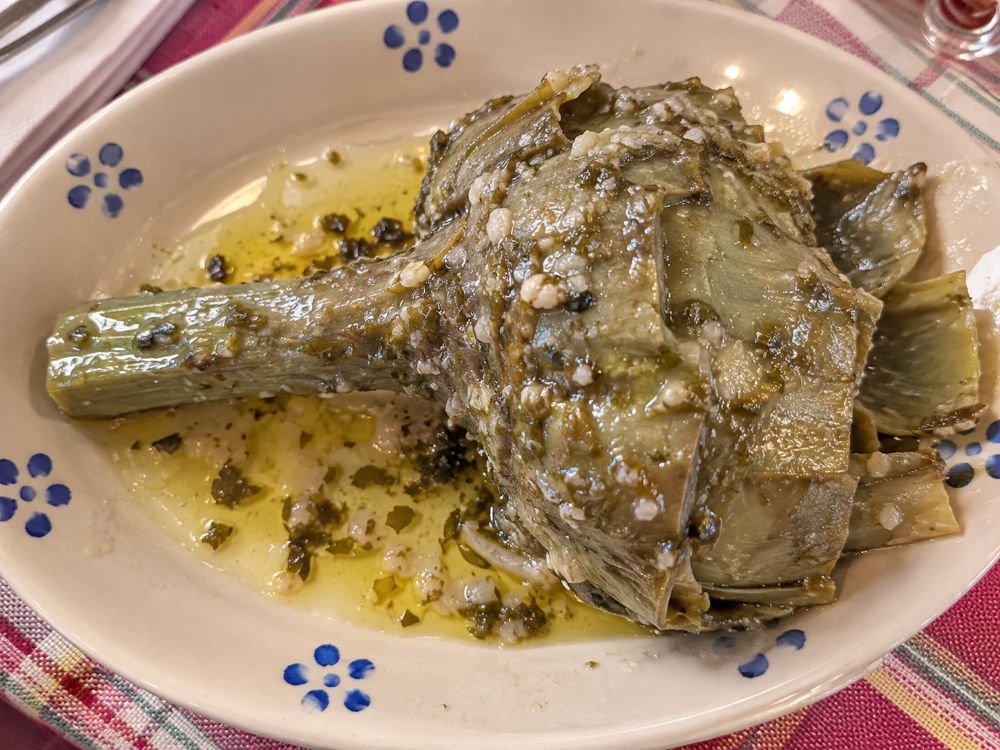
Roman artichokes do not need much persuasion.
A carciofo alla romana should be tender enough to cut with the side of a fork, with parsley, garlic and mint penetrating the leaves rather than sitting on top as decoration. Olive oil does the rest.
When artichokes are in season, this is the starter that makes the most sense here. It introduces the meal with something vegetal and aromatic before guanciale, Pecorino and long-cooked meat begin taking over.
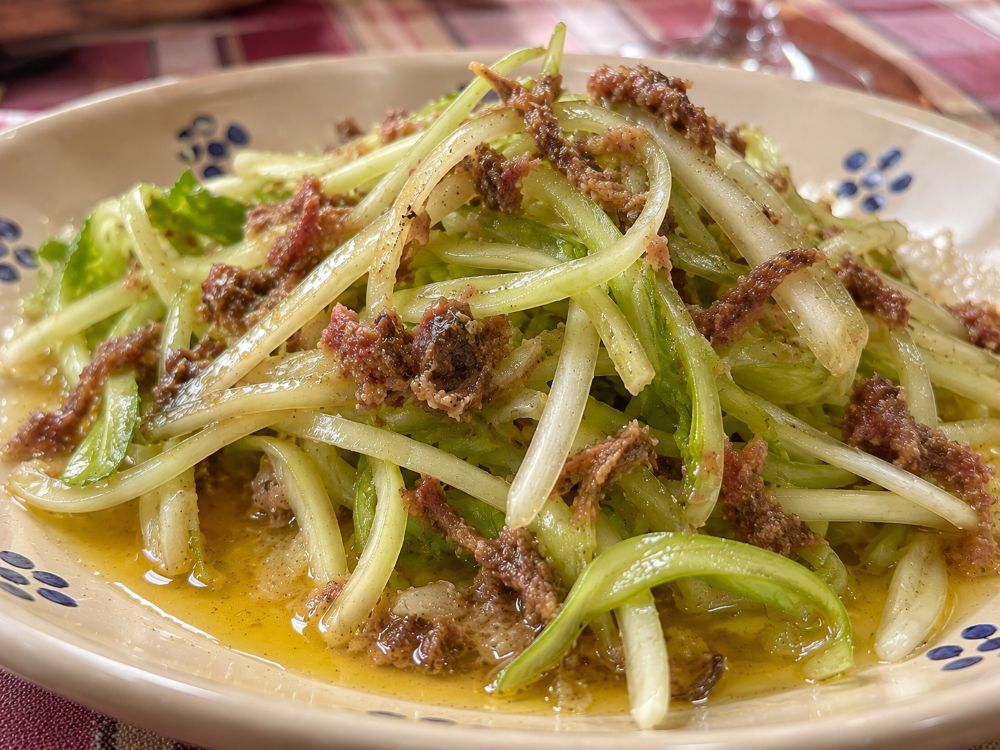
The alternative is puntarelle, another dish Rome understands better than almost anywhere else: crisp chicory shoots, bitterness, anchovy, garlic and acidity. Between the two, the choice is seasonal rather than strategic.
Fettuccine with Guanciale, Artichokes and Pecorino Feel Entirely at Home
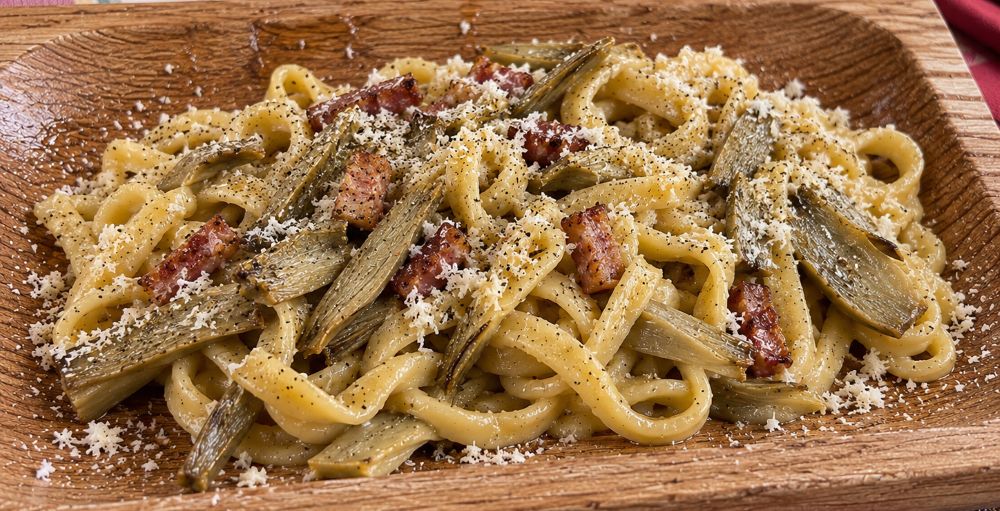
One of the combinations that best captures the kitchen is handmade fettuccine with guanciale, artichokes and Pecorino.
Nothing about it is delicate, but the flavours have a natural order. Guanciale supplies fat and salt, artichoke introduces bitterness and vegetal depth, Pecorino sharpens everything, while fresh fettuccine provide enough body to carry the sauce.
It is richer than a simple gricia but more layered than carbonara.
The artichoke is what saves it from becoming another exercise in pork fat and cheese.
Carbonara Refuses the Modern Roman Arms Race
Rome currently has no shortage of carbonara designed to look impressive before it tastes impressive: fluorescent yolk, mountainous Pecorino, guanciale piled vertically, sauces thick enough to stand a spoon upright.
Antica Hostaria Romanesca takes a more traditional line.
The sauce is built around whole egg, Pecorino, guanciale and black pepper, producing something looser and less aggressively creamy than many contemporary versions.
That may surprise diners trained by Instagram carbonara, but the style has historical logic. The dish tastes more like lunch in Rome and less like a demonstration.
Is this the carbonara to cross the entire city for? Rome has too many exceptional contenders for such an easy verdict. But if you want to understand how carbonara tasted before it became an online beauty contest, this plate makes a persuasive case.
Gricia May Be the More Revealing Pasta
Gricia strips the formula back even further.
No tomato. No egg. Just pasta, guanciale, Pecorino and black pepper.
That simplicity makes mistakes painfully obvious. The rendered guanciale fat has to emulsify with pasta water and cheese without becoming greasy; Pecorino needs to season rather than bury; pepper should remain aromatic rather than acrid.
It is easy to call carbonara the essential Roman pasta. At a traditional hostaria, gricia often tells you more about the kitchen.
Fettuccine with Coda Sauce Are Rome in Concentrated Form
The more intriguing pasta move is fettuccine dressed with the sauce from coda alla vaccinara.
Oxtail gives up collagen, fat and deep beef flavour during long cooking, producing a sauce much darker and more gelatinous than conventional ragù. Fresh pasta catches it beautifully.
This is not a light primo intended to precede three more courses.
It is practically the second course disguised as the first.
And that is part of the pleasure.
Coda alla Vaccinara Is the Dish with the Deepest Roman Accent
If one plate deserves to define the meal, it is coda alla vaccinara.
This is cucina romana at its most resourceful: a once-humble cut transformed through slow cooking until meat, connective tissue and sauce become almost inseparable. Celery is fundamental, not decorative, bringing sweetness and vegetal character to a dish that could otherwise become brutally heavy.
The meat should surrender easily from the bone without dissolving into fibres.
A good coda has depth, gloss and enough savoury intensity that bread becomes non-negotiable.
Fancy plating would only get in the way.
Trippa alla Romana Is Not There for Nostalgia
Trippa alla romana remains one of the dishes that separates a genuinely Roman menu from one assembled around four famous pasta recipes.
Tomato, mint and Pecorino give tripe its traditional framework. The texture should be tender but still recognisable, never cooked into complete softness.
Roman offal cooking survives because it makes sense, not because somebody decided it was picturesque.
For diners who already know carbonara and amatriciana, trippa is where the menu becomes more interesting.
Abbacchio Scottadito Needs Very Little
The abbacchio scottadito belongs to another essential Roman register.
Young lamb chops are cooked quickly at high heat, ideally developing char outside while preserving tenderness within. The name itself evokes meat hot enough to burn the fingers.
Rosemary can help. Lemon can help.
A thick sauce cannot.
The entire success of the dish rests on lamb quality, heat and timing.
Patate Cacio e Pepe Are Slightly Dangerous
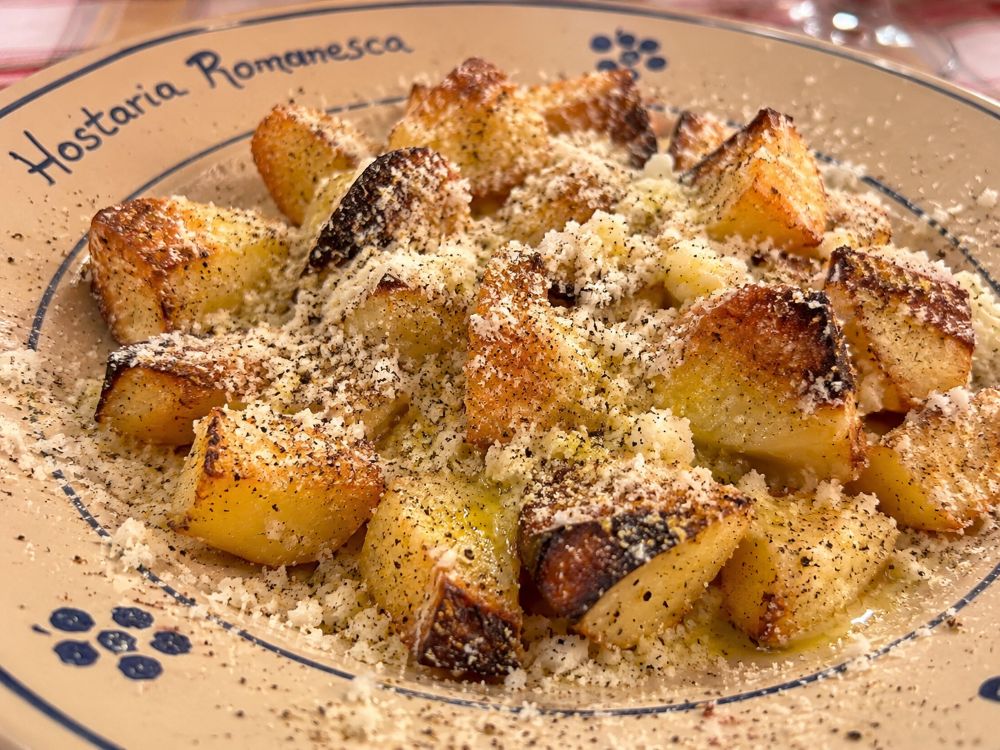
Potatoes dressed with cacio e pepe logic sound innocent until they reach the table.
Starch, Pecorino, black pepper and fat form exactly the kind of combination that encourages one forkful too many. They make obvious sense beside lamb or oxtail, but they can also turn a meal already dominated by Roman pasta into an impressive exercise in carbohydrates.
Shared between the table, they are excellent.
Alone, after carbonara, they are a declaration of intent.
Wine Pairings
Carciofi and puntarelle: Casale Marchese Frascati Superiore — fresh, herbal and crisp enough for bitter vegetables and anchovy.
Carbonara or gricia: Casale del Giglio Cesanese — lively red fruit and moderate structure against guanciale and Pecorino.
Coda alla vaccinara: Damiano Ciolli Silene Cesanese di Olevano Romano — savoury, energetic and substantial enough for slow-cooked oxtail.
Campo de’ Fiori Is Both the Attraction and the Test
There is no pretending the location is neutral.
Eating on Campo de’ Fiori means accepting one of Rome’s busiest central squares, with all the movement and tourism that entails. Yet the small scale of the hostaria and the unapologetically traditional menu keep the experience from drifting completely into visitor-oriented Rome.
This is not the place for hushed service, immaculate table spacing or contemporary Roman minimalism. The attraction is precisely the opposite: close quarters, plates that look cooked rather than styled and a menu built around dishes that survived long before anyone began rating restaurants on a phone.
Service, Atmosphere and Value
The room is compact, the terrace places you directly on Campo de’ Fiori and the pace naturally feels closer to a busy Roman hostaria than to formal dining.
That informality suits the food. Coda, gricia and trippa lose something when surrounded by too much ceremony.
The restaurant serves both lunch and dinner, generally around 12:00–15:00 and 19:00–23:00, and booking makes sense given the limited scale of the space and its position on the square.
What matters most is expectation. Come looking for polished contemporary Rome and the place may feel deliberately old-fashioned. Come wanting fettuccine, guanciale, artichokes and braised meat without cosmetic surgery, and the proposition becomes much clearer.
Useful Information
- Address: Campo de’ Fiori 40, 00186 Rome
- Area: Parione / Campo de’ Fiori
- Cuisine: Traditional Roman and Lazio cooking
- Dishes to look for: Carbonara, gricia, handmade fettuccine, coda alla vaccinara, trippa, abbacchio scottadito and Roman artichokes
- Handmade pasta: Fettuccine prepared in-house
- Vegetarian options: Available
- Gluten-free options: Available
- Outdoor seating: Available on Campo de’ Fiori
- Reservations: Available
- Telephone: +39 06 686 4024
- Typical service: Lunch and dinner
- Best for: Traditional Roman pasta, quinto quarto, artichokes and an old-school meal in the historic centre
Our Rating of Antica Hostaria Romanesca
Food: 9.1/10
The strongest plates are deeply rooted in Roman domestic cooking rather than modern restaurant fashion.
Roman Pasta: 9.3/10
Gricia, carbonara and handmade fettuccine provide the clearest reason to sit down.
Traditional Roman Cooking: 9.4/10
Coda, trippa and abbacchio give the menu considerably more depth than the standard tourist-centre quartet of pasta dishes.
Vegetables and Sides: 9/10
Carciofi, puntarelle and bitter greens are treated as part of the cuisine rather than decorative relief.
Wine: 8.6/10
This is more naturally a house-wine hostaria than a destination cellar, which suits the food.
Service: 8.8/10
Direct, informal and appropriate to the scale and rhythm of the room.
Atmosphere: 9.2/10
Campo de’ Fiori provides theatre for free; the small hostaria keeps enough old-Rome character to hold its ground.
Value for Money: 9/10
Traditional cooking and a central location make the proposition notably stronger than the address might suggest.
Overall Rating: 9.1/10

