
Is Bocconcino Soho Worth It? Inside the Italian Restaurant off Carnaby Street

Bocconcino Soho sits at 59 Great Marlborough Street, between Oxford Circus and the upper edge of Carnaby. That geography could easily push a restaurant towards safe, interchangeable West End Italian cooking. Bocconcino goes in the opposite direction: handmade pasta, pizza from an open-fire oven, a Josper grill for meat and fish, and a wine list deep enough to move well beyond the obligatory Pinot Grigio.
The room is polished rather than theatrical. Marble, warm earthy tones and an open kitchen give the ground floor a contemporary Italian look, while the basement Sotto Bar takes over later in the evening. Friday and Saturday nights add DJs, a singer and drummer, so dinner gradually shifts from restaurant to Soho night out.
The strongest impression is not one spectacular signature dish but breadth. Bocconcino can move from tuna tartare and beef carpaccio to wild-mushroom pasta, slow-cooked Genovese ragù, Roman-style pizza, sea bass and charcoal-grilled beef without making the menu feel completely incoherent.
That matters in Soho, where plenty of restaurants are better at creating an occasion than feeding one.
Tuna Tartare Is a Sharper Start Than Another Burrata
The tuna tartare with chilli and vitello tonnato sauce is the sort of combination that looks questionable for approximately three seconds.
Raw tuna gives sweetness and softness; chilli adds lift; the tuna-and-caper character of vitello tonnato sauce takes the dish towards something more savoury and almost saline.
It is considerably more interesting than beginning yet another London Italian meal with mozzarella and tomatoes.
Bocconcino does offer buffalo mozzarella with tomatoes and pesto, and there is nothing wrong with it. But the tartare tells us more about this kitchen.
Beef Carpaccio Keeps Things Cleaner
The Scottish beef carpaccio with mustard dressing goes in the opposite direction.
Thin beef needs almost nothing if the meat is good: seasoning, acidity and just enough fat to carry flavour. Mustard provides a sharper edge than the more predictable Parmesan-and-rocket combination.
For a pre-theatre dinner, it is particularly well judged.
You can eat it without spending the first act regretting your starter.
Wild Mushrooms and Stracciatella Make More Sense Than Truffle Everywhere
The pasta section changes with the seasons, but pappardelle with wild mushrooms and stracciatella captures Bocconcino at its more balanced.
Wild mushrooms bring earthiness and umami, while stracciatella softens the sauce without smothering it. Pappardelle have the width to carry both.
The temptation with mushrooms in an upscale Italian restaurant is always to add truffle until the diner can smell the plate from Regent Street.
This dish does not need that.
Its strength is the contrast between woodland depth and fresh dairy richness.
Genovese Ragù Deserves More Attention
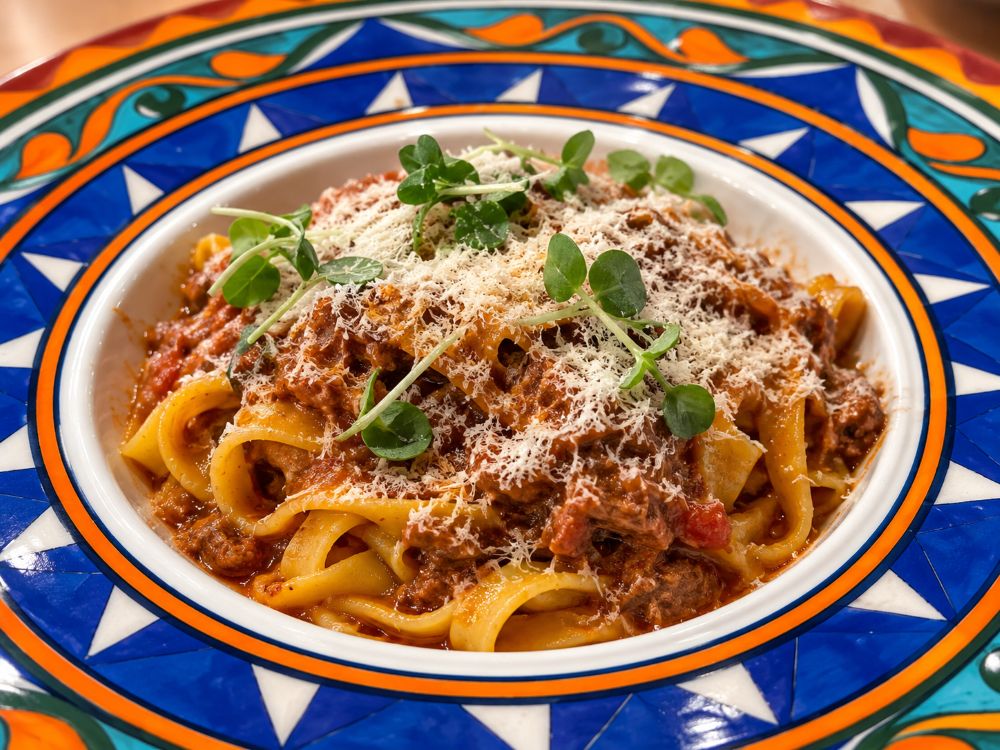
The ravioli with slow-cooked Genovese beef ragù are more substantial.
Genovese ragù is one of Naples’ great slow-cooked sauces, built around onions and meat rather than tomato. Time turns the onions sweet and almost jam-like while the beef gives the sauce its depth.
Putting that flavour inside or around filled pasta creates something much more restrained than a huge bowl of ragù, but the flavour remains unmistakably rich.
This is the kind of dish we would order here before carbonara.
Not because carbonara is wrong, but because London already has enough restaurants competing over it.
Roman-Style Pizza Changes the Rhythm
Bocconcino’s pizza is Roman-style rather than Neapolitan, baked in the open-fire oven visible from the dining room.
That distinction matters.
The base is thinner and crisper, giving toppings less soft dough to disappear into. It makes the pizza particularly suited to sharing between pasta and grilled dishes rather than treating it as the entire meal.
The Bocconcino pizza, topped with stracchino, mozzarella, fresh tomato and Parma ham, is the obvious house order.
Stracchino melts into a softer, tangier layer than mozzarella alone, while Parma ham brings salt without requiring an aggressive spicy topping.
Diavola Is Simpler and Probably the Better Test
The Diavola keeps the formula more direct.
Tomato, mozzarella and spicy salami leave far less room to disguise an average base.
The appeal is contrast: crisp edge, acidic tomato, dairy sweetness and cured-meat heat.
If you want to understand the pizza rather than photograph it, order this before the truffle version.
The Josper Grill Gives Bocconcino an Advantage
The Josper is one of the pieces of equipment that genuinely shapes the menu rather than simply appearing in restaurant copy.
Its enclosed charcoal cooking produces intense heat, developing a dark exterior quickly while keeping meat and fish relatively moist inside.
That makes a rump steak with rocket more interesting than it sounds. The beef gets smoke and crust; peppery rocket cuts through the fat.
No elaborate sauce is required.
Sea Bass with Caponata Has Better Mediterranean Instincts
The sea bass with caponata is one of the cleaner routes through the menu.
Caponata gives fish something far more useful than another buttery sauce: aubergine, tomato, sweet-sour acidity and the occasional hit of caper.
Sea bass is mild enough to absorb those flavours but delicate enough that the vegetables still need restraint.
When the balance is right, this is a dish with considerably more personality than generic grilled fish with lemon.
Slow-Cooked Chicken Is Quietly Convincing
The slow-cooked chicken supreme with creamed potatoes may be the least fashionable plate on the page.
It is also the sort of dish that exposes whether a kitchen understands temperature.
Chicken breast becomes dull the moment it dries out. Slow cooking preserves moisture, while the creamy potato underneath gives the dish enough richness to feel substantial.
There is no theatre here.
Sometimes that is refreshing.
The Wine List Is More Ambitious Than the Room Initially Suggests
Bocconcino carries more than 300 bottles, with Italy at the centre: Barolo, Barbaresco, Brunello, Amarone and Super Tuscans sit alongside lesser-known indigenous varieties, organic and biodynamic producers. France is also represented seriously, and Coravin opens access to more expensive wines by the glass.
This is one area where Bocconcino separates itself from a generic Soho Italian.
You can drink simply, but you do not have to.
Wine Pairings
Tuna tartare: Jermann Vintage Tunina — aromatic and textured enough for chilli and the savoury sauce.
Genovese beef ravioli: Vietti Barbera d’Alba Tre Vigne — bright acidity handles slow-cooked onion and beef without adding excessive tannin.
Sea bass with caponata: Planeta Cometa Fiano — Mediterranean herbs, citrus and enough structure for aubergine and sweet-sour tomato.
Tiramisù Is Still the Right Ending
The dessert section stays relatively traditional, with tiramisù, vanilla gelato with chocolate and hazelnuts, and seasonal additions.
That restraint is welcome.
After pasta, pizza or grilled beef, tiramisù brings coffee bitterness and mascarpone without introducing another conceptual exercise.
A good Italian dinner does not always need to end with something taller than the diner.
Lunch Is Where Bocconcino Becomes Particularly Interesting
The weekday lunch runs Monday to Friday from noon until 4:45 pm, at £24 for two courses or £28 for three.
That is a strong proposition in this part of central London.
Current choices span buffalo mozzarella, fried courgette parmigiana and chilled tomato soup before moving into mushroom pasta, salmon, slow-cooked chicken or Diavola pizza.
At dinner, Bocconcino behaves like a polished Soho restaurant.
At £24 for two courses, it starts behaving like a very sensible Soho restaurant.
The Theatre Menu Is Even More Practical
The dedicated theatre menu costs £30 for two courses or £35 for three.
It runs Monday to Friday and Sunday from 5:00 to 6:00 pm, with an additional late sitting Monday to Thursday from 9:30 to 10:30 pm.
The London Palladium is only a few minutes away, so this is not one of those “pre-theatre” menus that requires leaving dessert halfway through.
Pasta, pizza, steak, chicken and sea bass all appear, which means the format does not feel like a punishment for dining on a clock.
Soho Changes the Restaurant after Dark
During the day, Bocconcino can function perfectly well as a smart Italian lunch stop.
Friday and Saturday evenings are different.
A resident DJ starts from 7:30 pm, with live vocals and drums later in the evening. The shift is deliberate: food first, louder room later, then Sotto Bar downstairs if nobody is interested in going home.
Is Bocconcino Soho a quiet date-night trattoria? Definitely not at 10 pm on Saturday.
Would we choose that exact energy for a long dinner with friends? Much more readily.
Service, Atmosphere and Value
The restaurant operates Monday to Saturday from 12:00 pm to 12:30 am, with Sunday service until 10:30 pm.
That late closing time matters in Soho, particularly when so many kitchens become increasingly difficult after theatre hours.
Service needs to adapt throughout the day. Lunch demands pace, theatre tables have actual deadlines, while weekend dinner needs enough personality to survive the music without turning into nightclub bottle service.
The best value sits clearly in the fixed menus: £24 for two-course lunch, £28 for three; £30 for two-course theatre dining, £35 for three. A 13.5% discretionary service charge is added.
Bocconcino is not trying to be a tiny Roman trattoria discovered accidentally down an alley. It is polished, central and commercially confident.
The surprise is that the cooking has enough substance not to be swallowed by that positioning.
Useful Information
- Address: 59 Great Marlborough Street, London W1F 7JY
- Area: Soho / Carnaby
- Cuisine: Regional Italian
- Pasta: Handmade in-house
- Pizza: Roman-style, cooked in an open-fire oven
- Grill: Josper charcoal oven
- Wine list: More than 300 bottles
- Lunch menu: £24 for two courses / £28 for three
- Lunch hours: Monday–Friday, 12:00–4:45 pm
- Theatre menu: £30 for two courses / £35 for three
- Pre-theatre: Monday–Friday and Sunday, 5:00–6:00 pm
- Late theatre menu: Monday–Thursday, 9:30–10:30 pm
- Aperitivo: Monday–Friday and Sunday, 4:00–7:00 pm
- Friday–Saturday: Resident DJ from 7:30 pm, with live entertainment later
- Monday–Saturday: 12:00 pm–12:30 am
- Sunday: 12:00 pm–10:30 pm
- Service charge: 13.5% discretionary
- Best for: Italian dinner in Soho, pre-theatre dining, wine, Roman-style pizza and late weekend meals
Our Rating of Bocconcino Soho
Food: 8.9/10
A broad menu, but the stronger dishes retain enough regional identity to avoid generic luxury-Italian territory.
Antipasti: 8.8/10
Tuna tartare and beef carpaccio bring more personality than the familiar mozzarella route.
Pasta: 9/10
Seasonal mushroom pasta and Genovese ragù give the kitchen more character than another parade of fashionable truffle dishes.
Pizza: 8.9/10
Roman-style bases create a welcome contrast to the Neapolitan pizza dominating much of central London.
Josper Grill: 9/10
Charcoal gives both meat and fish a stronger reason to exist on such a pasta-heavy menu.
Seafood: 8.9/10
Sea bass with caponata is particularly well aligned with the restaurant’s Mediterranean side.
Wine: 9.3/10
Three hundred-plus bottles, serious Italian regions and Coravin make this one of the restaurant’s strongest cards.
Service: 8.9/10
A demanding Soho schedule handled with the right mixture of speed and polish.
Atmosphere: 9/10
Sophisticated at lunch, considerably louder once the weekend music starts.
Value for Money: 9/10
The weekday lunch and theatre menus are particularly competitive for this part of London.
Overall Rating: 9/10

