
Antica Trattoria del Ponte Brescia Review: Fiorentina, Handmade Pici and Tuscan Cooking Since 1908

Antica Trattoria del Ponte has been part of Sant’Eufemia, Brescia, since 1908, when the neighbourhood still had an open naviglio crossed by the bridge that eventually gave the restaurant its name. The water now runs underground, but the trattoria remains in the same building, an older structure dating back to the seventeenth century.
That history is still visible rather than merely commemorated. Timber ceilings, old doors and windows, marble sinks, former fireplaces and the covered space of the old washhouse survive within the restaurant. The Regione Lombardia has formally recognised Antica Trattoria del Ponte among the region’s historic businesses, but the interesting part is that the room still feels lived in rather than preserved behind glass.
The cuisine changed direction in 2011, when Alessandro and Valentina took over and turned the restaurant towards Tuscany. Today the menu is unapologetically Tuscan: Pratomagno prosciutto, finocchiona, Pienza pecorino, liver crostini, handmade pici, potato tortelli, hare, tripe, slow-cooked beef and Bistecca alla Fiorentina.
On our 2026 visit, this was a restaurant where resistance seemed unnecessary. Come for the meat, order the pasta, drink Tuscan wine and leave nutritional restraint for another evening.
The Antipasto del Ponte Is the Correct Beginning
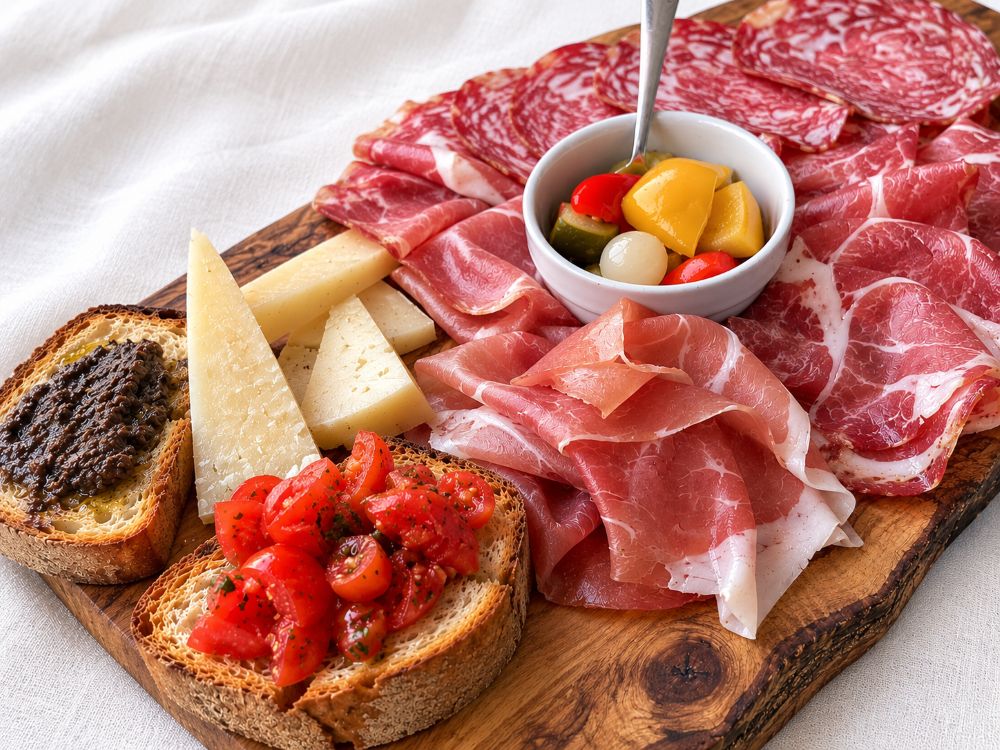
The Antipasto del Ponte, at €24 for two, is almost a compressed tour of Tuscany.
It combines Pratomagno prosciutto, Tuscan salami, finocchiona, capocollo, Pienza pecorino with Tropea onion jam, chicken-liver crostini and tomato bruschetta.
The strength is variety rather than complexity.
Finocchiona introduces fennel perfume, capocollo brings deeper pork richness, pecorino supplies salt and firmness, while the onion jam provides the sweet counterpoint needed against aged cheese. Liver crostini then shift the plate towards the darker, more mineral end of Tuscan cooking.
For two people planning to order Fiorentina afterwards, this is already a generous opening. Adding several separate starters would be enthusiasm turning into poor strategy.
Coccoli, Prosciutto and Stracchino Are Difficult to Refuse
The coccoli with prosciutto and stracchino, at €10, are even more dangerous.
Coccoli are small pieces of fermented bread dough fried until puffed and crisp outside while remaining soft within. Their role is essentially to transport salty cured ham and creamy cheese in the most efficient possible way.
The combination works because every texture has an opposite.
Hot dough against cool stracchino. Crisp exterior against soft centre. Salted prosciutto against mild dairy sweetness.
There is nothing refined about the idea, and refinement would only make it worse.
Fried Tripe Is the Most Mischievous Starter
The menu calls fried tripe “totani di terra”, or land squid, and serves it with homemade mayonnaise for €10.
The joke is visual, but the dish has real substance behind it.
Tripe is usually associated with slow cooking and soft texture. Frying reverses that expectation, creating crisp edges while preserving the characteristic chew underneath.
The mayonnaise adds richness, perhaps more than strictly necessary, but also turns the plate into something closer to Tuscan bar food than traditional offal stew.
It is the sort of starter that immediately tells you this is not a hushed room concerned with tweezers.
Handmade Pici Cacio e Pepe Keep the First Courses Direct
The handmade pici cacio e pepe, at €15, are the most obvious pasta choice.
Pici are thick, hand-rolled Tuscan strands with considerably more resistance than ordinary spaghetti. That texture suits a sauce as concentrated as cheese and black pepper because the pasta does not disappear beneath it.
The important part is emulsification.
Cacio e pepe should remain glossy rather than clotted, with cheese coating the pasta and pepper providing aroma and heat without becoming dusty.
Pici make the dish especially substantial. This is not the pasta to order before Fiorentina unless two people are prepared to share.
Potato Tortelli with White Beef Ragù Are Even More Tuscan
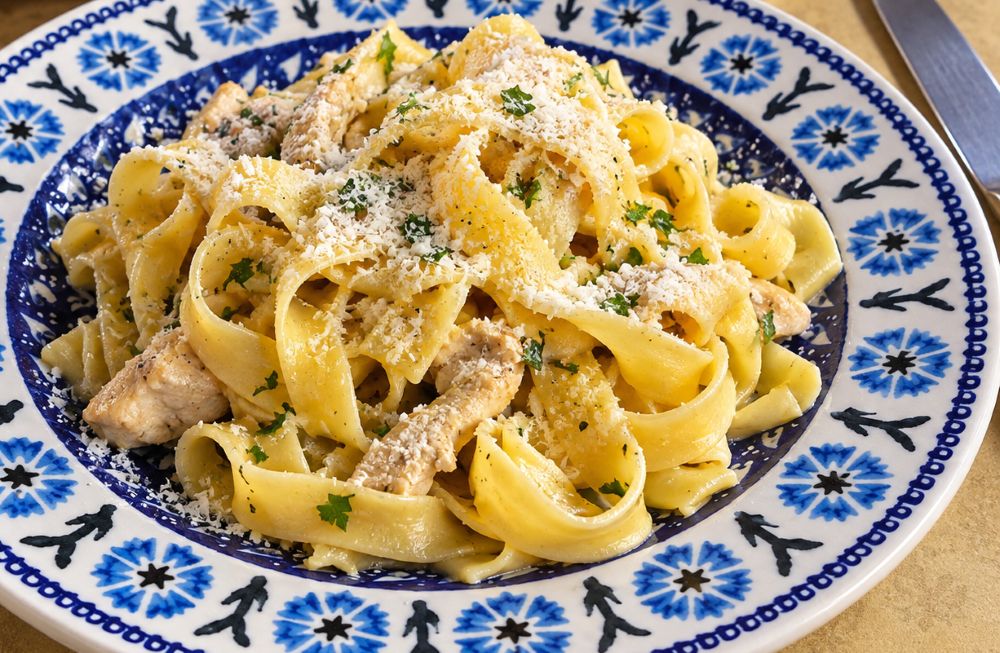
The potato tortelli with white beef ragù, priced at €16, move closer to Mugello-style comfort.
The potato filling is mild and soft, which allows the ragù to do more of the aromatic work. Without tomato, the meat remains clearer and more savoury, while the pasta itself provides enough richness to make the dish feel complete.
This is a quieter plate than cacio e pepe.
It is also one of the best bridges between the trattoria’s pasta section and its deep commitment to meat.
Pappardelle with Hare Are Built for a Glass of Sangiovese
The pappardelle with hare, also €16, are darker and more serious.
Hare has a distinctive game character that needs a broad pasta and a sauce capable of softening its intensity without erasing it. Pappardelle provide exactly that.
Long cooking rounds the meat, while the wide ribbons carry enough sauce to make each forkful complete.
This is autumnal food in spirit even when served outside autumn: woodland flavours, slow cooking and the sort of depth that immediately makes a structured red wine seem inevitable.
Zuppa Frantoiana Is the Dish to Remember When Meat Becomes Too Much
The zuppa frantoiana, at €13, is the menu’s important corrective.
This Tuscan soup traditionally brings together beans, vegetables, bread and olive oil, creating substance without requiring meat to dominate every course.
It is rustic but not heavy in the same way as tripe or braised beef.
The texture should be thick, almost spoon-standing, while good olive oil gives the final layer of fragrance and peppery freshness.
On a menu proudly devoted to “ciccia,” the soup prevents Tuscany from becoming synonymous with steak alone.
Fiorentina Is the Main Event
The Bistecca alla Fiorentina costs €60 per kilogram and is served rare, with no attempt to negotiate the cooking towards medium-well compromise.
Correctly so.
A proper Fiorentina needs thickness, very high heat and enough resting time for the juices to settle. The exterior should develop a dark crust while the interior remains deeply red and warm rather than cooked through.
The meat is not an empty canvas for sauces.
Salt is sufficient.
For diners who want the whole experience in one decision, the Fiorentina menu costs €50 per person for a minimum of two people and includes Antipasto del Ponte, approximately 1.2 kg of Fiorentina, fresh fries and fagioli all’uccelletto. Drinks and cover charge are excluded.
That is probably the cleanest first visit.
The Tagliata with Lardo di Colonnata Is Richer Than the Fiorentina
The tagliata with Lardo di Colonnata IGP, at €22, turns the richness dial considerably higher.
Hot sliced beef begins melting the lardo immediately, coating the meat with pork fat and the aromatic seasoning of the cured product.
The combination is powerful enough that additional sauce would be counterproductive.
What it needs instead is acidity, perhaps from wine, and a side dish without another layer of richness.
This is one of those plates where restraint should happen around the meat rather than on top of it.
Stracotto alla Fiorentina Rewards Patience
The stracotto alla fiorentina, at €19, represents the opposite end of beef cooking.
Rather than fierce heat and rare meat, stracotto depends on prolonged cooking until collagen relaxes and the sauce becomes concentrated.
The texture should yield almost immediately to the fork.
This is less dramatic than carrying a Fiorentina to the table, but arguably more representative of domestic Tuscan cooking: inexpensive cuts transformed by time rather than luxury.
A spoonful of sauce left on the plate should never survive without bread.
Chicken and Rabbit Fried Together Is Pure Trattoria Food
The gran fritto dell’aia, at €18, combines chicken, rabbit and garden vegetables.
Mixed farmyard frying is not particularly elegant, but its appeal lies elsewhere.
Chicken brings softness, rabbit a leaner and slightly sweeter texture, while vegetables interrupt the succession of meat with lighter, crisp bites.
Frying needs to remain dry and immediate. This is a dish that loses charm with every minute it waits.
Eat it hot and forget conversation briefly.
Wine Pairings
Pici cacio e pepe: Fèlsina Berardenga Chianti Classico — bright Sangiovese acidity cuts through cheese and pepper.
Pappardelle with hare: Selvapiana Bucerchiale Chianti Rufina Riserva — earthy, savoury and structured enough for game.
Fiorentina: Le Ragnaie Brunello di Montalcino — firm tannins, acidity and depth match charred beef without drowning it.
The Cellar Stays Deliberately Tuscan
The wine identity is unusually clear: the cellar concentrates on Tuscan labels.
That makes sense with a menu built around Fiorentina, hare, tripe and pecorino. Chianti Classico, Chianti Rufina, Brunello, Montecucco, Morellino and Bolgheri all have natural places at the table.
The benefit of such focus is coherence.
A large international wine list can become impressive but disconnected. Here the wine follows the kitchen’s geography.
Even the digestif selection takes Tuscany seriously, with grappas linked to estates such as Grattamacco, Collemassari, Ornellaia, CastelGiocondo and Tignanello, alongside Vin Santo and regional amaros.
The evening can remain Tuscan until the last glass.
Dessert Should End with Vin Santo
All desserts are made in-house and mostly cost €7.
The cantucci with Vin Santo are the most natural conclusion because they continue the regional thread without introducing unnecessary complexity.
Dip briefly rather than drowning them.
The ricotta and almond cake with pear and anise compote is more elaborate and especially attractive after a lighter main course, while the apple tarte tatin with vanilla ice cream moves gently across the border into French territory.
There is also tiramisù, berry cheesecake, pistachio semifreddo with salted caramel and a soft chocolate cake with mascarpone cream.
After Fiorentina, however, cantucci and Vin Santo show better judgment.
A Trattoria with a Real Past
The restaurant’s history deserves more than a decorative paragraph.
The business began in 1908 as an inn and lodging house, opposite the bridge over the old naviglio. For decades it was associated with the Cassavago family and particularly with Maria Cassavago, whose strong personality became part of the trattoria’s local mythology.
The building itself is older still, dating to the seventeenth century.
In 2011 Alessandro and Valentina began the current chapter, replacing the previous Brescian identity with a deliberately Tuscan one while preserving the historic setting.
That combination is unusual: a genuinely historic Lombard trattoria serving food from another Italian region without disguising either side of the story.
Service, Atmosphere and Prices
The room looks exactly as a trattoria should: wooden beams, terracotta flooring, old architectural details, simple wooden furniture and red-and-white tablecloths.
It is warm rather than polished.
The menu is equally straightforward. Starters range from €8 to €24, with the larger antipasto designed for two. First courses sit between €13 and €16, traditional mains between €14 and €24, while Fiorentina is €60 per kilogram.
A meal of coccoli (€10), pici (€15) and tiramisù (€7) comes to €32 before drinks and the €3 cover charge.
A more substantial dinner of Antipasto del Ponte shared between two (€12 each), potato tortelli (€16) and stracotto (€19) reaches €47 per person before dessert, wine and cover.
The €50-per-person Fiorentina menu is particularly competitive for anyone whose primary goal is steak.
Useful Information
- Address: Via Indipendenza 1, 25135 Brescia
- Area: Sant’Eufemia
- Founded: 1908
- Building: Historic structure dating to the seventeenth century
- Current management: Alessandro and Valentina since 2011
- Recognition: Historic business recognised by Regione Lombardia
- Cuisine: Traditional Tuscan
- Dishes to look for: Antipasto del Ponte, coccoli, handmade pici, potato tortelli, pappardelle with hare, tripe and Fiorentina
- Antipasto del Ponte: €24 for two
- Pici cacio e pepe: €15
- Potato tortelli: €16
- Pappardelle with hare: €16
- Fiorentina: €60 per kg
- Fiorentina menu: €50 per person, minimum two people
- Traditional mains: Approximately €14–€24
- Desserts: Mostly €7
- Cover charge: €3
- Wine: Strong focus on Tuscan producers
- Wednesday–Friday: 12:00 pm–2:00 pm and 7:00 pm–10:00 pm
- Saturday: 12:00 pm–3:00 pm and 7:00 pm–10:30 pm
- Sunday: 12:00 pm–3:00 pm and 7:00 pm–10:00 pm
- Closed: Monday and Tuesday
- Telephone: +39 030 3760740
- Email: [email protected]
- Parking: Via Giuseppe Saleri is the most practical nearby option
- Best for: Fiorentina, Tuscan comfort food, handmade pasta and long convivial dinners
Our Rating of Antica Trattoria del Ponte
Food: 9/10
Tuscan cooking based on slow preparation, strong flavours and little interest in unnecessary refinement.
Starters: 9.1/10
Coccoli, liver crostini and the generous mixed antipasto establish the tone immediately.
Handmade Pasta: 9.2/10
Pici, potato tortelli and pappardelle give the menu much more depth than steak alone.
Traditional Tuscan Cooking: 9.4/10
Tripe, frantoiana soup, stracotto and fried farmyard meats keep the regional identity broad and convincing.
Fiorentina: 9.4/10
The centrepiece of the experience and best enjoyed rare, shared and without distractions.
Meat: 9.3/10
From Colonnata-lardo tagliata to slow-cooked beef, this is unmistakably a carnivore’s menu.
Desserts: 8.8/10
Homemade, generous and sensibly traditional, with cantucci and Vin Santo providing the cleanest ending.
Wine List: 9.2/10
A deliberately Tuscan cellar reinforces the restaurant’s identity instead of chasing international breadth.
Atmosphere: 9.4/10
More than a century of restaurant history and a seventeenth-century building give the room genuine texture.
Value for Money: 9.2/10
€50 per person for the Fiorentina menu and first courses around €15 remain compelling for this level of generosity.
Overall Rating: 9.2/10

