
The Secrets of Nori: Japan’s Iodine-Rich, Umami-Packed Culinary Treasure
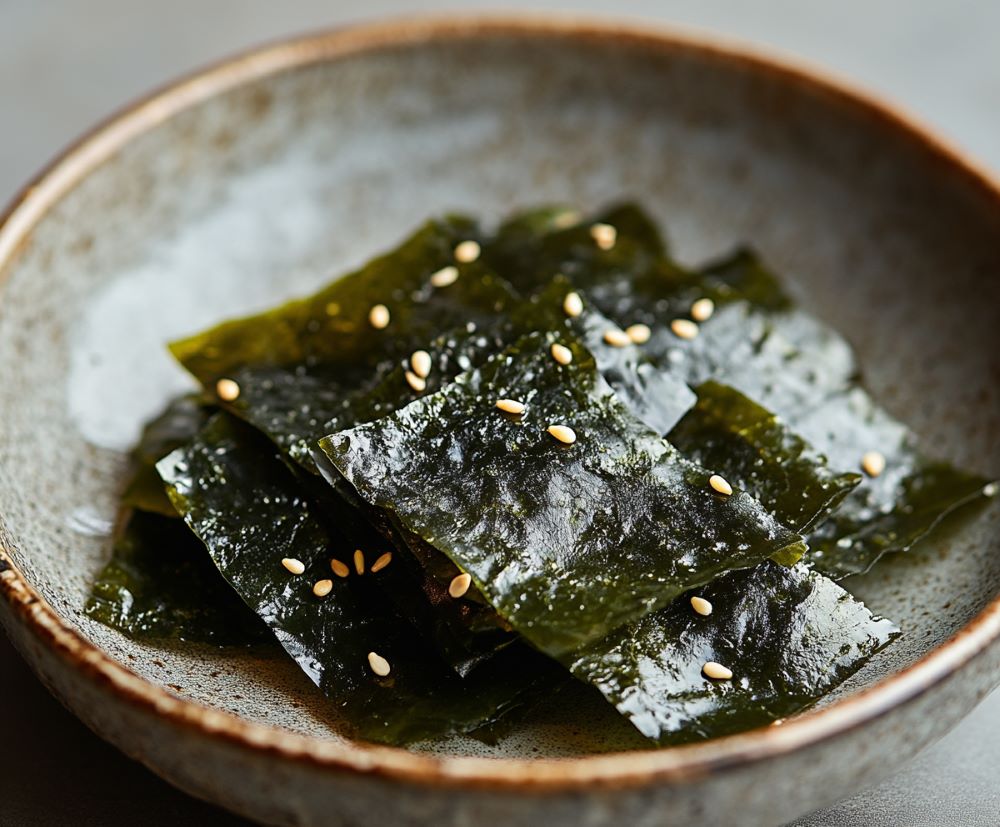
Considered one of the most incredible ingredients in Japanese cuisine, nori (海苔 in Japanese) is used in sushi all around the world. Not only for taste, but also for its nutritional value and adaptability in cooking, crispy, wholesome, and umami nori is beloved.
Nori’s Long History
Nori’s cultivation has a long history—more than 1,000 years ago. Originally consumed raw by Japanese coastal towns, nori developed into a highly polished good thanks to the Edo period (1603–1868) farming method adopted. Modern production now is based on this method still.
Harvesting and Production
Harvested in Japan’s coastal seas, especially in the Ariake and Seto Inland Sea areas—regarded as among the greatest for the quality of their seaweed—nori is once gathered, dried, and pressed into thin sheets, akin to paper sheets, using techniques evocative of handcrafted papermaking.
Features of Nori Seaweed
- Somewhat lustrous surface, thin sheets in dark green or black hue.
- Rich in umami, with a toasted smell when cooked and a distinctively salted taste.
- Crispy in dry form, softens in touch with moist components.
Nutritional Values (Per 100g)
A natural superfood rich in vital minerals is nori:
- Calcium: 35 kcal
- Protein: 5g
- Fat: 0.4g
- Carbohydrates: 3g
- Fiber: 0.5g
- Vitamin A: 5,000 IU (100% of daily need)
- Iodine: 1,200 µg (800% of daily needed)
- Iron: 2 mg (25% of daily needs)
Particularly valued for its iodine concentration, which is vital for thyroid health, and vitamin B12, which is vital for vegans, is nori.
Applications in the Kitchen
Extreme adaptable and used in many dishes is nori seaweed:
- Sushi: Most famously used, when nori coils fish and rice in maki or temaki.
- Onigiri: Rice balls stuffed and covered in nori sheets.
- Soups: Added to miso, nori soups give a trace of the sea.
- Snacks: Toasted and mildly salted, a popular and nutritious choice.
- Condensed goods: Perfectly cut, they might be a salad, noodle, or rice top garnish.
Production and Culture
Growing on nets submerged in shallow seas, nori is found in growing quickly, the seaweed is gathered around every 45 days. It is cleaned, dried, then pressed into sheets once harvested. To guarantee the best quality, most reliable manufacturers blend conventional procedures with contemporary approaches.
Ecological Balance
Growing nori seaweed is really environmentally friendly. It helps to improve the quality of saltwater by absorbing carbon dioxide and surplus nutrients, so requiring less resources—including fresh water or fertilizers.
Interesting Information
- Origin of the word “nori”: Though today it is mostly used to describe that used in sushi, “nori” usually denotes edible seaweed in Japanese.
- Everyday food: Not only in sushi, but also as an accompaniment to breakfast, usually with rice and tamari, nori is eaten everyday in Japan.
- Variations: To meet more current preferences, there are flavored varieties including sesame or chili pepper in addition to the conventional sheets.
Pricing and Availability
Origin and quality affect the price of nori seaweed. While the basic versions are less expensive, at 10-15 euros for 50 sheets, high-quality sheets—often known as “gold grade”—can cost up to 30-40 euros for 50 sheets.

