
Inside Gruyère: The Hidden Science Behind Its Rich, Nutty Flavor
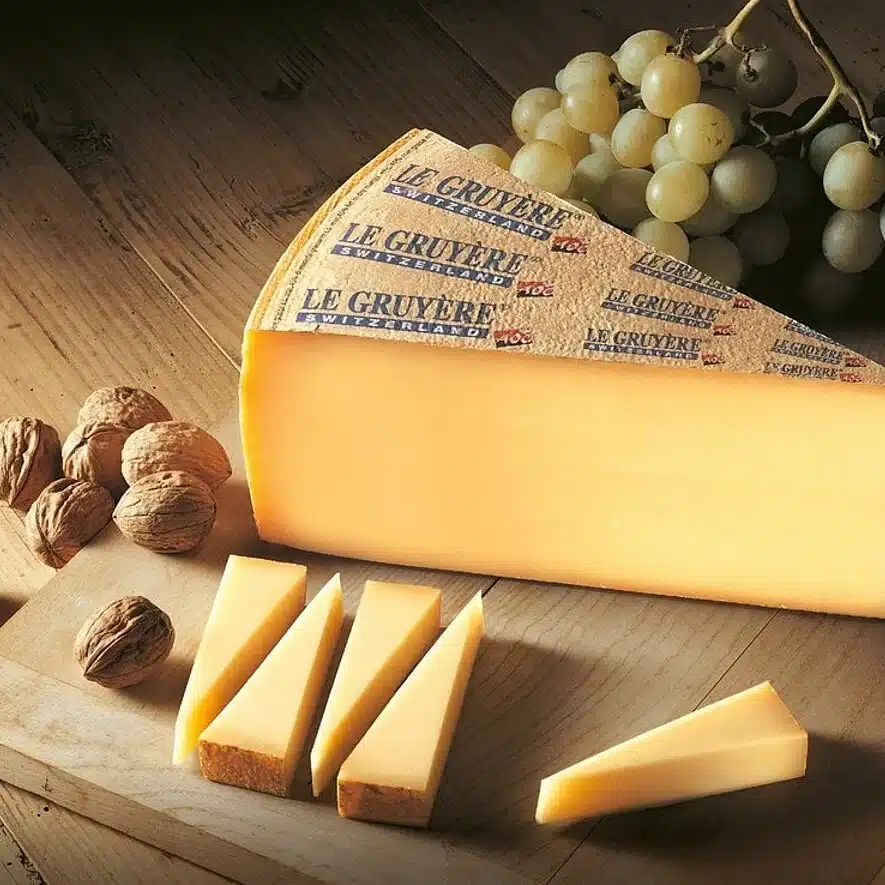
A pillar of Swiss cooking, Gruyère cheese comes from the mediaeval town of Gruyères in the canton of Fribourg, Switzerland. Local dairy producers honed their skills in turning rich Alpine milk into a solid, full-fat cheese in the 12th century, hence historical records link its manufacture to there. With its name registered under the AOP (Appellation d’Origine Protégée), Gruyère has evolved over the years into one of Switzerland’s most revered cheeses, guaranteed in authenticity and high standards of manufacture.
Method of Production: Excellence Tradition
Made from raw cow’s milk, derived from cows grazing on Switzerland’s nutrient-dense pastures, Gruyère is produced through several painstaking steps:
Preparation of Milk
The nighttime milk is let to settle overnight and then combined in big copper vats with fresh morning milk, hence improving the distinctive depth of taste of the cheese.
The milk is mixed with starter cultures made from whey, then rennet to cause curdling. Usually, this takes thirty-five to forty minutes.
Cutting and Heating
Traditional cheese harps chop the curd into pea-sized grains. Over a 40 to 45 minute period, the mixture is then progressively heated to 57°C (135°F).
Once the correct texture is attained, the curds are rounded wooden molded and pressed to eliminate extra whey.
Brining and Aging
To improve taste, the cheese wheels spend 24 hours submerged in a 22% salt brine. They then go to aging cellars, where they develop for at least five months; some are matured for more than a year to provide a more strong profile.
Unique Attributes
Shape and Texture
- Golden-brown, wrinkled rind on big wheels weighing 32 to 36 kg (70 to 80 pounds).
Interior
- A pale yellow paste with sporadic “eyes”—natural fermentation produces—small holes.
Flavor Profile
- In younger variations, nutty, slightly sweet, and creamy; in aged kinds, earthy, sophisticated, and somewhat gritty.
Aroma
- More noticeable as the cheese ages with hints of hazelnuts, brown butter, and Alpine herbs.
Older Varieties
Gruyère’s texture and taste are considerably influenced by the aging process:
- Five to seven months – Young Gruyère: mild, nutty, and milky taste; smooth, creamy.
- Ten to twelve months – Mature Gruyère: more rigorous and orderly, with caramelized onion flavors and a hard mouthfeel.
- Fourteen months or more – Gruyère AOP Premier Cru: Developing a crystalized structure and great umami richness under controlled humidity in Fribourg cellars, it earns many World Cheese Awards as the greatest cheese in the world.
Culinary Applications: A Flexible Component
Excellent melting qualities of Gruyère make it indispensable in French and Swiss cooking. Among its most venerable applications are:
- Fondue moitié-moitié – Key component of the traditional Swiss fondue, mixed with Vacherin Fribourgeois.
- Croque-Monsieur – Essential for the ideal French toasted sandwich, adding a golden, creamy crust.
- French Onion Soup – Forms the bubbling, golden cheese crust atop this classic dish.
- Quiche Lorraine & Potato Gratins – Enhances depth and creaminess.
- Charcuterie Boards – Pairs beautifully with cured meats, figs, walnuts, and crusty sourdough bread.
Profile of Nutrients (per 100g)
Gruyère has great nutritional value and offers:
- Calories: ~413 kcal
- Protein: 29g
- Fat: 32g (of which 19g are saturated)
- Calcium: 1,101 mg (110% RDI)
- Phosphorus: 600 mg
Gruyère is a fantastic choice for people with lactose intolerance since, unlike certain soft cheeses, its fermentation and aging process inherently make it lactose-free.
Suggestion Pairings
Wine Pairings
- Whites: Chardonnay (such as Burgundy, California) balances its buttery richness.
- Reds: Pinot Noir or a light-bodied Syrah accentuates the umami and nutty aromas.
- Brut Champagne or Crémant cuts through the creaminess of the cheese.
Pairings for Beer & Spirits
- Belgian Trappist Beer – Malty depth balances the salinity.
- Single Malt Scotch (Speyside) – Honeyed, somewhat smoky tones fit perfectly.
- Dry Cider – Refreshing acidity contrasts the richness of the cheese.
Accessibility and Organization
Specialty cheese stores, gourmet markets, and supermarkets all over provide Gruyère. To keep it fresh:
- Wrap in parchment paper and stow in the refrigerator’s vegetable drawer.
- Avoid plastic wrap, which collects moisture and alters the natural scent of the cheese.
- Best consumed within three weeks after opening; yet, if kept correctly, it can mature even further.
In Summary
Gruyère is a gastronomic legacy, reflecting centuries of Swiss knowledge. Its nutty flavor and creamy texture make it a classic, whether melted into a soothing fondue or eaten on a cheeseboard with a glass of fine wine. An essential choice for every cheese enthusiast.

