
Autumn Bliss at Lake Constance: Wine, Colors, and Cultural Wonders Await
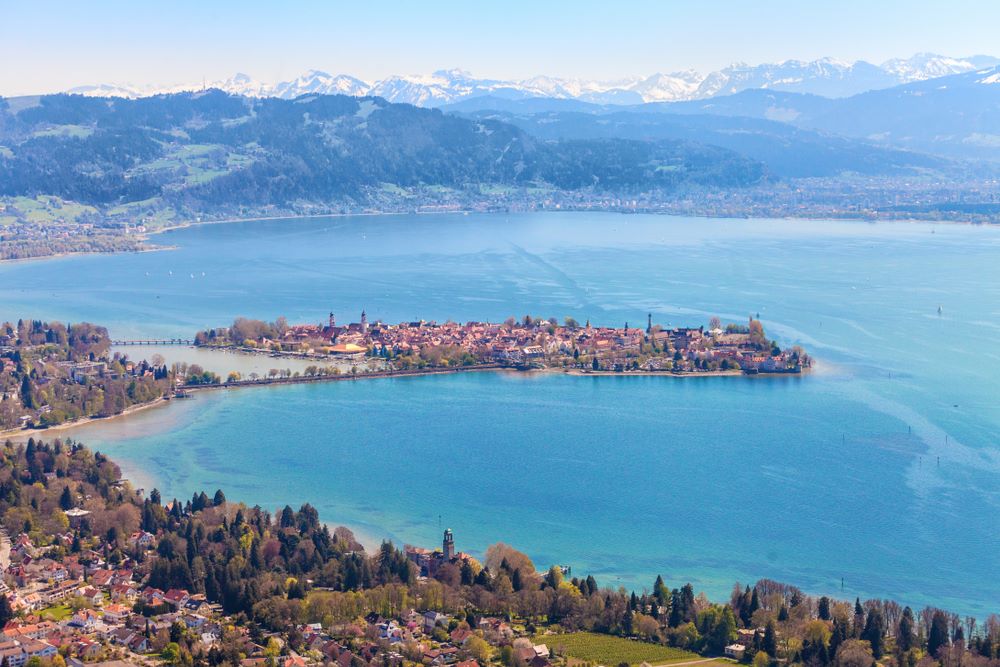
With its 500 km², Lake Constance (Bodensee in German) spans across Switzerland, Germany, and Austria, with Liechtenstein just a short distance away. It’s a lake shared by four nations, set amid panoramic views of vineyard rows and hop fields, stretching across the plains and hills.
In autumn, the landscape glows with classic fall hues—those reds and golds that make traveling during this season so unique. It’s also harvest time, blending cultural exploration with cellar and farm tours where you can sample local wines like Rheintal, Müller-Thurgau, Pinot Noir, Blauburgunder, and Sauvignon Blanc.
St. Gallen and the Haus des Weins in Berneck
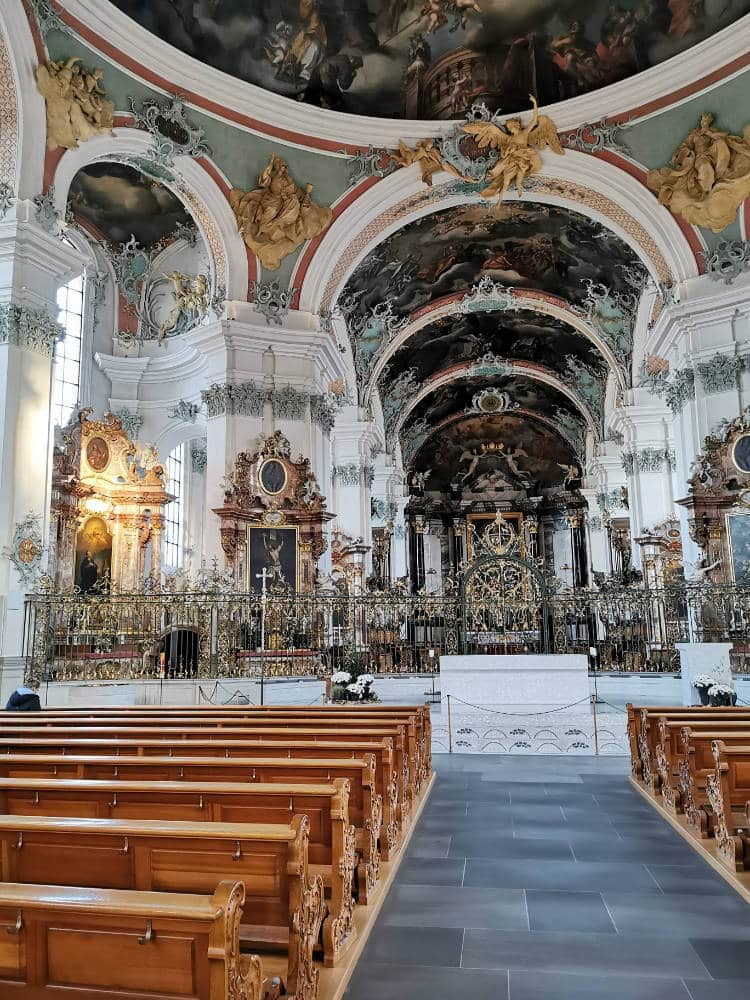
The lace-making city of St. Gallen has a youthful energy, thanks to the many university students who attend one of Switzerland’s top economics faculties. The historical center wraps around the heart of political power, with the central square hosting the abbey complex, the baroque church, and the famous library with its 170,000 volumes—a UNESCO World Heritage site. It also houses the Parliament, the Ministry of Labor, and the Chamber of Commerce. The old city walls have long been torn down—removed between 1830 and 1880 to make way for expansion during the textile boom. Today, St. Gallen is a fascinating blend of contrasting architectural styles.
The city features the chiaroscuro effects of German Baroque architecture, with malachite green accents enhancing the abbey church’s interior, alongside the neo-Gothic Reformed Church of San Lorenzo. Charming half-timbered houses in red, grey, and blue, with finely carved wooden bay windows, add to the city’s character (with 111 bow windows in total). Many doorways bear symbols of old guilds, reflecting an era when cobblestone streets were bustling with craftspeople.
You’ll also see bold modern designs like the raised and mobile entrance to the abbey cellars by Santiago Calatrava, right across from Guest Rooms at the Castle—a great spot to sample local specialties like St. Gallen’s famous blue potato soup, all made with zero-mile ingredients. Meanwhile, the City Lounge by Pipilotti Rist and Carlos Martinez is an urban installation that envelops an entire area in red, with massive spheres hovering overhead, giving the square a truly unique atmosphere.
To understand St. Gallen’s textile legacy, visit the Textile Museum, which holds 30,000 artifacts—including fabrics, embroidery, lace, and machinery like pantograph looms. Temporary exhibits, such as displays on power dressing from Elizabeth I to Margaret Thatcher, often fill the second floor.
For panoramic views, walk up to Drei Weiern (about a twenty-minute trek from the center). For an in-depth look at the local wine scene, with over 220 hectares of terraced vineyards across St. Gallen, visit Haus des Weins in Berneck, founded in October 2018. There, the ever-welcoming Andreas Stössel will guide you through tastings and vineyard tours.
Lindau and the Haug Family Wine Estate

From St. Gallen, you can head via Bregenz to the German shore of Lake Constance, arriving in Lindau—a town built around a heart-shaped island. Lindau Island connects to the broader Bodensee region, with a Riviera that in summer is packed with people strolling, fishing, or sunbathing by the lighthouse and the Bavarian lion statue.
Three main roads cut across the island. The primary one, elevated along its spine, takes you past landmarks like Insel Hotel—a perfect spot to stay if you want to explore, just minutes from the station. Here you’ll also find the historic Town Hall and old houses that once belonged to Lindau’s wealthy merchants, while humbler homes sit along the streets closer to the water. Half-timbered houses painted in shades of red, yellow, and blue, adorned with stone bay windows, lend a distinct charm to every corner.
Fountains are scattered across the city, each unique: one depicts the Lindau carnival masks, another two children, celebrating an annual tradition held on the last Wednesday of school, and others illustrate traditional trades—farming, fishing, and wine harvesting.
The old Town Hall showcases Gothic architecture mixed with other influences, such as the secondary staircase that served as an additional entrance when the fish market occupied the area. The facade features a frieze depicting the Imperial Diet of 1496, and atop the building stands a lime tree, the symbol of Lindau.
Further away lies the Convent, opposite the Reformed church, replacing the Church of San Pietro near the Thieves’ Tower. Among newer structures, the Inselhalle Congress Center stands out—it even hosts the Nobel Prize Conference. Nearby, the UN Restaurant offers traditional Bavarian dishes in an upscale setting.
The area around Lindau offers a mix of vineyards and lake views, and Weingut Haug in the Schönau district is well worth a visit. The cellar tour, complete with tastings of wines like Souvigner, Solaris, and Muscaris, provides insight into Lindau’s modern winemaking. The farm also hosts picnic-style tastings along the lake’s shore.
Meersburg and the State Winery

Heading along the northern coast of Lake Constance from Lindau, an hour’s journey—via train to Friedrichshafen and then by bus—takes you to Meersburg, a town known for its Müller-Thurgau and Spätburgunder (Pinot Noir, Pinot Blanc, and Pinot Gris). To dive deeper into the region’s winemaking heritage, visit the Staatsweingut cooperative winery. Established in 1210, it was the first in Baden to achieve the FairChoice® sustainability seal in 2012. You can tour the atmospheric cellars filled with barriques and taste these wines right at the Weinverkauf Staatsweingut. Across from the winery, Gutsschänke serves zero-mile dishes that pair perfectly with the wines, all while offering a beautiful view over the lake and vineyards.
Meersburg itself is a joy to explore, with steep stairways leading between the lower and upper towns, offering glimpses of medieval scenes—like the old mill’s wheel by the Zeppelin Museum. Follow Steigstraße to Marktplatz, where you’ll encounter Bodensee’s iconic sights: Obertor (the gate to the upper town), Hotel Zum Bären (from 1456), and Zum Löwen, with its intricate wrought-iron sign.
The streets, once traveled by medieval merchants moving goods towards Ravensburg, are lined with red-painted, half-timbered houses and lovely bay windows framed by creeping vines. Old Castle, still privately owned, stands guard over the town, while the New Castle, with its Baroque splendor, offers sweeping views from its terrace.
A visit to Vineum Bodensee is a must—a wine museum housed in a 17th-century building where grapes were pressed until 1922. It’s an interactive experience, featuring aroma vials, historic labels, and a remarkable 17th-century press that comes to life every half hour.
Mainau: A Garden Island for Every Season

Conclude your journey with a day at Mainau Island, easily reached from Constance (a half-hour trip, with ferries from Meersburg’s port every 20 minutes, followed by a short bus ride). Mainau is 45 hectares of gardens, surrounded by forest and filled with a million flowering bulbs every year. From the start, you’ll notice the whimsical Blumi—a symbol that appears throughout the island.
Stroll the island at your leisure, enjoying benches placed throughout the lush gardens. The castle is mostly closed to visitors, but the Arboretum opens behind the gardener’s tower, displaying majestic trees brought mainly from North America.
Mainau transforms with the seasons: winter brings festive decorations and markets, spring boasts tulips and rhododendrons, summer features roses and peonies, while autumn ends with an explosion of dahlias. There’s also a Butterfly House where beautiful winged creatures fly freely, a medicinal herb garden, an insect house, and an educational farm with alpacas and ponies.
Don’t miss the avenue of metasequoias—planted from seeds brought in 1959, creating a magnificent tree-lined path that blazes with reds and yellows in autumn.
Getting Around Lake Constance
The Bodensee Card PLUS offers free or discounted access to more than 160 regional attractions, from spas to amusement parks, mountain cable cars, and boat trips. It’s valid for three to seven days, making it a convenient choice for exploring the area.

