
A Journey Through Sicily: From Catania to Trapani, Embrace the Island’s Timeless Charm

Located in the heart of the Mediterranean Sea, Sicily is the largest of all the islands in the Mediterranean. A crossroads between Europe and Africa, Sicily is a land of beauty, traditions, mystery, and landscapes that the whole world envies us. It is an exotic mix of medieval Norman influences, Spanish heritage, the Arab world, ancient Greece, and the Phoenician and Roman eras.
No definition does justice to what this region is able to offer its visitors. Sicily is also a land of contrasts, not only from a social point of view but also from a landscape perspective. On the eastern side of the island stands the majestic Mount Etna, which at 3,329 meters above sea level is the highest active volcano in Europe.
On the opposite shore of the region, you can find Caribbean-colored beaches and seas. Despite certain landscape disasters mainly due to illegal constructions, Sicily boasts six sites declared World Heritage by UNESCO. And then there are the minor Sicilian islands—beautiful and unique—that in themselves deserve dedicated trips and holidays.

Mount Etna alone is worth a trip to Sicily, with its lunar landscapes, the contrast between its flower-filled slopes, and its often snow-capped peak. Its valleys create landscapes unique in the world, such as the valley of the Alcantara River, with the columnar basalts visible in Acitrezza, the Alcantara Gorges, and Motta Sant’Anastasia.
Catania and the Baroque Wonders of Val di Noto
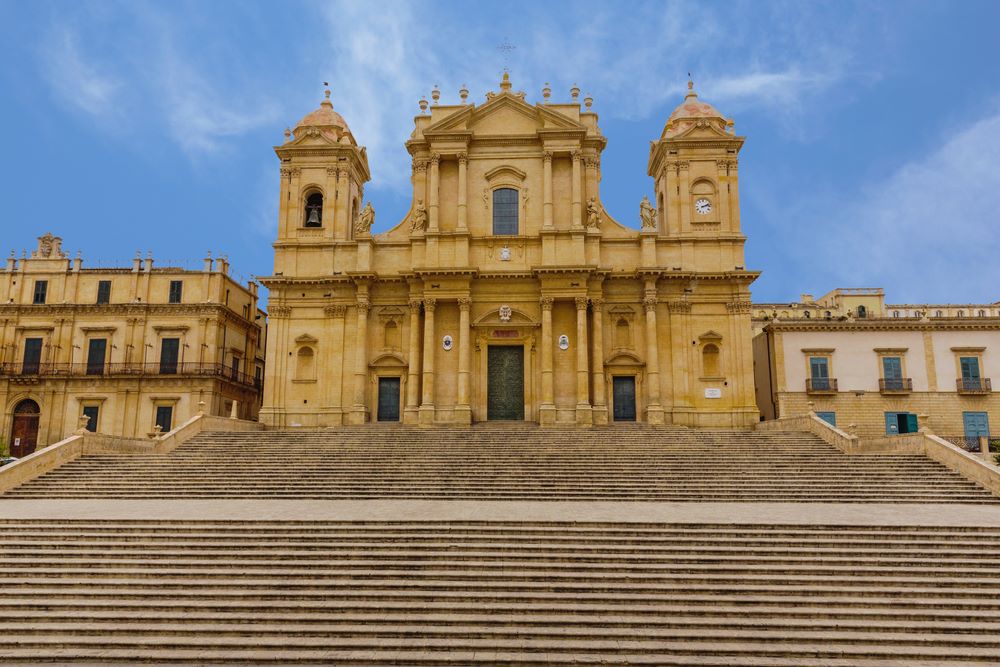
What to say then about Catania, which lives in the shadow of the great mountain, sharing both its benefits and risks? Together with Ragusa, Noto, Modica, Caltagirone, Militello Val di Catania, Palazzolo Acreide, and Scicli, it forms part of the “late Baroque cities of the Val di Noto,” recognized by UNESCO as a testament to the art and architecture of that specific genre. Catania is a bit chaotic due to its size, but it is also an ideal arrival point for many tourists who use the international airport of Fontanarossa to begin their Sicilian adventure.
Not far away, Taormina and the surrounding towns offer glimpses of history and architecture that are unparalleled, especially when, at the end of winter, the blooming almond trees color the landscape and the entire southern coast that gently slopes down towards the Mediterranean. Wherever your holiday takes you on the Sicilian roads, the encounter with the locals is overwhelming, and you always have the impression of feeling like a welcome guest—treated to the famous Sicilian cuisine, among the most varied and tasty in the entire Mediterranean.
Syracuse, Capo Passero, and Ancient Wonders

How can we forget Syracuse with its island of Ortigia, to be discovered meter by meter as you walk around, or the Necropolis of Pantalica where you can admire incredible tombs carved into the cliffs dating back over three thousand years? For those who want to dedicate their holidays to the sea, the extreme tip of Capo Passero offers stunning beaches lapped by crystalline waters, where you can gaze over the sea and imagine the treasures of nearby Africa.
Enna, Caltanissetta, and the Roman Villa del Casale
Sicily also has magnificent surprises inland, in the provinces of Enna and Caltanissetta, such as the incredible Roman Villa del Casale in Piazza Armerina, dating back to the 4th century, with its extraordinary mosaics. The most famous mosaic depicts the “girls in bikinis” (actually in subligar) playing ball and doing sports. Everything has already been said about the Valley of the Temples in Agrigento, yet a visit to the largest archaeological area in the world, where the Doric temples of ancient Greece still stand almost intact, is essential.
The West: Trapani, Erice, and Coastal Reserves
Further west, on the Trapani plain, majestic Erice stands, famous for its medieval urban fabric and its panoramic, dominant position. A short drive takes you to the magnificent Monte Cofano Nature Reserve, the Zingaro Reserve, or the famous white beach of San Vito Lo Capo.
Palermo and Nearby Treasures

Of course, we haven’t forgotten about Palermo, the Sicilian capital and one of the most fascinating cities in Italy, full of priceless treasures (such as the Zisa Castle and the Ballarò market). Unfortunately, these treasures are somewhat suffocated by chaotic traffic. However, just a little beyond the densely populated urban area, Monreale and Cefalù reveal new atmospheres and showcase the art and history of these towns.
The Beaches and Islands of Sicily
The beaches of Sicily are world-famous, attracting millions of tourists every year. The seaside resorts of the main island are joined by those located in the many archipelagos that make up Sicily: think of the beaches of the Egadi Islands, with the crystalline sea that laps the coasts of Favignana, or the beaches of the Pelagie Islands, where the beach of Isola dei Conigli is the jewel, or the beaches of the Aeolian Islands, among active volcanoes that offer the magical sensation of being in a place out of time.

