
Fuji Gotemba Distillery Review: Japanese Whisky at the Foot of Mount Fuj

Fuji Gotemba is one of the most technically unusual whisky distilleries in Japan. It is also one of the easiest to misunderstand.
The location is spectacular enough to dominate the conversation: the distillery sits in Shizuoka Prefecture, almost directly beneath Mount Fuji, surrounded by forest, cool air and frequent mist. Yet the mountain view is not what makes Fuji Gotemba genuinely interesting. The real story is inside the production plant, where Kirin makes both malt and grain whisky and, more remarkably, produces three different styles of grain spirit using three distinct distillation systems.
That changes the entire character of the distillery. Fuji Gotemba is not simply another Japanese single-malt site trying to reproduce a Scottish model. It was conceived from the beginning as a broader whisky-making facility, drawing on Scotch, American and Canadian production traditions and then adapting them to a Japanese blending philosophy.
If Yamazaki is fundamental for understanding the birth of Japanese malt whisky and Yoichi for Taketsuru’s Scottish inheritance, Fuji Gotemba is where the category becomes much more technical.
The Basics
- Name: Fuji Gotemba Distillery
- Japanese name: 富士御殿場蒸溜所
- Location: Gotemba, Shizuoka Prefecture
- Founded: 1973
- Owner: Kirin
- Whisky region: Mount Fuji / Shizuoka
- Altitude: Around 620 metres above sea level
- Main production: Malt whisky and grain whisky
- Grain distillation systems: Multi-column, kettle and doubler
- Main grain ingredients: Corn and rye
- Main maturation wood: American white oak ex-bourbon barrels
- Current FUJI range: Single Grain, Single Malt, Single Blended
- Core bottling strength: 43–46% ABV depending on expression
- Standard distillery tour: Around 80 minutes
- Standard tour price: ¥500 per adult
- Premium Grain Whisky Tour: Around 110 minutes
- Premium tour price: ¥5,000
- Address: 970 Shibanta, Gotemba, Shizuoka 412-0003
- Closed: Mondays, unless Monday is a public holiday; additional closures apply
- Tour language: Japanese
- Reservations: Required for tours
Where Is Fuji Gotemba?
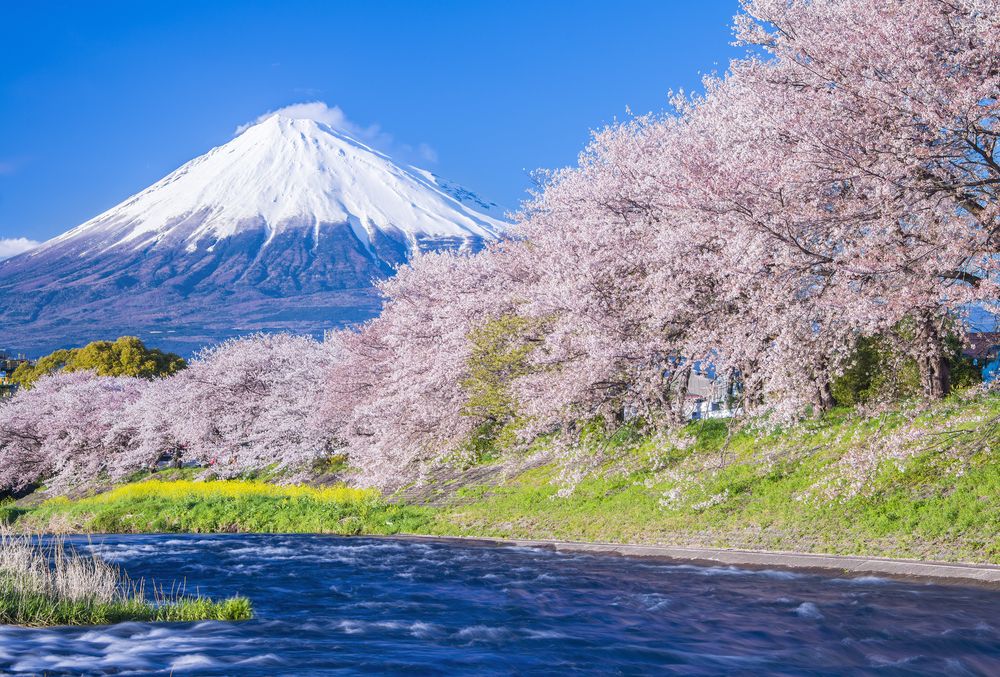
The distillery stands in Gotemba, on the southeastern side of Mount Fuji. Tokyo is close enough for a day trip, but geographically the atmosphere changes quickly once you move towards Shizuoka. Dense forests, military training grounds, cooler temperatures and the massive profile of Fuji dominate the landscape.
Kirin chose the site for whisky production partly because of climate and water. The annual average temperature is around 13°C, while mist appears frequently throughout the year. The distillery uses underground water that has filtered slowly through Mount Fuji’s volcanic geology, a process Kirin estimates takes roughly half a century.
That combination provides relatively cool maturation conditions by Japanese standards. Gotemba is not as cold as Hokkaido, but it is far removed from the warmer maturation environments found in Kagoshima.
The mountain is therefore more than branding. It shapes both water supply and warehouse climate.
How Fuji Gotemba Began
Kirin’s whisky project took shape in the early 1970s through an unusually international partnership.
In 1972, Kirin Brewery, J.E. Seagram and Chivas Brothers established Kirin-Seagram. The new Gotemba facility was completed the following year, and production started in November 1973.
That founding structure explains a great deal about the distillery today. Instead of inheriting only a Scottish malt-whisky model, Fuji Gotemba absorbed expertise from several whisky cultures.
Scotch traditions informed the malt side.
Seagram brought North American grain-whisky knowledge.
Canadian-style production contributed another layer.
The first domestically produced whisky released by the company was Robert Brown in 1974, followed over subsequent decades by brands including Emblem, Crescent and Boston Club. Fuji Sanroku later became one of Kirin’s more recognisable Japanese whisky names.
The modern FUJI brand arrived in 2020 and gradually shifted attention towards the distillery itself rather than the corporate blending labels that had historically dominated its output.
One Distillery, Malt and Grain

This is where Fuji Gotemba separates itself from most Japanese whisky distilleries.
Many malt distilleries concentrate overwhelmingly on pot-still spirit and source grain whisky elsewhere for blends. Fuji Gotemba produces both categories on the same site and carries the process from mashing and fermentation through distillation, maturation and bottling.
That gives the blenders enormous control.
More importantly, the grain whisky is not treated simply as a light neutral base. Kirin has developed several distinct grain styles specifically because grain spirit is expected to contribute flavour to the finished whisky rather than disappear behind the malt.
That philosophy becomes clearest in the distillation room.
The Three Grain Whisky Styles
Fuji Gotemba uses three markedly different grain-whisky production systems.
This is arguably the most interesting technical feature of the entire distillery.
Light Grain: Multi-Column Distillation
The lightest style comes from a five-column continuous distillation system.
Continuous columns produce a relatively clean and refined spirit with fewer heavy congeners. The resulting whisky is gentle, smooth and useful for adding lift and elegance to blends.
This is the system closest to conventional Scotch grain-whisky production.
Medium Grain: The Kettle Still
The second system is much rarer.
Fuji Gotemba uses a batch kettle distillation system combined with a rectification column to produce a medium-bodied grain whisky. The technique creates considerably more flavour than the multi-column process while keeping the texture relatively soft.
The spirit tends towards fruit, sweetness and a fuller mid-palate.
Kirin identifies this as a Canadian-inspired style, and the equipment is highly unusual outside Canada.
Heavy Grain: The Doubler
Then things become distinctly American.
The heaviest grain spirit is produced through a beer column and doubler system, a method strongly associated with bourbon production. Seagram originally developed the particular doubler technology installed at Gotemba, and systems of this type are extraordinarily rare outside the United States.
More flavour compounds remain in the spirit, producing a richer, weightier grain whisky with greater corn sweetness and body.
Put the three styles together and Fuji Gotemba can move from light grain to something much closer to bourbon-like intensity without leaving the distillery.
That flexibility is the real genius of the place.
Why Grain Whisky Is the Star Here
Japanese whisky tourism tends to obsess over pot stills and single malt. At Fuji Gotemba, that would miss half the point.
The Single Grain Japanese Whisky FUJI is arguably the bottle that best explains the distillery because it combines the three grain personalities into one whisky. Corn sweetness, fruit, vanilla and a silky texture sit at the centre, but the whisky has considerably more depth than the phrase “grain whisky” often suggests.
The distillery’s 50th Anniversary Single Grain went even further, combining bourbon-, Canadian- and Scotch-style grain whiskies from several decades, including rare spirit distilled in the 1970s.
That kind of inventory is possible only because Fuji has been making all three styles for decades.
Grain is not the supporting actor here.
It is one of the main attractions.
Malt Whisky at Fuji Gotemba
Fuji also produces malt whisky in traditional copper pot stills.
Recent investment expanded the stillhouse to six pot stills, increasing the range of malt spirit styles available to the blenders. Fermentation also includes wooden washbacks, which can encourage a broader microbial environment and contribute additional aromatic complexity.
The modern Single Malt Japanese Whisky FUJI shows a noticeably fruitier personality than many people expect from a distillery primarily associated with grain.
Think ripe apple, white peach, pastry, vanilla and crème brûlée, with a soft, rounded texture rather than the smoke of Yoichi or the herbal profile of Hakushu.
This is not austere mountain whisky.
Fuji’s malt side is surprisingly generous.
Single Blended: The Distillery’s Most Complete Idea
The Single Blended Japanese Whisky FUJI may actually be the most intellectually satisfying bottle in the current range.
“Single blended” means that the malt and grain whiskies used in the blend were produced at the same distillery.
That is important here because Fuji Gotemba has enough production diversity to make the concept meaningful. Pot-still malt, light column grain, medium kettle grain and heavy doubler grain can all be combined without importing another distillery’s spirit.
The result is not simply a blend with a fashionable label. It is almost a summary of Fuji Gotemba itself.
The whisky is silky and fruit-driven, with orchard fruit, vanilla, honey and gentle spice, but the interest lies in how the different spirit weights build texture.
For someone visiting the distillery, this is probably the bottle that makes the production tour click into place.
How Fuji Gotemba Whisky Tastes
The house style is broadly clean, fruity, polished and sweetly cereal-driven, but there is more variation than that description initially suggests.
The malt whisky tends towards apple, peach, vanilla custard and pastry. Grain expressions show corn sweetness, pear, caramel, maple and occasionally deeper toasted notes depending on the proportion of heavier spirit.
Peat is not the central language here.
Neither is aggressive Mizunara.
Fuji’s personality comes more from fruit, texture and blending precision. The whiskies generally feel rounded and immediately approachable, but the better bottlings reveal more structure once you stop expecting grain whisky to be neutral.
The Role of Bourbon Barrels
American white oak ex-bourbon barrels dominate maturation.
That makes perfect sense given the North American influence embedded in Fuji’s production history. Vanilla, caramel, coconut, light spice and toasted oak naturally complement the corn-heavy grain whisky and ripe malt fruit.
The result can sometimes feel more American-influenced than the stereotype of Japanese whisky would suggest.
But Fuji does not taste like bourbon. The distillery combines that sweet oak profile with lighter grain components and Japanese blending restraint, so the final whisky remains cleaner and less overtly woody.
The best examples sit somewhere between Scotch elegance and American sweetness.
The Current FUJI Range
FUJI Single Grain Japanese Whisky
The most distinctive bottle in the range and the one I would start with.
It blends grain spirits made through the distillery’s three production systems, giving the whisky layers of pear, corn sweetness, vanilla, caramel and gentle spice.
Current official Japanese retail price is around ¥7,190 for 700 ml.
FUJI Single Malt Japanese Whisky
A fruitier and richer expression, with ripe apple, white peach, fruit tart and crème brûlée among the dominant notes.
The palate is soft and relatively lush but retains enough structure to avoid becoming simply sweet.
Current official price is approximately ¥8,380 for 700 ml.
FUJI Single Blended Japanese Whisky
This combines only malt and grain whiskies made at Fuji Gotemba.
It is probably the best bottle for understanding the philosophy of the distillery as a whole: fruit, silky grain sweetness, malt depth and careful integration.
Current official Japanese price is around ¥7,780 for 700 ml.
Visiting Fuji Gotemba
The standard distillery tour currently lasts around 80 minutes, including approximately one hour through the facilities and twenty minutes for tasting.
It costs just ¥500 per adult, which is extremely reasonable by international distillery-tour standards.
The route includes a large projection-mapping introduction, views of the expanded pot-still installation, wooden fermentation vessels and an explanation of the three grain distillation systems. Visitors also pass through the packaging area before finishing with a tasting.
The current standard tasting includes FUJI Single Grain Japanese Whisky and Kirin Whisky Riku, although the exact lineup can change.
There is one important limitation: guided tours are currently conducted only in Japanese.
For non-Japanese speakers, the production equipment is still worth seeing, but the experience is clearly more rewarding if you already understand the basic whisky-making process.
The Premium Grain Whisky Tour
For serious whisky drinkers, this is the visit to book.
Introduced as a recurring programme in 2026, the Premium Tour – Grain Whisky Edition lasts around 110 minutes and costs ¥5,000 per person.
Group size is limited to 15 participants.
Unlike the ordinary tour, it enters an ageing warehouse that is normally closed to standard visitors. The tasting includes the regular FUJI Single Grain plus rare grain spirit available only at the distillery, accompanied by food pairings.
You also use a tasting glass with a carrying strap, which is yours to keep afterwards.
This tour makes far more sense for whisky enthusiasts because Fuji Gotemba’s uniqueness lies precisely in its grain production. If you already know what a pot still does, spend the extra money.
The Shop and Paid Tasting Bar
You do not need to join a tour to use the visitor facilities.
The exhibition area, shop and paid tasting section can be accessed without a tour reservation. The bar offers distillery-exclusive whiskies and other releases that may be difficult to find in normal retail channels.
The final tasting受付 is currently around 15:30.
The shop also sells distillery-exclusive bottlings and branded goods, so it is worth allowing additional time after the visit rather than rushing back to the station immediately.
There is no restaurant at the distillery.
Mount Fuji from the Roof
The visitor building has an observation deck with views towards Mount Fuji and Gotemba.
Obviously, Japan’s most famous mountain has its own opinions about whether you deserve to see it. Cloud and mist can swallow the entire thing even when you are practically standing underneath it.
Morning generally gives you the best odds, particularly outside the humid summer months.
On a clear day, however, the setting is exceptional.
There is also a wooded area called Kirin no Mori, where visitors can walk among local vegetation and birdlife. It gives the site a more relaxed character than the scale of the production plant initially suggests.
How Fuji Gotemba Differs from Yamazaki
The two distilleries demonstrate completely different Japanese whisky philosophies.
Yamazaki is fundamentally a malt-whisky distillery with enormous internal variation created through different pot stills, fermentation methods and cask types.
Fuji Gotemba is broader industrially. Malt and grain coexist, and grain whisky itself is deliberately divided into light, medium and heavy styles.
Yamazaki’s identity is more strongly connected with complex malt, sherry wood and Mizunara.
Fuji is more about fruit, grain texture, American oak and blending architecture.
If Yamazaki teaches you Japanese malt whisky, Fuji teaches you Japanese blending.
Fuji Gotemba vs Yoichi
Yoichi is more visceral.
Coal-fired pot stills, peat, oiliness and Hokkaido’s maritime climate give Nikka’s northern distillery a rugged personality.
Fuji Gotemba is cleaner and more controlled. Fruit is brighter, smoke is far less important and grain whisky plays a central role.
Yoichi feels deliberately old-fashioned.
Fuji feels engineered.
Neither approach is inherently better, but they illustrate just how meaningless the phrase “Japanese whisky style” becomes once you visit the actual distilleries.
A Distillery Built Around Blending
This may be the most important thing to understand before visiting.
Fuji Gotemba was never designed simply to produce one famous single malt.
Its industrial logic comes from blending.
Multiple grain weights, different malt styles and decades of cask inventory allow the blenders to build flavour internally without relying heavily on spirit from other Japanese distilleries.
That makes the place less romantic on the surface than a tiny craft operation, but technically far more interesting than the enormous factory footprint suggests.
The distillery is large because it is trying to do many jobs at once.
Useful Information
- Name: Fuji Gotemba Distillery
- Operator: Kirin Distillery
- Founded: 1973
- Location: Gotemba, Shizuoka Prefecture, Japan
- Address: 970 Shibanta, Gotemba, Shizuoka 412-0003
- Distance from Tokyo: Roughly 1.5–2 hours depending on transport
- Nearest main station: JR Gotemba Station
- Standard tour duration: Around 80 minutes
- Standard adult price: ¥500
- Standard tour capacity: 25 people
- Tour language: Japanese only
- Reservations open: Generally one month ahead
- Premium Grain Whisky Tour: Around 110 minutes
- Premium tour price: ¥5,000
- Premium tour capacity: 15 adults
- Minimum drinking age in Japan: 20
- Standard tasting: FUJI Single Grain and Kirin Whisky Riku, subject to change
- Paid tasting bar: Available without joining the tour
- Shop: Yes
- Distillery-exclusive whisky: Yes
- Restaurant: No
- Observation deck: Yes
- Closed: Mondays, except public holidays, plus maintenance and New Year closures
- Advance booking: Required for tours
- Best tour for whisky enthusiasts: Premium Grain Whisky Tour
- Best bottle to understand the distillery: FUJI Single Grain or FUJI Single Blended
Our Verdict
History: 8.5/10
It does not have the century-old aura of Yamazaki or Yoichi, but the Kirin-Seagram origins make its story unusually important to the development of modern Japanese blending.
Production Interest: 9.5/10
This is the reason to come. Three grain-distillation systems plus malt production under one roof make Fuji Gotemba technically exceptional.
Whisky Tasting: 9/10
The grain side is far more interesting than many visitors expect. The premium tour is the obvious choice for enthusiasts.
Visitor Experience: 8.5/10
Highly organised, attractive and inexpensive, although the Japanese-only guided tour is a real limitation for international visitors.
Value: 9.5/10
¥500 for the regular tour is almost absurdly good value. Even the ¥5,000 premium experience remains reasonable given the warehouse access and rare grain tasting.
Overall Score: 9.0/10

