
Why the Rock of Gibraltar Feels Like a Legend: Monkeys, Sea Cliffs and Millennia of Power
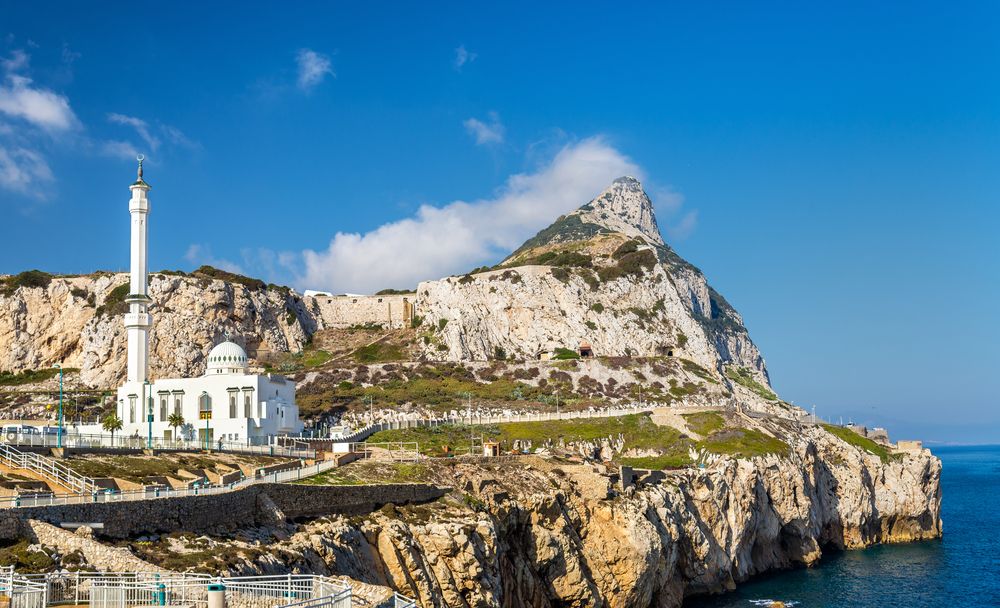
The Rock of Gibraltar is a place more like something out of a Greek myth than a map. A vertical, isolated limestone mountain, sculpted by wind and sea, it stands like a sentinel at the entrance to the strait that connects the Mediterranean and the Atlantic. Walk along its steep streets and feel the weight of three continents; gaze at the cliffs and understand why this place has been, for millennia, a desire and obsession of diverse peoples.
Gibraltar is a palimpsest of **cultures—Phoenician, Roman, Arab, Spanish, English—**overlaid like layers of paint. It’s also a powerful physical place: monkeys watching visitors from atop the ramparts, tunnels carved into the rock, caves that resonate like concert halls, vistas overlooking two seas at once.
History
The Rock has a history as long as the Mediterranean itself. The Phoenicians knew it as one of the Pillars of Hercules, the edge of the ancient world. The Romans venerated its symbolic strength. Under the Arabs, starting in the 8th century, it became an extraordinary strategic fortress and took the name Jabal Ṭāriq, the Mountain of Tariq, after the leader who initiated the Muslim conquest of the Iberian Peninsula.
For centuries, Gibraltar was a key point for anyone seeking to control maritime traffic—and thus power. The English conquered it in 1704 during the War of the Spanish Succession and transformed it into an impregnable defensive stronghold. Tunnels, gunports, fortifications, wells, and warehouses were carved into the rock with almost superhuman tenacity.
During World War II, the fortress experienced its most dramatic moment: it became a vital strategic base for the Atlantic and Mediterranean, an underground military city capable of housing thousands of soldiers. Today, that history is visible everywhere: in the tunnels, the bastions, and the panoramic viewpoints that resemble natural turrets.
What to See on the Rock of Gibraltar
The Upper Rock
This is the wildest and most spectacular part of the mountain: steep trails, cliffs, Mediterranean plants, and views that reach all the way to the Moroccan coast. Here, the Rock reveals its natural side, the one that has inspired legends for millennia.
The Barbary Apes
Symbolic, curious, often mischievous: they are Europe’s only wild monkeys. They have lived on the ridges of the Rocca for centuries and have become an essential part of the local imagination. Observing them is a fun experience, but requires caution: their familiarity with humans can turn them into highly skilled thieves.
Skywalk and Panoramic Points
Suspended walkways, glass balconies, natural terraces: the Rock offers some of the most impressive panoramic views on the continent. The landscape is always dual: the Mediterranean to the east, the Atlantic to the west; Spain on one side, Africa on the other. It’s a place that makes geography visible in a way rarely seen.
St. Michael’s Cave
A natural cathedral of stalactites and stalagmites, illuminated by spectacular light displays. The cave is enormous, tall, and acoustically striking: throughout the year, it hosts concerts, shows, and performances. Visiting it feels like entering a geological temple.
The Great Siege Tunnels
One of the most incredible military constructions of the 18th century. Hundreds of meters of tunnels were hand-dug into the rock to allow British cannons to defend the promontory during the siege of 1779–1783. Entering it is like stepping into the mind of a military engineer of the time: narrow passages, openings in the cliffs, stories of resistance written in stone.
Moorish Castle
Fascinating medieval ruins, with Arab towers, defensive courtyards, and walls that speak of the Islamic era. The castle dominates the hillside and represents the ancient soul of Gibraltar, when its value was primarily spiritual and symbolic.
Neighborhoods and Atmosphere
The Rocca isn’t isolated: it slopes down towards a compact urban fabric, both Mediterranean and British. The streets at the foot of the mountain are filled with Victorian details, pubs, shops, and small markets. Just a few meters up are enough to see everything transform: the houses diminish, nature takes over, and the silence of the mountain becomes predominant.
What makes the Rocca unique is this constant alternation: urban, wild, military, geological, symbolic. No other European place has such a blend of identities.
1-Day Itinerary
The ideal day begins with a cable car ride up to Upper Rock. The ascent is short but thrilling: the city shrinks, the sea widens, and the crest appears like a colossal limestone ridge.
First stop: the monkeys, who watch visitors with a superior air. Continuing, you reach the Skywalk, where the view of the Strait is powerful, almost physical. Continue to St. Michael’s Cave, exploring the illuminated halls and geological structures that resemble works of art.
The afternoon is perfect for visiting the Great Siege Tunnels and discovering the most dramatic part of the Rock’s military history. We then descend to Moorish Castle, which offers a completely different, more ancient and thoughtful historical interpretation.
The day ends with a stroll through the city center: British houses, Mediterranean life, the smells of fish, pubs and terraces watching the sunset over the Strait.
Activities for Families
La Rocca is a natural adventure park. Children and teens are enchanted by the monkeys, military tunnels, cable car, and suspended walkways. Caution is required in exposed areas, but the experience is safe and highly engaging.
Gastronomy
Gibraltar boasts a border cuisine: British in structure, Mediterranean in flavor, with Genoese, Andalusian, and Maltese influences. Savory pies, fresh fish, rustic dishes, meat pies, and traditional bakery products. Strait fish—tuna, bluefish, and grey mullet—are a natural protagonist. The pubs offer the other side of the story: beer, meat, and flavors from across the Channel.
Where to Eat
- The Clipper – Irish Town 60. Historic pub, simple and hearty dishes, convivial atmosphere.
- The Lounge Gastro Bar – Queensway Quay. Modern, elegant, well-executed Mediterranean cuisine.
- Roy’s Fish & Chips – Casemates Square. The British soul of the area, perfect for a quick lunch.
- Latino’s – Naval Hospital Road. Lively local cuisine, excellent seafood selection.
Where to Sleep
- Rock Hotel – Europa Road. Iconic, spectacular views of the Strait, colonial charm.
- Sunborn Gibraltar – Ocean Village. A modern, scenic floating hotel.
- O’Callaghan Eliott Hotel – Governor’s Parade. Central, convenient, and walkable.
- Bristol Hotel – Engineer Lane. Historic, simple, a good choice for a traditional stay.
How to Get There and Around
The Rocca can be reached on foot, by taxi, or by cable car, which remains the most scenic option. The roads are steep; comfortable shoes are a must. The area is compact; the center is easily explored on foot. Cars are not recommended for the climb to the Rocca: traffic is limited and parking is limited. It’s best to combine the cable car and walking.
Practical Information
Bring water, a hat, and sunscreen: the Rock is exposed to the wind and sun. The monkeys are accustomed to visitors but should be observed without offering food. For medical emergencies, St. Bernard’s Hospital is available at +350 200 79700. Cable car schedules vary seasonally; arrive early to avoid queues.
The Gibraltar Tourist Office can be reached at +350 200 45000.
In the Surroundings
From the Rock, you descend to the eastern beaches, perfect for a quiet afternoon. Algeciras and Tarifa are very close, an ideal departure point for ferries to Morocco. The Costa de la Luz opens up just beyond the Spanish border: dunes, natural parks, and intense ocean light.

