
Vilnius in Two Days: What to See, Where to Go, and How to Fall in Love with Lithuania
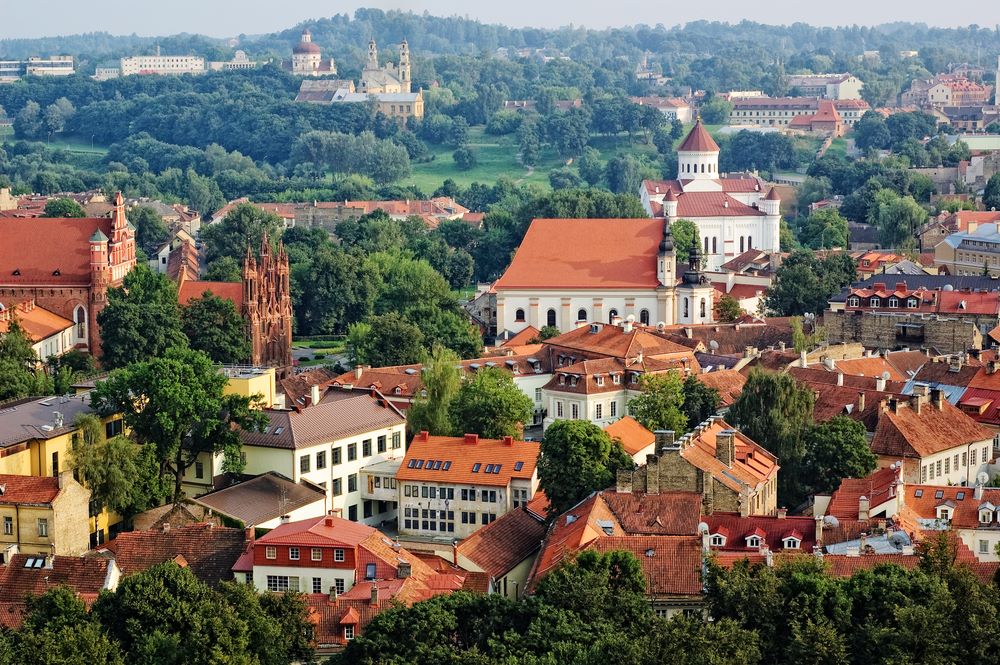
Vilnius, with nearly 600,000 inhabitants—or over 800,000 if you include the entire county—is the capital of Lithuania, located in the southeastern part of the country, not far from the Belarusian border. According to legend, the city was founded in the Middle Ages, specifically in 1320, by Grand Duke Gediminas after he dreamed of a wolf howling with the strength of a hundred wolves. He interpreted this as an unmistakable sign to build a city equally strong and powerful. However, history tells us that the area at the confluence of the Vilnia and Neris rivers had been inhabited for over a thousand years.
Vilnius Through the Centuries

In the 16th century, Vilnius was one of the major cities in northeastern Europe. With the arrival of the railway during the Industrial Revolution, Vilnius became a strategic hub for Jewish merchants. The 20th century saw German occupation during World War I, followed by inclusion in the Russian sphere after the Bolshevik Revolution, and then another German occupation during World War II, during which at least 25,000 Jewish citizens lost their lives. The post-war period saw the rise of residential neighborhoods, but it wasn’t until the late 1980s that Vilnius emerged as a key force in achieving Lithuania’s independence from the Soviet Union.

Today, Vilnius has transformed into a modern European city. In 1994, its historic center was declared a UNESCO World Heritage Site, which has contributed significantly to Lithuania’s economic and cultural revival, drawing an increasing number of tourists each year. Since 2004, Lithuania has also been a member of the European Union, adhering to the Schengen Agreement, which has greatly facilitated entry for European citizens.
Exploring the Historic Center of Vilnius

Vilnius can easily be explored over a couple of days, beginning perhaps with the streets of its historic center, where Gothic, Baroque, and Renaissance buildings blend to create a truly unique urban landscape.
The Sv. Stanislovo ir Vladislovo arkikatedra bazilika—the city’s Cathedral—is located on Katerosaik and is dedicated to Saint Stanislaus and Saint Vladislaus. Built in 1251 by Grand Duke Mindaugas, it has been reconstructed multiple times over the centuries, ultimately assuming its current neoclassical style. Inside, it houses the oldest wall fresco in Lithuania, “The Crucifixion,” dating back to the late 14th century.
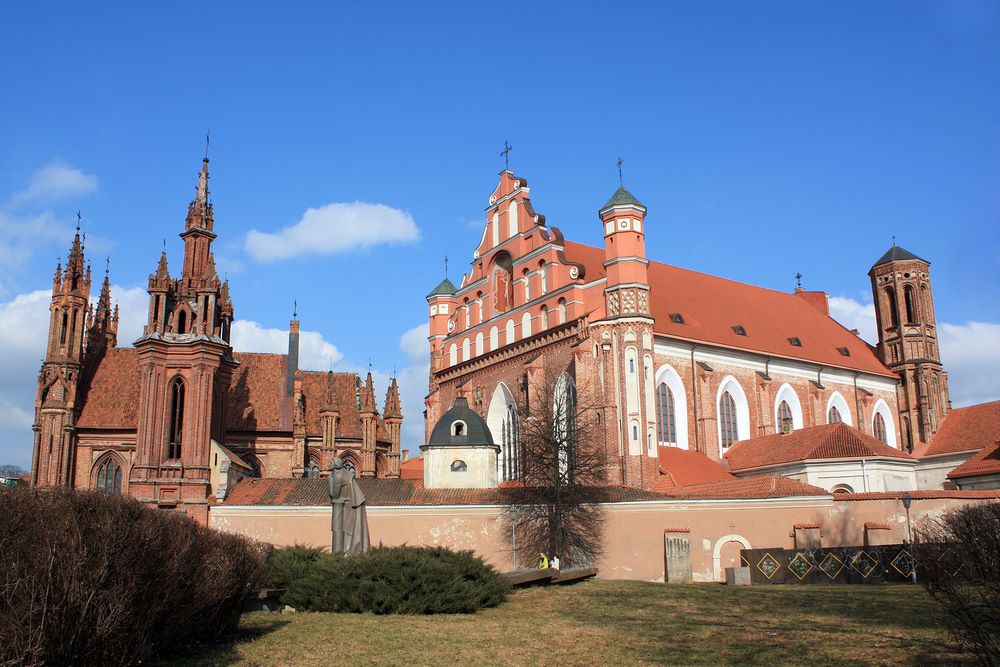
Among Vilnius’ many churches, there is St. Kotrynos baznycia (St. Catherine’s Church), which has been restored over the last 20 years and is also used for concerts due to its excellent acoustics, and Sv. Apastalu Petro ir Pauliaus baznycia (Church of Saints Peter and Paul), a 17th-century Baroque masterpiece famous for its interiors decorated with over two thousand stuccos. Another iconic place of worship is the Gate of Dawn, which features a small chapel housing the image of the Virgin Mary, Mother of Mercy.
In front of the Cathedral lies the city’s main shopping street, while behind it are the remnants of the ancient Ducal Palace.
Gediminas Tower and the Best Views in Vilnius
One of Vilnius’ must-see landmarks is Gediminas Tower, which stands atop a hill overlooking the city. Covered in red bricks, it houses a historical museum. Visitors can reach the tower either by following a footpath or opting for a quick ride on the funicular. Either way, the panoramic view from the top makes the climb more than worth it.
Museums in Vilnius
Vilnius is home to several interesting museums, including the Lietuvos nacionalinis muziejus (Lithuanian National Museum), which holds collections of archaeology, history, and ethnic culture, and the Gintaro muziejus-galerija, founded in 1988 and focused on a collection of amber artifacts and jewelry, with a recently added section dedicated to traditional ceramics and terracotta modeling.
The Genocide Muziejus—Museum of the Victims of Genocide—illustrates the suffering endured by the Lithuanian people during the years of Soviet occupation, especially under Stalin’s dictatorship. The museum is provocatively housed in the former KGB headquarters, which was operational until 1990.
The Television Tower and Beyond
A bit farther from the center, about a 15-minute drive away, is the Television Tower, which stands 326 meters tall. By taking an elevator to the nineteenth floor, visitors can reach a viewing platform located 165 meters above ground. The platform slowly rotates, allowing a 360-degree view of Vilnius and its surroundings while seated comfortably at the café.
Hot Air Balloon Flights: A Unique Perspective
Vilnius is one of the few European capitals where hot air balloon flights are permitted. In recent years, this form of tourism has grown in popularity, offering an unforgettable experience with a unique vantage point over the city when the weather conditions are right.
Geographical Center of Europe
One curiosity about Vilnius is its proximity to what is considered the geographical center of Europe by the French National Geographic Institute, located in Bernotai, about 25 km north of the capital.
Getting Around

Vilnius International Airport connects the Lithuanian capital with direct flights, including many low-cost options, to major European cities. For getting around the city, there is a convenient train station located close to the center. Urban transport includes numerous bus and trolleybus lines, but renting a bike can be a great way to move freely during the warmer months.

