
Tuvalu’s Hidden Gem: Explore Vaiaku, the Soul of Fongafale
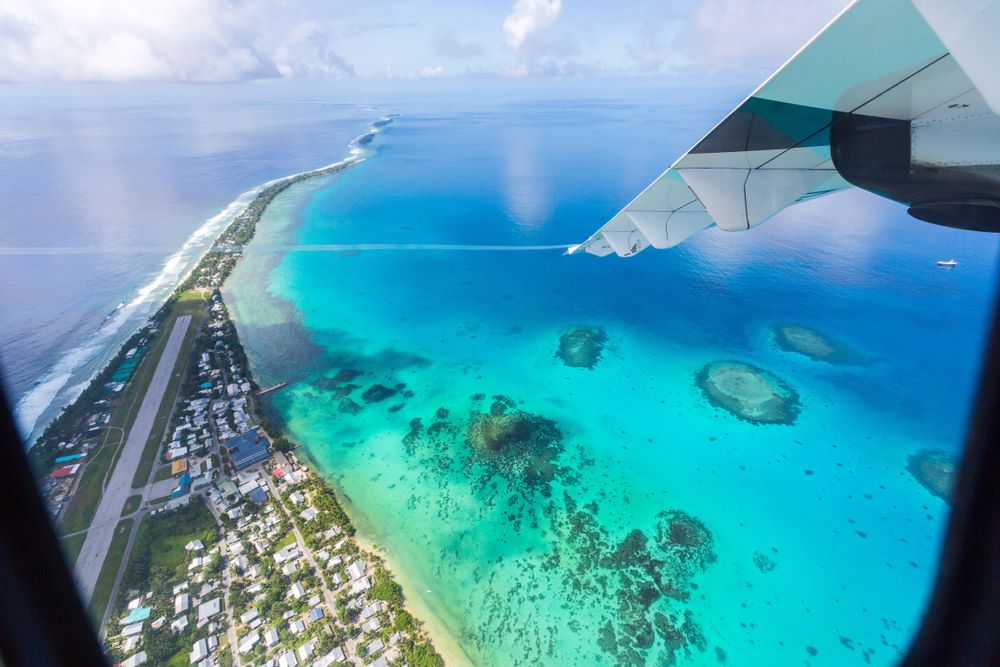
The largest, most important, and most populous village in the Tuvalu archipelago is Vaiaku, a town of not even 600 inhabitants located on the central-western coast of the island of Fongafale, belonging to the Funafuti atoll, which has been the capital of the state for some 30 years. All the administrative buildings, the main commercial activities, the few infrastructures, and the only hotel in Tuvalu, the Vaiaku Langi Hotel, are located in Vaiaku. It is a village of modest dimensions but with a strong soul, capable of bewitching visitors thanks to its charm resulting from the coexistence of typically exotic characteristics and traits inherited from the years of colonialism.
The Splendid Lagoon

The main attraction of Vaiaku, and indeed of the entire island of Fongafale, is the splendid lagoon around which the atoll wraps itself. The Pacific waters are calm within the large ‘horseshoe’ formed by the consolidation of the surface layers of the corals, with thousands of fish darting up to the surface and numerous mollusks coloring the seabed. Near Vaiaku, also on the shoreline overlooking the lagoon, is the Deep-Water Wharf, while from the village it is a short drive to the Funafuti Conservation Area, one of Tuvalu’s most scenically exciting areas.
Deserted Islets
Just a few dozen meters from the main island of Fongafale, where Vaiaku is located, lie several tiny, totally deserted islets. With the appropriate means of transport, it is easy to reach Fatato, Funangongo, Funamanu, Falefatu, and the slightly more distant Mateiko, Funafala, and Telele, which represent the southern end of the atoll. Alternatively, one can adjust to the rhythm of the tides, which sometimes let large portions of sandy seabed surface, offering a truly unique and inimitable walk.
The Ocean Experience
If you prefer the real ocean to the calm of the lagoon, it only takes a short walk to reach the east coast of Fongafale. The coastal scenery is almost identical, with long stretches of white sand extending to the horizon, but the ocean waters are decidedly rougher and a few degrees colder.
Events in Vaiaku

Every year, numerous events are celebrated in Vaiaku. Besides New Year’s Eve, Christmas, and Boxing Day, the most significant festivities include:
- Funafuti Youth Day (11 February)
- Commonwealth Day (March)
- Bomb Day (23 April): Commemorating the bombing of Funafuti by the Japanese during WWII.
- The Queen’s Birthday (early June)
- Independence Day (early October)
- Prince Charles’ Birthday (early November)
Climate
Vaiaku has a tropical maritime climate, with high temperatures throughout the year and abundant rainfall.
- Average temperatures: Rarely below 30°C, even in winter. Summer highs exceed 32–33°C.
- Rainy season: November to February, with 3,000 mm of annual rainfall.
- Cyclone season: November to April. The best time to visit is from May to October, avoiding the cyclone risk.
How to Reach Vaiaku
- Funafuti International Airport: A small wooden terminal built in 1993 with Australian and European funding. Air Fiji offers flights between Suva and Funafuti.
- Sea Travel: The lagoon features two wide channels for ships, along with the Deep-Water Wharf north of Vaiaku. Boats like Nivaga II and Manu Folau carry passengers and cargo, sometimes reaching Fiji.
Where to Stay in Vaiaku
- Vaiaku Langi Hotel: The only hotel in Tuvalu, offering basic accommodations with a direct view of the beautiful lagoon. Its central location makes it perfect for accessing Vaiaku’s attractions and nearby activities.
For those seeking a more immersive experience, consider homestays with local families, providing insight into traditional Tuvaluan life.
Where to Eat in Vaiaku
Dining options in Vaiaku are limited but authentic, focusing on fresh local ingredients:
- Local Eateries: Small, family-run spots offer simple dishes like grilled fish, taro, and breadfruit.
- Vaiaku Langi Hotel Restaurant: Known for serving fresh seafood and classic Polynesian-inspired meals in a relaxed setting.
- Market Stalls: Try roadside stalls for snacks like fresh coconuts and tropical fruits, perfect for a quick refreshment.

