
Templars, Miracles, and Cyclopean Walls: What Makes Alatri One of Italy’s Most Fascinating Towns?
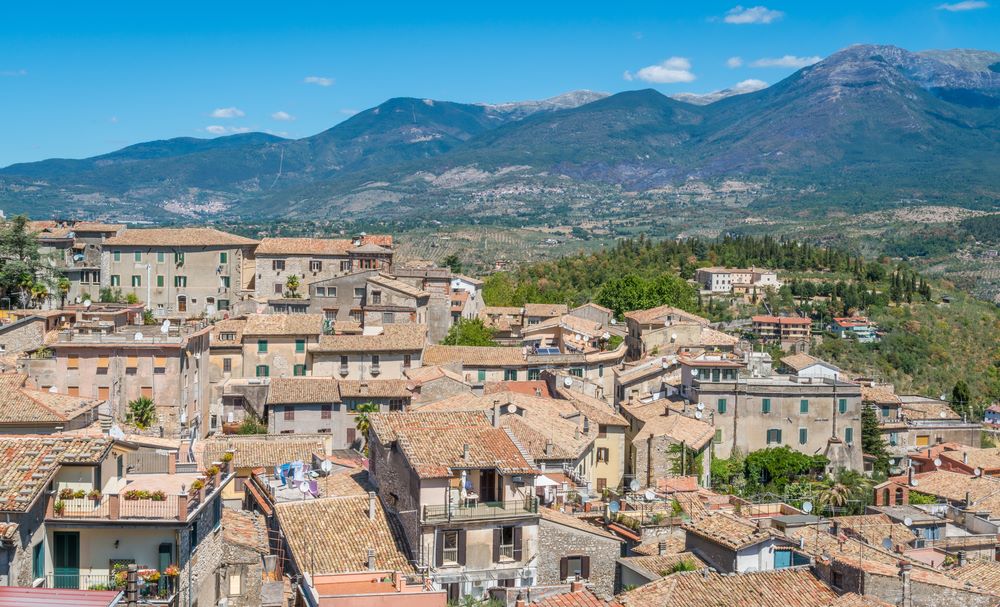
According to Ferdinand Gregorovius, a German historian of the nineteenth century, Alatri is “an interesting city, full of splendid buildings that demonstrate a thriving city life in the past.” He had never seen before—adds the author—“such a beautiful-looking city in the mountains of Lazio.” To tell the truth, the region is not lacking in architectural wonders, but it cannot be denied that Alatri, in the province of Frosinone, is among the most fascinating and richest cities from an artistic and cultural point of view. It is no coincidence that it is considered one of the most beautiful villages in Lazio.
What to See in Alatri
With a population of almost 30,000 inhabitants and a remarkable architectural heritage, Alatri is one of the main towns of Ciociaria and the third in the province in terms of number of inhabitants.
It was once Aletrium, an important center of the Italic Hernici, famous especially for the presence of a pre-Roman acropolis surrounded by enormous stone walls, still present today, with the Porta Maggiore as one of its main attractions.
As a pedestal of such beauty, the city rests on a green, twin-tree hill, rising at the foot of the Ernici mountains, on the natural border between Lazio and Abruzzo. The municipal territory of Alatri is large and varied, composed of plains and gentle ripples, and also includes the administrative island of Pratelle and the large basin of the Cosa river.
The Cyclopean Walls

To conquer the heart of Alatri, you must first overcome the frame of Cyclopean walls, approximately 2 km long and still excellently preserved, tastefully and elegantly inserted among the more recent city buildings. Along the imposing ring, there are five access gates, corresponding to the most important road axes, as well as quadrangular towers added during the Middle Ages for better defense.
Once inside the historic center of Alatri, you will discover fascinating buildings, monuments, and picturesque streets, but the religious structures are the city’s greatest treasures, rich with mysteries, legends, and passionate stories that intertwine memory with myth.
The Church of San Francesco and the Labyrinth of Alatri
Among the must-see places, the Church of San Francesco is particularly fascinating. Built between the late 13th century and early 14th century, it was founded by Franciscan friars who had settled in the area in the first half of the 13th century.

Standing between Piazza Santa Maria Maggiore and Porta San Francesco, the church features compact and severe Gothic lines, a large single portal, and a finely decorated rose window. Inside, you can admire Baroque elements and valuable works of art, including a Deposition from the 17th-century Neapolitan school.
However, the most mysterious treasure is kept inside the adjacent convent of San Francesco, built in 1359. In 1997, a frescoed tunnel was discovered by chance, now known as the “Labyrinth of Alatri”. The painting depicts a circular labyrinth with Christ Pantocrator at its center, an extraordinary and unique case in the world. The path of the labyrinth is identical to the one found on the floor of the Cathedral of Chartres in France, adding to the intrigue.
Templar Symbols and the Church of San Silvestro
The Church of San Silvestro, a medieval treasure chest, is filled with priceless relics and symbols, some believed to be linked to the Templars. The “Triplice Cinta”, a mysterious geometric engraving, is carved into the architrave of the main portal, fueling speculation about its origins.
Inside the church, frescoes feature crosses and figures like Saint Bernard of Clairvaux, a key figure in the Templar Order. However, experts urge caution in linking these symbols exclusively to the Knights Templar, as they were used by various religious orders.
The Basilica Co-Cathedral of St. Paul and the Eucharistic Miracle
At the top of the acropolis, on the remains of an ancient pagan temple dedicated to Saturn, stands the Basilica Co-Cathedral of St. Paul. Founded in the early Middle Ages, it underwent significant 18th-century renovations and houses relics and sacred artifacts.
The most extraordinary relic is a particle of human flesh, believed by the faithful to be the result of an Eucharistic miracle in the 13th century. The event was recognized by the Catholic Church in 1228, and its story is illustrated in frescoes within the cathedral.
Events and Festivals in Alatri
Alatri’s festivals and traditions bring its history to life. Some must-see events include:
- InfiorAlatri, the Corpus Domini flower festival, transforming the streets into a floral masterpiece.
- The Good Friday Procession, a moving religious event.
- The Living Nativity Scene and Nativity Exhibition, celebrated at Christmas.
- The Palio delle Quattro Porte, a September event featuring a 30 km race rolling a wheel of Parmesan cheese to the Cloister of San Francesco.
- The Alatri International Jazz Festival, held in August and December with live performances throughout the city.
Climate: When to Visit Alatri
The climate in Alatri is mild in winter and hot but dry in summer.
- January temperatures: 1°C (min) – 11°C (max).
- July & August temperatures: 16°C (min) – 30°C (max).
- November sees the most rain, with 202 mm of precipitation.
The best seasons to visit Alatri are spring and autumn, avoiding the hot summer months and the rainiest winter days.
How to Get to Alatri
The closest airports are in Rome:
- From Fiumicino Airport: Take the A1 motorway towards Naples, exit at Fiuggi/Anagni, then follow the SS155 road to Alatri.
- From Naples Capodichino Airport: Take the A1 motorway towards Rome, exit at Frosinone, then take the SS155 road.
For those traveling by train, the nearest station is in Frosinone, with buses connecting to Alatri.
Where to Eat in Alatri
Ristorante Il Frantoio – A former olive mill turned into an elegant restaurant where Ciociarian tradition meets modern cuisine. The homemade pasta and grilled meats are must-tries.
Address: Via della Croce, 5, 03011 Alatri (FR)
Phone: +39 0775 435006
Trattoria La Campagnola – A no-frills, authentic trattoria offering hearty local dishes. Their pappardelle with wild boar ragù and lamb chops are excellent.
Address: Via San Francesco, 18, 03011 Alatri (FR)
Phone: +39 0775 432112
Osteria Perbacco – A cozy spot known for its traditional Roman and Ciociarian dishes, including amatriciana and saltimbocca alla romana. Great selection of local wines.
Address: Piazza Santa Maria Maggiore, 7, 03011 Alatri (FR)
Phone: +39 0775 434512
Pizzeria La Taverna – A casual eatery serving some of the best wood-fired pizza in town. Try the pizza Ciociara with sausage and local pecorino.
Address: Corso Umberto I, 45, 03011 Alatri (FR)
Phone: +39 0775 439021
Ristorante La Loggia – Located in a historic building, this restaurant offers refined seasonal cuisine, from truffle risotto to grilled fish.
Address: Via delle Piagge, 12, 03011 Alatri (FR)
Phone: +39 0775 436008
Where to Stay in Alatri
Hotel San Francesco – A comfortable hotel in the heart of Alatri, offering modern rooms with views of the historic center.
Address: Via San Francesco, 35, 03011 Alatri (FR)
Phone: +39 0775 431502
B&B Il Colle – A charming bed and breakfast in a restored countryside villa. Ideal for a peaceful stay surrounded by nature.
Address: Strada Collelavena, 8, 03011 Alatri (FR)
Phone: +39 334 7891023
Albergo L’Arcangelo – A family-run hotel with a welcoming atmosphere, featuring spacious rooms and a traditional Italian breakfast.
Address: Via della Repubblica, 22, 03011 Alatri (FR)
Phone: +39 0775 432208
Residenza Porta Maggiore – A stylish boutique guesthouse near the historic walls, perfect for couples looking for a romantic stay.
Address: Via Porta Maggiore, 11, 03011 Alatri (FR)
Phone: +39 0775 437890
Agriturismo Le Querce – A rural escape offering cozy rooms, homemade food, and stunning views of the Ciociaria countryside.
Address: Contrada Le Querce, 03011 Alatri (FR)
Phone: +39 339 8716547

