
Journey Through Asunción: Top Attractions
With a population of more than 500,000, Asunción is the capital and largest city of Paraguay, situated in the Central region just a few kilometers from the Argentina border in the southwest of the country.
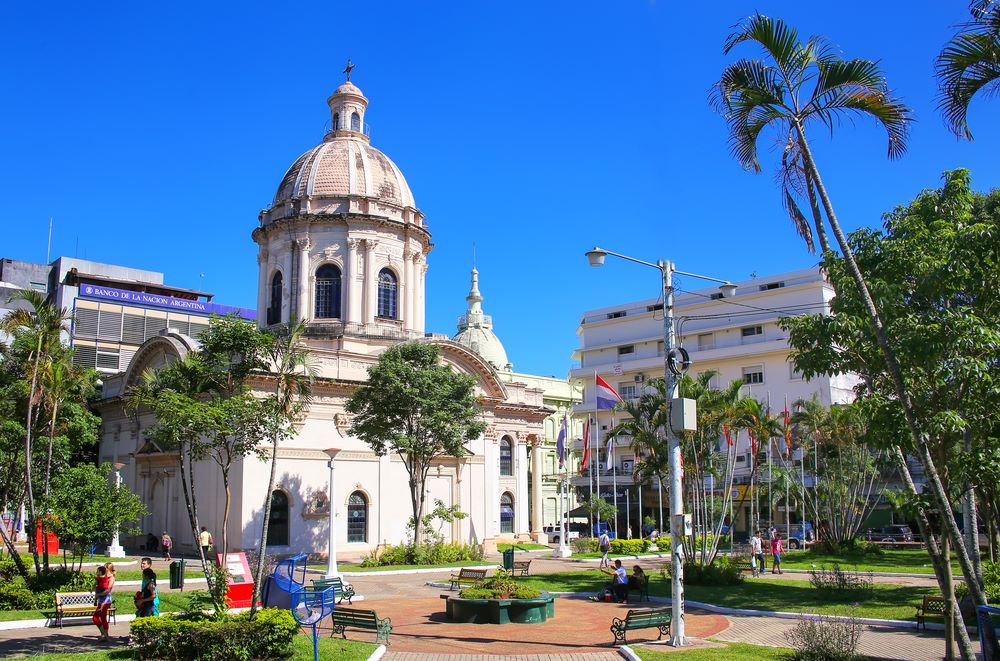
Known as the “Mother of the Cities” because the earliest pre-Columbian settlement dates back a very long time, Asunción was formally established on August 15, 1537, when Juan de Ayolas, the first European to set foot in these previously entirely indigenous regions, traced the plan of the then-Nuestra Segnora de la Asunción (the pantheon, see photo), along with Juan de Salazar and Gonzalo de Mendoza. The first wave of rioting against the Spanish, led by José de Antequera y Castro and his rebel factions, began in 1731, posing a threat to the early geopolitical calm.
Significance of the Mercosur Treaty
With the signing of the “mercosur treaty” in 1995, the governments of Buenos Aires, Montevideo, Brasilia, and, most obviously, Asunción, committed themselves to creating a single economic market in the region, putting an end to the bitter consequences and mutual hatreds that resulted from Paraguay’s defeat in the War of the Triple Alliance, which it fought against Argentina, Brazil, and Uruguay between 1865 and 1870.
Geographical Location and City Layout
Situated close to the east bank of the Rio Paraguay, the city sprawls across gentle hills and has grown over the years with little regard for urban planning regulations. This has resulted in a complex network of streets that are inundated with traffic and bordered with primarily illegal constructions. You have to go toward the region bordered to the north by the river, to the east by Calle Estados Unidos, to the south by Calle Haedo and Calle Luis A. Herrera, and to the west by Avenida Colón if you want to forget about the harm that modernity has done.
Architectural Highlights
The most interesting structures in Asunción can be found here, including the city’s center, Independence Square, and the Palacio de Gobierno, which was architecturally “copied” from the Palace of Versailles.
Prominent Historical and Artistic Sites
Another building worth seeing is the Panteón Nacional de los Heroes, which is modeled after the Hotel des Invalides in Paris and is home to several national heroes. A short distance away is the Casa Viola, one of the few remaining examples of a colonial building that has been used for a museum for a few years.
Other historical and artistic sites include the Palacio de los Lopez, designed by Italian architect commissioned by President Don Carlos Antonio Lopèz to serve as the seat of the presidency of the Republic of Paraguay; the ancient Spanish Cabildo, which has housed the headquarters of numerous administrative bodies over the years and is still home to a museum of national art that features indigenous and colonial artifacts on display alongside some contemporary art; the church of la E and other notable locations.
Parks and Natural Attractions
The city is home to numerous parks, such as the Jarden Botànico and the Zoo, which have been renovated and brought to a previously unheard-of splendor with dozens of animals housed in cozy and well-fed cages.
Museums and Cultural Institutions
Notable museums include the Godoi Museum and the Barro Museum, which are home to a sizable collection of modern art. Calle Colón, Calle Pettirossi, Calle Palma, and Calle Estrella round the commercial sector, and eateries, movie theaters, and cultural institutions can be found all over the place.
Major Festivals and Celebrations
Apart from Christmas and Easter, the most sentimental celebrations are the Dìa de San Blas, Paraguay’s patron saint, in February, and the Fundacòn de Asuncion, the anniversary of the capital’s foundation, in August. The carnival, on the other hand, is unquestionably the most colorful and enjoyable.
Since there are currently no direct flights to Europe, all forms of transportation originate at the Silvio Pettirossi International Airport (ASU) in Luque, which is located about 16 kilometers outside of the city center. From here, buses and taxis—both fairly expensive—travel to Asunción from the major capitals of South America and the United States. In addition to the charming but slow wood-fueled steam trains, buses and flights—managed by the transport companies Lineas Aèreas de Transporte Nacional (LATN) and Transportes Aèreos del Mercosur (TAM)—are the best options for moving within Paraguayan borders. Smaller airports are also served by these companies.
Climate and Best Time to Visit
The subtropical climate is characterized by sporadic, short-intensity rainfall throughout the chilly months of May through September, and a rainy season that falls during the southern summer, which runs from October to April. The annual precipitation total is approximately 1000 mm. Summer highs typically reach 31 or 32 degrees, but winter lows can even fall below 10 degrees. Winter highs typically reach 23 degrees. It is advised to travel between May and September, when the weather is noticeably more tolerable, due in large part to the heavy humidity and copious summertime rains.

