
Final Resting Splendor: Discovering 12 Monumental Cemeteries Across Europe
“TripAdvisor, a behemoth in travel critiques, once sifted through its vast array of user comments to compile a list that might raise eyebrows: the most enchanting cemeteries in Europe. It’s not entirely unexpected that these solemn gardens of stone captivate travelers. They are, after all, enshrined with an air of poignant timelessness and often harbor a trove of significant cultural and artistic treasures.
These resting places often gain notoriety as the final abodes of figures who shaped history, culture, and even entertainment. And indeed, even as the world grapples with a pandemic, streams of visitors can’t resist the pull to these locales for that all-too-common selfie, sometimes missing the solemnity of their surrounds.
Yet, for the discerning traveler who approaches with respect, these sites promise a profound encounter with history in the cities they adorn. Here’s a list of 12 monumental cemeteries in Europe, esteemed by wanderers worldwide.
American Cemetery, Colleville-sur-Mer (France)
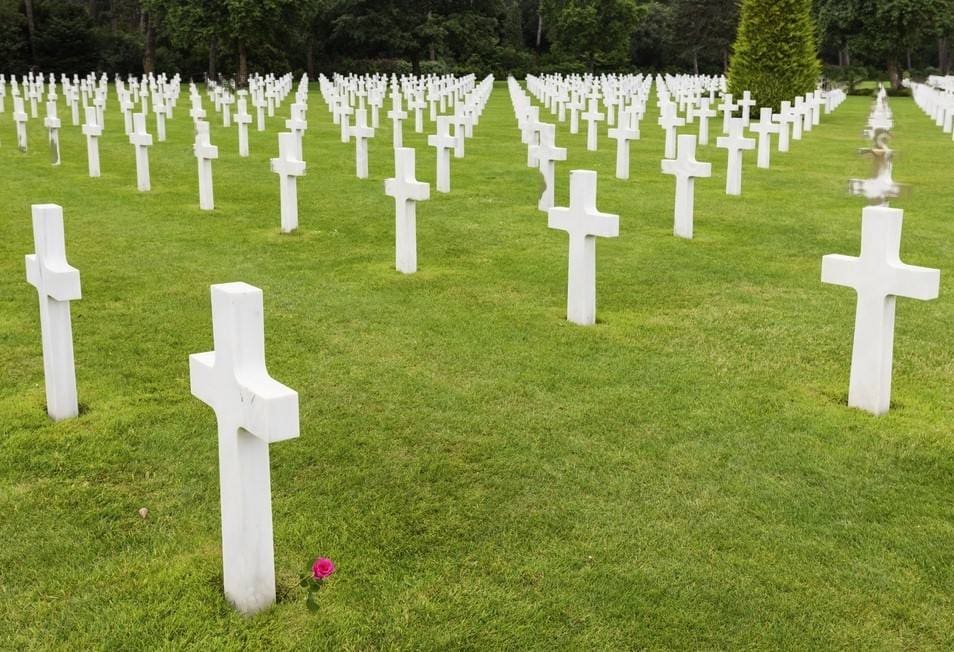
This hallowed ground, etched into the cliffs above Omaha Beach — a site steeped in the harrowing history of the D-Day landings of 1944 — is the eternal watchpost for 9,500 Allied warriors. Nestled in France’s northern reaches, this cemetery is a poignant waypoint on any D-Day beach tour. It’s noteworthy that this very cemetery, with its arresting architecture, served as a backdrop in Steven Spielberg’s cinematic opus, ‘Saving Private Ryan.’
Père-Lachaise Cemetery, Paris (France)

In Paris’s 20th arrondissement sits the storied Père-Lachaise, a site of pilgrimage for over 3.5 million souls yearly. Its allure isn’t just in its grandeur; it’s a mosaic of international legends resting in peace. Pilgrims often pause at the sepulchres of icons like Jim Morrison and the beloved French chanteuse Édith Piaf, not to mention the memorial of the illustrious Oscar Wilde.
Central Cemetery, Vienna (Austria)
The Zentralfriedhof claims the title of Europe’s second-largest burial ground and graces Vienna, Austria’s city of timeless elegance. It draws legions of classical music aficionados who come to pay homage to masters like Beethoven, Schubert, Brahms, and Strauss. Also, a cenotaph honoring Mozart stands here, complementing another in Vienna’s St. Marx cemetery, which marks the supposed resting place of this musical genius, though his exact burial spot remains a mystery.
Catacombs of Rome (Italy)
Beneath Rome’s bustling life lies a labyrinthine network of catacombs stretching over 150 kilometers across various levels. These subterranean sanctuaries, dating back to the 2nd century BC, mirror the Etruscan burial paths. Despite centuries of plunder, some sections, such as the Catacombs of San Callisto on the ancient Appian Way, have withstood the test of time. Here, half a million Christians found their final rest, among them numerous martyrs and sixteen pontiffs.”
Highgate Cemetery, London (England)
Embellished with an array of tombstones and structures reminiscent of Gothic grandeur, London’s Highgate Cemetery stands as the eternal abode of such luminaries as the revolutionary thinker Karl Marx, esteemed writers George Eliot and Douglas Adams, among others. Beyond its notable residents, the cemetery found itself at the heart of a chilling tale from the 1970s—the saga of the purported Highgate Vampire—when the cemetery had fallen into disrepair. The lore of a vampiric presence ignited a movement to restore this captivating site to its former splendor.
Southern Cemetery, Leipzig (Germany)
Nestled in Leipzig’s southern reaches, the Südfriedhof, as it’s known in German, claims the title of the city’s most expansive burial ground. Adjacent to the monument commemorating the 1813 Battle of the Nations, this sprawling 82-hectare cemetery park not only is a sanctuary for a plethora of rare flora and majestic trees, including an impressive collection of over 9,000 rhododendrons, but it also serves as the guardian of many poignant historical monuments.
Montparnasse Cemetery, Paris (France)
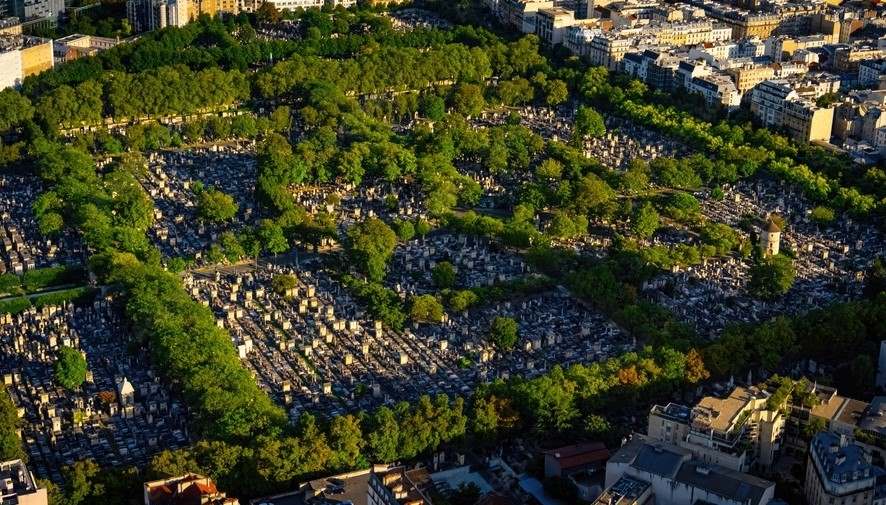
In the heart of the 14th arrondissement lies the Montparnasse Cemetery, a historical tapestry woven from the merging of several smaller burial sites in 1824, following a mandate to clear the central city of its graveyards. This sanctuary is a treasure trove of France’s intellectual and artistic spirit, sheltering the graves of luminaries such as the enigmatic poet Charles Baudelaire, existential philosopher Jean-Paul Sartre, feminist icon Simone de Beauvoir, acclaimed actor Philippe Noiret, and the legendary singer Serge Gainsbourg.
Staglieno Cemetery, Genoa (Italy)
Genoa’s Staglieno Cemetery is revered as a veritable open-air museum due to the sheer artistic brilliance and the plethora of monuments it contains. It serves as the final resting place for illustrious figures like Giuseppe Mazzini, the distinguished patriot and statesman of the 19th century, and also celebrates the legacy of modern music maestros like the beloved Genoese singer-songwriter Fabrizio De André.
Ancient Jewish Cemetery, Prague (Czech Republic)
The historic Jewish Cemetery in Prague’s former Ghetto dates back to the 15th century and is regarded as the oldest Jewish burial site in Europe. Constrained by its perimeter within the ghetto walls, it is believed that some sections of the cemetery contain burials stacked up to twelve layers deep. Preserved through time, the oldest headstone dates back to 1439, and the most recent interment occurred in 1787. During the harrowing times of World War II, this site was fortuitously spared by the German occupiers, who intended it to stand as a testament to a people they sought to eradicate.
Non-Catholic Cemetery, Rome (Italy)
Tucked away in Rome’s Testaccio district, the Non-Catholic Cemetery offers a serene reprieve from the city’s bustle. Known also as the Protestant or English Cemetery, it is the hallowed ground for romantic poets like Percy Bysshe Shelley and John Keats, whose poignant epitaph laments, “Here lies one whose name was writ in water.” With limited space, the cemetery is now a rare burial site, primarily for distinguished non-Catholic foreigners, and only occasionally for esteemed Italians whose life’s work set them apart from the prevailing cultural norms.
Skogskyrkogården, Stockholm (Sweden)

Escape to the tranquil embrace of Skogskyrkogården, Stockholm’s own “Forest Cemetery,” and you’ll find serenity and architectural genius intertwined beneath a canopy of pine. Conceived by Gunnar Asplund and Sigurd Lewerentz, this is where nature meets eternity, designed to reflect the profound journey from life into death. Wander through the soft light filtering through the trees, and discover the Woodland Chapel, a masterpiece of understated elegance that invites quiet reflection. Here, among the murmuring pines, rests Ingmar Bergman, whose cinematic stories continue to haunt and enchant. Skogskyrkogården is not just a necropolis, but a living, breathing ode to the soul’s passage through nature’s timeless beauty.
Assistens Cemetery, Copenhagen (Denmark)
Delve into the serene pathways of Assistens Cemetery in Copenhagen, a tranquil repository of Danish history and culture. This verdant oasis in the heart of the bustling city is the final resting place of some of Denmark’s most illustrious figures, like the enchanting storyteller Hans Christian Andersen, whose fairy tales have traversed beyond the realm of time, and the groundbreaking philosopher Søren Kierkegaard, whose existential musings challenge the living to find meaning in the paradox of life. Here, the legacy of geniuses mingles with the everyday, inviting visitors to ponder the narrative tapestry of the past while surrounded by a lush canvas of greenery that celebrates life in every leaf and tombstone.

