
Escape to Paradise: A 2024 Guide to the Allure of the Seychelles

Want to escape? Want sea, sun, palm trees, snorkeling, and almost deserted sandy beaches? The Seychelles Islands are your answer. We’re 4 degrees south of the Equator and 1,100 km northeast of Madagascar, in the Creole navel of the Indian Ocean. Here’s what to do and see in this true tropical paradise.
A Little History
Uninhabited until the 18th century, explored by Mauritian sailors, and finally claimed by the French in 1754, the Seychelles have always remained relatively isolated. This isolation has helped preserve the unique endemic species of these islands, such as the coco de mer palm (which grows only in the Vallé de Mai, a UNESCO World Heritage site), the paradise flycatcher, and many other fascinating flora and fauna.
Despite the French name (derived from Moreau de Séchelles, finance chief under Louis XV), English rule from 1814 to 1976 left an indelible mark, including driving on the left. Be cautious if you decide to rent a car!
Getting to the Seychelles
A favorite destination for Westerners since the 1970s and 1980s, today the Seychelles are connected with international flights from practically all over the world (and you don’t even need a visa). Visitors arrive on the main island, Mahé, before dispersing mostly between Mahé, Praslin, and La Digue. This means most trips only touch three of the 115 islands that make up this archipelago—lands that rise like pearls from the Ocean’s chest.
With a population of 90,000 spread over 86 coral islands and 29 granite ones, the Seychelles have an economy primarily supported by tourism and industrial fishing. This is the most realistic portrait of the islands.
Mahé Island

Mahé is the main island and still boasts many traces of the history of this country, albeit modern. It has an international airport, steep peaks (with Morne Seychellois reaching 905 m in height), and a lush jungle that envelops the interior slopes. Mahé is an island where it is impossible to get bored. Each day offers new discoveries: adventure, diving (including frequent whale shark sightings), hiking, and luxury in Eden Island. There’s something for everyone.
Victoria, the colorful capital, located in the northeast of Mahé, is home to 25,000 people and showcases a mix of cultures that almost seems like the ideal recipe for a tasty curry. Features of the capital include colonial-style houses, the Clock Tower, the lively market (open from 5:30 am to 5:00 pm on weekdays and until 12:00 pm on Saturdays), and the colorful Hindu temple of Harul Mihu Navasakthi Vinyagar.
Praslin Island
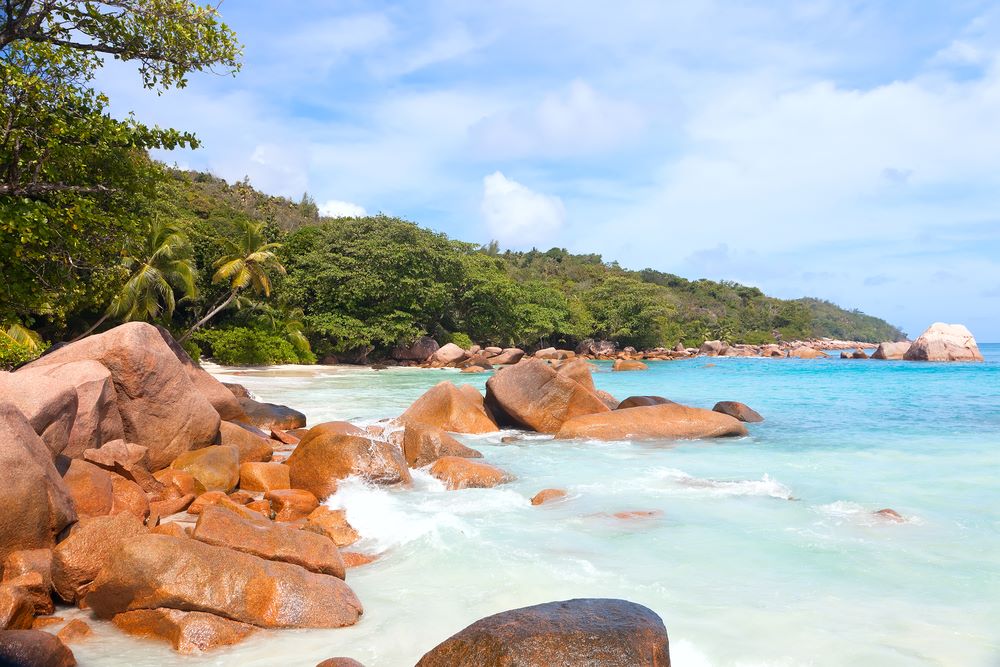
Praslin, located 45 km northeast of Mahé, is the quintessential tropical island. Rich in facilities and connections, it inevitably attracts honeymooners, but even casual visitors will fall in love with Praslin’s long, sandy beaches and high-level amenities. It’s also close to Curieuse Island, which hosts a marine reserve populated by Aldabra giant tortoises, and the Vallé de Mai, home to the only forest in the world where the coco de mer palm grows.
Among the must-visit beaches are Anse Lazio (notorious for a couple of shark attacks in 2011, though now under control with nets), Anse Georgette (part of the Constance Lémuria Resort but accessible to all), and Anse Volbert with the exclusive Chauve Souris islet. My tip? Rent a kayak (currents permitting) and explore the bay all the way to Saint Pierre, where you can snorkel while just sitting on the surface.
La Digue Island
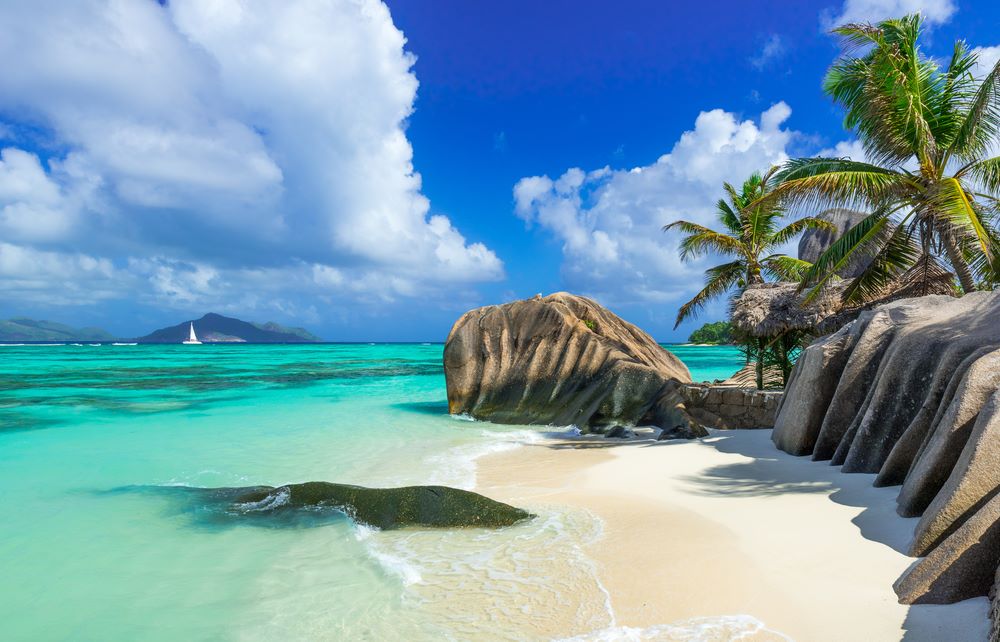
La Digue has the most laid-back atmosphere of all, with a relaxed Rastafarian vibe. Here, you can get around by bike, although motor vehicles have been introduced in recent years. On two wheels, you can visit beaches, go shopping, or explore Grande Anse on the east coast and continue on foot to the nearby beaches of Petite Anse and Anse Cocos through jungle paths (ask locals for directions to avoid getting lost in the forest, like I did!).
One thing you can’t do by bike on La Digue is visit the nearby islands: Grande Soeur, Petite Soeur, Coco Island, and Felicité, but these can easily be reached in a 15-20 minute boat ride from La Passe, the port of La Digue. These islands along the northeast coast hide a real underwater treasure—turquoise waters teeming with tropical fish, coral, and sea turtles.
La Digue has gained enormous fame in recent years, partly thanks to some of the world’s most beautiful and photographed beaches (like Anse Source d’Argent and Anse Cocos), its carefree holiday style, and stunning sunsets. The island is seeing a proliferation of family-run guesthouses, restaurants like the Fisherman’s Trap, and high-end resorts.
Best Time to Visit
Anytime, except February/March when heavy rains from Mauritius and Reunion strike. May/June and September/November are the best months, with pleasant temperatures and fewer crowds.
Two major events draw tourists here: Festival Kréol in late October, celebrating Creole culture, and Semaine de la Francophonie in Victoria, featuring shows, exhibitions, and films.
Hotels Not to Miss
There are many high-end properties across the islands, and even the smallest islands feature luxurious resorts that can cost up to 8,000-10,000 euros per night. But don’t worry, there are always alternatives, thanks to the rise of family-run establishments often equipped with kitchens.
Restaurants to Discover
Creole cuisine will surprise you with its mix of salty, fruity, and spicy flavors. Dishes are simple yet delightful: rice with meat or fish curry, fruit salads, fried plantains, grilled crustaceans, and fresh mollusks. On La Digue, don’t miss Chez Jules or Bellevue Restaurant (true to its name). On Praslin, the Hotel Saint Pierre restaurant offers a special dining experience—your feet in the sand. For those on a budget, convenient takeaways offer plenty of flavor for just a few rupees.

