
Astana: Dive into the World’s Most Unexpected Urban Revolution!

Located in the northern part of Kazakhstan, the capital Astana is a very modern city of over six hundred thousand inhabitants in the middle of the steppe. Until the nineties, it was nothing more than a quiet provincial town, but following the dissolution of the Soviet Union, it was chosen in 1994 as the future capital of the country, replacing Almaty three years later. The first settlement on the site where Astana stands today happened in 1830, with a Russian fort called Ammolone. Over a century later, it was renamed Tselinograd (literally: City of Virgin Lands, from the name of the Soviet strategic plan), remaining so until the collapse of the USSR.
Officially, the city was chosen as the capital due to its central location and being in a less seismic area than Almaty, as well as being better connected to Russia. However, it is believed that it was simply a political move by President Nazarbayev to calm the northern population and distract them from secessionist tendencies.
A City Divided by the Ishim River
The city is crossed by the Ishim River, which divides it into two distinct parts: the area on the right bank (or pravy bereg) is the historic centre, while the more modern neighbourhoods on the left bank (or levy bereg) are filled with government offices.
In the historic center, several places of interest stand out, such as the President’s Cultural Center—a building shaped like a yurt with a blue dome that also houses a nice museum about the city—and, not far away, the Museum of Contemporary Art, displaying a fabulous permanent collection. A little further north, the President’s Museum celebrates the prestige of the Head of State inside the former presidential palace, displaying gifts given to the president by famous guests, and can be visited free of charge with a mandatory guided tour in Russian.
Astana’s Urban Park and Bizarre Architecture
Astana has a large urban park, accessible via a pedestrian bridge in the south of Zheltoskan. Here you will find both the Monument to the Victims of the Totalitarian Regime and the Atemeken, a huge model of the city.
The capital, incredibly modern—if not outright futuristic—sees its profile change every year thanks to the freedom given to architects to build bizarre and unique buildings. Further south of the park, the Khan Shatyr is a transparent structure inaugurated in 2010 that stands 150 metres high, built with innovative materials capable of absorbing heat and transferring it inside, even when the outside temperature is well below zero.
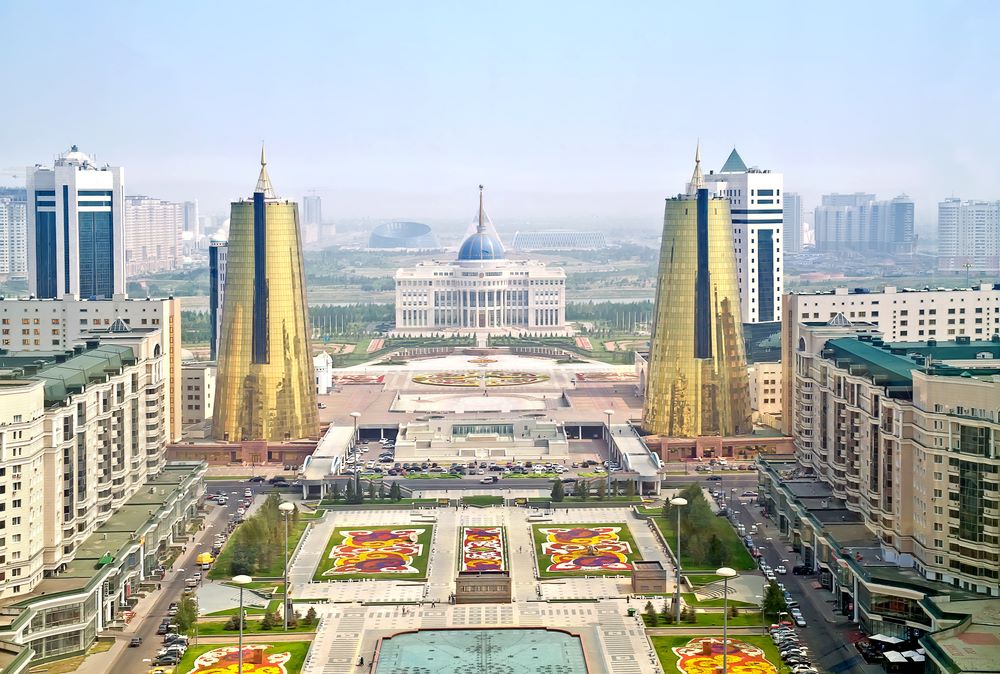
Not far from here, still in the new part of the city along Nurzhol Bulvar, many modern and imaginative buildings are visible. Among them are the Ministry of Transport and Communications, often called the “lighter” due to its shape, and the Islamic Centre, a vast complex with four minarets. The three green skyscrapers with wavy walls are called Northern Lights, while the Bayterek Monument—a tall white tower topped with a glass dome—stands nearby and is accessible via an interior lift.
Singing Fountains and More Extravagance
Still on Nurzhol Bulvar, heading east, ploshchas Poyushchykh Fontanov is the Square of the Singing Fountains, where in the summer evenings, a water and music show begins at 9 PM sharp.
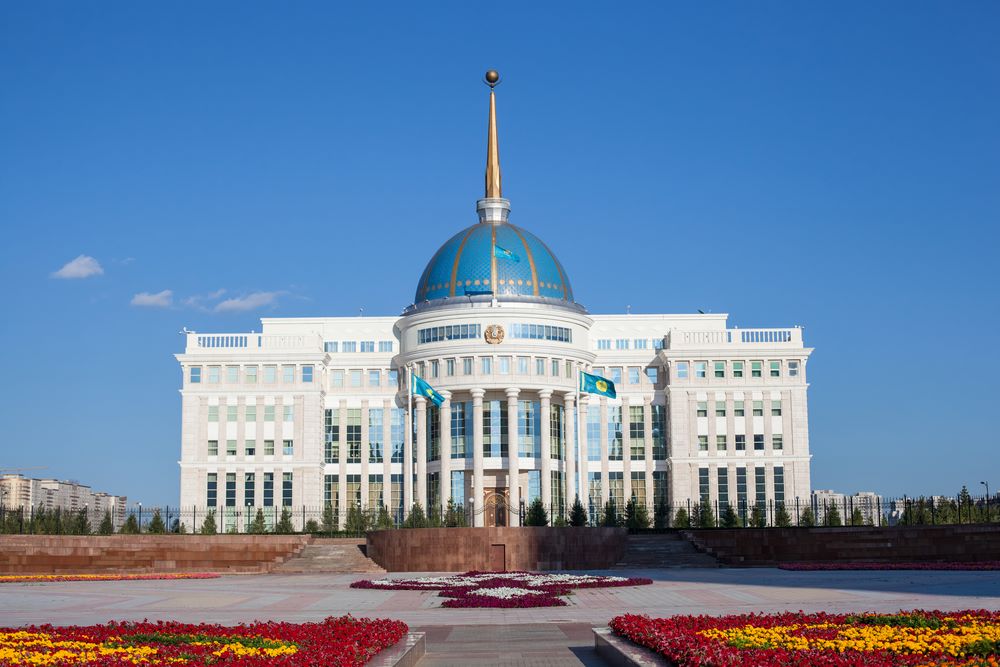
For those who want more extravagance, there are the golden-green conical buildings of Samruk-Kazyna and, not far away, the Ak Orda Presidential Palace with its distinctive blue dome. On the southern side of the palace grounds, the spectacular State Auditorium—designed by two Italian architects—resembles the petals of a flower.
Palace of Peace and Harmony: The Glass Pyramid

Further east of the river lies the iconic Palace of Peace and Harmony, the glass and steel pyramid symbolizing the city, inaugurated in 2006 and designed by Norman Foster. In front of this symbol, the Kazak Yeli, a 91-meter high monument to the Kazakh nation, features a golden eagle on top, with the Shabyt, a blue ring-shaped building, nearby. For a full overview of how the city will further develop, you can visit the large-scale model housed inside the Palace of Independence, right next to the Shabyt.
Getting to Astana

Astana is connected to the world via its international airport, offering flights to several major European capitals (such as Amsterdam, Prague, Frankfurt, and Moscow) as well as to numerous Asian destinations. There are also bus and minibus services connecting Astana to almost all Kazakh cities, and even routes to Russian cities like Omsk and Novosibirsk. Alternatively, train travel is quite comfortable, thanks to very modern carriages that have recently been added to some lines. Remember that given Kazakhstan’s vast size, journeys can be long and tiring, but they offer an authentic view of the country’s life and landscapes.
Where to Eat and Stay in Astana
Where to Eat:
- Line Brew Astana: This restaurant is all about hearty Kazakh hospitality and perfectly grilled steaks. Step into a medieval setting, complete with armor and stone walls, while you savor dishes like lamb kebabs, horse sausage, and more. It’s a must-visit for a filling and memorable meal.
- Satti: A mix of cozy and contemporary, Satti serves traditional Kazakh dishes with a modern twist. Think of succulent Beshbarmak served with finesse, or Kazy (horse meat sausage) with delicate spices. Satti creates a culinary bridge between tradition and today, making it a favorite among locals and visitors.
- Rafe Coffee & Food: Perfect for breakfast or brunch, Rafe is the place where locals and tourists come to relax with specialty coffee, international breakfasts, and classic Kazakh pastries. You can expect friendly vibes and the best Baursak (fried dough) to start your day.
- Focaccia: When you’re craving Italian comfort food, Focaccia delivers. It brings Italian classics like wood-fired pizzas and creamy pastas to the heart of Astana, with huge windows looking out onto the shimmering futuristic skyline. A slice of Italy amidst Central Asia’s rising city.
- The Shoreditch: For a more casual and lively night out, Shoreditch offers a creative fusion of Asian and Western dishes. Enjoy sushi, curry, or a good old-fashioned burger as you sit back in an industrial-chic setting with cool beats and a buzzing crowd. It’s an eclectic experience that matches Astana’s vibrant atmosphere.
Where to Stay:
- Rixos President Astana: This luxury hotel provides everything you need for a posh stay in the capital. Relax in the spa, dine at high-end restaurants, and enjoy impeccable service—all just steps away from Astana’s main landmarks. The elegant rooms come with everything you’d expect for the perfect high-class Kazakh experience.
- Astana Marriott Hotel: With sleek, modern interiors and sweeping views, Astana Marriott offers comfort and convenience. Its location near government buildings makes it ideal for business travelers, while the in-house amenities—like an indoor pool and lounge—offer a welcome reprieve for all guests.
- Hilton Astana: If you want to feel the pulse of Astana’s booming development, the Hilton is the place to be. Featuring stunning rooms, a luxurious spa, and a fantastic rooftop bar with breathtaking views, it’s where comfort meets contemporary style. Plus, the rooftop is perfect for sunset cocktails while watching the city’s lights come alive.
- Diplomat Hotel and Business Center: Nestled right on Nurzhol Boulevard, this hotel has easy access to Astana’s central sights, including Bayterek Tower and the nearby singing fountains. It’s ideal for travelers looking to be in the middle of everything without sacrificing comfort. Spacious rooms and an excellent restaurant await you here.
- Ibis Astana: Looking for value without cutting corners? Ibis Astana delivers comfort and style at an affordable price. It’s well-positioned for easy access to both the old town and the modern left bank. The bright rooms and friendly staff make it the perfect place to rest after a day exploring Astana’s architectural wonders.

