
Adelaide Awaits: Must-See Attractions in South Australia
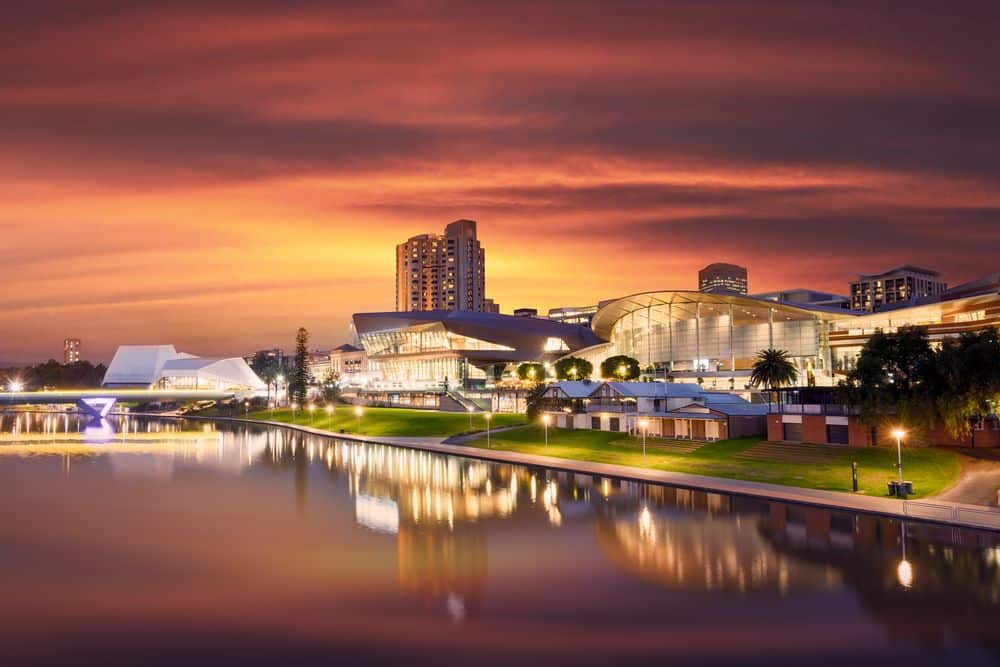
The city of Adelaide, which is the capital of the state of South Australia, is home to roughly 1,125,000 people and is located inside the nation of South Australia. When seen from a geographical perspective, Adelaide is situated in a position that provides a view of the waters of the Indian Ocean. It is located to the north of the Fleurieu peninsula, in the middle of the Gulf of St. Vincent and that of the Lofty Mountains, which are not very high in elevation. In terms of population, the city is the fifth most populated in Australia and the first in the state.
Additionally, it is the oldest city in the state. The city motto, Ut Prosint Omnibus Conjuncti, which translates to “United for the common good” is a hymn to respect and industriousness, qualities that are certainly not lacking in the people who live in the area. Meanwhile, the name of the city was chosen to honor Queen Adelaide, who was the wife of King William IV of England.
Historical Background and Settlement
The theory of systematic colonization, which was developed by Edward Gibbon Wakefield, was the foundation upon which the establishment of the Adelaide settlement and, more generally, the European colony in South Australia was built. The cornerstones of this theory were the colonization of the land by common citizens, the sale of land in relatively small lots, and the possibility of establishing some form of self-government. Despite the fact that South Australia was not officially colonized as a British province until December 28, 1836, which is the day that is celebrated today as Proclamation Day, his thoughts suggest that the South Australian Association was established in the year 1834. The location of the real city, on the other hand, was thoroughly investigated by Colonel William Light. He chose a slightly elevated area along the Torrens River as a settlement site, which became one of the founding parts of the city. However, he did not succeed in avoiding criticism from other commanders. In order to ensure that the city, throughout the course of the years to come, did nothing but continue to grow while keeping the founding principles, the tracing of the main road axes and the creation of the first neighborhoods were carried out with careful attention and meticulous attention to detail.
Cultural and Architectural Highlights
Originally, the immigrants constructed Adelaide primarily out of stone, which lends the city an air of sophistication. Adelaide is a city that is both sturdy and stunning. Additionally, it is important to note that the idea of solidity in the context of Adelaide extends beyond the realm of strictly architectural concerns. This is due to the fact that Adelaide has, in many ways, maintained its connection to the customs and principles that have been in place since the past. While strolling around the “city of churches,” you will be able to inhale an atmosphere of civilization and peace that is not present in any other capital city in Australia. A highly vital artistic community and a very dynamic underground scene are hidden behind the facade of this extraordinary city. A city center that is surrounded by big parks and green spaces, as well as a metropolitan region that is bounded by the Lofty Ranges mountain ranges, which nearly appear to force her onto the coastline, make Adelaide’s location even more attractive. In addition, Adelaide is situated in a wonderful geographical position.
Prominent Cultural Attractions
The center is packed with attractions from a cultural perspective, including the following: the Art Gallery of South Australia, which is the state art gallery and houses a magnificent collection of works by Australian and international artists; the South Australian Museum, which is situated next to the art gallery and focuses primarily on natural history; the Bradman Collection, which is housed within the Institute Building and displays a rich collection of memorabilia and personal objects belonging to the legendary cricketer Sir Donald Bradman, who passed away in Adelaide in 2001; the Migration Museum, which is a fascinating immigration museum that tells the stories of people from all over the world; and the Tandanya, which is a very special institution because it is dedicated to indigenous culture and is managed by the local Aboriginal community.
Architectural Landmarks
Each of the structures that are of the utmost artistic and architectural significance can be found either in the center of the area or in the immediate neighborhood. These include: Ayers Historic House, built in 1845 and former residence of Sir Henry Ayers, seven-time prime minister of South Australia; the Edmund Wright House, built in 1878 in a rich and elaborate Renaissance style to house the Bank of South Australia; the Adelaide Town Hall, built between 1863 and 1866 in sixteenth-century Renaissance style, on whose façade the faces of Queen Victoria and Prince Albert are sculpted; the Parliament House, which has a very interesting façade, as it is decorated with ten marble Corinthian columns; Holy Trinity Church, the first Anglican church built in South Australia; St Peter’s Cathedral, built between 1869 and 1904 in the North Adelaide area; and the Sir Samuel Way Building, a building dating back to 1912 where the judicial offices are located.
Parks, Gardens, and Natural Beauty

North Adelaide is surrounded by a big green area, which in turn is surrounded by parks and gardens that line the Torrens River, which divides Adelaide from North Adelaide. The city center is totally circumscribed by green spaces. There are a number of beautiful artificial lakes scattered around the twenty-hectare Adelaide Botanic Garden, which is easily accessible on foot from the vicinity of the city center. One of the components of the garden is the spectacular greenhouse, which is designed to simulate the atmosphere of a warm tropical rainforest. Two of the attractions that can be found in Rymill Park, which is located inside the East Parkland, are a lake where you can go boating and a running track that is 600 meters long. On the other hand, the Veale Gardens, which are surrounded by streams and are strewn with flowerbeds, and the Japanese gardens known as Himeji Gardens are located within the South Parklands. While the North Parklands surround North Adelaide and line the Torrens River, there are a number of athletic installations located to the west of the city.
Coastal Beauty and Glenelg Beach

One more thing that helps to make Adelaide a wonderful location to live is the breathtaking scenery that can be found along the Atlantic coast. It is the most popular beach among residents of Adelaide, and Glenelg is a coastal resort that is quite popular. It is provided with all the amenities that one could possibly need, and it is great for practicing water sports.
Climate: when is the best time to visit
The weather is fully Mediterranean, with moderate winters and hot, dry summers. The climate is entirely Mediterranean. The average temperature in January, which is the month with the highest average temperature according to the statistics, is 28.8 degrees, while the relative humidity rate not even comes close to exceeding 20-30%. At least four to five days during the summer months are often characterized by temperatures that are at least forty degrees. In July, on the other hand, temperatures have a tendency to range anywhere from 15 to 8 degrees. There is a tendency for precipitation to be concentrated in the months between October and May, given that it is quite uncommon to get rain during the summer season. The average amount of precipitation that we receive each year is somewhere in the range of 550 to 600 millimeters. In the region, which is frequently ravaged by intense fires throughout the summer months, water scarcity is a significant issue that needs to be addressed.
For those who are interested in traveling to South Australia, the Adelaide International Airport (AAL), which is situated in West Beach, serves as the most significant infrastructural hub in the region and serves as the designated point of reference.
Public Transport and Road Network
The Adelaide Metro, on the other hand, is in charge of managing public transportation. It is responsible for providing a vast bus network, as well as a single Adelaide O-Bahn, which is a type of light rail, and the Glenelg Tram, which is a historic tram. The road system, both urban and interurban, is very efficient and is based on some main axes: the Port Wakefield Road and the Sturt Highway leading north, the South Eastern Freeway leading south, and the Southern Expressway serving as an alternative route to the frequently congested South Road. The local railway system is still underdeveloped, to the point where it is the only one in Australia that has not yet been electrified. But the road system is very efficient.

