
A Journey Through Recoaro Terme: Wellness, Traditions, and Natural Beauty

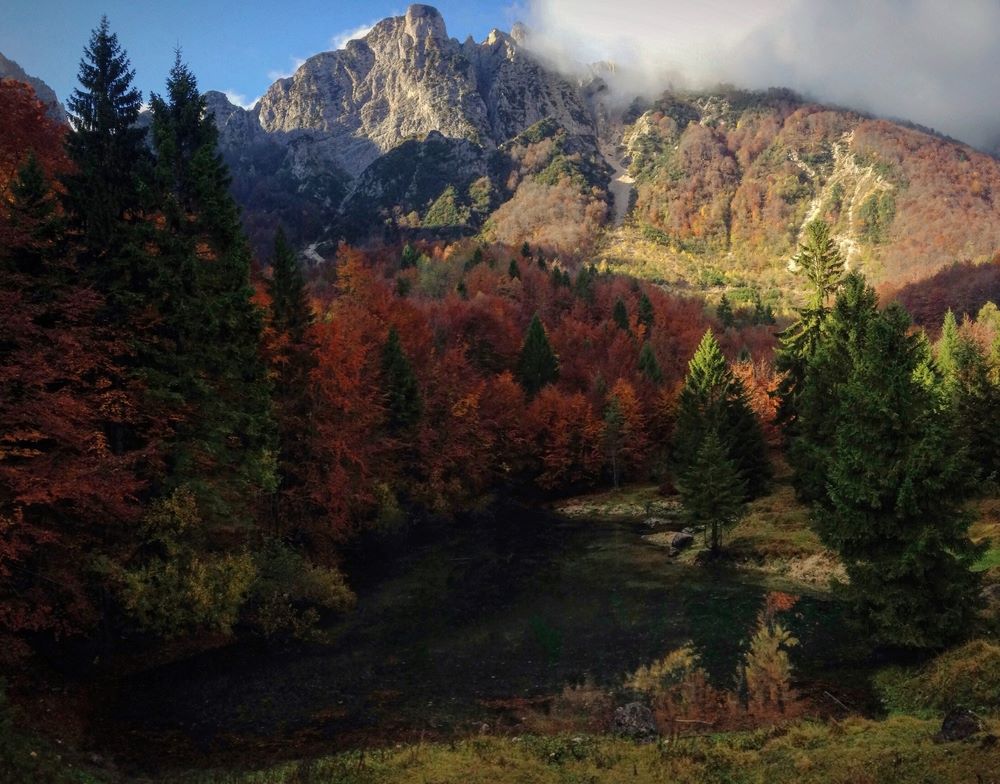
To pique your curiosity, the name of the surrounding valley is enough: the Conca di Smeraldo, formed by the course of the Agno river and shaded by the reassuring outline of the Piccole Dolomiti. This is the green scenery that embraces Recoaro Terme, a pretty Venetian town in the province of Vicenza with just 7 thousand inhabitants. Nestled between the Trentino towns of Ala and Vallarsa to the north, the upper Val Leogra to the east, the Val del Chiampo to the west, and the town of Valdagno to the south, Recoaro Terme is immersed in a unique landscape, dominated by limestone rocks.
The Spa
It is precisely these rocks that offer the most important local resource, the precious mineral water which flows from the numerous sources distributed throughout the territory. Part of the water is commercialized, while the remaining quantity is used in the spas of Central Sources since 1689, when its beneficial and therapeutic properties were discovered.
Built towards the end of the 19th century in an elegant and refined style, the Fonti Centrali establishment is a large complex, immersed in a splendid park of more than 200 hectares, right in front of the town of Recoaro. In a fairytale setting, where hydrangeas bloom and from which you can admire the first crests of the Piccole Dolomiti, there are five thermal springs that flow from the earth: the Lelia, the Lorgna, the Amara, the Nuova, and the Lora. Another four varieties, the Giuliana, the Capitello, the Franco, and the Aureliana emerge in detached locations.
There are countless treatments, especially hydrotherapy and inhalation, but the most interesting is perhaps the ochre mud bath: by macerating the spontaneous inorganic deposits of the mineral springs in water, this compound with a pasty consistency, yellow-reddish in color, is obtained and used in various treatments.
But the limestone rocks of the area are not limited to offering thermal waters: thanks to the conformation of the landscape, in fact, you can also practice countless sports and outdoor activities, from paragliding to winter sports at Recoaro Mille, from mountain biking along dirt roads and mule tracks to mountaineering, up to sport climbing.
What to see in Recoaro Terme
Not to be overlooked is the cultural offering of the city centre. Recoaro Terme: here, in fact, there is no shortage of monuments and buildings worthy of interest, among which the parish church dedicated to Saint Anthony the Abbot stands out, built between 1949 and 1951 by the famous architect Giuseppe Vaccaro, custodian of a beautiful terracotta Via Crucis.

Older, however, are the Church of Santa Giuliana and the Church of San Bernardo, both built around the 14th century. The inhabitants of Recoaro, the recoaresi, are particularly fond of and devoted to Santa Giuliana, who, according to tradition, has assisted them several times over the centuries against wars and plagues.
A peculiarity of the area, closely linked to local tradition, is the presence of votive shrines: in the municipal territory there are 128 of them, testimonies of popular faith but also temporary shelters for those who, in the past, found themselves wandering in the area and needed a humble shelter. A shrine-shelter not to be missed is in the Camonda area: built in the 19th century, when there was still no road accessible to the town, it is thought that it was used by wayfarers heading to Recoaro along the route between the Agno Valley and the Leogra Valley.
Festivals, events and typical products
But the tradition of Recoaro Terme, beyond the architecture and religious expressions, emerges above all from the events that take place during the year. Lively and delicious is the Gnocchi Festival with Fioreta, which is held in the central Via Lelia on the first Sunday of September. For the occasion, the center is adorned with utensils and furnishings from the peasant world, while the culinary specialty is served: the “fioreta” is the semi-liquid ricotta, obtained from an initial processing of milk, with which the very tender gnocchi of the Agno Valley are made, seasoned with melted butter and sage or, for true gourmets, with fried lard and cheese.
Another traditional occasion, linked to rural and popular culture, is the so-called Call of March. On the last night of February, only in even years, citizens pour into the streets in traditional clothes, armed with cowbells, milking buckets, and agricultural tools, with the intention of making a racket and calling spring.
Climate and when to go
After much fanfare, feeling desired, spring arrives punctually every year, but it plays a few unexpected tricks on the people of Recoaro and tourists: just think that in 2008, in the spring, Recoaro was the rainiest place in the whole of Veneto. The fault lies with the territorial conformation: the Conca di Smeraldo is characterized by high rainfall in spring and autumn, with heavy showers and sudden thunderstorms during the summer. Temperatures are low in winter and high in summer: the average values of the coldest month, January, range from a minimum of -2°C to a maximum of 5°C, while in July and August they range from 18°C to 29°C.
How to get there
To get to Recoaro Terme you can consider different options, depending on the means of transport you choose. The closest airports are Verona and Venice, 85 km and 116 km away respectively, from which you can reach Vicenza by train. From Vicenza, you can continue with the scheduled buses to your destination. Those traveling by car should take the A4 Milan-Venice motorway and exit at Alte-Monticchio, then continue on state road 246 towards Valdagno-Recoaro Terme.

