Directions

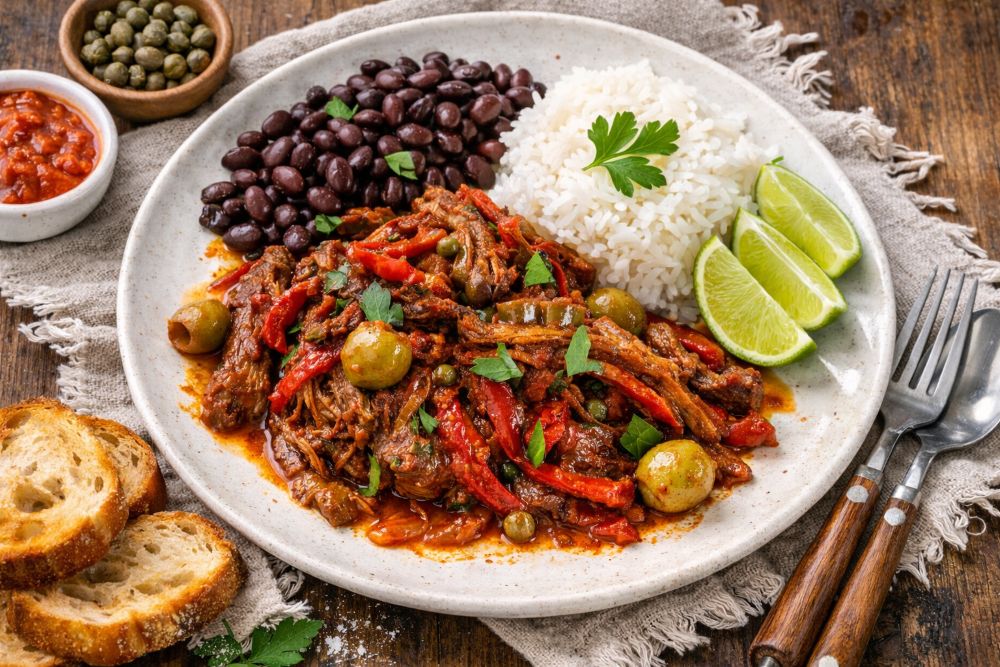
Ropa Vieja is now considered Cuba’s national dish, but its history begins far beyond the Caribbean. The first documented traces appear in the Canary Islands, a territory deeply connected to migration toward Cuba between the 18th and 19th centuries. Canarian settlers brought with them a leftover stew prepared with boiled meats, later sautéed with vegetables and spices.
The name means “old clothes,” a direct reference to the beef which, after long cooking, is torn into thin fibers resembling worn fabric. In Cuba, the dish quickly evolved: Caribbean sofrito, sweet peppers, tomatoes, and a balanced use of cumin and bay leaves became essential elements.
It soon became a cornerstone of family cooking in Havana and Santiago de Cuba, almost always served with white rice and black beans, one of the most successful flavor balances in Caribbean gastronomy.
Ingredients for 6 people
- 1.2 kg beef chuck or shoulder cut
- 1 large onion
- 1 red pepper
- 1 green pepper
- 3 cloves garlic
- 400 g peeled tomatoes
- 120 ml tomato purée
- 120 ml dry white wine
- 500 ml meat broth
- 60 ml extra virgin olive oil
- 1 teaspoon cumin
- 1 teaspoon sweet paprika
- 2 bay leaves
- Salt
- Black pepper
Preparation time
Prep time: 20 minutes
Cooking time: 2 hours 30 minutes
Total time: 2 hours 50 minutes
Procedure
Place the whole piece of beef in a large pot and cover it with lightly salted cold water. Bring to a boil and simmer for about 1 hour and 30 minutes. This first cooking phase relaxes muscle fibers and makes the meat easy to shred.
Once tender, drain the meat, reserving part of the cooking liquid, and allow it to cool slightly. Using your hands or two forks, pull the meat apart following the natural grain. Avoid cutting with a knife: correct shredding allows the sauce to cling properly.
In a wide saucepan, heat the extra virgin olive oil and add the sliced onion. Cook slowly until translucent. Add the minced garlic and peppers cut into strips, forming the aromatic base typical of Cuban sofrito.
When the vegetables soften, add cumin, paprika, and bay leaves. The spices should briefly toast in the oil to release their aromas.
Pour in the white wine and allow the alcohol to evaporate completely. Add the peeled tomatoes, tomato purée, and about 250 ml of the reserved meat broth.
Add the shredded beef and mix gently so it distributes evenly in the sauce. Partially cover and simmer over low heat for about 40–50 minutes. During this stage, the meat absorbs flavor while the sauce gradually thickens.
Ropa Vieja is finished when the sauce becomes concentrated but still fluid and the meat remains soft without drying out.
Nutritional values per 100 g
Calories: 185 kcal
Protein: 22 g
Fat: 9 g
Carbohydrates: 4 g
Wine pairing
Frappato by Arianna Occhipinti works particularly well, supporting tomato richness without overwhelming spices. A lightly chilled Cerasuolo d’Abruzzo by Emidio Pepe enhances the meat’s succulence while maintaining vibrancy.