
What Makes Marsala Superiore Riserva the Most Underrated Fortified Wine in the World?
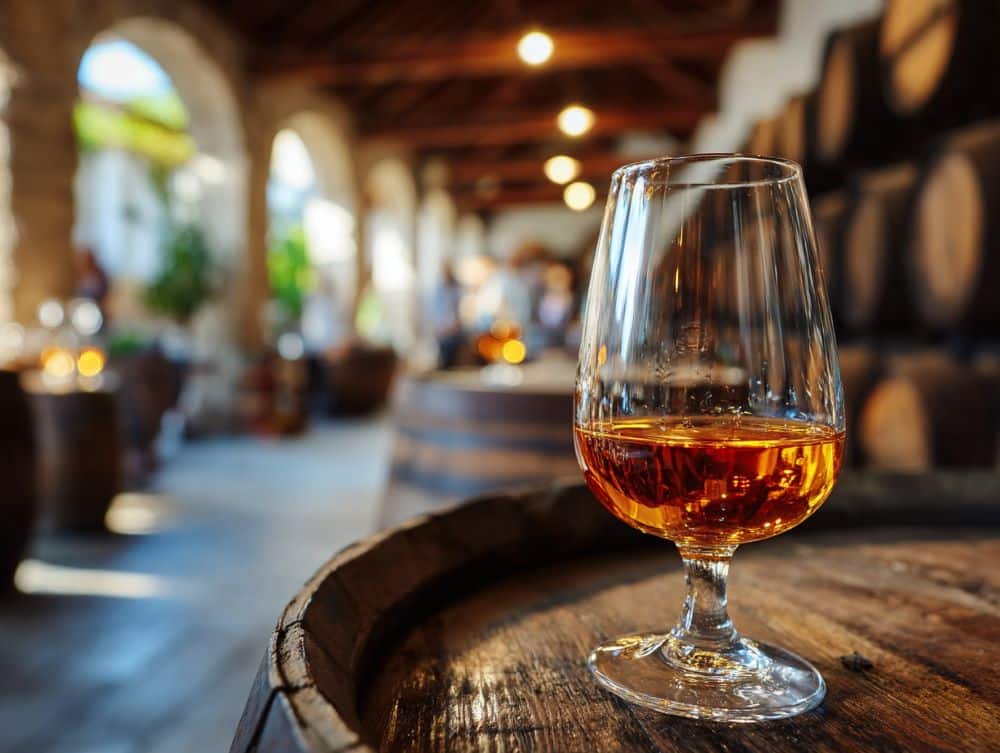
The most refined and structured version of the renowned Sicilian fortified wine is Marsala Superiore Riserva. A minimum of four years in wood gives it aromatic complexity, depth of flavor, and adaptability that makes it ideal for both meditation and refined culinary pairings. For those seeking a historic wine, rich in character and legacy, it is the perfect option.
Area of production
The Marsala DOC designation spans all of the Trapani province’s land save for the islands. At the base of the gold and amber versions, the calcareous soils and Mediterranean climate—with hot, dry summers and mild winters—favor the growth of native grapes including Grillo, Catarratto, Ansonica (Inzolia), and Damaschino. Red grapes like Perricone, Nero d’Avola and Nerello Mascalese are used for the ruby type.
The Basics
Name: Marsala Superiore Riserva DOC
Region: Sicily, Italy
Extension: approximately 1,500 hectares
Main grape varieties: Grillo, Catarratto, Ansonica, Damaschino (for gold and amber); Perricone, Nero d’Avola, Nerello Mascalese (for ruby)
Alcohol content: minimum 18% vol.
Types: dry (<40 g/l sugars), semi-dry (40–100 g/l), sweet (>100 g/l)
Minimum aging: 4 years in wooden barrels
Serving temperature: 14–16°C for dry versions; 16–18°C for sweet versions
Organoleptic characteristics
Marsala Superiore Riserva is set apart by a hue ranging from deep amber (amber) to intense gold (gold) to ruby red with garnet reflections (ruby). Aromatic on the nose, it has a rich bouquet of dried fruit, sweet spices, vanilla, tobacco, and honey. It is warm, enveloping, with a strong structure and a long and harmonious persistence on the palate.
Grape kind, vinification, and polishing define its manufacture
Selected grapes are fermented to create Marsala Superiore Riserva; “conciatura” or the addition of cooked must, rectified concentrated must and ethyl alcohol of vitivinicultural origin, interrupts the fermentation and enriches the wine. The wine then ages in oak or cherry barrels for at least four years, during which time it acquires its own organoleptic qualities.
Food Pairings
Dry version: perfect as an aperitif, it goes well with aged cheeses like Parmigiano Reggiano, Grana Padano, Sicilian Pecorino and dried fruit.
Perfect with foie gras, liver pâté, blue cheeses, and almond-based desserts is the semi-dry version.
Sweet version: it pairs well with dark chocolate desserts, Sicilian cannoli, cassata and zabaglione.
What is the price of a bottle?
The most popular versions of Marsala Superiore Riserva range in price from 15 to 30 euros; the historic reserves and limited editions, depending on the producer and the vintage, can go over 50 euros.
Iconic producers to taste
Cantine Florio: historic winery founded in 1833, offers a wide range of high-quality Marsala.
Cantine Pellegrino: active since 1880, is renowned for the production of traditional and innovative Marsala.
Marco De Bartoli: pioneer in the valorization of artisanal Marsala, with a biodynamic approach.
Caruso & Minini: modern company that combines tradition and innovation in the production of Marsala.
Curiosities and history
The Englishman John Woodhouse, who found this wine in 1773 and recognized its commercial promise, began exporting Marsala to England, thus giving it worldwide notoriety. Over the years, Marsala has become a symbol of Sicilian oenology and has earned a place of honor among the great fortified wines of the world, on a par with Port and Sherry.

