
Exploring Castelfranco Veneto: A Hidden Gem of Venetian History and Charm
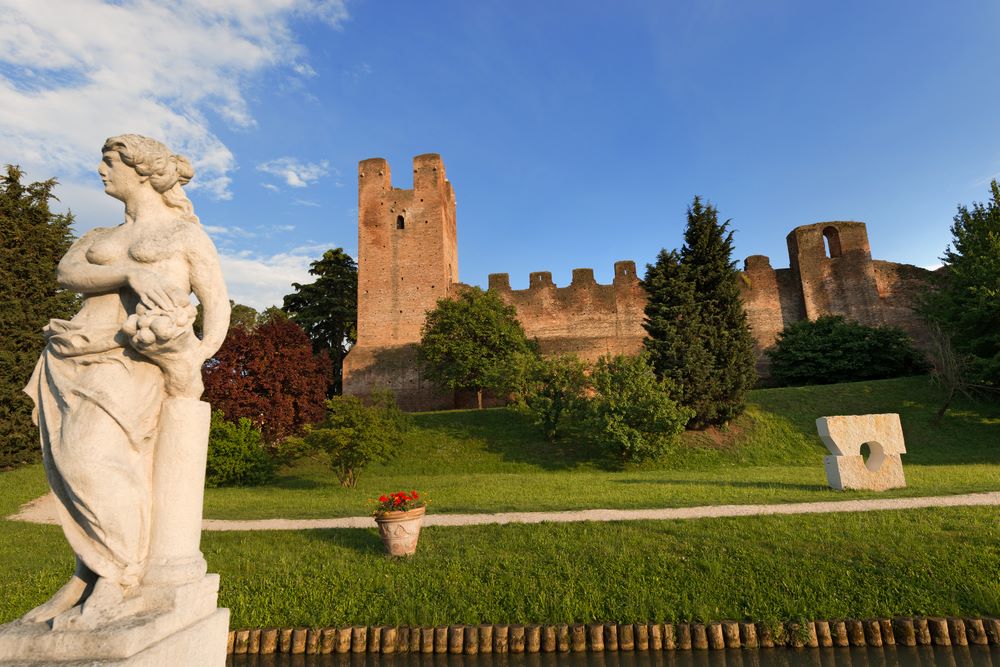
Castelfranco Veneto is a small town in the Treviso plain. Centrally located, it is easily reachable from Padua, Venice, and Vicenza (as well as Treviso, of course). This location once made it a privileged center for trade, intersected by three important roads: the Aurelia, the Postumia, and the Cornelia.
The territory was once controlled by the Romans, and after the barbarian invasions, it entered the sphere of influence of nearby Treviso. In 1195, the Castle was erected with a defensive function against the neighboring enemies of Padua and Vicenza, and one hundred families of free men were sent there to live.
This is where the name “Castelfranco” originates, meaning “tax-free castle” (the adjective “Veneto” was officially added only in 1867). With the colony came the soldiers, then the laws, and Castelfranco gradually became a small village. When Frederick II arrived in Italy, an imperial vicar, Ezzelino da Romano, governed here until the end of the thirteenth century, when Treviso regained possession of the castle. During the fourteenth and fifteenth centuries, the Caminesi of Treviso, Carraresi of Padua, and Scaligeri of Verona took control.
Venetian Villas: Elegance Amidst the Countryside

After the confusion caused by the agreements of the League of Cambrai, Castelfranco passed under Venetian rule, entering a period of splendor. The countryside became a popular summer retreat for noble Venetian families who invested in the territory.
Ca’ Amata, built in 1711 by architect Giovanni Rizzetti, is a prime example of these luxurious villas. Echoes of the Palladian style are evident, but the villa fully blends into its rural surroundings. Without a garden, surrounded by cultivated fields, it develops horizontally on a single level, uniting pleasure and work in a unique landscape.
Even older is Villa Chiminelli, built on the remains of a previous domus in the late 16th century. Despite its obscurity, it is undoubtedly beautiful, frescoed inside and out by the school of Paolo Veronese. Its compact size and refined decorations show its purpose as a vacation home, dedicated to leisure.
The villa features vaulted cellars, a raised main floor, a central hall with rooms on the sides, and an entrance loggia. Later, a two-story wing was added, and the garden was modified to make room for a barchessa. A chapel with a fifteenth-century wooden altar overlooks the beautiful entrance portico. The Soranzo coat of arms stands out on the façade, alongside the emblems of other noble families.
Discovering the Historic Core of Castelfranco Veneto
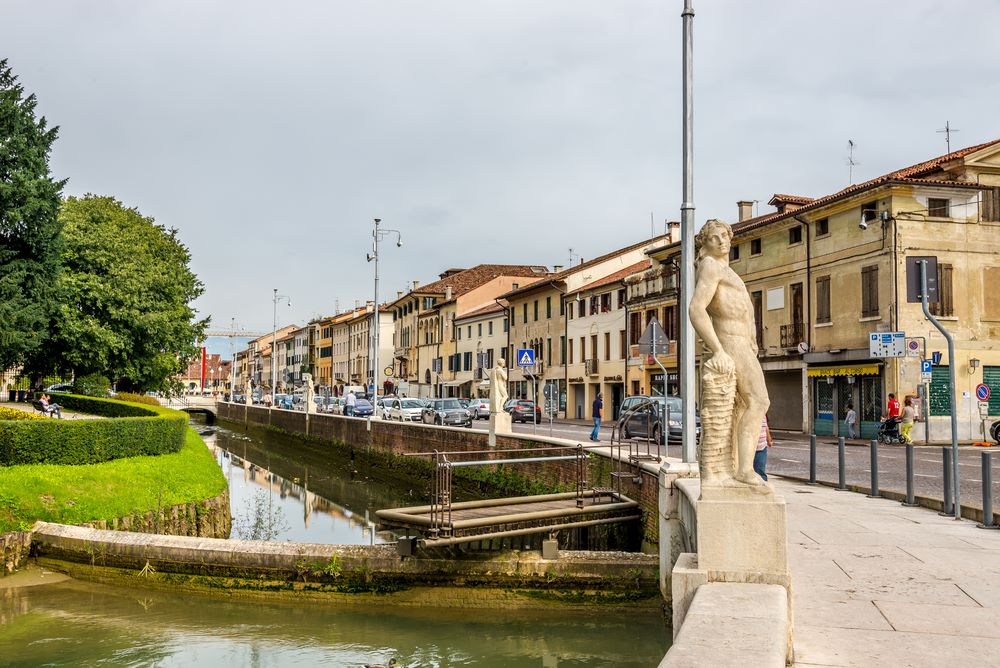
When visiting Castelfranco Veneto, it is essential to admire its historic villas—vital elements of the landscape. Within the village walls, a must-see is the Cathedral, in neoclassical style, with important frescoes by Paolo Veronese and Jacopo Bassano, as well as the renowned Castelfranco Altarpiece by Giorgione, who was born here.
Casa Marta Pellizzari, Giorgione’s former residence, now serves as a museum and stands a short distance from San Liberale. It was likely the home of one of the families for whom Giorgione worked in his youth.
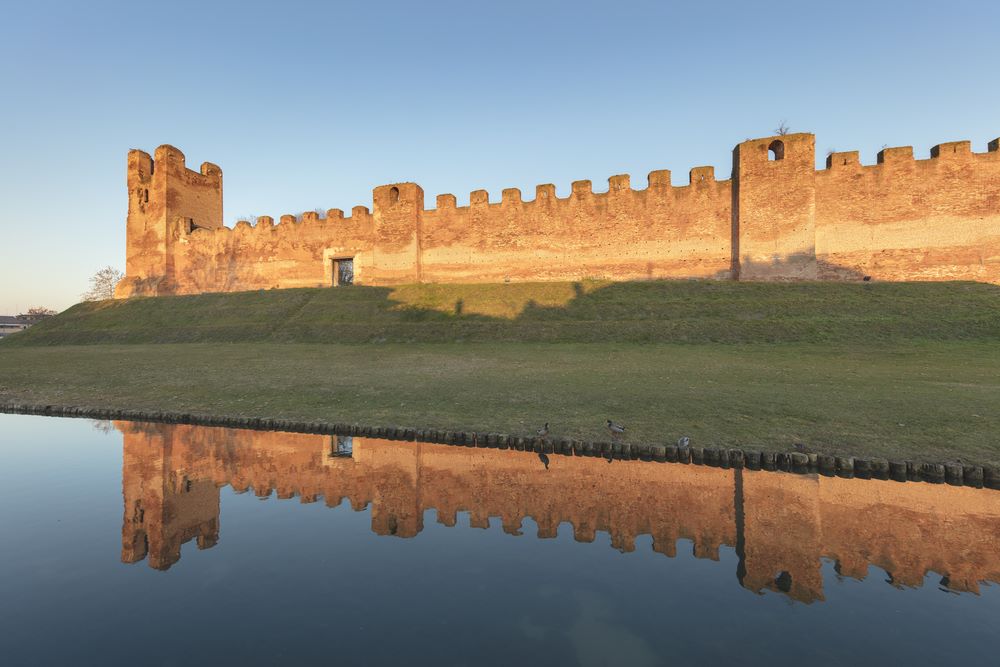
The structure that defines Castelfranco is the Castle, which surrounds the historic center. Made of red brick, it has high walls and six towers, one of which now serves as the bell tower of the nearby Cathedral.
The Beauty of Villa Revedin Bolasco and Its Gardens
Outside the castle walls lies a romantic English park, the park of Villa Revedin Bolasco. Created in the late nineteenth century, it replaced the former “Paradiso” garden of Villa Corner. The green lawns and precious plants are enriched by ponds, Spanish-Moorish architecture, and elegant statues. The park surrounds a large, imposing palace with grand, fairytale-like rooms.
Rediscovering Castelfranco Veneto’s Artistic Heritage
Castelfranco Veneto is a city where art and history blend seamlessly in its elegant villas—a testament to the prestige and value that this territory once held. A value that is ready to be rediscovered through visits to important monuments and savoring the flavors of numerous local delicacies, which can be enjoyed at many farmhouses in the countryside.
Getting to Castelfranco Veneto
You can reach Castelfranco via the motorway: the A27 Mestre – Vittorio Veneto, exiting at Treviso; the A31 Vicenza – Piovene Rocchette, exiting at Vicenza Nord; and the A4 Turin – Milan – Trieste, exiting at Padua. There is also a railway station in the city, making it accessible by train. The nearest airports are Treviso and Venice.

