
Osteria La Grotta Brescia: Local Wines, Pasta and Dry-Aged Beef

Antica Osteria La Grotta is tucked away at Vicolo del Prezzemolo 10, in the historic centre of Brescia, a few minutes from Piazza della Loggia. The narrow alleyway, old wooden furniture and intimate dining rooms belong to a different era of Italian restaurants, when an osteria was somewhere to eat properly, drink local wine and spend a few hours without worrying about fashionable cooking.
The restaurant’s history dates back to 1942, when an innkeeper named Morando established La Grotta in premises previously used to store timber and coal. More than eighty years later, it remains one of Brescia’s historic dining addresses.
A change of ownership in 2026 introduced a new chapter, with renovated interiors and renewed attention to seasonal ingredients, particularly fresh porcini mushrooms and dry-aged beef. The kitchen remains rooted in Brescian and Lombard cooking, a tradition shaped by stuffed pasta, slow-braised meat, polenta and robust local wines.
La Grotta is particularly appealing for travellers who want to understand the food of Brescia beyond the predictable repertoire of Italian restaurant classics.
Casoncelli Are the Essential Brescian Pasta
Few dishes express the culinary identity of Brescia better than casoncelli, the stuffed pasta found throughout the province and neighbouring Bergamo.
Their filling traditionally combines meat, breadcrumbs, cheese and aromatic ingredients, although recipes change considerably between families and towns. The pasta is rolled thinly, filled, folded and sealed into compact parcels.
The classic accompaniment is melted butter and sage, sometimes enriched with grated Grana Padano. The butter coats the pasta without overwhelming the filling, while sage introduces a distinctive herbal fragrance.
Casoncelli have long been one of La Grotta’s defining specialities. They are also a sensible first course because they reveal the character of local cooking without needing complicated sauces or elaborate presentation.
The pleasure comes from tender pasta, a savoury filling and the aromatic simplicity of butter and sage.
Manzo all’Olio Is Brescia’s Great Beef Dish
Manzo all’olio is arguably the most representative meat preparation in the Brescian repertoire.
Closely associated with Rovato, in Franciacorta, this traditional dish involves slowly braising beef with olive oil, wine, vegetables and anchovies until the meat becomes exceptionally tender.
The anchovies are particularly important. They dissolve into the cooking liquid, contributing umami and salinity without turning the sauce into something recognisably fishy.
The finished beef is typically sliced and served with its concentrated sauce and soft polenta, which absorbs the juices.
It is a dish of surprising subtlety. Despite the generous quantity of olive oil, well-prepared manzo all’olio should taste savoury and rich rather than greasy.
La Grotta built much of its gastronomic reputation around preparations of this kind. For anyone exploring the traditional cuisine of Brescia, manzo all’olio deserves as much attention as casoncelli.
Porcini Mushrooms Give the Seasonal Menu More Character
Fresh porcini mushrooms are among the ingredients associated with the restaurant’s renewed seasonal cooking.
Their dense flesh, earthy fragrance and meaty texture make them particularly suitable for fresh pasta, risotto and simple pan-fried preparations.
Unlike ordinary cultivated mushrooms, porcini have enough aromatic intensity to carry a dish with relatively little assistance. Butter, olive oil, parsley and perhaps a little garlic are usually sufficient.
They also provide an attractive alternative to the meat-heavy side of traditional Brescian cuisine.
The best seasonal cooking does not need an elaborate list of ingredients. With porcini, restraint is usually an advantage.
Dry-Aged Beef Brings a More Contemporary Accent
Alongside the traditional braised dishes, La Grotta has introduced a stronger emphasis on dry-aged beef.
Dry ageing allows controlled moisture loss and enzymatic changes in the meat, concentrating flavour and modifying texture. Depending on the cut and maturation period, the result can develop more pronounced savoury, roasted and nutty characteristics.
This approach introduces a different style of meat cooking to an osteria historically associated with stews, roasts and regional preparations.
A properly matured steak needs little more than careful grilling, salt and a suitable resting period. Heavy sauces would conceal much of the character developed during ageing.
For dedicated meat lovers, the dry-aged selection gives La Grotta another reason to visit beyond its traditional pasta dishes.
Cured Meats and Local Cheeses Deserve a Place at the Table
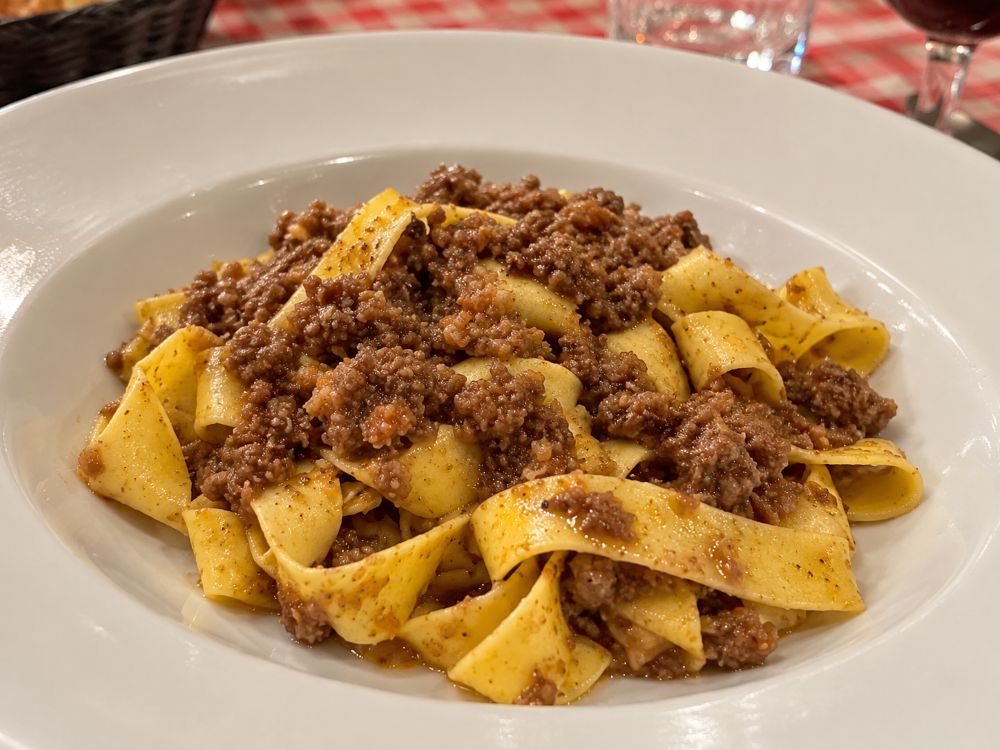
Brescia has a particularly interesting tradition of cured meats and mountain cheeses, influenced by the valleys north of the city.
A regional antipasto can include salame, pancetta, coppa and lardo, accompanied by bread and occasionally pickled vegetables.
The province also produces excellent cheeses, from the firm, intensely flavoured Bagòss of Bagolino to the more delicate Nostrano Valtrompia and the famous Grana Padano.
Bagòss is especially distinctive. Made with raw cow’s milk and traditionally coloured with saffron, it develops a concentrated, savoury flavour as it matures.
These ingredients provide a useful introduction to the region’s agricultural traditions, although a generous starter of cured meat can easily become a meal in itself.
With casoncelli or braised beef still to come, sharing an antipasto is the more sensible approach.
Polenta Is Much More Than a Side Dish
Polenta appears throughout the traditional cuisine of Brescia, particularly alongside braised beef, stewed rabbit, game and substantial meat sauces.
Its importance is not merely historical. The soft, slightly granular texture of cornmeal provides an excellent contrast to slow-cooked meat, while its mild flavour absorbs sauces without competing with them.
Brescia also has a tradition of pairing polenta with Bagòss, mushrooms and rich cheeses.
A good polenta should be creamy without becoming watery and retain the natural flavour of corn rather than tasting entirely of butter or cheese.
It is one of the simplest components of Lombard cooking, yet it often determines whether a traditional meat dish feels complete.
Franciacorta and Valtènesi Wines Belong on the Table
The province of Brescia offers considerably more wine variety than its international reputation for Franciacorta alone might suggest.
Franciacorta DOCG, made principally from Chardonnay and Pinot Noir using the traditional method, is an excellent choice with cured meats, savoury starters and certain fresh pasta dishes. Its acidity and fine bubbles help counter fat and salt.
For casoncelli, a Valtènesi Chiaretto brings freshness, delicate red-fruit flavours and enough structure to accompany the meat filling without overwhelming the butter and sage.
A red based on Groppello, the characteristic grape of the western shores of Lake Garda, is particularly appealing with rabbit, roast meat and lighter braised dishes.
More substantial beef preparations call for something with greater concentration. A well-structured Curtefranca Rosso or a mature red from Botticino can provide the tannins and savoury depth needed for manzo all’olio and grilled beef.
Local wines are the natural choice here, not simply because of geography but because their acidity and moderate weight complement the richness of traditional Brescian cooking.
The Dining Rooms Preserve the Character of an Old Osteria
La Grotta’s atmosphere is inseparable from its history.
The restaurant occupies rooms with arched ceilings, old wooden furniture and decorative details that preserve the feeling of a traditional Italian tavern. Some of the furnishings recall the period when the place was frequented by generations of Brescia residents.
The 2026 renovation introduced new solid-wood tables and refreshed the interiors without abandoning the historic character of the rooms.
The location adds to the appeal. Vicolo del Prezzemolo is a narrow street hidden within the historic centre, giving the restaurant a sense of separation from the busier squares and shopping streets nearby.
This is an intimate setting rather than a grand dining room. The architecture and furniture provide enough personality without needing theatrical decoration.
Service, Prices and Value
La Grotta belongs to the traditional mid-range osteria category rather than the world of elaborate fine dining.
Its appeal rests on regional recipes, substantial meat dishes, seasonal ingredients and a historic setting.
A dinner budget of approximately €30–€45 per person is a reasonable planning allowance, with dry-aged beef and more ambitious wine choices potentially increasing the total.
Useful Information
- Restaurant: Antica Osteria La Grotta
- Address: Vicolo del Prezzemolo 10, 25121 Brescia, Italy
- Area: Historic centre, near Piazza della Loggia
- Cuisine: Traditional Brescian and Lombard
- History: Established as an osteria in 1942
- Management: New ownership since 2026
- Specialities: Brescian casoncelli, traditional beef dishes, seasonal porcini mushrooms and dry-aged meat
- Regional classics: Manzo all’olio, polenta, local cured meats and cheeses
- Typical budget: Approximately €30–€45 per person, with premium beef and wines costing more
- Wine: Regional Lombard wines, including Franciacorta and reds from the Brescia area
- Vegetarian options: Seasonal vegetable and mushroom dishes
- Setting: Historic vaulted rooms with wooden furnishings
- Reservations: Recommended
- Telephone: +39 347 222 1301
- Best for: Traditional Brescian cuisine, regional wines, historic osteria atmosphere and seasonal meat dishes
Our Rating of Antica Osteria La Grotta Brescia
Regional Cuisine: 8.7/10
Casoncelli, braised beef and local ingredients give the restaurant a strong connection to the culinary traditions of Brescia.
Pasta and Traditional Recipes: 8.7/10
The historic repertoire of stuffed pasta and slow-cooked specialities remains the restaurant’s principal gastronomic attraction.
Meat Selection: 8.6/10
The renewed attention to dry-aged beef adds variety to a cuisine already rich in substantial meat dishes.
Wine and Regional Pairings: 8.6/10
Franciacorta, Valtènesi and local red wines provide excellent opportunities to explore the province’s wine culture.
Atmosphere: 9.2/10
The secluded alleyway, vaulted rooms and historic wooden furnishings give La Grotta an unmistakable identity.
Value for Money: 8.3/10
A mid-range proposition whose appeal depends on traditional cooking, seasonal ingredients and the distinctive setting.
Overall Editorial Rating: 8.7/10

