
Crème de Mûre Guide: Blackberry Liqueur, Production, Best Brands, Bramble Cocktail and Food Pairings
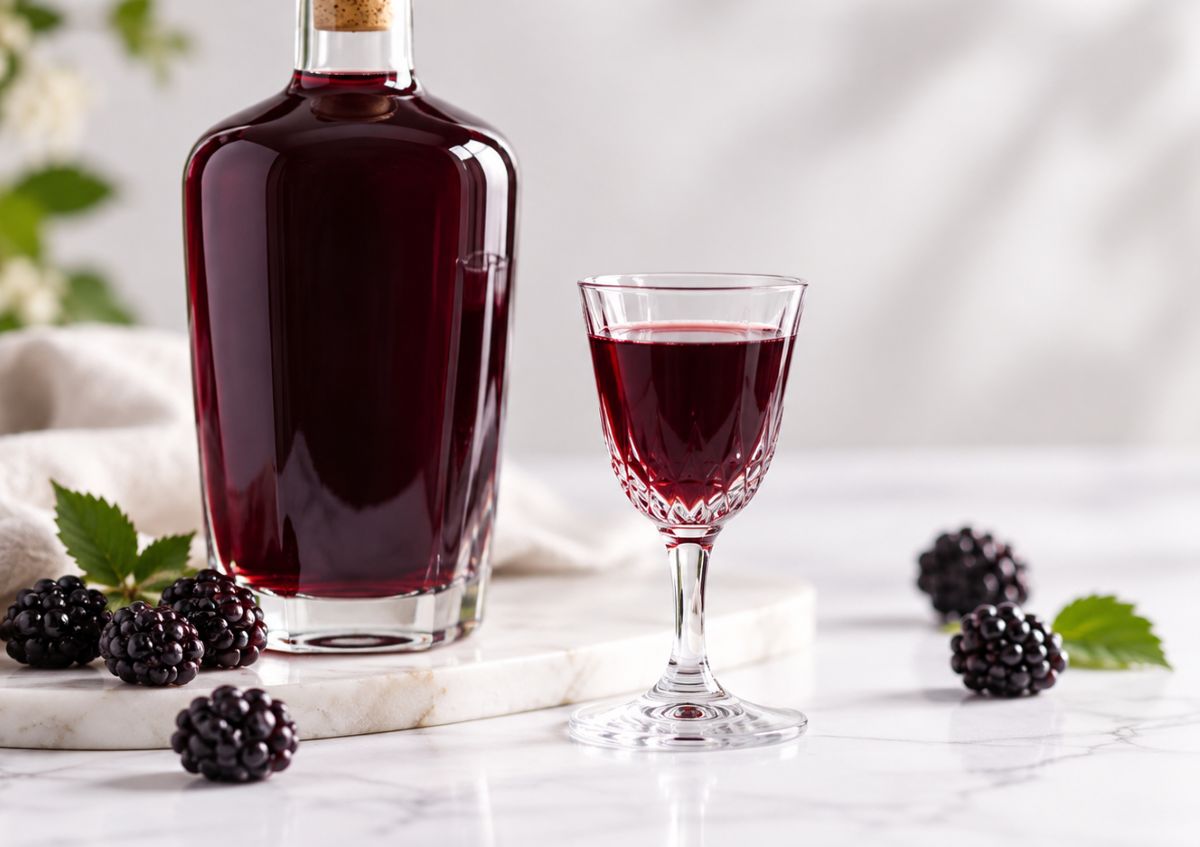
Crème de Mûre: The French Blackberry Liqueur Behind the Bramble Cocktail
Few fruit liqueurs have benefited from a single cocktail as much as Crème de Mûre. This dark, intensely flavoured blackberry liqueur was once largely associated with French aperitifs, fruit desserts and the traditional world of crèmes de fruits. Its international reputation changed in the 1980s, when British bartender Dick Bradsell used it to create the Bramble, a modern classic that remains one of the most successful gin cocktails of the past four decades.
Crème de Mûre is built around the flavour of ripe blackberries: juicy dark fruit, gentle acidity, concentrated sweetness and a characteristic hint of bitterness from the seeds. Its deep purple-red colour is particularly attractive in cocktails, but the best examples offer much more than visual impact.
Unlike many strongly flavoured cocktail liqueurs, Crème de Mûre has a relatively straightforward aromatic identity. The challenge is preserving the natural flavour of blackberries while balancing the considerable sugar required by the category. French producers such as Giffard and Briottet have developed different approaches, creating bottles that range from fresh and fruit-driven to dense, almost jam-like expressions.
The Basics
- Category: Blackberry fruit liqueur
- Country most associated with the style: France
- French name: Crème de Mûre
- Principal fruit: Blackberry, from plants belonging to the genus Rubus
- Alcohol base: Agricultural alcohol
- Production: Fruit maceration, infusion, fruit juice blending or a combination of methods
- Minimum alcohol: 15% ABV under EU regulations
- Minimum sweetness: 250 g/L, expressed as invert sugar
- Typical strength: 15–20% ABV
- Colour: Deep ruby, garnet or purple-red
- Characteristic aromas: Blackberry, dark berries, fruit preserves, gentle acidity and subtle seed bitterness
- Important producers: Giffard, Briottet and Marie Brizard
- Signature cocktail: Bramble
- Other uses: White wine aperitifs, sparkling wine, desserts and fruit cocktails
What Is Crème de Mûre?
Crème de Mûre is a sweet blackberry liqueur belonging to the French tradition of crèmes de fruits.
The word crème does not indicate the presence of dairy ingredients. It refers to a legally defined style of liqueur containing a relatively high concentration of sugar.
Under Regulation (EU) 2019/787, a liqueur labelled Crème de followed by the name of a fruit or other permitted raw material must contain at least 250 grams of sweetening products per litre, expressed as invert sugar. Its minimum alcoholic strength is 15% ABV, and the named ingredient must provide the predominant flavour.
These requirements explain the distinctive texture of Crème de Mûre. It is richer and sweeter than an ordinary blackberry-flavoured spirit, but its characteristic fruit acidity should prevent it from becoming cloying.
The category does not require one specific extraction technique. Producers can obtain blackberry character through fruit maceration, juice concentrates, natural flavouring preparations or carefully balanced combinations of these ingredients.
The French Tradition of Fruit Crèmes
Crème de Mûre belongs to the same family as Crème de Cassis, Crème de Framboise and Crème de Pêche.
These liqueurs became particularly important in French aperitif culture, especially in Burgundy, where fruit liqueurs developed alongside wine production and the region’s established commercial networks.
Crème de Cassis remains the most famous member of the family, largely because of its role in the Kir, a traditional aperitif made by adding blackcurrant liqueur to dry white wine.
Blackberry liqueur developed within the broader tradition of preserving fruit in alcohol and sugar. The technique allowed highly perishable berries to be transformed into concentrated, relatively stable products suitable for drinking and cooking.
Unlike Crème de Cassis, whose history and reputation are particularly closely tied to Burgundy, Crème de Mûre does not have one universally recognised geographical birthplace or protected regional identity.
Its modern importance comes primarily from the expertise of French liqueur producers and its popularity in cocktails.
Blackberries: The Fruit Behind the Liqueur
Blackberries are the fruits of several closely related plants belonging to the genus Rubus, particularly the complex group commonly called Rubus fruticosus.
The fruits are actually aggregates of numerous small drupelets rather than single berries in the strict botanical sense.
Their flavour varies considerably with species, ripeness and growing conditions.
Fully ripe blackberries can offer deep fruit concentration, gentle floral notes and a balance between sweetness and acidity. Less ripe fruit often introduces firmer acidity and astringency.
The seeds contribute a subtle bitter dimension that can become noticeable in concentrated liqueurs.
This combination is important because Crème de Mûre contains substantial sugar. Without sufficient acidity and authentic fruit character, the finished product risks tasting like sweetened blackberry syrup.
High-quality examples preserve a recognisable impression of fresh or gently cooked blackberries rather than relying solely on generic dark-fruit sweetness.
How Crème de Mûre Is Made
There is no single production method, but the process generally involves extracting blackberry flavour, blending it with alcohol and adding enough sugar to meet the requirements of the category.
Fruit Extraction
Traditional fruit liqueur production often relies on maceration, in which blackberries remain in contact with agricultural alcohol for a controlled period.
Alcohol extracts aromatic compounds and some of the pigments responsible for the fruit’s dark colour.
Other producers use blackberry juice or concentrate to achieve the desired flavour intensity.
Giffard Crème de Mûre, for example, is made using concentrated blackberry juice, while Marie Brizard Blackberry uses a blackberry infusion reinforced with fruit juice.
These differences affect the aromatic profile. Macerated fruit can contribute greater depth and some seed-derived bitterness, while juice-based production may emphasise ripe fruit and immediate freshness.
Neither method automatically guarantees higher quality. Fruit concentration and careful blending are more important than the production description alone.
Sweetening and Blending
After extraction, the blackberry component is blended with alcohol, water and sugar.
The legal requirement of at least 250 g/L of sweetening products gives Crème de Mûre its characteristic richness.
Sweetness needs to be balanced against natural fruit acidity. The best producers preserve enough freshness to make the liqueur suitable for cocktails containing additional sugar or other sweet ingredients.
Some recipes also use permitted natural flavourings or colour adjustments to obtain a consistent product.
The finished liqueur is generally filtered and bottled without extended barrel ageing, since the objective is to preserve its fruity character.
What Does Crème de Mûre Taste Like?
The colour is usually deep purple-red, sometimes approaching black garnet in the glass.
The nose typically reveals ripe blackberries, dark fruit preserves and a softer impression of raspberry or blackcurrant.
On the palate, the liqueur is sweet, rounded and full-bodied, with an intense blackberry character.
The most successful examples retain a clear impression of fruit acidity. A faint bitterness from the seeds can add welcome definition to the finish.
The flavour should be concentrated enough to remain identifiable when mixed with gin and lemon juice.
A weak Crème de Mûre may provide colour and sweetness without contributing much actual blackberry flavour. Conversely, an overly concentrated or heavily sweetened version can make a cocktail taste more like jam than fresh fruit.
Balance is the essential quality.
Crème de Mûre vs Crème de Cassis
Both are French fruit liqueurs, but their flavours are quite different.
Crème de Mûre is made around blackberries, while Crème de Cassis is based on blackcurrants.
Blackcurrants generally have a sharper, more penetrating aromatic profile, with pronounced acidity and sometimes leafy or herbal notes.
Blackberries tend to be rounder, darker and more reminiscent of ripe fruit preserves.
There is also an important legal distinction.
Under EU regulations, Crème de Cassis must contain more than 400 g/L of sweetening products, expressed as invert sugar, compared with the 250 g/L minimum for Crème de Mûre.
The two liqueurs can sometimes be substituted in cocktails, but the result will not be identical. Cassis usually produces a more assertive blackcurrant profile, while Mûre offers a softer blackberry character.
Crème de Mûre vs Blackberry Liqueur
The terms are related, but they are not always legally interchangeable.
Blackberry liqueur is a broad description that can cover products with different levels of sugar, alcohol and fruit concentration.
Crème de Mûre identifies a more specific style with the minimum sweetness and alcoholic strength required for the Crème de category.
An ordinary blackberry liqueur may be less sweet or more alcoholic, depending on its recipe.
For cocktails, the distinction matters because sugar concentration changes the balance of the finished drink.
A Bramble made with a relatively dry blackberry liqueur may require more sugar syrup, while a rich Crème de Mûre needs less adjustment.
The Bramble: The Cocktail That Made Crème de Mûre Famous
The modern reputation of Crème de Mûre is inseparable from the Bramble, created in 1984 by Dick Bradsell at Fred’s Club in London.
Bradsell, one of the most influential figures in modern British bartending, developed a drink inspired by the blackberries he remembered picking during his childhood on the Isle of Wight.
The concept was elegant: take the structure of a Gin Sour, serve it over crushed ice and finish with blackberry liqueur.
The resulting cocktail had everything required for lasting success. Gin provided the botanical foundation, fresh lemon delivered acidity, sugar balanced the mixture and Crème de Mûre introduced dark fruit and a striking purple-red colour.
The Bramble became one of the defining modern classics of the 1980s and remains an official cocktail of the International Bartenders Association.
Bramble Cocktail: Official IBA Recipe
Ingredients
- 50 ml gin
- 25 ml fresh lemon juice
- 12.5 ml sugar syrup
- 15 ml Crème de Mûre
- Crushed ice
- Optional garnish: lemon slice and fresh blackberries
Method
- Shake the gin, lemon juice and sugar syrup with ice.
- Strain into a chilled Old Fashioned glass filled with crushed ice.
- Pour the Crème de Mûre over the drink in a circular motion.
- Garnish with lemon and fresh blackberries if desired.
The blackberry liqueur gradually moves through the crushed ice, creating the cocktail’s characteristic colour gradient.
A London Dry gin works particularly well because its juniper and citrus notes provide contrast to the richness of the blackberry.
The quality of the Crème de Mûre matters enormously. It must contribute a recognisable fruit character without overwhelming the drink’s acidity.
The Best Crème de Mûre Brands
Giffard Crème de Mûre
Giffard produces one of the most accessible French examples of the category.
Its Crème de Mûre is made with concentrated blackberry juice and bottled at 16% ABV.
The profile emphasises ripe blackberry purée, jam and fresh fruit, with a slight seed-derived bitterness on the finish.
It is particularly suitable for the Bramble, where concentrated fruit flavour needs to remain present alongside gin and lemon.
At approximately €14.90 for 70 cl in the producer’s French shop, it also offers good value.
Briottet Crème de Mûre
Founded in Burgundy in 1836, Maison Briottet has a long history in French fruit liqueurs.
Its Crème de Mûre is bottled at 18% ABV and uses natural blackberry-derived flavouring, with a small addition of grape anthocyanins to reinforce its colour.
The liqueur is rich and fruit-driven, suitable for cocktails and French-style aperitifs with dry white or sparkling wine.
The producer sells its 70 cl bottle for approximately €22.
Briottet is a useful choice for drinkers seeking a French liqueur with a relatively full texture and good aromatic intensity.
Marie Brizard Blackberry
Marie Brizard offers blackberry liqueurs designed for both cocktails and direct consumption.
Its Excellence Collection Blackberry is bottled at 16% ABV and uses a blackberry infusion combined with blackberry juice.
The result emphasises ripe fruit and a smooth, sweet palate.
A separate Blackberry expression in the producer’s Crèmes & Modern Collection is bottled at 15% ABV, making it important to check the exact product when comparing bottles.
Marie Brizard is a practical option for fruit cocktails, highballs and mixed drinks where a softer blackberry flavour is desirable.
How Much Does Crème de Mûre Cost?
Crème de Mûre is generally an affordable cocktail liqueur.
Standard French bottles commonly cost approximately €15–€25 for 70 cl, although prices vary by market and distributor.
Giffard represents particularly good value for a classic Bramble, while Briottet occupies a slightly higher price point.
More expensive does not necessarily mean better. Since the liqueur is typically used in quantities of 10–20 ml per cocktail, the most important qualities are fruit concentration, acidity and balance.
A good bottle should provide a recognisable blackberry flavour without requiring excessive quantities.
How to Drink Crème de Mûre
Although the Bramble is its most famous application, Crème de Mûre can be enjoyed in several other ways.
Served neat in a small glass, slightly chilled, it reveals its concentrated fruit aromas and sweetness.
Over ice, dilution makes the liqueur lighter and less syrupy.
The French aperitif tradition also offers an easy alternative: add 15–20 ml Crème de Mûre to approximately 100 ml dry white wine.
The result is a blackberry variation on the Kir, traditionally made with Crème de Cassis.
Dry sparkling wine or Crémant de Bourgogne can be used instead for a more festive aperitif.
For cocktail applications, lemon juice, gin and dry sparkling wine are especially effective partners because they counterbalance the liqueur’s sugar.
Food Pairings
Crème de Mûre is naturally suited to desserts featuring berries, chocolate and almonds.
Try dark chocolate tart with fresh blackberries, almond frangipane with roasted berries, or panna cotta with a lightly acidic blackberry compote. In each case, the fruit’s tartness helps balance the liqueur’s sweetness.
How to Choose and Store Crème de Mûre
A good Crème de Mûre should smell unmistakably of blackberries, not merely of generic red-fruit sweets.
Look for concentrated fruit aromas, lively acidity and a finish that remains fresh despite the sugar.
For the Bramble, a balanced 16–18% ABV French expression is a reliable starting point.
Once opened, keep the bottle tightly closed, away from heat and direct sunlight. Refrigeration can help preserve its fresh-fruit character, particularly if the bottle will remain open for several months.
Its high sugar content provides some stability, but it does not prevent gradual changes in aroma or colour.
Unlike wine or barrel-aged spirits, Crème de Mûre does not improve through extended bottle ageing.

