
Ciabot San Giorgio 2018 Review: Angelo Negro Roero Riserva Nebbiolo
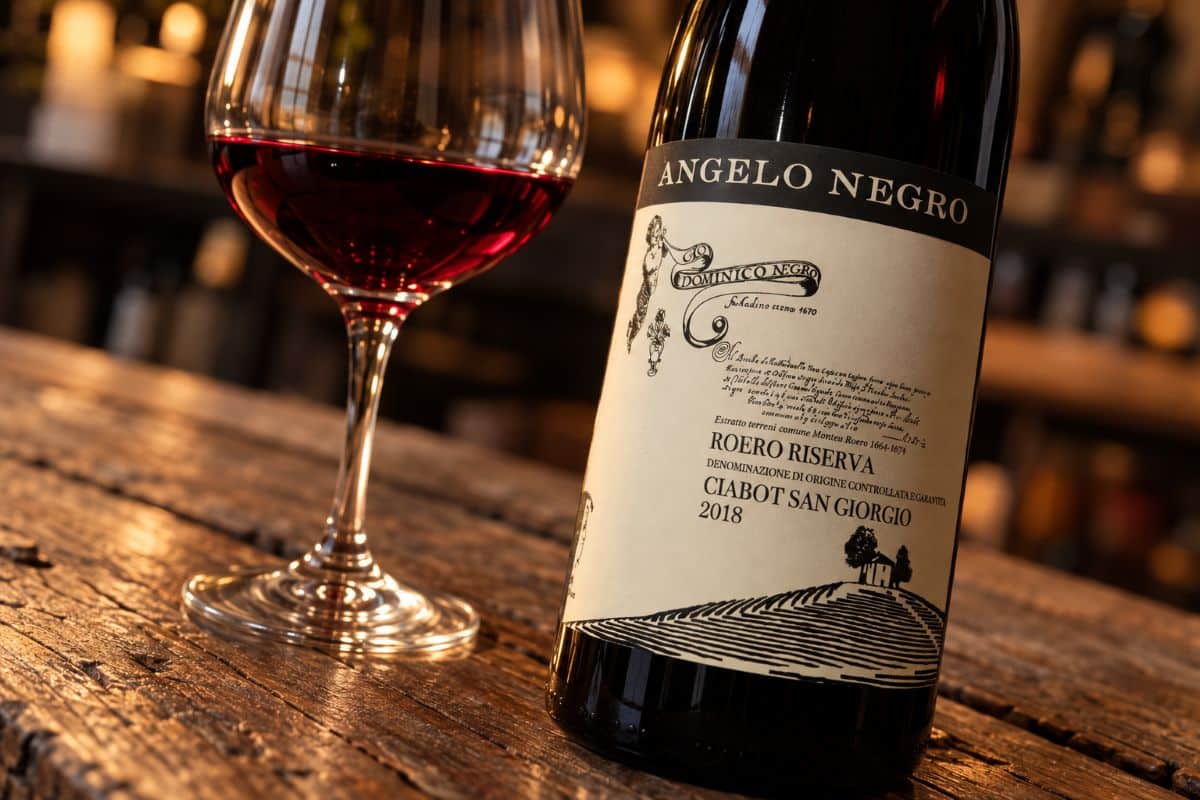
Angelo Negro’s Ciabot San Giorgio 2018 comes from the eponymous MGA in Monteu Roero and shows why serious Roero should not be treated simply as a lighter alternative to Barolo. The sandy, calcareous-marl soils and warmer, more open character of the Roero give Nebbiolo a different shape: aromatic, finely textured and often less severe, while still retaining the tannin and acidity needed for proper evolution.
The 2018 is particularly attractive now because the wine has moved beyond its harder youthful phase without losing fruit. Red berries and floral notes remain clear, but anise, herbs and balsamic tones are beginning to add complexity, creating a more complete and layered expression than the wine showed on release.
The Basics
- Producer: Angelo Negro e Figli
- Vintage: 2018
- Appellation: Roero DOCG Riserva
- Grape: Nebbiolo
- MGA: Ciabot San Giorgio
- Village: Monteu Roero
- Altitude: Around 280 metres
- Exposure: South and southeast
- Soils: Calcareous marl with the sandy component typical of the Roero
- Harvest: Manual
- Maceration: Around 20 days
- Ageing: Large oak followed by bottle ageing
- Total maturation: Around 32 months
- Alcohol: 14%
- Production: Roughly 6,000 bottles
- Current stage: Mature, but still with room to develop
Appearance
Medium ruby moving toward garnet at the rim, translucent rather than deeply coloured, exactly as mature Nebbiolo should be. The colour already shows some evolution but remains bright and healthy.
Nose
The nose is elegant rather than forceful, opening with wild strawberry, red cherry and raspberry, followed by violet and dried rose. Blood orange introduces a sharper citrus note, while star anise, dried herbs and a clean balsamic character give the wine greater definition as it opens.
With more air, the fruit becomes less dominant and subtle notes of tobacco leaf, liquorice and dry earth begin to emerge. The aromatic development is already well underway, but the wine has not crossed into fully tertiary territory.
Palate
The palate is medium-bodied, fresh and finely structured. Red cherry and wild berry fruit remain lively, with blood orange providing brightness through the middle, while anise and herbs give the wine a distinctly savoury edge.
The tannins are polished but still present, providing enough grip to remind you that this is Riserva Nebbiolo rather than an easy-drinking Langhe red. The sandy Roero soils seem to express themselves more through finesse of texture than sheer power, and the wine carries its structure without the weight or severity associated with more muscular Nebbiolo appellations.
Acidity remains one of the strongest elements, keeping the fruit precise and giving the wine a long, controlled development across the palate.
Finish
Long and dry, with sour cherry, blood orange, anise, dried violet and a balsamic-herbal note. The tannins tighten slightly at the end but no longer dominate, leaving a clean and persistent finish.
Ready to Drink?
Yes. The 2018 is entering a very good drinking phase.
The fruit remains alive, the tannins have softened and the first tertiary notes are beginning to emerge without replacing the wine’s fresher character. It should remain convincing through roughly 2030–2033, and well-stored bottles may continue beyond that, but there is little need to postpone opening one now.
Serving and Decanting
Serve at 16–17°C.
A short 30-minute decant is enough to open the aromatic profile without stripping away the more delicate floral notes. Mature bottles can simply be opened in advance and followed in the glass.
A large Burgundy-style glass suits the wine better than a narrow Bordeaux glass, giving Nebbiolo’s floral and balsamic side more room to develop.
Food Pairings

Ciabot San Giorgio 2018 suits dishes with savoury depth but not excessive weight. Try tajarin with porcini and veal jus, finanziera piemontese, roast guinea fowl with hazelnuts, or braised rabbit with herbs and Nebbiolo.
For cheese, choose Castelmagno, Bra Duro and Raschera stagionata. Their savoury, nutty character matches the wine’s mature tannin and balsamic profile without overwhelming its red-fruit freshness.
Price and Value
The 2018 originally occupied a relatively modest price bracket for a cru-level Roero Riserva, and remaining bottles now tend to appear around €40–€55, depending heavily on provenance and market.
At that level, it offers convincing value for mature Nebbiolo from a named MGA with limited production. The comparison with Barolo is inevitable, but it is not particularly useful for judging value: Ciabot San Giorgio is more aromatic, lighter on its feet and earlier to resolve, which is precisely where its appeal lies.
What Defines the 2018
The defining quality of the 2018 is balance rather than concentration. It has enough tannin and depth to behave like serious Nebbiolo, but its strongest qualities are aromatic precision, freshness and a supple transition into maturity.
The vintage has allowed red fruit, violet and citrus to remain visible while anise, herbs and balsamic notes have begun to deepen the profile. This makes the wine more interesting now than when tannin and primary fruit were still competing for attention.
Ciabot San Giorgio 2018 is therefore at an attractive middle point: mature enough to show complexity, young enough to retain energy.

