
Triscele Cefalù: The Sicilian Seafood Restaurant That Thinks beyond the Usual Grilled Fish

Ristorante Triscele sits at Via Umberto I 34, inside Cefalù’s historic centre, with a small dining room, an outdoor area for the warmer months and a menu that treats Sicilian tradition as a starting point rather than a museum piece. Fish dominates, but the kitchen is just as interested in tenerumi, panelle, caciocavallo, ricotta, pistachio and citrus as it is in tuna, octopus, mackerel and red prawns.
That gives Triscele a clearer identity than a generic coastal fish restaurant. The menu moves between recognisable Sicilian flavours and more contemporary constructions: sarde a beccafico with berry reduction, octopus with panelle and squid-ink mayonnaise, red-prawn tagliolini, saffron risotto with raw langoustine, grilled mackerel with caponata and ricotta ravioli with pistachio.
Our 2026 dinner was one of the most satisfying meals we had in Cefalù precisely because the restaurant never confused technique with complication. Some plates were playful, some deeply Sicilian, but the best ones still tasted first of fish, vegetables and the island around them. In a town where the sea view can easily become the main attraction, Triscele gives you a stronger reason to remember the table.
Cod Meatballs Are the Best Small-Plate Opening
The cod-heart meatballs cost €6, served with sweet-and-sour onion and tomato fondue.
This is a smart first bite because it introduces several parts of the restaurant’s vocabulary at once: preserved fish, acidity, sweetness and tomato, all in a compact form.
Black Bao with Tuna Sausage Is the More Playful Start
The black bao buns cost €7, filled with tuna sausage, sautéed chicory and smoked provola.
This is one of the most contemporary dishes on the menu, but the flavours still make sense. Tuna gives density, chicory contributes bitterness and provola adds smoke and fat.
Fiori di Zucca Push Sweet and Savoury Together
The courgette flowers with ricotta, anchovies and truffle honey cost €7.
The combination is deliberately rich, but it has logic. Ricotta softens the anchovy’s salinity, the flower brings delicacy and truffle honey adds a sweet aromatic layer.
This is exactly the kind of plate that could become excessive if the honey dominates.
Tuna Tartare Keeps Things Cleaner
The tuna tartare costs €19, with buffalo-mozzarella foam and caper powder.
Tuna has enough structure to carry dairy, but the balance needs discipline. The mozzarella foam should soften rather than coat the fish, while capers provide the salinity that keeps the plate from becoming too round.
Octopus with Panelle Is One of the Most Sicilian Ideas on the Menu
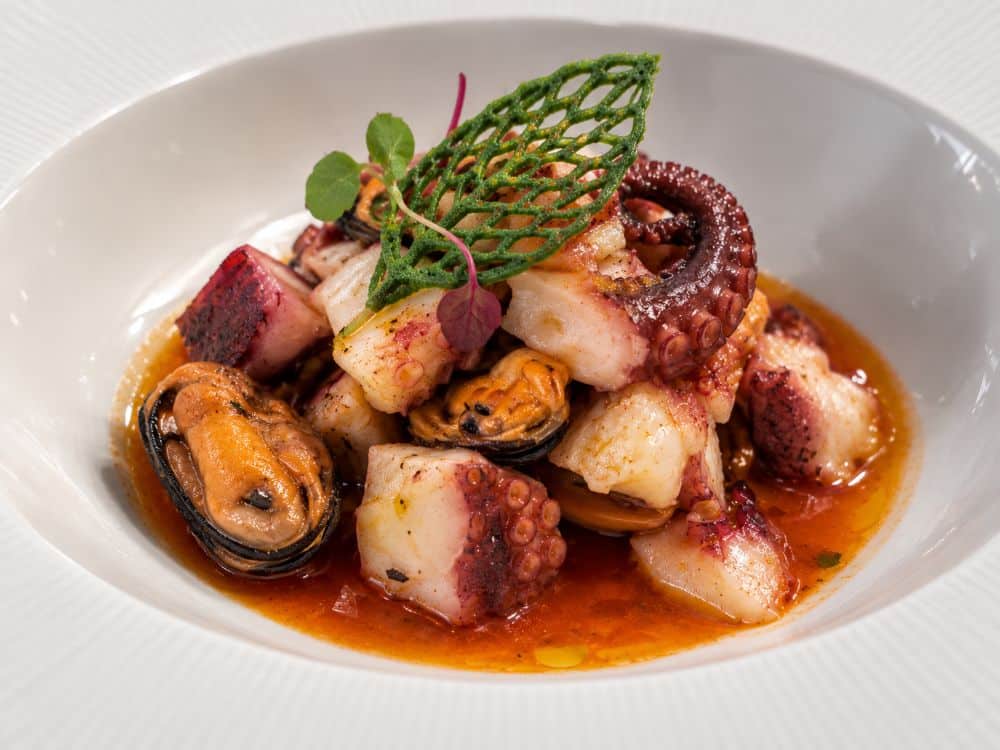
The slow-cooked octopus costs €18, with yellow Datterino cream, squid-ink mayonnaise and panelle.
This is a much stronger expression of place.
Panelle immediately bring Palermo and western Sicily into the dish, while the yellow tomato adds sweetness and the squid ink restores marine depth. The octopus itself needs to remain tender enough to cut easily without losing all resistance.
Sarde a Beccafico Are Tradition with a Twist
The sarde a beccafico cost €13, paired with berry reduction and candied orange.
The classic Sicilian combination already carries sweetness through raisins and citrus logic, so the fruit-led garnish is not completely foreign. The challenge is keeping the sardine’s oily, savoury flavour at the centre.
Tagliolini with Red Prawn Are the First Course to Order
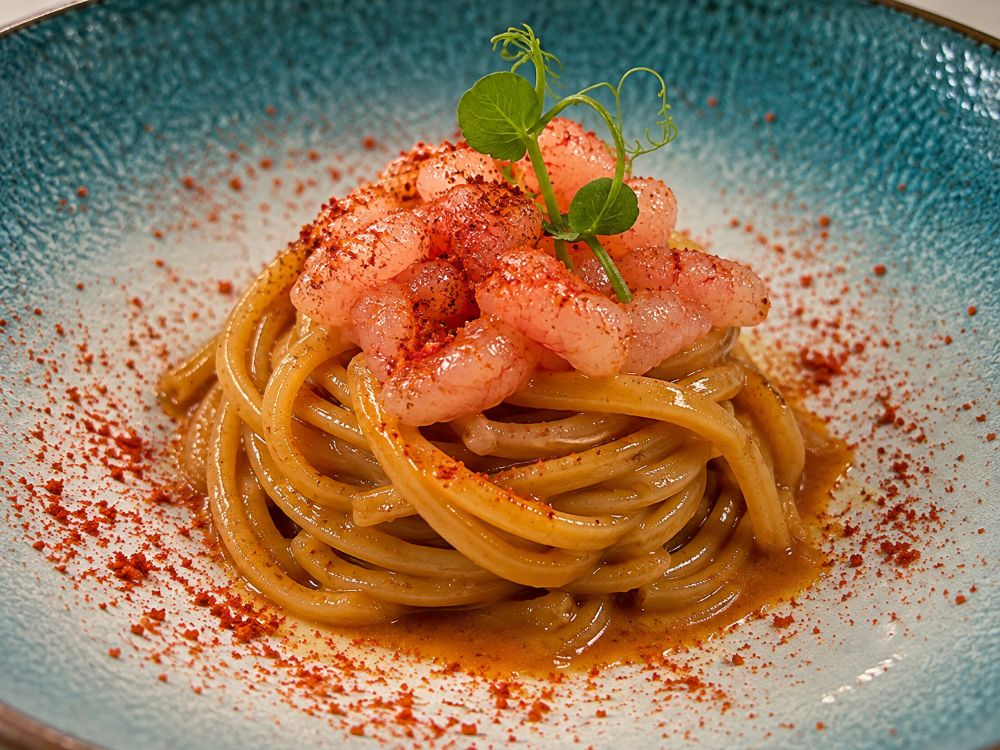
The tagliolini with red-prawn essence and prawn tartare cost €24.
This is the most obvious first course if seafood quality is the priority.
The pasta needs enough structure to carry the shellfish reduction without becoming heavy, while the raw prawn on top brings sweetness and a colder, silkier texture. The best part is the contrast between cooked depth and raw delicacy.
Octopus Amatriciana Is Riskier — and More Interesting
The bucatini all’amatriciana di polpo cost €17.
It is a clever idea because octopus can provide the savoury depth that guanciale normally brings, while tomato and bucatini preserve the familiar structure of amatriciana.
The success depends on not forcing the comparison too literally. This is not Roman pasta with seafood dropped in; it is a Mediterranean reinterpretation with its own logic.
Fusilloni with Tenerumi Are the Most Sicilian Pasta
The fusilloni cost €16, with tenerumi cream, cherry tomato “pic pac”, mussels and ricotta salata.
This may be the pasta with the strongest regional identity.
Compared with the prawn tagliolini, this is less luxurious and more rooted.
Saffron Risotto with Raw Langoustine Brings More Precision
The saffron risotto costs €21, with raw langoustine and langoustine bisque.
This is richer and more polished.
Ravioli with Burrata and Pistachio Go Full Comfort
The burrata ravioli cost €18, with pistachio cream and courgette flowers.
This is a softer, richer course than the seafood pastas.
Burrata provides the filling, pistachio gives sweetness and fat, while courgette flowers add a more delicate vegetal note. The dish can become heavy quickly, so the portion and seasoning matter.
Grilled Mackerel Is the Main Course with the Strongest Character
The grilled mackerel costs €18, with seasonal caponata and orange yoghurt.
Mackerel is oily, assertive and much more interesting than many more expensive white fish. It can carry acidity, sweetness and smoke without disappearing.
Caponata makes complete sense beside it, while orange yoghurt cools and sharpens the plate.
Tuna Tataki Goes Lighter
The tuna tataki costs €20, with citrus and yuzu air.
The flavour profile is cleaner and more contemporary.
Tuna takes searing well because the exterior can caramelise while the centre remains nearly raw. Citrus gives the plate exactly the lift it needs, and the yuzu component should remain aromatic rather than theatrical.
Amberjack with Baba Ganoush Is the Most Cross-Cultural Plate
The amberjack costs €22, paired with baba ganoush and house barbecue sauce.
This is the dish that travels furthest from Sicily.
Amberjack has enough firmness and fat to handle smoke and aubergine, and baba ganoush gives the fish a Mediterranean bridge rather than a random fusion effect.
The barbecue sauce is the risky part. It needs to sit in the background.
Wine Pairings
Red-prawn tagliolini: Marco De Bartoli Vignaverde Grillo — saline, tense and citrus-driven enough for sweet shellfish.
Fusilloni with tenerumi and mussels: Feudo Montoni Masso Catarratto — herbal freshness and mineral structure fit greens, tomato and mussels.
Grilled mackerel: COS Frappato — light tannin and bright red fruit work surprisingly well with oily fish and caponata.
Desserts Keep the Sicilian Thread Alive
The dessert list is more creative than a standard cannolo-and-tiramisù finish.
The Conca d’Oro al limone costs €8, while the saffron cheesecake with passito foam and dehydrated capers costs €7. The latter sounds provocative, but the idea has logic: saffron gives warmth, passito sweetness and capers salinity.
The ricotta sphere with sour cherry, amaretti and pistachio costs €7 and keeps the most recognisably Sicilian ingredients together without simply reproducing a cannolo.
The Historic Centre Works Best when the Food Does Not Lean on It
Triscele benefits from being inside Cefalù’s historic centre, but it does not need to make the location carry the experience.
The internal room is compact and intimate, while the outdoor space becomes particularly attractive in spring and summer. The restaurant is better suited to a focused dinner than a loud group meal.
During our 2026 visit, that scale worked in its favour. Service felt attentive without becoming formal, and the room gave the more technical dishes enough space to remain enjoyable rather than precious.
Service, Atmosphere and Prices
Triscele serves lunch and dinner from Tuesday through Sunday, with Monday closed. Service runs from 12:00 to 14:30 and 19:00 to 22:30.
Pricing is unusually coherent for this level of cooking: small plates €6–€8, starters €13–€19, primi €16–€24, mains €18–€22 and desserts €7–€10. The kitchen therefore feels ambitious without drifting into fine-dining pricing.
Useful Information
- Address: Via Umberto I 34, 90015 Cefalù, Sicily
- Cuisine: Contemporary Sicilian and Mediterranean
- Style: Seafood-focused restaurant with seasonal outdoor seating
- Small plates: €6–€8
- Starters: €13–€19
- First courses: €16–€24
- Main courses: €18–€22
- Desserts: €7–€10
- Dishes to look for: Octopus with panelle, sarde a beccafico, red-prawn tagliolini, fusilloni with tenerumi and mussels, saffron risotto and grilled mackerel
- Vegetarian dishes: Available
- Gluten-free options: Available
- Outdoor seating: Available in warmer months
- Tuesday–Sunday: 12:00–14:30 / 19:00–22:30
- Monday: Closed
- Telephone: +39 0921 921571
- Best for: Contemporary Sicilian seafood, creative pasta and a more refined dinner in central Cefalù
Our Rating of Ristorante Triscele
Food: 9.3/10
Technique adds interest without erasing the Sicilian ingredients underneath.
Small Plates and Starters: 9.3/10
Cod meatballs, octopus with panelle and sarde a beccafico give the opening section real personality.
Pasta and Risotto: 9.5/10
Red prawn, tenerumi, mussels and langoustine make this the strongest part of the menu.
Seafood Mains: 9.2/10
Mackerel and tuna show more character than a predictable parade of white fish.
Sicilian Identity: 9.3/10
Panelle, tenerumi, caponata, ricotta and citrus keep the menu anchored even when technique becomes more contemporary.
Desserts: 9.1/10
Creative without abandoning ricotta, pistachio, lemon and passito.
Wine Pairing Potential: 9.2/10
Sicilian whites and lighter reds fit the menu naturally.
Service: 9.2/10
Attentive and composed without becoming ceremonial.
Atmosphere: 9.1/10
Intimate enough for the cooking and particularly attractive with the outdoor seating in season.
Value for Money: 9.4/10
The €16–€24 core of the menu is particularly compelling for this level of ambition.
Overall Rating: 9.3/10

