
Where to Eat Fresh Fish in Palermo: Osteria Mercede for Sea Urchin Pasta, Bottarga and Sicilian Seafood

Osteria Mercede sits at Via Sammartino 1, a short walk from Teatro Politeama, with a compact dining room divided into small spaces and a menu devoted almost entirely to fish. The proposition is refreshingly clear: the catch determines the dishes, the blackboard changes with availability, and the kitchen moves between raw seafood, tartare, shellfish pasta, local fish and a handful of more creative combinations without turning dinner into a tasting-menu exercise.
Chef Helios Gnoffo works in a register that feels recognisably Sicilian but not rigidly traditional. Sea urchin, bottarga, tenerumi, clams, baccalà and local fish establish the geography; citrus, sesame and lighter contemporary touches keep the menu from feeling preserved in amber.
Our 2026 dinner was one of those Palermo meals where satisfaction arrived quietly and then kept building. The raw fish was clean, the pasta tasted of the sea rather than sauce, and the kitchen showed enough confidence to leave good ingredients alone when they needed nothing else. Palermo is full of fish restaurants; Mercede earns its place by feeling intimate, focused and genuinely connected to the day’s catch.
Raw Seafood Is the Natural First Move
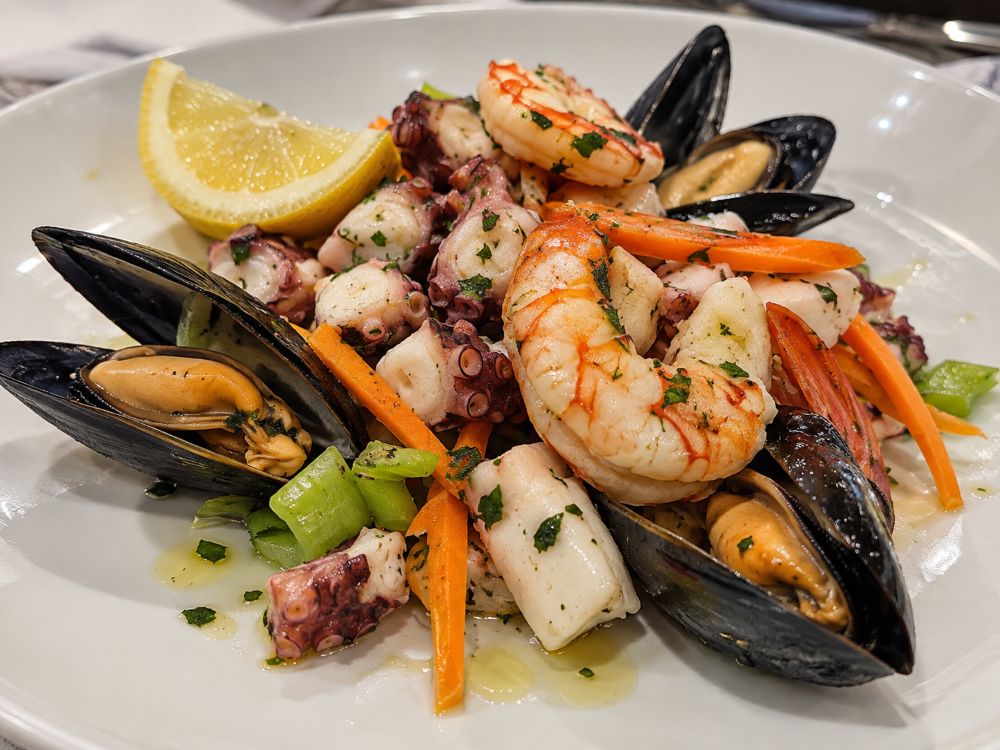
The crudo section changes with availability, which is exactly how it should be in a seafood restaurant this small.
Oysters, red prawns, salmon, tartare and mixed carpacci can all appear, but the point is not quantity. A compact raw selection gives the table a clean starting point before cooked shellfish, pasta and richer fish dishes begin.
Red prawn needs little beyond correct temperature and careful handling. Its sweetness is almost creamy, while oysters provide the opposite sensation: saline, metallic and sharp.
When the raw material is good, extra decoration only gets in the way.
Marinated Prawn Shows a More Aromatic Side
The marinated prawn adds acidity and seasoning without losing the character of the shellfish.
This is the kind of preparation that can easily become too citrus-heavy. The marinade should wake up the prawn, not cure it into something firm and sour.
At Mercede, dishes like this work best as a bridge between pure crudo and the more structured antipasti.
The Mixed Seafood Starter Is the Broader Introduction

A mixed antipasto can include seafood salad, caponata and baccalà with potato, bringing together several textures and traditions on one plate.
The caponata is particularly important because its sweet-sour profile gives the seafood something sharper to push against. Baccalà and potato move in the opposite direction, softer and more comforting.
This is not a minimalist opening, but it gives a clear picture of how broadly the kitchen interprets Sicilian seafood.
Chitarra with Baccalà, Bottarga and Lemon Has Real Precision
One of the more distinctive first courses is spaghetti alla chitarra with baccalà, bottarga and lemon.
The logic is excellent. Baccalà brings concentrated salinity, bottarga deepens it further, while lemon prevents the dish from becoming dense and monotonous.
The chitarra pasta matters because its rough, square edges hold seasoning better than a smoother spaghetti would.
This is the kind of plate that could easily become too salty. The citrus keeps it in line.
Pasta with Tenerumi and Clams Is More Sicilian than It Looks
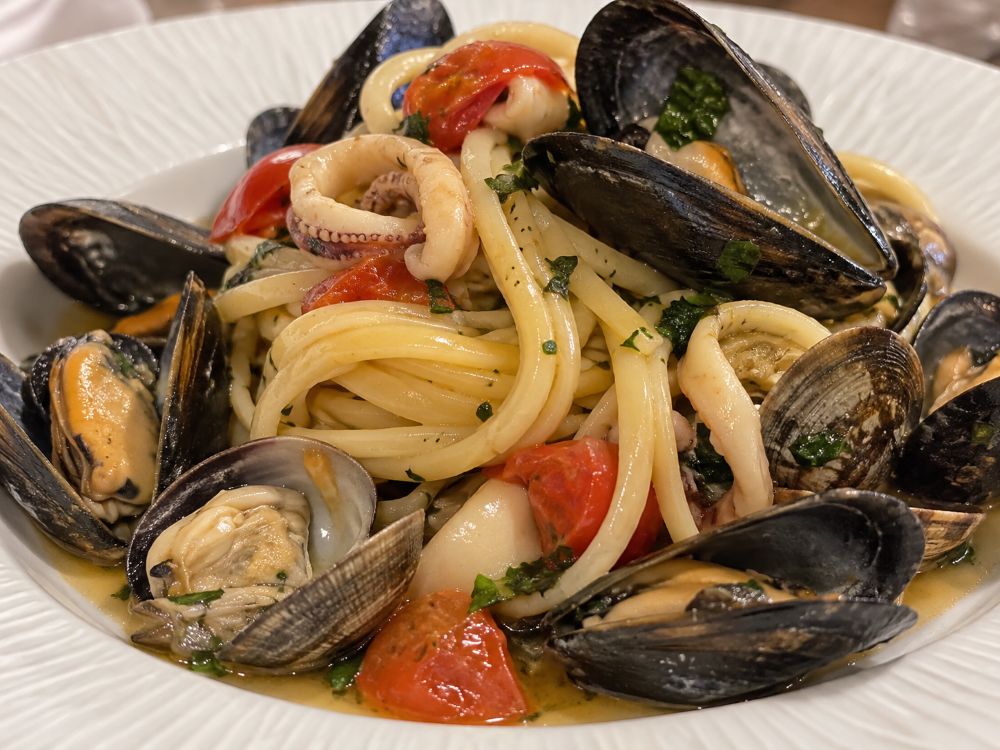
Pasta with tenerumi and clams is one of the dishes that best connects sea and vegetable garden.
Tenerumi — the tender shoots and leaves of Sicilian long zucchini — have a delicate vegetal flavour that suits clams beautifully. Their softness and slight sweetness give the shellfish a completely different context from the usual garlic-and-parsley treatment.
It is not a flashy pasta.
That is exactly why it stands out.
Sea Urchin Pasta Is the Dish to Watch for
When available, pasta with sea urchin is one of the most obvious reasons to eat here.
Sea urchin does not need heavy sauce. Its flavour is already rich, iodine-driven and slightly sweet, so pasta water, olive oil and restrained aromatics are usually enough.
The best version tastes intensely marine without becoming aggressive.
This is Palermo in one of its purest forms: pasta used not as a canvas for sauce, but as a vehicle for the sea.
Linguine allo Scoglio Stay Classic
Linguine allo scoglio offer the broader shellfish route.
Clams, mussels, prawns and whatever else is available bring several layers of salinity and sweetness to the same plate. The pasta should absorb the shellfish liquor rather than simply carry seafood on top.
A good scoglio is glossy, not oily.
The difference sounds small and tastes enormous.
Fish in Potato Crust Is One of the House Classics
The fish in potato crust takes a more structured approach.
A fillet of local fish gains protection and texture from thinly layered potato, allowing the flesh underneath to stay moist while the exterior develops crisp edges.
It is a simple idea, but technically unforgiving.
Too much potato and the fish disappears; too little and the dish loses its contrast.
This is one of the preparations that shows Mercede can move beyond raw seafood and pasta without losing focus.
Seared Tuna Brings a Cleaner, Meatier Texture
Seared tuna, often paired with sesame and a sweeter element such as caramelised onion, moves the kitchen in a slightly more contemporary direction.
Tuna behaves almost like red meat. The exterior can take high heat, but the centre needs to remain pink and moist.
Sesame works because it reinforces nuttiness without turning the fish into something heavy.
The sweeter garnish should remain secondary.
Local Fish Is Still the Most Important Main Course

The most interesting second course may simply be whatever local fish is strongest that day.
Sea bass, amberjack, ombrina or other Mediterranean species need very little once freshness is there. Roasting, grilling or a potato crust are all enough.
This is where a daily-changing blackboard makes genuine sense. A fixed fish list would be less interesting than letting supply dictate the choice.
Wine Pairings
Chitarra with baccalà and bottarga: Marco De Bartoli Vignaverde Grillo — saline, tense and citrus-driven enough for bottarga and lemon.
Pasta with sea urchin: Porta del Vento Ishac Grillo — textured and mineral, with enough freshness for the iodine richness.
Local grilled fish: Barraco Catarratto — dry, herbal and Mediterranean without overwhelming delicate fish.
The Wine Should Stay Sicilian
Mercede’s food makes the most sense with Grillo, Catarratto, Carricante or a light Frappato rather than heavy international varieties.
Western Sicilian whites are especially natural with shellfish because they combine citrus, herbs, salinity and enough structure to stand beside richer seafood.
This is one of those restaurants where a good local white does more for the meal than an expensive prestige bottle ever could.
Dessert Should Cool Things Down
After a seafood-heavy meal, a semifreddo alle mandorle makes considerably more sense than a dense chocolate dessert.
Almond brings a specifically Sicilian flavour while the cold texture resets the palate after salt, bottarga and shellfish.
A citrus sorbet can do the same job even more cleanly.
The meal has already made its point by then.
The Small Dining Rooms Are Part of the Appeal
Osteria Mercede is intimate by design, with several small rooms rather than one large dining hall. The scale keeps the restaurant feeling personal even when the tables fill.
During our visit, that closeness suited the meal perfectly. The service was relaxed but attentive, and the menu never needed a theatrical explanation to feel special.
Service, Atmosphere and Value
Osteria Mercede serves dinner on Monday and both lunch and dinner from Tuesday through Saturday, with Sunday closed. The restaurant remains small, so booking is sensible for dinner.
This is not Palermo seafood turned into a luxury exercise. The kitchen is more interested in freshness, seasonality and fish that still tastes recognisably of itself.
Useful Information
- Address: Via Sammartino 1/1A, 90141 Palermo
- Area: Politeama
- Cuisine: Sicilian seafood
- Chef: Helios Gnoffo
- Style: Small intimate osteria with daily-changing fish menu
- Dishes to look for: Raw seafood, chitarra with baccalà and bottarga, pasta with tenerumi and clams, sea urchin pasta and fish in potato crust
- Fish: Menu changes according to the day’s catch
- Vegetarian options: Limited
- Gluten-free options: Available
- Outdoor seating: Available
- Takeaway: Available
- Monday: Dinner only
- Tuesday–Saturday: Lunch and dinner
- Sunday: Closed
- Telephone: +39 091 332243
- Best for: Fresh fish, shellfish pasta and intimate seafood dining near Politeama
Our Rating of Osteria Mercede
Food: 9.2/10
Focused seafood cooking with enough creativity to stay interesting without losing Sicily.
Raw Seafood: 9.4/10
The cleanest expression of the restaurant’s relationship with the local catch.
Pasta: 9.4/10
Bottarga, sea urchin, clams and tenerumi give the first courses real regional depth.
Fish: 9.3/10
The changing catch is handled with restraint rather than buried under technique.
Traditional Sicilian Character: 9.2/10
Caponata, tenerumi, bottarga and local fish keep the menu grounded.
Wine: 9/10
Sicilian whites are exactly where the strongest pairings lie.
Service: 9.1/10
Relaxed and personal, fitting the compact rooms.
Atmosphere: 9/10
Small, intimate and refreshingly removed from the feel of a high-volume seafood restaurant.
Value for Money: 9/10
The attraction comes from fresh fish and a changing menu rather than luxury ingredients for their own sake.
Overall Rating: 9.2/10

